Uric Acid Stones: How to Dissolve Them Without Surgery
Uric acid stones are the one kidney stone you can dissolve with a tablet instead of a laser. But the published success rates are softer than most men are told, and the reason is almost always urine pH.

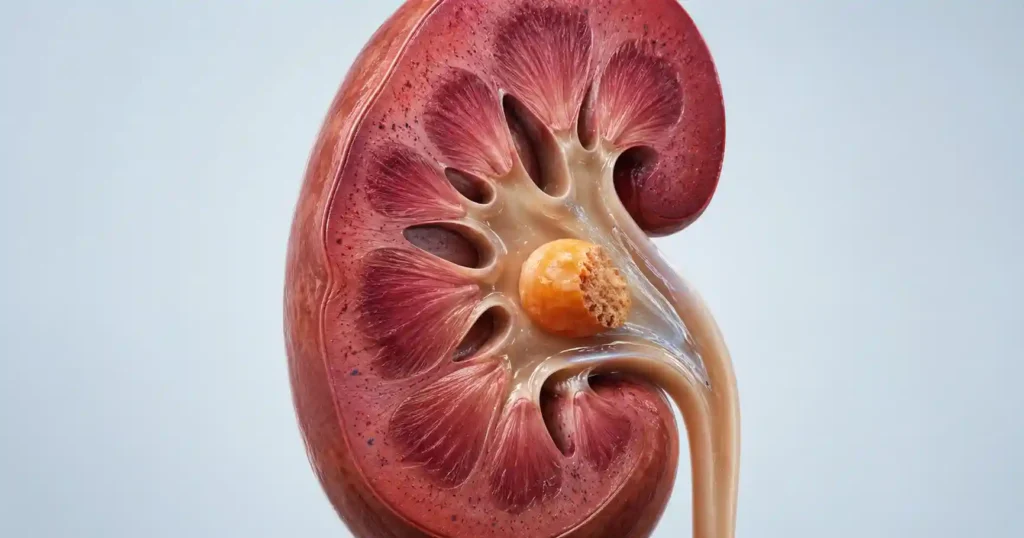
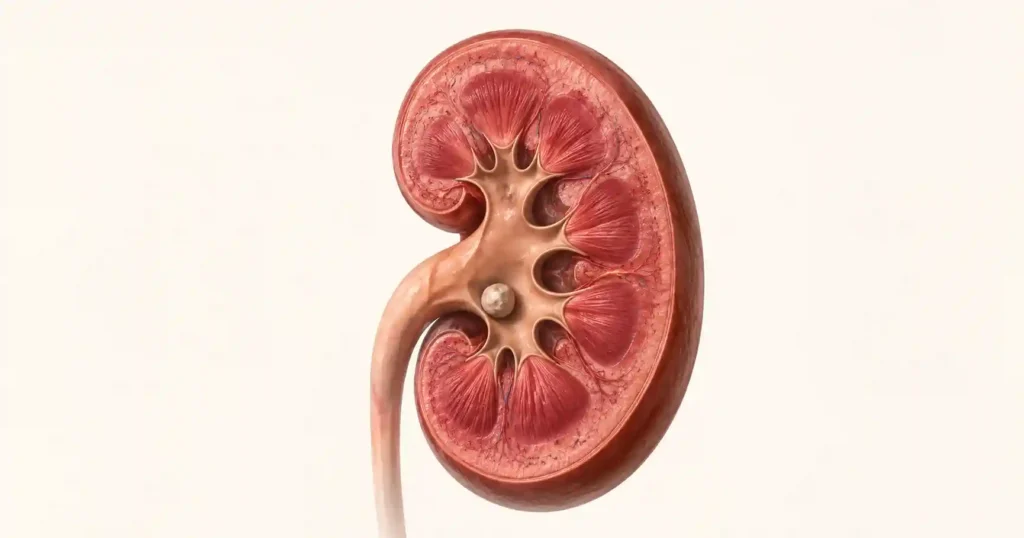
Uric acid stones are the only common kidney stone I can offer to dissolve with a tablet instead of a laser. That one fact changes the whole conversation in clinic — a man arrives braced for ureteroscopy and leaves with a prescription and a pack of urine pH strips. But the promise gets oversold, and I would rather you heard the honest version. Published series show complete dissolution in roughly six patients out of ten, not nine out of ten, and the failures nearly always trace back to the same two problems: a stone that was never pure uric acid to begin with, or a urine pH that never actually reached the range where dissolution happens. This article covers what makes these stones dissolvable, why acidic urine rather than high uric acid is the real culprit, the exact pH window that decides whether the medication does anything at all, and the point at which I stop waiting and book the operating theater. For the wider picture on stone disease, see our Kidney Stones Hub.
Key Takeaways
- Uric acid stones dissolve because uric acid becomes roughly 20 times more soluble as urine pH rises from 5.0 to 7.0 — calcium oxalate stones have no equivalent pH switch, which is why they can never be dissolved.
- The problem is almost never a high uric acid level. It is persistently acidic urine, driven in most men by insulin resistance and metabolic syndrome, and most of my uric acid stone formers have never had a gout attack.
- Urine pH held between 6.5 and 7.2 is the treatment. Below 6.0 the tablets are close to inert no matter how many you take, and above 7.4 you start precipitating calcium phosphate instead.
- Complete dissolution runs near 62 percent in the largest pooled series, with about 16 percent still needing surgery — a mixed calcium and uric acid stone is the single commonest reason a course fails.
Why Uric Acid Stones Dissolve When Other Kidney Stones Don’t
Uric acid exists in urine in two forms, and they behave completely differently. Below a urine pH of about 5.35, most of it sits as undissociated uric acid, which is barely soluble and drops out of solution as crystals. Above that point it converts to urate salt, which stays dissolved. The practical consequence is dramatic: moving urine pH from 5.0 to 7.0 increases uric acid solubility roughly twentyfold. Nothing you do to a calcium oxalate stone comes close to that.
Think of it like sugar in iced tea versus hot tea. The sugar has not changed; the conditions have. Raise the temperature and it disappears into solution. Uric acid works the same way, except the variable is acidity rather than heat — and unlike temperature, you can hold urine pH steady for weeks with a prescription.
Uric acid stones make up around 10 percent of all kidney stones in the United States, with a considerably higher share among men with type 2 diabetes or obesity [2]. They have a recognizable signature before you ever analyze one. They are invisible on a plain abdominal X-ray, which is why a KUB film taken in the emergency room can look clean while a man is in obvious renal colic. On a non-contrast CT they show up as low-density stones, typically 500 Hounsfield units or less, and the urine dipstick almost always reads pH 5.5 or below.
If you have passed a stone or had one removed, the analysis report is the single most valuable document in your file. If you have never had one analyzed but the CT density was low and your urine is consistently acidic, the stone composition identifier will walk you through what your imaging and urine chemistry are pointing toward. And if you are not sure how your stone type sits relative to the others, our guide to the four main kidney stone types lays out the differences that actually change treatment.
The Real Driver Is Acidic Urine, Not High Uric Acid
Three urinary abnormalities contribute to uric acid stone formation: low urine volume, high urinary uric acid excretion, and persistently acidic urine. The third one dominates so heavily that the other two are close to footnotes [2]. Most of the men I treat have a perfectly normal serum uric acid and have never had gout. What they have is urine that will not climb above pH 5.5 no matter what they eat.
Where the acid actually comes from
Your kidney gets rid of daily acid load by pairing hydrogen ions with ammonia, which it manufactures in the proximal tubule. Ammonia is the buffer. Insulin resistance impairs that manufacturing step, so less ammonia is available, and the hydrogen ions get excreted paired with other anions instead — which drops urine pH sharply [2]. Add a diet heavy in animal protein and light on fruit and vegetables, and the acid load rises while the buffering capacity falls.
This is why a uric acid stone is best understood as a renal manifestation of metabolic syndrome, not as a purine problem. Central obesity, prediabetes or established type 2 diabetes, and hypertension travel with these stones far more reliably than gout does. If you have formed one, ask your primary care doctor for a fasting glucose and HbA1c at your next visit, and treat any blood pressure reading above 130/80 mmHg as part of the same problem rather than a separate one — the mechanism that damages the kidney in uncontrolled hypertension shares most of its risk factors with the mechanism acidifying your urine.
In My Practice
A man in his early fifties came to me after two ureteroscopies in three years at another unit, convinced he had a diet problem. He had cut out red meat entirely and was miserable about it. His stone analysis said pure uric acid. His first-morning urine pH was 5.1, his waist circumference was 108 cm (about 43 inches), and his HbA1c came back at 6.3 percent — prediabetes nobody had checked. We started potassium citrate, got his morning pH to 6.7 within three weeks, and the 9 mm stone on his surveillance CT was gone at ten weeks without an anesthetic.
When a man forms uric acid stones, I now order a fasting glucose and HbA1c at the same appointment as the 24-hour urine — the metabolic diagnosis is usually sitting there undetected.
Stop uric acid stones coming back: get the 7-Day Kidney Stone Prevention Meal Plan, including the alkali-rich foods that raise urine pH
Enter your email below to receive Dr. Khalid’s complete 7-Day Kidney Stone Prevention Meal Plan as a free, printable PDF.
Dissolution Therapy: The Urine pH Target That Decides Success
Everything in dissolution therapy is downstream of one number. If urine pH is not in range, nothing else you do matters — not the fluid intake, not the purine restriction, not the allopurinol.
What the guidelines say, and where they disagree
The 2026 AUA Medical Management of Kidney Stones Guideline, released in July 2026, recommends alkalinizing therapy to bring urine pH above 6 without naming a dissolution ceiling [1]. The European Association of Urology is more specific and targets 6.5 to 7.2. That gap is not academic, and a 2025 laboratory study in European Urology Open Science settled it fairly convincingly: dissolution rate rose roughly fourfold when pH moved from the 6.0–6.5 band to 6.5–7.0, and ninefold again in the 7.0–7.2 band, with the optimum at 7.2. At pH 7.4 the rate collapsed and hydroxyapatite — calcium phosphate crystal — began precipitating instead [3].
So the working window is narrow and it has a hard ceiling. I aim for 6.8 to 7.2 and I tell patients explicitly not to chase a higher number, because overshooting swaps one stone type for another.
The four components of a dissolution course
- Potassium citrate, titrated to pH. This is the first-line agent. Typical starting regimens sit around 20 mEq two to three times daily, but the dose is not fixed — your urologist adjusts it upward or downward based on your pH diary, which is why the diary matters more than the prescription. Sodium bicarbonate works chemically but adds a sodium load that raises urinary calcium and blood pressure, so I reserve it for patients who cannot tolerate citrate.
- Fluid to produce more than 2.5 liters of urine daily (around 85 fl oz / 10 cups output, not intake). Dilution reduces uric acid saturation and supports the pH effect.
- Dipstick monitoring three times a day, including the first morning void. The overnight urine is the most acidic of the day and the hardest to correct. If your afternoon reading is 7.0 and your 7am reading is 5.4, you are not in range — you are in range for eight hours out of twenty-four, and the stone reforms overnight.
- Dietary alkali load. More fruit and vegetables, less animal protein, and a hard cut on fructose-sweetened drinks, which raise uric acid production directly. The detail on this sits in our clinical stone diet protocol.
Where allopurinol fits, and where it doesn’t
Allopurinol lowers uric acid production. It does not raise urine pH, and adding it to a patient whose 24-hour uric acid excretion is normal achieves close to nothing — the 2025 kinetics work confirmed that lowering urine uric acid concentration only helps once pH is already above 6.5 [3]. The AUA position is that it belongs in patients with documented hyperuricosuria on a 24-hour urine collection, added alongside alkalinization rather than instead of it [1]. If you have not had a 24-hour urine collection, that test comes before any second-line drug decision; the 24-hour urine interpreter explains what each value on the report is telling your urologist.
How Well It Actually Works, and When to Stop and Operate
Dissolution therapy is frequently described as highly effective. The pooled data are more modest than that phrase implies, and you deserve the actual numbers before you commit three months to a tablet.
A 2023 systematic review in Current Urology Reports pooled 1,075 patients on oral dissolution therapy. Complete dissolution occurred in 61.7 percent and partial dissolution in a further 19.8 percent, giving 80.5 percent some response. But 15.7 percent still required surgery, and 10.2 percent stopped the medication altogether, mostly for gastrointestinal side effects [4]. A 2026 systematic review and meta-analysis from the EAU Endourology Section was blunter still: pooled complete-or-partial dissolution of 64 percent with a confidence interval running from 40 to 83 percent, treatment failure or surgery in 21 percent, and an explicit conclusion that real-world effectiveness sits below what guidelines commonly quote [5].
The commonest reason a course fails is not non-compliance. It is that the stone was never pure. A mixed stone with a calcium oxalate or calcium phosphate component dissolves down to the calcium core and then stops dead, which is exactly what “partial response” means on a follow-up scan.
The timeline I use in clinic
AUA teaching material holds that a pure uric acid stone maintained at pH 6.5 or above will usually dissolve in two to six weeks [6]. My own protocol is deliberately conservative around that:
- Week 2: review the pH diary and a serum potassium. If more than a third of readings are below 6.5, the dose goes up before anything else changes.
- Week 6: repeat imaging — non-contrast CT, or ultrasound if the stone was clearly visible on the baseline scan and you want to spare the radiation.
- Weeks 7 to 12: a second course only if the six-week scan shows the stone shrinking. Partial response with pH documented in range means a mixed stone, and I convert to a surgical plan rather than run a third course.
- No measurable change at six weeks with a compliant pH diary: stop. The composition assumption was wrong. Book the procedure.
When Dissolution Is the Wrong Plan Entirely
Dissolution is elective treatment for a stable stone. It is not a substitute for urgent care. Go to the emergency room the same day, do not wait for your next pH reading, if you have any of the following:
- Fever above 38C (100.4F) or shaking chills with flank pain — an obstructed, infected kidney is a surgical emergency and antibiotics alone will not treat it
- Pain not controlled by your prescribed analgesia, or persistent vomiting preventing you from keeping fluids or tablets down
- Passing very little or no urine, or a rising creatinine on bloods
- Any of the above in a solitary kidney, a transplanted kidney, or established chronic kidney disease
Two safety points on the medication itself: potassium citrate raises serum potassium, so it needs a potassium check if you have reduced kidney function or take an ACE inhibitor, ARB, or potassium-sparing diuretic. And if diarrhea or reflux stops you taking it consistently, tell your urologist rather than quietly halving the dose — an erratic pH is worse than a planned switch of agent.
One more point that gets missed. Dissolving the stone treats the stone, not the tendency. Unless urine pH stays above 6.0 long term and the underlying insulin resistance is addressed, the next stone starts forming as soon as the tablets stop.
Read next: the dietary protocol I give every stone former after treatment ends →Frequently Asked Questions
How long does it take to dissolve a uric acid stone?
At a urine pH held between 6.5 and 7.2, a pure uric acid stone usually shrinks measurably within two to six weeks, and larger stones can take three months or more. What matters is not elapsed time but pH consistency, so I review a two-week dipstick diary before ordering repeat imaging, and a 24-hour urine profile tells me whether the target is realistic for you.
Can lemon juice or baking soda dissolve uric acid stones instead of potassium citrate?
Neither reliably holds urine pH in the dissolution range. Lemon juice supplies citrate but very little alkali load, and sodium bicarbonate raises pH while adding a sodium load that pushes calcium into the urine and blood pressure upward. Both have a place in long-term stone prevention, but a prescribed, pH-titrated dose of potassium citrate is what actually dissolves a stone.
Why did my uric acid stone stop shrinking halfway through treatment?
The usual answer is that it was never pure uric acid. Mixed stones with a calcium oxalate or calcium phosphate component dissolve down to that core and then stall, which is why partial response is so common in published series. Send any fragment you pass for laboratory analysis, and review the likely stone composition before starting a second course.
Does allopurinol dissolve uric acid stones?
No. Allopurinol lowers uric acid production, but uric acid stones are primarily a disease of acidic urine and low urine volume rather than uric acid overproduction. The AUA reserves allopurinol for stone formers with documented hyperuricosuria on a 24-hour urine collection, and it is added to alkalinization rather than used in place of it. Confirming your stone type comes first.
Do uric acid stones mean I have gout or diabetes?
Not necessarily gout. Most men I treat for uric acid stones have never had a gout attack and have a normal serum uric acid level. What they usually do have is insulin resistance: central obesity, prediabetes or type 2 diabetes, and often raised blood pressure. I ask for a fasting glucose, an HbA1c, and an assessment of what uncontrolled blood pressure does to the kidneys at the same visit.
References
- Pearle MS, Matlaga BR, Antonelli JA, et al. Medical management of kidney stones: AUA guideline (2026) Part II: treatment and follow-up of kidney stones. J Urol. Published online July 30, 2026. AUA
- Sakhaee K, Maalouf NM. Epidemiology and clinical pathophysiology of uric acid kidney stones. J Nephrol. 2014;27(3):241-245. PubMed
- Lotan P, Mastai M, Mastai Y, et al. Revisiting uric acid stone dissolution kinetics: insights for optimizing medical therapy. Eur Urol Open Sci. 2025;76:38-44. PubMed
- Ong A, Brown G, Tokas T, et al. Selection and outcomes for dissolution therapy in uric acid stones: a systematic review of literature. Curr Urol Rep. 2023;24(8):355-363. PubMed
- Dissolution of uric acid stones and factors associated with treatment success: EAU endourology systematic review and meta-analysis. Arab J Urol. Published online May 8, 2026:218-228. DOI
- American Urological Association. Medical student curriculum: kidney stones. AUA Education. AUA
Dr. Muhammad Khalid
MBBS · FCPS (Urology) · MCPS (Gen. Surgery) · CHPE · CRSM · IMC #539472
Specialist urologist with 11+ years of clinical experience across tertiary teaching hospitals. Trained at Lady Reading Hospital and Khyber Teaching Hospital, Peshawar. Author of 5 peer-reviewed international publications in Cureus, WJSA, and AJBS. Procedural expertise: URS, PCNL, RIRS, TURP, TURBT, and major open urological surgery. Full profile →
This article is for educational purposes only and does not constitute medical advice. Always consult your physician or urologist for diagnosis and treatment decisions specific to your condition.