Urethral Stricture: Symptoms, Causes & Treatment Odds
Most men with a urethral stricture are offered a quick endoscopic cut first. The published data on how long that cut lasts is far worse than most patients are ever told. Here is what I explain in clinic.

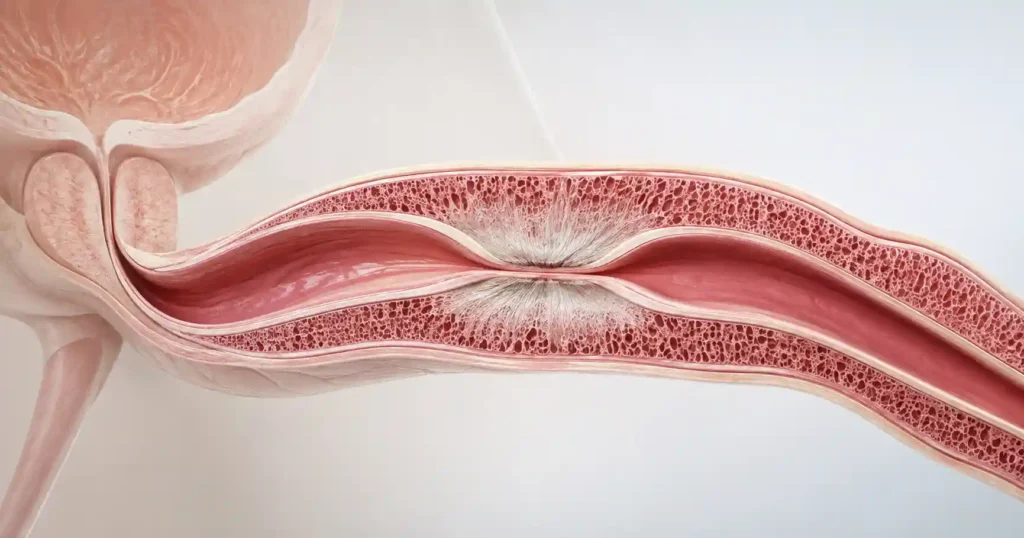
A urethral stricture is scar tissue narrowing the tube that carries urine out of your bladder, and it is one of the most consistently misdiagnosed causes of a weak stream in men. I regularly meet men who have spent two or three years on tamsulosin for an enlarged prostate that was never the problem, while the actual obstruction sat several inches downstream in the urethra itself. The distinction matters enormously, because no prostate medication has any effect on scar tissue. Stricture is a mechanical problem and it needs a mechanical answer. What complicates the decision is that the quickest mechanical answer — an endoscopic cut through the scar — has a long-term success rate most patients are never quoted. In this article I walk through how a stricture forms, what separates it from prostate obstruction on symptoms alone, how it is properly mapped before anyone operates, and the honest numbers behind each treatment. For the wider picture on procedures and healing, see our urological surgery and recovery hub.
Key Takeaways
- A urethral stricture is scar in the wall of the urethra, not a prostate problem — which is why tamsulosin and finasteride do nothing for it.
- Among men referred for reconstructive surgery, iatrogenic causes (catheters, transurethral surgery, cystoscopy, hypospadias repair) accounted for 45.5% of strictures, and roughly one in three had no identifiable cause at all.
- A stream that sprays or forks, in a man under 50, with a history of catheterization or a straddle injury, points to stricture rather than BPH.
- In a long-term series of endoscopic urethrotomy, the stricture-free rate was 8% after the first procedure and never exceeded 9% through five attempts — repeat cutting buys months, not a cure.
- Urethroplasty by a high-volume reconstructive urologist is the durable repair, with long-term success in most contemporary series between roughly 85% and 95% depending on length and location.
What a Urethral Stricture Actually Is
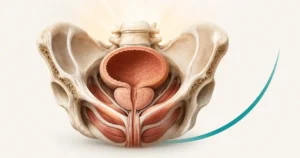
The male urethra runs roughly 20 cm (about 8 inches) from the bladder neck to the tip of the penis. Urologists divide it into a posterior portion, which passes through the prostate and the pelvic floor muscle, and an anterior portion, which runs through the bulb of the penis and out to the meatus — the opening at the tip.
The anterior urethra is not a rigid pipe. It sits inside a sleeve of spongy erectile tissue called the corpus spongiosum, which keeps the channel soft, compliant, and able to open under flow. When that spongy tissue is injured — by pressure, by a tear, by inflammation — it heals the way any tissue heals: with collagen. Collagen does not stretch. The result is a fibrotic ring that pulls the channel inward, a process called spongiofibrosis. That is a urethral stricture.
Think of a garden hose where one short segment has hardened into rigid plastic. Turning the tap up harder does not restore the flow through that segment; it just raises the pressure behind it. Your bladder does exactly this. It thickens its muscle wall to push harder, which is why symptoms often stay tolerable for years — the bladder is compensating. When it eventually decompensates, things deteriorate quickly.
Narrowing in the posterior urethra — after radical prostatectomy, after radiation, after a pelvic fracture — is a different animal and is usually called a stenosis or a distraction defect. It behaves differently and is repaired differently. When I use the word stricture in this article, I mean the anterior urethra.
Urethral Stricture Symptoms: The Stream Tells the Story
Every symptom of a stricture is a symptom of obstruction, which is precisely why it gets confused with the prostate. But the pattern differs, and the differences are diagnostic if you know what to ask.
- A stream that sprays, forks, or fans out. This is the single most useful clue and it is nearly specific to stricture. A narrowed segment turns laminar flow into a turbulent jet. Men describe hitting the wall, hitting their own shoes, or needing to sit down to void reliably. An enlarged prostate does not do this — it produces a slow but focused stream.
- A weak stream that has been slowly worsening for years. Scar matures gradually. Men often cannot name a start date, only that the last decade has been a steady decline.
- Straining and a long voiding time. You are recruiting your abdominal muscles to do the bladder’s work.
- Terminal dribbling and the sense of never finishing. Urine trapped behind and within the narrowed segment leaks out afterward.
- Recurrent urinary infections, epididymitis, or prostatitis. Stagnant residual urine is a culture medium. A man having his third infection in a year should be assumed to have an anatomical cause until proven otherwise.
- Weak or uncomfortable ejaculation. Semen travels the same channel. Some men notice this before they notice the urinary change.
The combination I take most seriously is a man in his thirties or forties with a spraying stream and a past catheterization. That man does not have benign prostatic enlargement — he is too young and the mechanism is wrong. He has a stricture until an imaging study says otherwise.
What Causes a Urethral Stricture
The honest and uncomfortable answer is that medicine causes most of them. In a prospective series of 268 men who underwent urethroplasty at a European reconstructive referral center, iatrogenic causes — urethral catheterization, transurethral resection, cystoscopy, prostatectomy, brachytherapy, and previous hypospadias repair — accounted for 45.5% of cases [2]. In roughly one in three men, no cause could be identified at all.
The main groups, and what each one does mechanically:
- Catheter and instrument injury. An oversized catheter, a forced insertion against resistance, or a catheter left in for days after cardiac or orthopedic surgery compresses the delicate mucosa against the spongy tissue. The mucosa dies, the spongiosum scars. The stricture then declares itself six months to two years later, long after anyone connects it to the hospital stay.
- Straddle trauma. The bulbar urethra sits directly against the pubic bone. A bicycle crossbar, a fence, a ladder rung, or a fall onto a hard edge crushes it between the object and the bone. Many of the so-called idiopathic strictures are almost certainly forgotten straddle injuries from adolescence.
- Pelvic fracture. A high-energy pelvic fracture can shear the urethra at the pelvic floor. This produces posterior injury and is managed by reconstructive specialists.
- Lichen sclerosus (also called balanitis xerotica obliterans). A chronic inflammatory skin condition that whitens and scars the foreskin and glans, then narrows the meatus, then tracks backward into the penile urethra. It usually announces itself on the skin first — the same disease pattern I cover in the guide to a tight or scarred foreskin in adult men. Recognizing it before surgery changes the operation entirely.
- Infection. Untreated gonococcal urethritis was historically the dominant cause worldwide and remains significant in regions with limited access to early treatment. It typically produces long, multi-segment disease.
In My Practice
A man in his late fifties came to me eighteen months after coronary bypass surgery, having been on tamsulosin for a year for what his primary care doctor had reasonably called an enlarged prostate. His prostate was small on examination. When I asked him to describe the stream rather than rate it, he said it had started splitting in two and hitting the side of the bowl. He had been catheterized for four days in intensive care after the bypass. His retrograde urethrogram showed a 1.5 cm bulbar stricture.
Ask any man with obstructive symptoms whether he has ever had a catheter or a camera passed, and ask him to describe the shape of his stream — those two questions separate stricture from prostate more reliably than a digital rectal exam does.
Facing urethral stricture surgery? Get the recovery guide before you agree to a date
Enter your email below to receive Dr. Khalid’s complete Urology Surgery Recovery Guide as a free, printable PDF.
How a Urethral Stricture Is Diagnosed
The AUA’s 2023 urethral stricture guideline amendment is clear that once a stricture is suspected, the job is to establish its length and location before choosing a treatment, because those two numbers determine which operations are even on the table [1].
Uroflowmetry and post-void residual
You void into a machine that graphs your flow rate against time. A healthy stream produces a bell-shaped curve. A stricture produces a flat, box-shaped plateau — the narrowed segment caps the flow at a fixed ceiling no matter how hard the bladder pushes, often below 10 mL per second. That plateau shape is characteristic enough that an experienced urologist can often call the diagnosis from the tracing alone. An ultrasound scan immediately afterward measures how much urine you left behind.
Estimate how much residual urine is a warning sign with the post-void residual tool →Retrograde urethrogram — the anatomical map
Contrast is instilled at the meatus and X-rays are taken as it fills the urethra backward. This is the study that produces the actual measurements. It shows exactly where the narrowing starts, exactly where it ends, and whether there is more than one. If the posterior urethra needs assessment, it is combined with a voiding study. No surgeon should be planning a urethral reconstruction without this film.
Cystoscopy and ultrasound urethrography
A flexible camera passed along the urethra confirms the narrowing directly and shows the quality of the mucosa. Its limitation is obvious: if the scope cannot pass the stricture, it tells you nothing about what lies beyond, which is why it supplements rather than replaces the urethrogram. If you are having this done and want to know what to expect, I have written a separate walkthrough of what a cystoscopy actually feels like. Ultrasound of the urethra adds one more piece — how deep the scar extends into the spongy tissue, which predicts how likely an endoscopic cut is to fail.
One practical point from the 2023 AUA amendment that patients are rarely told: if you have recently been catheterized or instrumented, you should be catheter-free and instrument-free for 4 to 6 weeks before staging — a period the guideline calls urethral rest [1]. Imaging a freshly traumatized urethra underestimates the true extent of disease, and an underestimated stricture leads to an undersized operation.
Urethral Stricture Treatment: Dilation, Urethrotomy and Urethroplasty
There are two philosophies. One stretches or cuts the scar and leaves it in place. The other removes or bypasses the scar. Their long-term results are not comparable, and the gap is where most of the frustration in this condition lives.
Dilation and direct vision internal urethrotomy
Dilation stretches the narrowed segment with graduated sounds or a balloon. Direct vision internal urethrotomy (DVIU) cuts through it endoscopically with a small blade. Both take twenty minutes, both are done through the urethra with no external incision, and both feel like a success in the first week because the stream immediately improves.
The AUA supports offering dilation, DVIU, or urethroplasty as initial options for a short bulbar stricture under 2 cm (about 3/4 inch) [1]. That word “initial” is doing a lot of work. In a retrospective series analyzing stricture-free survival after each successive urethrotomy, the stricture-free rate was 8% after the first procedure with a median time to recurrence of seven months, and it never rose above 9% through the fifth [3]. Other long-term series report better first-attempt numbers than that, but the direction of travel is not disputed: every repeat cut performs worse than the one before it, because each one adds scar to the problem it is treating.
The reasonable way to frame a urethrotomy is as a purchase of time, not a cure. If you are told you are having a quick fix, ask directly what your surgeon’s expected stricture-free rate is at three years. If a third urethrotomy is being proposed, ask why the answer is not referral.
Urethroplasty — the operation that actually removes the problem
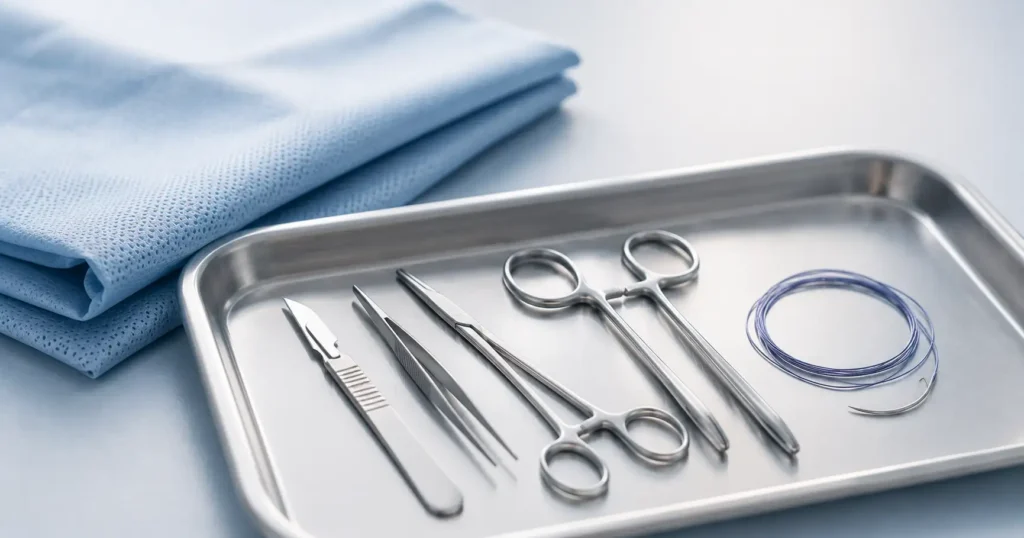
Urethroplasty is open reconstruction through a perineal or penile incision. It takes two to four hours, requires a catheter for around two to three weeks afterward, and is done by reconstructive urologists who perform it regularly. Two main variants exist:
- Excision and primary anastomosis. For short bulbar strictures, the diseased segment is cut out completely and the two healthy ends are sewn together. Because no scar is left behind, this is the most durable repair available, with long-term success rates reported in the region of 90% to 95%.
- Substitution urethroplasty with buccal mucosa. For longer strictures, or strictures in the penile urethra where excision would shorten the penis, the urethra is opened along its length and a graft of oral lining taken from the inside of the cheek is inlaid to widen the channel. Buccal mucosa is used because it is thin, tough, and adapted to a wet environment. Contemporary series report success generally in the 80% to 90% range, varying with length and prior treatment [5].
Two special situations change the plan. If lichen sclerosus is the cause, genital skin must not be used as graft material — the disease affects that skin too and the repair fails; oral mucosa is used instead [5]. And for men with disease along the whole length of the urethra, or older men who would rather have one reliable operation than a complex reconstruction, a perineal urethrostomy — a permanent opening behind the scrotum, voiding while seated — is a legitimate and highly durable choice that the AUA explicitly endorses [1]. European guidance takes a comparable position on stratifying by length and location [4].
Compare urological procedures side by side before your consultation →What to ask before you agree to anything
- Ask for the measured length and location of your stricture from the retrograde urethrogram, in centimeters. If nobody can give you that number, the workup is incomplete.
- Ask how many urethroplasties your surgeon performs each year. This is a volume-dependent operation and outcomes track experience closely.
- If a repeat urethrotomy is offered, ask what changed since the last one that would make this attempt last longer.
- Book a flow rate and post-void residual check at three months and twelve months after any treatment. Recurrence can be silent until the bladder gives out, and the flow curve detects it before you do.
The situation that requires no deliberation is complete inability to pass urine. A stricture that fully occludes leaves the bladder with nowhere to drain, and pressure transmits back to the kidneys. In the emergency room a urethral catheter frequently will not pass the scar, so a suprapubic catheter is placed through the lower abdominal wall instead — one reason to tell the triage nurse immediately that you have a known stricture. My guide to acute urinary retention and what happens in the emergency room walks through that visit in detail.
When to Go to the ER
Go to the emergency room the same day, not the next morning, if you have any of the following:
- You cannot pass urine at all and your lower abdomen is distended and painful
- You can only pass drops despite a full bladder and a strong urge
- Fever, shaking chills, or back pain alongside difficulty voiding — this suggests infected obstructed urine, which can become septic within hours
- Visible blood in the urine with clots and worsening difficulty voiding
Tell the triage nurse you have a known or suspected urethral stricture. It changes how the team attempts drainage and prevents a forced catheter attempt that adds further scar.
Frequently Asked Questions
How do I know if my weak stream is a urethral stricture or an enlarged prostate?
Age and stream shape are the giveaways. Prostate obstruction usually begins after 50 and produces a slow but focused stream. A urethral stricture often appears earlier, sprays or forks, and follows a catheter, a cystoscopy, or a straddle injury. Flow testing plus a retrograde urethrogram settles it, and a flexible camera test, described in my walkthrough of what a cystoscopy actually feels like, confirms the narrowing directly.
Can a urethral stricture open up on its own?
No. A stricture is collagen scar in the wall of the urethra, and scar does not remodel back into elastic spongy tissue. What changes over time is your bladder, which thickens to push harder. That is why the stream can seem stable for years while residual urine quietly climbs. You can gauge how concerning a residual volume is with the post-void residual estimator before it becomes retention.
Why do urologists keep repeating urethrotomy if it fails so often?
Because it is quick, low-risk on the day, and every patient feels better for several months. The published long-term data is blunt: stricture-free rates were no higher than 9% across the first through fifth urethrotomy in one detailed series. The 2023 AUA amendment pushes toward reconstruction rather than a third cut. Weighing the operations side by side using the urology surgery comparison tool is a reasonable way to prepare for that conversation.
Can lichen sclerosus cause a urethral stricture?
Yes, and it changes the operation. Genital lichen sclerosus scars the meatus first and can track backward into the penile urethra. It usually declares itself on the skin as a tight, white, scarred foreskin, the same pattern covered in my article on phimosis and paraphimosis in adult men. Because the disease affects genital skin, skin grafts fail in these men and oral mucosa is used instead.
What should I do if I cannot pass urine at all with a urethral stricture?
Go to the emergency room the same day. Complete obstruction backs pressure up to the kidneys and infected obstructed urine can turn septic within hours. A urethral catheter often will not pass the scar, so a suprapubic catheter through the lower abdomen is placed instead. Tell triage you have a known stricture. My guide to acute urinary retention explains the whole visit.
References
- Wessells H, Morey A, Souter L, Rahimi L, Vanni A. Urethral Stricture Disease Guideline Amendment (2023). J Urol. 2023;210(1):64-71. AUA
- Lumen N, Hoebeke P, Willemsen P, De Troyer B, Pieters R, Oosterlinck W. Etiology of urethral stricture disease in the 21st century. J Urol. 2009;182(3):983-987. PubMed
- Santucci R, Eisenberg L. Urethrotomy has a much lower success rate than previously reported. J Urol. 2010;183(5):1859-1862. PubMed
- European Association of Urology. EAU Guidelines on Urethral Strictures. EAU Guidelines Office. EAU
- Levine LA, Strom KH, Lux MM. Buccal mucosa graft urethroplasty for anterior urethral stricture repair: evaluation of the impact of stricture location and lichen sclerosus on surgical outcome. J Urol. 2007;178(5):2011-2015. PubMed
Dr. Muhammad Khalid
MBBS · FCPS (Urology) · MCPS (General Surgery) · CHPE · CRSM · IMC #539472
Specialist urologist with 11+ years of clinical experience across tertiary teaching hospitals. Trained at Lady Reading Hospital and Khyber Teaching Hospital, Peshawar. Author or co-author of five peer-reviewed international publications, including in Cureus and the World Journal of Surgery. Procedural expertise: URS, PCNL, RIRS, TURP, TURBT, and major open urological surgery. Full profile →
This article is for educational purposes only and does not constitute medical advice. Always consult your physician or urologist for diagnosis and treatment decisions specific to your condition.