Postoperative Urinary Retention: Causes and Treatment
Postoperative urinary retention is not just an inconvenience — an overfilled bladder can stretch its own muscle wall past the point of full recovery. Here is what happens in recovery, and what should happen.

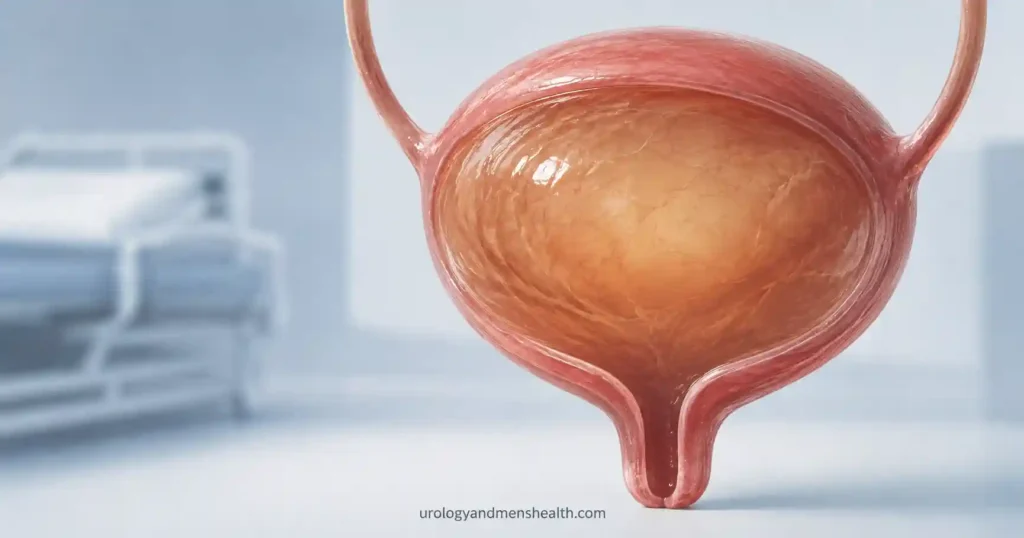
Postoperative urinary retention is the reason a lot of otherwise routine operations end with an unplanned catheter. You wake up in recovery, the anesthetic wears off, you feel a growing pressure low in your abdomen — and nothing comes out. It is one of the most common complications after surgery, with reported rates anywhere from 5% to 70% depending on the operation and the anesthetic used [1]. Most patients are never warned about it beforehand, which is why it feels like something has gone badly wrong. Usually it hasn’t. But the window in which it stays harmless is narrower than most people realize: a bladder allowed to overfill can stretch its own muscle wall past the point of full recovery. That single fact drives nearly every decision your nursing team makes in the first hours after your operation. For the wider picture on recovering from urological procedures, see our Urological Surgery & Recovery hub. Here is what is actually happening, and what should happen next.
Key Takeaways
- Retention is defined by volume, not by how long you have waited — more than 500–600 mL (about 17–20 fl oz) in the bladder with an inability to void means the bladder needs draining now.
- In a 313-patient recovery-room study, arriving in recovery with 270 mL (about 9 fl oz) already in the bladder raised retention risk nearly fivefold — the single strongest predictor found.
- Being male is not itself a risk factor in ambulatory surgery. Age over 50 and pre-existing urinary symptoms are.
- Overdistension, not the retention itself, is what causes lasting detrusor damage — which is why draining at the threshold beats waiting to see if you settle.
- Tamsulosin halved retention risk across 23 randomized trials, but showed no overall benefit in open inguinal hernia repair.
What Postoperative Urinary Retention Actually Means
Postoperative urinary retention means your bladder is filling normally but cannot empty itself after an operation. It is not the same as passing small amounts, and it is not the same as being slow to go because you are embarrassed by the ward bathroom. The clinical definition is a volume one: most surgical units act when a bladder ultrasound shows more than 500 to 600 mL (about 17 to 20 fl oz) and you are unable to void, or when six to eight hours have passed since the end of surgery with no urine produced [1].
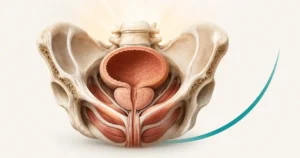
The reason the threshold is set at a volume rather than a time is mechanical. The detrusor — the muscle layer that squeezes the bladder empty — is a smooth muscle that generates force by overlapping protein filaments. Stretch those filaments too far and they lose their overlap, the same way an overstretched spring stops springing back. Once the bladder is distended beyond roughly 600 mL, the muscle fibers are pulled past the length at which they can generate a useful contraction. Keep it there for several hours and some of that loss becomes permanent.
That is the whole logic of the recovery-room bladder scan. Nobody is scanning you because they think something has gone wrong with your operation. They are scanning you because the bladder gives you almost no warning before it crosses from “full” into “damaged.”
Why Anesthesia and Surgery Shut Down Bladder Emptying
Emptying your bladder is not a voluntary act in the way lifting your arm is. It runs on a reflex loop between the bladder wall and the sacral spinal cord at the S2 to S4 level, with the brain acting as a permission switch rather than the engine. Surgery interferes with that loop in four separate places at once.
- Neuraxial anesthesia (spinal or epidural) blocks the sacral roots directly. Sensation and leg movement come back before bladder emptying does — so you can be walking and comfortable while the reflex arc is still offline.
- Opioid painkillers reduce the force of the detrusor contraction and blunt the sensation of fullness. This is why the most comfortable patients are sometimes the ones in the most trouble.
- Anticholinergic drugs given during anesthesia — glycopyrrolate and atropine — block the muscarinic receptors the detrusor needs to contract at all.
- Pain and surgical stress drive sympathetic outflow, which tightens alpha-1 receptors at the bladder neck and prostatic urethra. The outlet clamps down at exactly the moment the pump weakens.
Layer intravenous fluid on top of that. The bladder is being filled at surgical-theater rates while the reflex that empties it is still suppressed. That mismatch — fast filling, delayed emptying — is the mechanism behind most cases, and it explains why retention is disproportionately common after anorectal surgery, inguinal hernia repair, pelvic procedures, and joint replacement performed under spinal anesthetic.
Who Actually Develops Retention — and Who Doesn’t
The assumption most patients arrive with is that this is a male problem caused by the prostate. The data does not support that as stated. A 2016 systematic review and meta-analysis in the American Journal of Surgery pooled 21 studies covering 7,802 ambulatory general surgery patients and found an overall retention rate of 14%. Increased age raised the odds 2.11-fold and pre-existing lower urinary tract symptoms raised them 2.83-fold — but male sex, analyzed on its own, returned an odds ratio of 0.96, meaning no measurable effect [3].
Read that carefully, because the practical implication is not intuitive. It is not the anatomy of being male that puts you at risk. It is the symptoms you already had before the operation — the slow stream, the hesitancy, the two trips to the bathroom at night. A man with a large prostate and no symptoms is at much lower risk than a man with a modest prostate who has been quietly straining for three years.
The strongest single predictor found so far is something nobody can assess before the day. A prospective study of 313 patients in Anesthesia & Analgesia scanned every bladder on arrival in the recovery unit and found a 16% retention rate. Three factors independently predicted it: bladder volume of 270 mL or more on arrival (odds ratio 4.8), age of 50 or older (2.4), and intraoperative fluid of 750 mL or more, about 25 fl oz (2.3) [2]. The bladder volume you arrive with beats every patient characteristic on the list.
Related read: why the first voiding trial after prostate surgery so often fails, week by weekRecovering From Urological Surgery? Get the Day-by-Day Bladder and Catheter Recovery Guide
Enter your email below to receive Dr. Khalid’s complete Urology Surgery Recovery Guide as a free, printable PDF.
How Retention Is Detected and Treated in Recovery
Detection is a handheld ultrasound scanner held against your lower abdomen. It takes about twenty seconds, involves no needles, and produces a bladder volume in millilitres. Symptoms are deliberately not used as the trigger, because after a spinal block or a dose of morphine the sensation of fullness is exactly the thing that has been switched off.
Check what a given residual volume actually means with our post-void residual estimatorIn My Practice
The case I still use when I teach this was a 58-year-old man three hours out of an inguinal hernia repair who was irritated that I wanted to scan him. He had no urge, no discomfort, and had been walking the corridor. The scanner read 940 mL — about 32 fl oz. He had received a spinal and 1.4 liters of intravenous fluid, and the reason he felt nothing was that the sacral block had not fully worn off. We drained him with a single in-and-out catheter and he was voiding normally by the next morning. Had we waited for him to complain, his detrusor would have sat overstretched for another four hours.
Comfort is not evidence of an empty bladder after neuraxial anesthesia — the scan is.
For a first episode, the preferred treatment is a single in-and-out catheterization: the bladder is drained once and the tube comes straight back out. This resolves the overdistension, gives the detrusor a chance to recover its length, and avoids the infection risk and bladder spasms that come with leaving a catheter in place [7]. Roughly half of patients void normally on their next attempt.
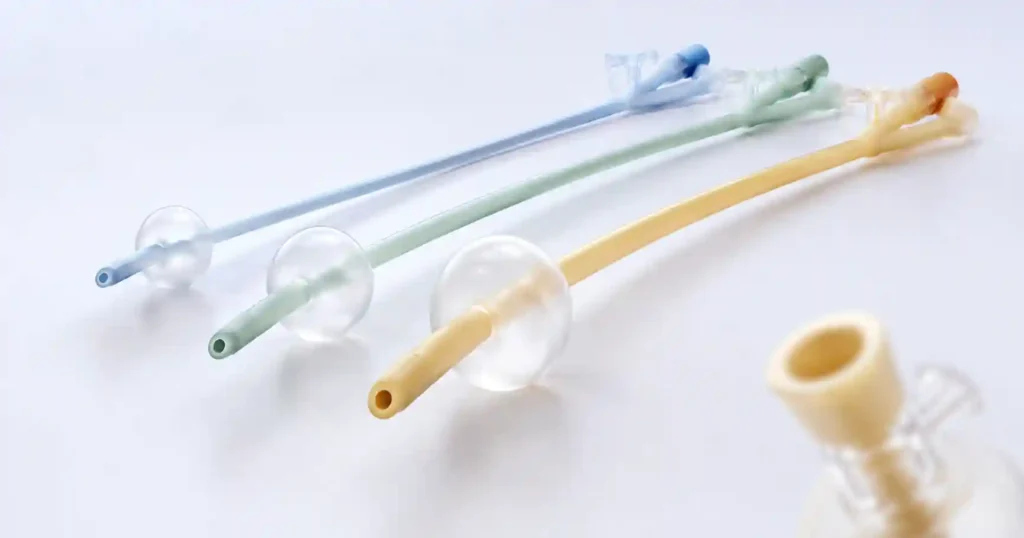
If you fail a second or third time, an indwelling catheter for one to three days is usually the better option, and the choice of catheter size and material starts to matter for comfort and infection risk. Alongside it, your team should be reversing the causes rather than just draining the result: switching opioid painkillers to paracetamol or an anti-inflammatory where safe, stopping anticholinergics, treating constipation, getting you upright and mobile, and giving you an actual door to close. Standing to void and running a tap are not folklore — both raise successful voiding rates.
The catheter is then removed for a trial without catheter, usually with tamsulosin 0.4 mg started at least 24 to 48 hours beforehand. If two trials fail, the question stops being “when will this settle” and becomes “why is this bladder not emptying.” At that point ask your urologist directly whether a pressure-flow study is appropriate — urodynamic testing is what distinguishes a blocked outlet from a weak muscle, and the treatments for those two problems are opposites.
Can Postoperative Urinary Retention Be Prevented?
Partly, and the evidence here is genuinely split — which is worth knowing before you ask for a prescription.
The optimistic reading comes from a 2023 systematic review in the American Journal of Health-System Pharmacy that pooled 23 randomized controlled trials covering 3,555 patients and found that tamsulosin given before or after surgery cut retention risk roughly in half (relative risk 0.50), with no increase in urinary tract infection [4]. That is a large, consistent effect across a lot of patients.
The cautious reading comes from a 2023 meta-analysis in Hernia that looked only at inguinal hernia repair and found that prophylactic alpha-blockade did not prevent retention overall. The benefit appeared only in two subgroups: laparoscopic repair (odds ratio 0.66) and patients over 60, where the effect was large (odds ratio 0.14) [5]. In other words, the drug is not a blanket insurance policy. It works where there is an outlet to relax, and in younger patients having open repairs there often isn’t one.
What that means for you concretely, if you have an operation coming up:
- At least seven days before: tell your surgeon if you have a slow stream, hesitancy, incomplete emptying, or wake more than once a night. Ask whether an alpha-blocker such as tamsulosin 0.4 mg started three to seven days preoperatively is appropriate for your age and procedure — the AUA 2026 BPH guideline supports alpha-blockers as first-line therapy for men with these symptoms [6].
- On the day: empty your bladder immediately before going to theater, and ask the anesthetist whether a general rather than a spinal is an option if you are high risk.
- First four hours after: ask for a bladder scan rather than waiting to be asked how you feel. Request one specifically if you had a spinal.
- At six to eight hours: if you have not passed urine, ask for the scan volume as a number and ask what the unit’s drainage threshold is.
When to Go Back to the ER After Discharge
A proportion of retention starts after you get home, particularly in day-case surgery where you are discharged before the anesthetic effect on the sacral reflex has fully resolved. The mechanism is identical to spontaneous acute urinary retention, and so is the urgency.
When to Go to the ER
Do not wait for the next working day, and do not wait to see whether it settles overnight. Go to an emergency department if you have any of the following after surgery:
- No urine passed for 8 hours despite a genuine urge to go
- A firm, tender swelling in the lower abdomen just above the pubic bone
- Passing only small dribbles while the pressure keeps building — this is overflow, not improvement
- Fever, shivering, or new pain in the flank or back
- New confusion or drowsiness in an older adult, which can be the first sign of obstructed kidneys
Bring your discharge letter and the name of the operation. The treatment is a catheter, and the sooner it goes in, the more detrusor function you keep.
Milder signals — a weaker stream than usual, straining, a sense of incomplete emptying without pain — are worth a same-day call to your surgical team rather than an ER trip. Ask specifically for a bladder scan and a residual volume measurement, not just reassurance over the phone.
Frequently Asked Questions
How long after surgery before not passing urine counts as postoperative urinary retention?
Most surgical units use a six-to-eight-hour window from the end of the operation. In practice the clock is not what triggers action — the bladder scan is. If an ultrasound shows more than 500 to 600 mL (about 17 to 20 fl oz) and you cannot void, that is postoperative urinary retention regardless of how long it has been, and the bladder should be drained. You can see how residual volumes are graded with our post-void residual estimator.
Does needing a catheter after surgery mean my prostate is the problem?
Not on its own. Anesthesia, opioids, and intravenous fluid can push a completely normal bladder into retention. But if you already had a slow stream, straining, or two trips to the bathroom at night before the operation, surgery has probably unmasked an outlet problem that was already present. That is worth investigating once you have recovered, because the same mechanism drives spontaneous acute urinary retention.
Is an in-and-out catheter better than leaving a catheter in?
For a first episode, yes. A single drainage empties the bladder and removes the tube immediately, avoiding the infection risk and bladder spasms that come with an indwelling catheter. If you fail to void a second or third time, an indwelling catheter for one to three days is usually the better option, and catheter type and size then start to matter — our catheter size and type selector explains how those choices are made.
Why did I go into retention after my TURP catheter was removed?
The bladder muscle has often been working against an obstruction for years, and it does not recover its squeeze the moment that obstruction is removed. Add swelling of the prostatic bed and small clots in the bladder, and a first trial without catheter can fail even after technically successful surgery. This is common enough that it is built into the standard TURP recovery timeline.
What happens if I fail the trial without catheter twice?
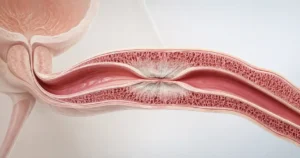
Two failed trials is the point at which the question changes from when this will settle to why the bladder is not emptying. Expect your urologist to look for prostate obstruction, a urethral stricture, and impaired detrusor contractility, usually with a flow rate study and pressure-flow measurement. Urodynamic testing is the investigation that separates a blocked bladder from a weak one, and the treatments for those two diagnoses are opposites.
References
- Baldini G, Bagry H, Aprikian A, Carli F. Postoperative urinary retention: anesthetic and perioperative considerations. Anesthesiology. 2009;110(5):1139-1157. PubMed
- Keita H, Diouf E, Tubach F, et al. Predictive factors of early postoperative urinary retention in the postanesthesia care unit. Anesth Analg. 2005;101(2):592-596. PubMed
- Mason SE, Scott AJ, Mayer E, Purkayastha S. Patient-related risk factors for urinary retention following ambulatory general surgery: a systematic review and meta-analysis. Am J Surg. 2016;211(6):1126-1134. PubMed
- Baysden M, Hein D, Castillo S. Tamsulosin for prevention of postoperative urinary retention: a systematic review and meta-analysis. Am J Health Syst Pharm. 2023;80(6):373-383. PubMed
- Drahman A, Ngee-Soon SL, Crawford M. Prophylactic alpha-blockade for prevention of post-operative urinary retention after inguinal hernia repair: a systematic review and meta-analysis. Hernia. 2023;27(6):1351-1361. PubMed
- American Urological Association. Management of Lower Urinary Tract Symptoms Attributed to Benign Prostatic Hyperplasia: AUA Guideline. AUA. 2026. AUA
- National Institute of Diabetes and Digestive and Kidney Diseases. Treatment of Urinary Retention. NIDDK. 2025. NIDDK
Dr. Muhammad Khalid
MBBS · FCPS (Urology) · MCPS (General Surgery) · CHPE · CRSM · IMC #539472
Specialist urologist with 11+ years of clinical experience across tertiary teaching hospitals. Trained at Lady Reading Hospital and Khyber Teaching Hospital, Peshawar. Author or co-author of five peer-reviewed international publications, including in Cureus and the World Journal of Surgery. Procedural expertise: URS, PCNL, RIRS, TURP, TURBT, and major open urological surgery. Full profile →
This article is for educational purposes only and does not constitute medical advice. Always consult your physician or urologist for diagnosis and treatment decisions specific to your condition.