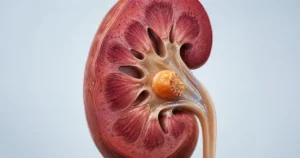
Types of Kidney Stones: Which One Do You Have?
Most patients pass a kidney stone and are simply told to drink more water, without ever testing what the stone was made of. The clinical reality is that treating a stone without knowing its composition makes your prevention diet a dangerous guess. Here is how we identify exactly what you are fighting.

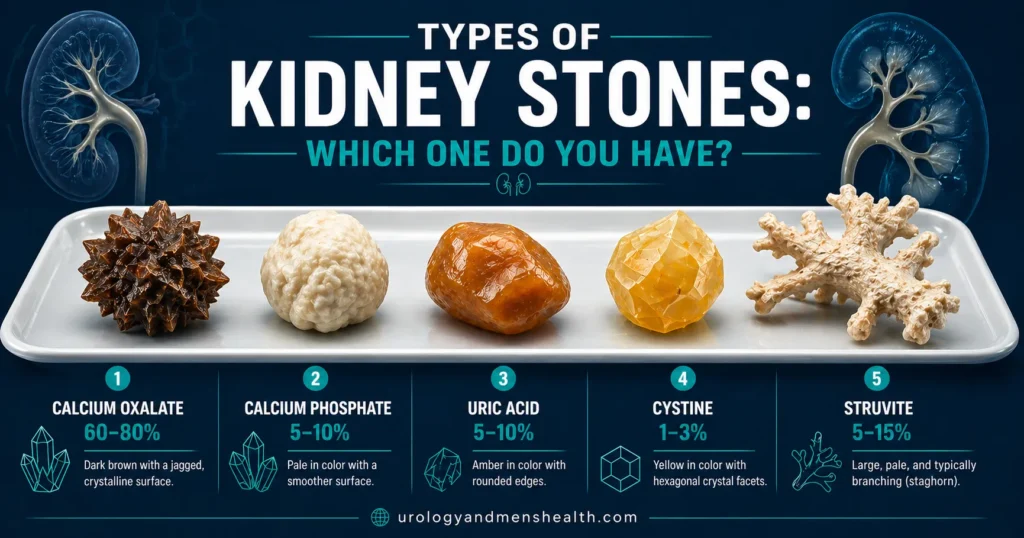
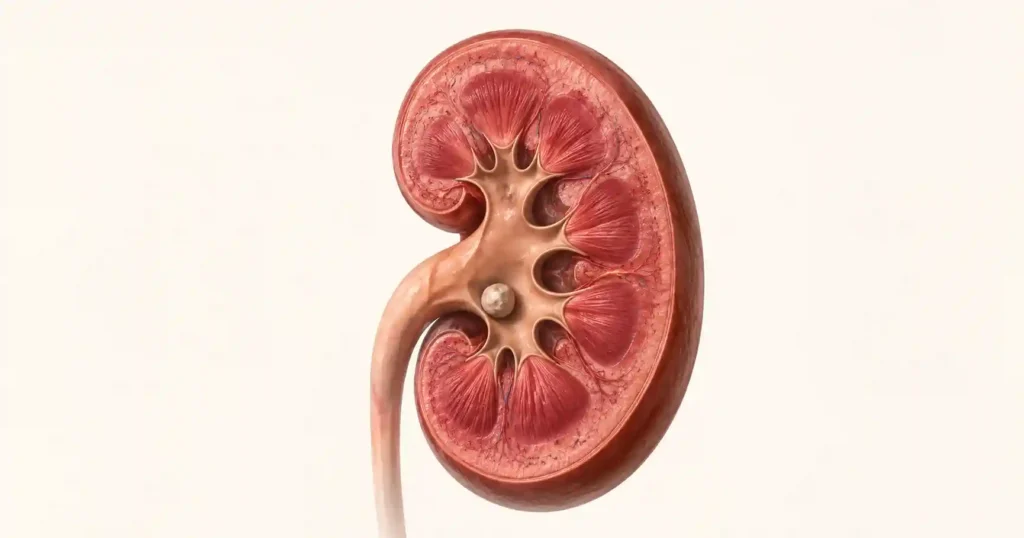
“What are the types of kidney stones — and which one do I have?” This is the single most important question in kidney stone prevention, and it’s the one most patients never get answered. I see this regularly in clinic: a patient passes a stone, gets pain relief, maybe has surgery to remove it, and is then told to “drink more water.” The stone itself is discarded or flushed away without ever being sent for chemical composition analysis.
That’s the equivalent of treating an infection without knowing which bacteria caused it. Without knowing your stone type, every piece of dietary advice you follow is a guess — and some of that guesswork can actually make things worse. The diet that prevents calcium oxalate stones is fundamentally different from the one that prevents uric acid stones. Get the strategy wrong, and you’re not just wasting effort — you may be increasing your risk.
In this article, I’ll walk you through each of the five main stone types, explain what causes them, how they’re identified, and — most importantly — what you need to do differently for each one. If you’ve had a kidney stone and don’t know what type it was, this article will tell you why finding out should be your next priority.
🧮 Tool: Take the free Kidney Stone Risk Profiler — assess your personal recurrence risk in 2 minutesKey Takeaways
- Calcium oxalate stones account for 70–80% of all kidney stones — reduce oxalate, increase dietary calcium, cut sodium.
- Uric acid stones (5–10%) are the only common stone type that can potentially be dissolved without surgery using urine alkalinization.
- Cystine stones are genetic — they require aggressive hydration (3+ L of urine output daily, about 100 fl oz / 13 cups) and lifelong specialist management.
- Struvite stones form from infections, not diet — complete surgical removal plus antibiotic treatment is the only cure.
- If your stone was never sent for analysis, your prevention plan is guesswork — ask your urologist about a 24-hour urine metabolic evaluation.
- A diet that prevents one stone type may be ineffective or even harmful for another — stone-type-specific prevention matters.
Why Stone Type Is the Starting Point (Not an Afterthought)
Think of it this way: if you went to your doctor with a bacterial infection, you’d expect them to identify the specific bacterium and choose the right antibiotic. Nobody would accept “just take any antibiotic and hope for the best.” Yet that’s essentially what happens when a kidney stone is treated without composition analysis — the patient is given generic prevention advice that may or may not match their specific stone chemistry.
The five main types of kidney stones form through different metabolic pathways, respond to different dietary interventions, and carry different recurrence risks. A calcium oxalate former who is told to alkalinize their urine aggressively could inadvertently create an environment that promotes calcium phosphate stones instead. A uric acid former who follows a low-oxalate diet is restricting foods that have nothing to do with their stone type while ignoring the actual culprit — acidic urine and excess purines.
Every stone that is passed or surgically removed should be sent for chemical composition analysis. If yours wasn’t, a 24-hour urine metabolic evaluation can still identify your metabolic risk profile and guide prevention — even without the stone itself.
→ Related Read: Kidney Stones — Complete Guide from a UrologistType 1: Calcium Oxalate Stones (70–80% of All Stones)
Calcium oxalate is by far the most common kidney stone type worldwide. These stones form when calcium and oxalate — both naturally present in your urine — combine and crystallize. They come in two sub-types: calcium oxalate monohydrate (whewellite), which is hard, dark, and difficult to fragment with shockwave lithotripsy, and calcium oxalate dihydrate (weddellite), which is lighter in color, more fragile, and easier to treat surgically.
What causes them
The primary metabolic drivers are hyperoxaluria (excessive oxalate in urine), hypercalciuria (excessive calcium in urine), and hypocitraturia (insufficient citrate — your natural stone inhibitor). High sodium intake is a major hidden contributor: every extra gram of salt forces approximately 40 mg of calcium into your urine [1]. Dehydration concentrates all these substances and accelerates crystallization.
The prevention protocol
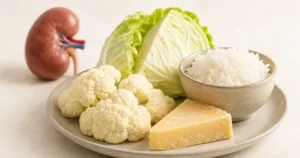
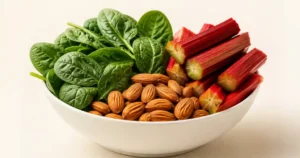
Increase dietary calcium to 1,000–1,200 mg per day from dairy (not supplements). This binds oxalate in the gut before it reaches your kidneys — the landmark Borghi NEJM trial showed a 51% lower recurrence rate with normal calcium intake versus a low-calcium diet [2]. Restrict the top high-oxalate foods: spinach, rhubarb, almonds, beets, and dark chocolate. Cut sodium below 2,300 mg per day (about 1 teaspoon of salt). Drink 3+ liters of fluid daily (roughly 100 fl oz / 13 cups), including lemon water for natural citrate. Limit red meat to 2–3 servings per week.
→ Related Read: The Kidney Stone Diet — My Clinical Protocol for PreventionType 2: Calcium Phosphate Stones (10–15%)
Calcium phosphate stones (brushite or apatite) are the second most common type. They often occur in patients with renal tubular acidosis (RTA) — a condition where the kidneys fail to properly acidify urine — or primary hyperparathyroidism, where overactive parathyroid glands drive excessive calcium excretion. These stones form preferentially in alkaline urine (pH above 6.5).
What makes them different from calcium oxalate
The defining distinction is urine pH. Calcium oxalate stones form across a wide pH range, but calcium phosphate stones thrive in alkaline urine. This creates a clinical paradox: the standard recommendation to alkalinize urine with citrate (which helps prevent calcium oxalate and uric acid stones) can actually promote calcium phosphate stone formation if urine becomes too alkaline. This is why stone type identification matters so much — a treatment that helps one type can worsen another.
The prevention protocol
Hydration and sodium restriction remain the foundation — identical to calcium oxalate management. However, urine alkalinization must be approached carefully. If potassium citrate is prescribed, urine pH should be monitored and kept below 6.5. Patients with hyperparathyroidism need PTH and serum calcium levels checked — surgical removal of the overactive parathyroid gland (parathyroidectomy) is often curative. Thiazide diuretics may be prescribed to reduce urinary calcium excretion [3].
Type 3: Uric Acid Stones (5–10%)
Uric acid stones are unique among kidney stones for one remarkable reason: they can be dissolved without surgery. No other common stone type offers this possibility. Uric acid is poorly soluble in acidic urine (pH below 5.5) but becomes highly soluble as urine pH rises above 6.0. This means that by alkalinizing urine — primarily with potassium citrate — existing uric acid stones can literally dissolve over 2–3 months.
Who gets them
Uric acid stones are strongly associated with gout, type 2 diabetes, obesity, and metabolic syndrome. The common thread is insulin resistance, which impairs the kidney’s ability to excrete ammonia, resulting in persistently acidic urine. High dietary purine intake (red meat, organ meats, shellfish, beer) provides the substrate, while acidic urine provides the conditions for crystallization [4].
The prevention protocol
Alkalinize urine to pH 6.0–7.0 — this is the single most impactful intervention. Potassium citrate (30–60 mEq per day, as prescribed) is the mainstay. Dietary alkalinization through increased fruit and vegetable intake helps. Reduce purine-rich foods: organ meats, game, shellfish, anchovies, sardines. Limit fructose (soft drinks, processed foods) — fructose metabolism directly increases uric acid production. Avoid beer specifically (high in purines AND dehydrating). Hydration is even more important than for calcium stones because uric acid solubility is highly volume-dependent.
For patients with gout and recurrent uric acid stones despite dietary measures, allopurinol (a xanthine oxidase inhibitor) reduces uric acid production and is highly effective when combined with alkalinization [5].
💡 In My Practice
The pattern I see most often in uric acid stone formers is the man in his late 40s to early 60s with central obesity, type 2 diabetes, and a history of gout — often surprised to learn his stones are not “calcium stones.” He has usually been told to cut dairy, which would have been wrong even if he were a calcium oxalate former. Once we confirm uric acid composition, the conversation changes entirely: it stops being about avoiding foods and starts being about alkalinizing urine and improving insulin sensitivity.
The discipline of taking potassium citrate three times a day — and the taste, which most patients find unpleasant — is the limiting factor. I now ask patients to set a phone alarm and stick with it for 60 days, after which I check a follow-up CT. The first time a patient sees a stone has measurably shrunk on imaging without any surgery, the compliance problem solves itself.
Type 4: Cystine Stones (1–2%)
Cystine stones are rare but disproportionately challenging. They are caused by cystinuria — an inherited genetic condition where the kidneys fail to reabsorb the amino acid cystine, allowing it to accumulate in urine and crystallize. Cystinuria is autosomal recessive, meaning both parents must carry the gene for a child to be affected.
Why they’re different from every other stone type
Cystine stones typically present in childhood or young adulthood and recur aggressively throughout life. They are extremely hard — resistant to ESWL (shockwave lithotripsy) — and often require multiple surgical procedures over a patient’s lifetime. Because the underlying defect is genetic, dietary measures alone are never sufficient. These patients require lifelong specialist urological management.
The management protocol
Aggressive hydration is the cornerstone — cystine stone formers need to produce at least 3 liters of urine per day (about 100 fl oz / 13 cups), which typically means drinking 4+ liters of fluid daily, including through the night (setting an alarm to drink water at 2–3 AM is standard advice for these patients). Urine alkalinization with potassium citrate to pH 7.0–7.5 increases cystine solubility. Sodium restriction is critical — sodium increases cystine excretion. For patients who form stones despite these measures, tiopronin or D-penicillamine (thiol drugs that bind cystine and increase its solubility) may be prescribed, though side effects can be significant [6].
Type 5: Struvite (Infection) Stones (5–10%)
Struvite stones — also called infection stones or triple-phosphate stones — are fundamentally different from every other type on this list. They are not caused by diet, hydration, or metabolic abnormalities. They are caused by urinary tract infections with specific bacteria (most commonly Proteus mirabilis) that produce an enzyme called urease. Urease breaks down urea in urine into ammonia, which alkalinizes the urine dramatically and causes magnesium ammonium phosphate (struvite) to precipitate rapidly.
Why they’re dangerous
Struvite stones can grow extremely fast — sometimes filling the entire renal collecting system within weeks to months, forming what’s called a staghorn calculus. Left untreated, they can cause sepsis (life-threatening bloodstream infection), progressive kidney damage, and ultimately kidney loss. They are more common in women (due to higher UTI rates) but do occur in men, particularly those with urinary catheters, neurogenic bladder, or structural urinary tract abnormalities [7].
The treatment protocol
Complete surgical removal is mandatory — any fragment left behind harbors bacteria and will serve as a nidus for rapid regrowth. PCNL (percutaneous nephrolithotomy) is the standard surgical approach for staghorn stones. Antibiotics are given before, during, and after surgery. Long-term antibiotic prophylaxis may be needed in patients with recurrent UTIs. Dietary modification plays minimal role — the focus is entirely on infection eradication and stone clearance.
Worried about a stone coming back? Download Dr. Khalid’s 7-Day Kidney Stone Prevention Meal Plan.
Enter your email below to receive Dr. Khalid’s complete 7-Day Kidney Stone Prevention Meal Plan as a free, printable PDF.
How Your Stone Type Is Identified
Method 1: Stone composition analysis (the gold standard)
If you pass a stone or have one surgically removed, it should be sent for infrared spectroscopy or X-ray diffraction analysis. This identifies the exact chemical composition — and often reveals that a stone is a mixture (for example, 80% calcium oxalate monohydrate with a 20% calcium phosphate core). The mixed composition matters because it identifies multiple metabolic abnormalities that need addressing.
To catch a stone at home: use a fine-mesh stone strainer (available from pharmacies or online) over the toilet every time you urinate during an episode. When the stone is captured, rinse it, place it in a clean dry container, and bring it to your urologist.
Method 2: 24-hour urine metabolic evaluation
If no stone is available for analysis (which is common — many stones are flushed away unknowingly), a 24-hour urine collection can identify your metabolic risk profile. The laboratory analyzes urinary calcium, oxalate, uric acid, citrate, sodium, magnesium, pH, and volume. This reveals whether you have hypercalciuria, hyperoxaluria, hypocitraturia, hyperuricosuria, or low urine volume — each of which points to a specific stone type and targeted intervention [8].
Method 3: CT scan characteristics
Different stone types have different densities on CT scan (measured in Hounsfield Units). Uric acid stones are typically lower density (200–500 HU), calcium oxalate stones are high density (800–1,500 HU), and cystine stones fall in between. While not as precise as chemical analysis, CT density can provide a useful initial indication of stone type — particularly useful when deciding whether to attempt dissolution therapy for a suspected uric acid stone [9].
The Quick Reference: Stone Type at a Glance
Here’s a clinical summary comparing all five types of kidney stones — what drives them, what prevents them, and whether medical dissolution is possible. (See the comparison chart above for the visual reference.)
- Calcium oxalate (70–80%): driven by high oxalate, low dietary calcium, dehydration, and excess sodium. Prevent with dairy at meals, lower oxalate, lower sodium, hydration, and citrate. Not dissolvable.
- Calcium phosphate (10–15%): driven by renal tubular acidosis, hyperparathyroidism, or alkaline urine. Prevent with sodium restriction, hydration, treatment of the underlying cause, and careful avoidance of over-alkalinization. Not dissolvable.
- Uric acid (5–10%): driven by acidic urine, gout, obesity, diabetes, and excess purines. Prevent by alkalinizing urine to pH 6.0–7.0, lowering purines and fructose, and aggressive hydration. Dissolvable with potassium citrate.
- Cystine (1–2%): driven by genetic cystinuria (autosomal recessive). Prevent with aggressive hydration (3+ L of urine daily), alkalinization, and sodium restriction. Partially dissolvable with thiol drugs.
- Struvite (5–10%): driven by urease-producing UTI (typically Proteus mirabilis) — NOT diet-related. Treated with complete surgical removal plus antibiotics; diet plays minimal role. Not dissolvable.
Mixed-Composition Stones: The Rule, Not the Exception
A fact that surprises many patients: pure stones are actually less common than mixed stones. Chemical analysis frequently reveals two or more components — for example, a calcium oxalate core with a calcium phosphate shell, or a uric acid nidus surrounded by calcium oxalate. Each component may reflect a different metabolic abnormality.
This is why the 24-hour urine metabolic evaluation is so valuable. It can identify multiple simultaneous metabolic drivers — hypercalciuria plus hypocitraturia, or hyperuricosuria plus low urine volume — and the prevention plan can address all of them at the same time. A stone analysis tells you what formed; the 24-hour urine tells you why it formed.
What If You Don’t Know Your Stone Type?
If your stone was discarded, flushed, or never retrieved for analysis, you are not without options. Here’s the practical pathway:
- Request a 24-hour urine metabolic evaluation from your urologist. This identifies your specific metabolic abnormalities even without the stone itself.
- Review any imaging. If you had a CT scan, your urologist can estimate stone type from the Hounsfield Unit density. Low-density stones suggest uric acid; high-density suggests calcium.
- Capture the next stone. Use a stone strainer over the toilet during any future stone episode. Retrieve even small fragments — a tiny piece is sufficient for chemical analysis.
- Follow universal prevention measures in the meantime. Hydration (2.5+ L of urine daily, about 85 fl oz / 10 cups), sodium restriction (under 2,300 mg per day), and adequate dietary calcium (1,000–1,200 mg per day from dairy) reduce risk regardless of stone type. These measures benefit all stone formers except struvite [10].
💡 In My Practice
I would say at least seven out of every ten new stone patients I see arrive with no prior composition analysis whatsoever. The stone passed at home, was lost in the toilet, and the patient was simply told to drink more water. After every URS or PCNL I perform, sending retrieved stone material for chemical composition analysis is non-negotiable — it changes the dietary advice in a meaningful way for a substantial proportion of patients.
The single most common harmful piece of advice I have to undo is “avoid all dairy” — given by well-meaning physicians who assume that calcium in the diet causes calcium stones. The opposite is true for the most common stone type. When I show a calcium oxalate former the Borghi data and start them on dairy at every meal, the dietary conversation changes from restriction to permission, and adherence improves immediately.
⚠️ When to See a Doctor — Urgently
- Recurrent stones (2+ episodes) — you need stone composition analysis and a 24-hour urine metabolic evaluation, not generic dietary advice.
- First stone before age 25 — may indicate cystinuria, primary hyperoxaluria, or hyperparathyroidism requiring specialist investigation.
- Known cystine or struvite stones — these require lifelong specialist urological management and cannot be managed with diet alone.
- Stones despite following dietary prevention — pharmacological treatment (thiazide diuretics, potassium citrate, allopurinol, tiopronin) may be needed.
- Family history of kidney stones in a first-degree relative — genetic predisposition doubles your risk and warrants proactive metabolic screening.
Frequently Asked Questions
Can a kidney stone be more than one type?
Yes — mixed-composition stones are actually more common than pure stones. A typical example is a calcium oxalate core with a calcium phosphate shell, or a uric acid nidus surrounded by calcium oxalate. Chemical analysis can identify each component, and the 24-hour urine metabolic evaluation can reveal the multiple metabolic drivers behind a mixed stone. Your prevention plan should address all identified abnormalities.
Is calcium oxalate monohydrate worse than dihydrate?
Calcium oxalate monohydrate (whewellite) is harder and more difficult to fragment with ESWL (shockwave lithotripsy) than dihydrate (weddellite). Monohydrate stones often require laser lithotripsy or PCNL instead. However, both sub-types respond to the same dietary prevention strategy: increase dietary calcium, reduce oxalate, cut sodium, and maintain high fluid intake. The distinction matters more for surgical planning than for long-term stone management.
Can uric acid stones really dissolve without surgery?
Yes — uric acid is the only common stone type that can be dissolved medically. Uric acid becomes highly soluble when urine pH rises above 6.0. Potassium citrate supplementation (as prescribed by your urologist) combined with high fluid intake can dissolve existing uric acid stones over 2–3 months. This is confirmed with serial imaging. Not all uric acid stones dissolve completely, but many do, and even partial dissolution can make subsequent surgery easier if needed. Read more about stone passage.
How do I know if I have cystine stones?
Cystine stones are diagnosed by chemical analysis of the stone itself, or by a urine cystine level test. They have a characteristic yellow-amber appearance and hexagonal crystal shape under microscopy. Cystinuria typically presents with the first stone in childhood or adolescence. If you had your first stone before age 25 and it recurred aggressively, ask your urologist to test for cystinuria — early diagnosis allows lifelong prevention strategies to be put in place before kidney damage accumulates. Take the Kidney Stone Risk Profiler to assess your personal recurrence risk.
My stone was never analyzed — what should I do now?
Request a 24-hour urine metabolic evaluation from your urologist. This test analyzes your urine for calcium, oxalate, uric acid, citrate, sodium, pH, and volume — identifying your metabolic risk profile even without the stone itself. In the meantime, follow universal prevention measures: drink 3+ liters of fluid daily (about 100 fl oz / 13 cups), eat 3 servings of dairy with meals, reduce sodium below 2,300 mg per day, and limit red meat. And critically — if you pass another stone, catch it with a strainer and have it analyzed. See the complete kidney stone guide for more.
Are there really only 5 types of kidney stones?
The five common types of kidney stones — calcium oxalate, calcium phosphate, uric acid, cystine, and struvite — account for over 99% of all stones encountered in adult clinical practice. Rare stone types do exist, including drug-induced stones (from medications such as indinavir, sulfadiazine, or triamterene), 2,8-dihydroxyadenine stones (from APRT deficiency), and xanthine stones (from xanthine oxidase deficiency). These are encountered occasionally in tertiary referral centers but are not part of routine stone disease. If a stone analysis reports a non-standard composition, your urologist will guide further specialist investigation.
📚 References
- Nouvenne A, Meschi T, Prati B, et al. Effects of a low-salt diet on idiopathic hypercalciuria in calcium-oxalate stone formers. Am J Clin Nutr. 2010;91(3):565–570. PubMed
- Borghi L, Schianchi T, Meschi T, et al. Comparison of two diets for the prevention of recurrent stones in idiopathic hypercalciuria. N Engl J Med. 2002;346(2):77–84. PubMed
- Pearle MS, Goldfarb DS, Assimos DG, et al. Medical management of kidney stones: AUA guideline. J Urol. 2014;192(2):316–324. AUA Guidelines
- Maalouf NM, Cameron MA, Moe OW, Sakhaee K. Low urine pH: a novel feature of the metabolic syndrome. Clin J Am Soc Nephrol. 2007;2(5):883–888. PubMed
- Goldfarb DS, MacDonald PA, Gunawardhana L, et al. Randomized controlled trial of febuxostat versus allopurinol or placebo in individuals with higher urinary uric acid excretion and calcium stones. Clin J Am Soc Nephrol. 2013;8(11):1960–1967. PubMed
- Biyani CS, Cartledge JJ. Cystinuria—diagnosis and management. EAU-EBU Update Series. 2006;4(5):175–183. DOI
- Flannigan R, Choy WH, Chew B, Lange D. Renal struvite stones — pathogenesis, microbiology, and management strategies. Nat Rev Urol. 2014;11(6):333–341. PubMed
- Skolarikos A, Neisius A, Petřík A, et al. EAU Guidelines on Urolithiasis. European Association of Urology. 2024. EAU Guidelines
- Patel SR, Haleblian G, Zabbo A, Pareek G. Hounsfield units on computed tomography predict calcium stone subtype composition. Urol Int. 2009;83(2):175–180. PubMed
- Moe OW. Kidney stones: pathophysiology and medical management. Lancet. 2006;367(9507):333–344. PubMed
Dr. Muhammad Khalid
MBBS · FCPS (Urology) · MCPS (General Surgery) · CHPE · CRSM · IMC #539472
Specialist urologist with 11+ years of clinical experience across tertiary teaching hospitals. Trained at Lady Reading Hospital and Khyber Teaching Hospital, Peshawar. Author or co-author of five peer-reviewed international publications, including in Cureus and the World Journal of Surgery. Procedural expertise: URS, PCNL, RIRS, TURP, TURBT, and major open urological surgery. Full profile →
This article is for educational purposes only and does not constitute medical advice. Always consult your physician or urologist for diagnosis and treatment decisions specific to your condition.