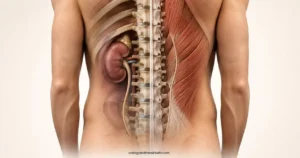
Kidney Stones in Young Adults: It’s Not Just Dehydration
Kidney stones in young adults are rising fastest in the under-30 group, and a stone at 27 is a longer, more metabolic problem than the same stone at 60. Here is what the data actually shows, and what to ask for.

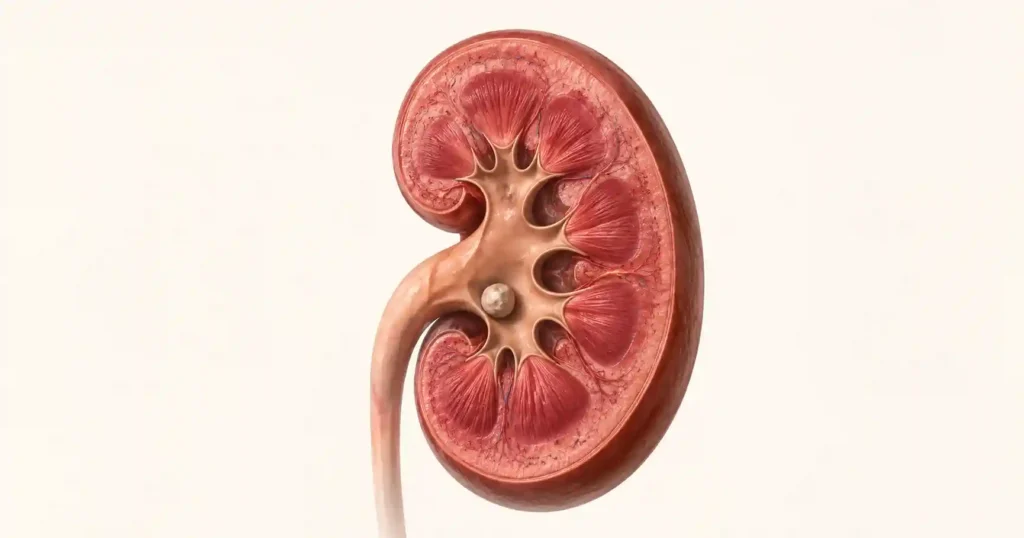
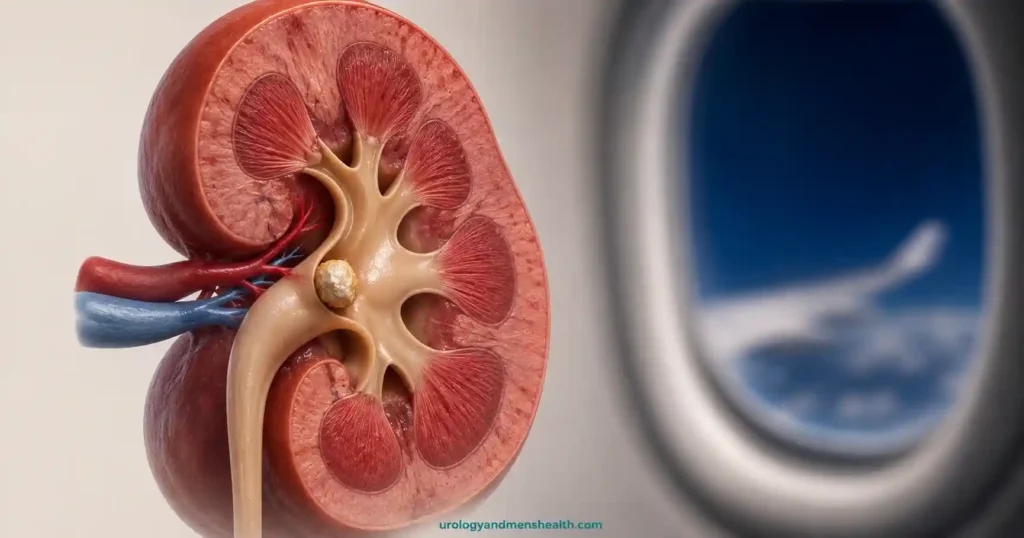
Kidney stones in young adults used to be the case I presented at teaching rounds because it was unusual. Now it is a Tuesday. The patients I meet doubled over in the emergency room with a 4 mm stone jammed at the vesicoureteric junction are increasingly 24, 28, 31 — not 55. That shift is measurable, not an impression, and it has been running for three decades. But the part that matters more than the headline is this: a first stone at 27 is a fundamentally different clinical problem from a first stone at 62, and it is almost always treated as though it were the same. Younger stone formers are handed a discharge letter, told to drink more water, and sent home. That advice is not wrong. It is radically incomplete — because the recurrence clock has forty years left to run, and because a stone at that age is frequently the first visible sign of a metabolic problem nobody has yet looked for. For the full overview of stone disease, see our Kidney Stones Hub.
Key Takeaways
- In the largest US state-wide dataset, stone incidence rose fastest in 15 to 19 year olds — 26% every five years — while incidence in adult men stayed flat.
- Younger age at first stone is an independent predictor of a second symptomatic episode in the ROKS model, so a stone at 25 carries more forward risk than the same stone at 65.
- Roughly one in three first-time stone formers has another symptomatic episode within ten years, and most never receive any metabolic evaluation at all.
- The prevention target is a measured urine output above 2.5 liters (about 85 fl oz) per day — an output you check with a jug once, not a fluid intake you estimate.
Kidney Stones in Young Adults Are Rising, and the Data Is Specific
The cleanest population evidence comes from South Carolina, where researchers tracked every emergency visit, admission and stone surgery in a population of 4.6 million people from 1997 to 2012 [1]. Overall annual incidence climbed modestly, from 206 to 239 cases per 100,000 people. That headline number hides the interesting part.
Broken down by age, incidence in 15 to 19 year olds rose 26% every five years. In adult men it did not rise at all — it stayed flat across the entire sixteen-year window. In women it rose 15% every five years. By the end of the study, the risk of forming a stone during childhood had doubled, and lifetime risk for women had climbed 45%.
National prevalence data points the same direction. Analysis of six NHANES cycles found age-standardized stone prevalence in US adults rising from 9.4% in 2007 to 2008 to 10.2% by 2017 to 2020, with the sharpest climb among adults carrying obesity — from 11.0% to 12.5% [2]. The AUA now puts lifetime risk at roughly one in nine US adults.
So when a 29-year-old asks me whether he is a statistical fluke, the honest answer is no. He is the demographic where the curve is steepest.
Why Your Kidneys Are Making Stones at 27
Urine is a solution carrying calcium, oxalate, phosphate and uric acid at concentrations that would not stay dissolved in a glass of water on your desk. It stays liquid for two reasons: there is enough volume to keep everything in solution, and there are inhibitor molecules — citrate above all — that physically coat crystal surfaces and stop them growing. Take away volume, take away citrate, and crystals nucleate on the renal papilla within hours. Four things are eroding that margin in people under 40.
Chronically low urine volume
This is still the single commonest contributor, and modern working life is built to produce it. Air-conditioned offices mask thirst. Coffee and energy drinks displace water rather than adding to it. Gym sessions generate sweat losses that never get replaced, because the person feels fine an hour later. None of these individually causes a stone. Together they hold urine output at 900 mL to 1.2 liters a day for years, which is roughly half of what stone-forming kidneys need.
Heat, and how fast it acts
A time-series analysis of 60,433 stone patients across five US cities found that a mean daily temperature of 30°C (86°F) carried a cumulative relative risk of stone presentation 1.38 times that of a 10°C (50°F) day in Atlanta, with comparable figures in Chicago, Dallas and Philadelphia [3]. The striking finding was the lag: in four of the five cities the strongest association appeared within three days. That is not a seasonal drift. That is a heat wave on Monday producing renal colic by Thursday. We cover the mechanism and the recurrence implications in how climate and heat exposure drive stone recurrence.
The diet pattern, not one villain food
A UK Biobank cohort of 166,427 adults followed for 1.5 million person-years found that people in the highest tertile of ultra-processed food intake had a 24% higher incidence of kidney stones than those in the lowest [4]. The mechanism is not mysterious. Sodium and calcium are reabsorbed together in the proximal tubule, so a high-salt day is also a high-urinary-calcium day. Fructose raises uric acid production. And a diet built on packaged food is almost always low in the potassium and citrate that would otherwise inhibit crystal growth.
Metabolic health arriving twenty years early
An NHANES analysis staging 15,568 adults by the American Heart Association cardiovascular-kidney-metabolic framework found stone prevalence climbing stepwise with stage — 5.10% at stage 0, rising to 16.55% at stage 4, with an adjusted odds ratio of 2.36 [5]. Insulin resistance impairs the kidney’s ability to produce ammonia, which is how it normally buffers acid. Less ammonia means a more acidic urine, and uric acid is nearly insoluble below a urine pH of 5.5. That is the pathway by which a 30-year-old with early insulin resistance grows uric acid stones that a textbook would place in a 60-year-old.
A Stone at 25 Is a 40-Year Problem
The Mayo Clinic group followed 2,239 adults through their first symptomatic stone episode and onward through 2012, building what became the ROKS nomogram [6]. Their recurrence figures are the numbers I quote to every young patient.
| Years after first stone | Symptomatic recurrence |
|---|---|
| 2 years | 11% |
| 5 years | 20% |
| 10 years | 31% |
| 15 years | 39% |
Now read those figures as a person in their twenties. Nearly two in five stone formers are back in an emergency room within fifteen years — and younger age at first stone was one of the independent predictors of recurrence in the model, alongside male sex, family history, and uric acid stone composition. Across nomogram quintiles, ten-year recurrence ranged from 12% at the low end to 56% at the high end. A young man with a family history and a uric acid stone is not sitting near 31%. He is sitting near 56%, and his clock does not stop at fifteen years.
The ROKS authors opened their paper by noting that most first-time stone formers undergo limited evaluation and few receive any preventive therapy. A decade on, that is still what I see. You can estimate where you sit using our kidney stone recurrence risk profiler, which is built on the ROKS variables.
In My Practice
The case that changed how I counsel young stone formers was a 26-year-old software engineer who came through the emergency department three separate times in fourteen months. Each visit he got intravenous fluids, tamsulosin, an analgesic prescription and a discharge letter. Nobody had ever asked him to strain his urine. On the fourth admission we finally caught a fragment and sent it: pure uric acid. His fasting glucose was borderline, his urine pH sat at 5.2 on every sample, and within four months of starting potassium citrate his residual stone burden on ultrasound had visibly shrunk. He spent well over a year being managed for the wrong disease because nobody collected the evidence.
In a young stone former, the stone itself is the most informative test you will ever get for free, and it is the one most often flushed away.
Getting stones before 40? Get the first-stone workup checklist — what to request, in what order, and when
Enter your email below to receive Dr. Khalid’s complete 7-Day Kidney Stone Prevention Meal Plan as a free, printable PDF.
What a Proper Workup Looks Like, and What You Will Probably Be Offered Instead
The AUA published a fully revised medical management guideline in July 2026 covering evaluation, dietary management, drug therapy and follow-up [7]. Four things follow from it that a young patient should push for by name.
1. Catch the stone. Strain every void through a filter until the stone passes, put it in a dry container — not water — and hand it to your doctor for compositional analysis. Calcium oxalate, uric acid, cystine and struvite stones have almost nothing in common therapeutically. Without a composition you are being treated on a guess.
2. Get the basic labs, including urine pH. Ask for serum creatinine and eGFR, calcium, uric acid, and electrolytes including bicarbonate, plus a urinalysis that actually reports pH. A urine pH persistently at or below 5.5 points hard at uric acid stones — which matters enormously, because uric acid stones can often be dissolved with oral alkalinization rather than operated on.
3. Argue for a 24-hour urine collection. Guidelines reserve this for recurrent or high-risk formers, and many primary care doctors read a single stone in a 28-year-old as low-risk. I would argue the opposite: a first stone that early is itself the high-risk category, because of the decades of exposure ahead. The sentence to use is: given my age at first stone and my recurrence risk over the next thirty years, do I meet criteria for a 24-hour urine collection? We break down what each value on that report means in our guide to the metabolic workup for recurrent stones.
4. Protect yourself from cumulative radiation. Non-contrast CT KUB is the correct scan in an acute obstructing episode. It is the wrong scan to repeat every time you feel a twinge over the next thirty years. Ask that routine surveillance be done with ultrasound, and that any repeat CT be a low-dose protocol. This is a far bigger consideration at 27 than at 67.
What Actually Moves the Numbers in Your 20s and 30s
Measure output, do not estimate intake. The long-standing AUA target is a urine output above 2.5 liters a day (about 85 fl oz, or 10 cups). Once — one single weekday — collect everything you pass into a marked jug and read the total. Almost everyone who assumed they were drinking enough discovers they are at 1.4 liters. Once you know your gap, our hydration calculator for stone prevention converts it into a daily intake target adjusted for your climate and activity.
Cut sodium, not calcium. Aim under 2,300 mg of sodium a day (about one teaspoon of table salt), which mostly means cutting packaged food rather than the salt shaker. And do not restrict dietary calcium — this is the most common self-inflicted error I encounter. Keep 1,000 to 1,200 mg a day from food, eaten with meals, because calcium in the gut binds oxalate into an insoluble complex that leaves in the stool instead of reaching your kidney. People who cut dairy after a stone reliably make their oxalate excretion worse.
Moderate oxalate rather than eliminating it. Spinach, almonds, beets and rhubarb are worth reducing. Pairing them with a calcium-containing food at the same meal blunts absorption more effectively than avoidance does, and it is far more sustainable over decades.
Treat the metabolic driver, because it is the same driver. Given the stepwise relationship between cardiovascular-kidney-metabolic stage and stone prevalence, weight, blood pressure, fasting glucose and lipids are not a separate project from stone prevention. In a 32-year-old with a uric acid stone, borderline glucose and a urine pH of 5.2, the stone is a symptom and the insulin resistance is the disease.
When to Go to the ER, Not Wait for an Appointment
Renal colic is usually painful but not dangerous. These specific combinations are dangerous and need emergency assessment the same day:
- Fever or shaking chills alongside flank pain. An infected, obstructed kidney can progress to sepsis within hours and needs urgent drainage, not antibiotics alone.
- Pain that oral analgesia will not control, or vomiting severe enough that you cannot keep fluids down.
- Any suspected stone if you have a single functioning kidney or a transplanted kidney. There is no reserve to fall back on.
- Passing little or no urine over several hours while in pain, which suggests obstruction affecting both sides.
Frequently Asked Questions
Are kidney stones in young adults usually caused by dehydration alone?
Rarely. Low urine volume is the most common single contributor, and it is present in most young stone formers, but it is seldom the whole picture. Ultra-processed diet patterns, high sodium load, early insulin resistance and heat exposure all stack on top of it. If drinking more water were sufficient, recurrence rates in people who were told to drink more water would not still sit near one in three at ten years.
Does a kidney stone at 25 mean I will definitely get another one?
Not definitely, but the odds are worse than most people are told. In the Mayo cohort, 20% of first-time formers had a second symptomatic episode within five years and 31% within ten. Younger age at first stone was itself an independent predictor of recurrence, and across risk quintiles ten-year recurrence ranged from 12% to 56%. Where you fall depends on family history, stone composition and whether anyone looked for a metabolic cause.
Should I ask for a 24-hour urine test after my first stone?
I think a first stone before 40 justifies asking, even though guidelines formally reserve the test for recurrent or high-risk formers. The reasoning is exposure time: a treatable abnormality found at 28 gets corrected for four decades, whereas the same finding at 68 gets corrected for one. Ask directly whether your age at first stone qualifies you, and ask for the collection to be done at least six weeks after the acute episode, on your normal diet.
Do energy drinks and pre-workout supplements cause kidney stones?
Not directly, but they contribute in two ways. First, they displace plain water, so total urine volume falls even though total fluid intake looks adequate. Second, many carry a substantial fructose and sodium load, which raises uric acid production and urinary calcium respectively. High-dose vitamin C is a separate concern: ascorbate is metabolized to oxalate, so gram-level daily supplements raise urinary oxalate in people already prone to calcium oxalate stones.
When should I see a urologist instead of my primary care doctor about stones?
Go straight to urology for a second stone episode, a stone that has not passed after four to six weeks, any stone larger than 5 mm on imaging, a single functioning kidney, or a stone found alongside a urinary infection. Primary care can reasonably manage a first small passing stone and order the initial labs. Our guide to when a young man should see a urologist covers the wider set of symptoms that warrant specialist referral.
References
- Tasian GE, Ross ME, Song L, et al. Annual Incidence of Nephrolithiasis among Children and Adults in South Carolina from 1997 to 2012. Clin J Am Soc Nephrol. 2016;11(3):488-496. PubMed
- Li W, Huang J, Liu Z, et al. Trends in the prevalence of kidney stones among U.S. adults with obesity from 2007 to 2020. Int J Surg. 2025;111(9):5843-5851. PubMed
- Tasian GE, Pulido JE, Gasparrini A, et al. Daily mean temperature and clinical kidney stone presentation in five U.S. metropolitan areas: a time-series analysis. Environ Health Perspect. 2014;122(10):1081-1087. PubMed
- Bai S, Zhang Y, Liu Y, et al. Ultra-processed food, genetic predisposition, and the risk of kidney stone: a population-based prospective cohort study. Eur J Nutr. 2025;64(2):103. PubMed
- Lu G, Tian J, Shi F, et al. Association of cardiovascular-kidney-metabolic syndrome stages with kidney stone prevalence: a population-based analysis of NHANES 2007-2020. BMJ Open. 2025;15(5):e096533. PubMed
- Rule AD, Lieske JC, Li X, et al. The ROKS nomogram for predicting a second symptomatic stone episode. J Am Soc Nephrol. 2014;25(12):2878-2886. PubMed
- Pearle MS, Matlaga BR, Antonelli JA, et al. Medical Management of Kidney Stones: AUA Guideline (2026), Part I and Part II. J Urol. Published online July 30, 2026. AUA
Dr. Muhammad Khalid
MBBS · FCPS (Urology) · MCPS (General Surgery) · CHPE · CRSM · IMC #539472
Specialist urologist with 11+ years of clinical experience across tertiary teaching hospitals. Trained at Lady Reading Hospital and Khyber Teaching Hospital, Peshawar. Author or co-author of five peer-reviewed international publications, including in Cureus and the World Journal of Surgery. Procedural expertise: URS, PCNL, RIRS, TURP, TURBT, and major open urological surgery. Full profile →
This article is for educational purposes only and does not constitute medical advice. Always consult your physician or urologist for diagnosis and treatment decisions specific to your condition.