When Should a Young Man See a Urologist? 7 Signs
Most men under 40 assume urology starts at 50 with a prostate check. The conditions I most regret seeing late — torsion, a testicular lump, silent blood — peak decades earlier. Here is when to actually go.

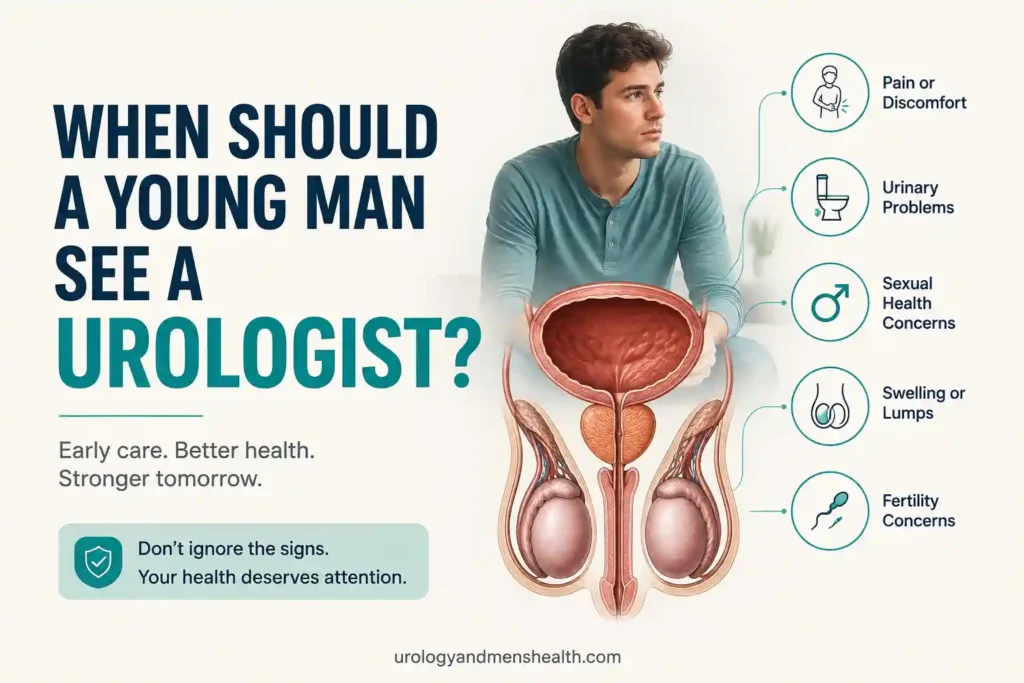
When should a young man see a urologist? Earlier than almost anyone under 40 believes. The specialty carries a reputation as something that begins at 50 with a prostate check, and that reputation costs men testicles, fertility, and occasionally lives. The conditions I most regret seeing late — testicular torsion, testicular cancer, an infection that climbed from the urethra into the epididymis — all peak between the ages of 15 and 40. Meanwhile the disease young men fear most, prostate cancer, is close to unheard of before 50. That mismatch between what men worry about and what actually threatens them is the biggest single problem in men’s urological health. Below are the specific symptoms that justify an appointment, the four that mean the emergency room tonight, and what actually happens once you are in the chair. For the wider picture on screening and preventive checks, see the Men’s Wellness Hub.
Key Takeaways
- Sudden severe testicular pain is a surgical emergency — in one tertiary pediatric series, symptom duration under six hours was the only factor that independently predicted saving the testicle.
- Testicular cancer is a young man’s disease: the average age at diagnosis is about 33, and five-year survival is roughly 99% while it is still confined to the testicle.
- Visible blood in the urine needs assessment even if it happens once and clears — painless bleeding is the pattern men ignore and the pattern that matters.
- Prostatitis-type pelvic pain is one of the most common reasons young men reach a urology clinic, and in this age group it is almost never cancer.
When Should a Young Man See a Urologist? The Two-Week Rule
I use a three-tier rule in clinic, and I teach it to every junior doctor who rotates through my service, because it removes the guesswork that keeps men at home.
Tier one — go now. Anything sudden and severe below the belt is an emergency until proven otherwise. Sudden means you can name the hour it started. Severe means it stops you doing what you were doing. These do not get an appointment; they get an emergency department.
Tier two — the two-week rule. Any urological symptom that is still there after fourteen days, or that keeps coming back after settling, has stopped being a passing irritation and has become a pattern. Patterns need a diagnosis. Two weeks is long enough for a self-limiting viral or mechanical cause to resolve, and short enough that nothing progresses meaningfully while you wait.
Tier three — the pain-free exceptions. Three findings need assessment no matter how good you feel: visible blood in the urine or semen, a lump or new firmness in a testicle, and any discharge from the penis. Pain is the body’s alarm for pressure and inflammation. Tumors do not create pressure early, and they do not inflame anything. That is precisely why they get missed.
The failure mode I see repeatedly is a young man applying tier-two thinking to a tier-one or tier-three problem — waiting out a symptom that was never going to declare itself through pain.
Go to the ER Tonight: Four Emergencies That Cannot Wait
The first is testicular torsion. The spermatic cord — the bundle carrying the testicular artery, veins and vas deferens — twists on its own axis and strangles the testis’s blood supply. It is most common between the ages of 12 and 25, often wakes a man from sleep, and is frequently accompanied by nausea or vomiting because the testis shares nerve supply with the gut. The clock is unforgiving. In a five-year review of 114 boys and young men at a tertiary pediatric center, the testis could only be saved in 55.3% of cases overall, and on multivariate analysis symptom duration under six hours was the only factor that independently predicted salvage [2]. If you are reading this at 2am with new testicular pain, stop reading and go — the full presentation is set out in our guide to the six-hour torsion emergency window.
The second is an erection lasting more than four hours without sexual arousal, known as priapism. Trapped blood becomes deoxygenated and acidic, and the erectile tissue begins to scar. Beyond roughly 24 hours, permanent erectile dysfunction is the usual outcome. It is a recognized complication of sickle cell disease, of injected erection therapies, and of certain recreational drugs.
The third is complete inability to pass urine with a painful, distended bladder. Not slow flow, not hesitancy — nothing at all, with rising lower abdominal pain. In a young man this is unusual and often signals a urethral stricture, a neurological problem, or severe prostatic infection. Left long enough, back-pressure damages the kidneys.
The fourth is fever with one-sided flank pain and burning urination. That combination suggests infection has ascended to the kidney. In men it also implies something structural is allowing it, so it needs intravenous antibiotics and imaging rather than a repeat prescription.
When to Go to the ER, Not the Waiting List
Do not book an appointment for any of these. Present the same day, and say the words “sudden testicular pain” at the desk — they will move you.
- Sudden severe pain in one testicle, with or without nausea or vomiting
- A testicle that has ridden up higher than usual or sits horizontally
- An erection lasting longer than four hours without arousal
- Complete inability to pass urine with a painful, swollen lower abdomen
- Fever above 38°C (100.4°F) with one-sided back or flank pain
- Scrotal pain with rapidly spreading redness, swelling and feeling systemically unwell
Seven Symptoms That Warrant a Urology Appointment
1. A painless lump or new firmness in a testicle. This is the highest-stakes item on the list and the one most often deferred, because it does not hurt. Testicular cancer is the most common solid tumor in men aged roughly 20 to 40, the average age at diagnosis is about 33, and about one man in 250 will develop it in his lifetime [1]. The reason to move quickly is not fear — it is that five-year survival is around 99% while the disease is still confined to the testis, and drops substantially once it has spread. Ask for a scrotal ultrasound within one week; it is quick, painless, and settles the question. Our full walkthrough of what a testicular lump feels like and how the self-exam is done covers the technique in detail.
Step-by-step tool: how to examine your own testicles properly →2. Blood in the urine, even once. Visible (gross) hematuria is the one that gets rationalized away, usually as dehydration or gym effort. It should not be. The AUA/SUFU microhematuria guideline (2020, amended 2025) is explicit that visible blood carries a materially higher malignancy yield than microscopic blood and warrants full evaluation, and that new gross hematuria after a previously negative workup restarts the process [4]. In a 25-year-old the eventual answer is usually a stone, an infection, or vigorous exercise — but that conclusion is reached by testing, not by assumption. Ask for a urinalysis with microscopy plus a renal and bladder ultrasound.
3. Discharge from the penis or burning that started after a new partner. Urethritis in a sexually active young man is a testing problem, not a guessing problem. The CDC’s 2021 treatment guidelines recommend nucleic acid amplification testing on a first-catch urine sample for chlamydia and gonorrhea, and presumptive treatment at the point of diagnosis rather than waiting [7]. Untreated, it can ascend to the epididymis. Ask for first-void urine NAAT testing within a week of symptoms starting, and do not accept a blind antibiotic course with no swab or sample taken.
4. Pelvic, perineal or ejaculatory pain lasting more than a month. Pain felt between the scrotum and anus, or a persistent ache after ejaculation, usually turns out to be chronic prostatitis or chronic pelvic pain syndrome. It is common: in Collins and colleagues’ 1998 analysis of US National Ambulatory Medical Care Survey data, prostatitis was recorded at roughly two million office visits a year, about 0.7 million of them by men aged 18 to 50 [3]. It is also chronically mismanaged with repeated antibiotic courses when fewer than one in ten cases is bacterial. Our detailed piece on why young men with prostatitis fear cancer and what the pain actually means explains the mechanism.
5. A dull dragging ache with a “bag of worms” texture above one testicle. That is the classic description of a varicocele — dilated veins of the pampiniform plexus, usually on the left. It is found in around 15% of otherwise healthy men and up to about 35% of men presenting with primary infertility [6]. Most need nothing. It matters when it causes persistent pain, visible size difference between the testicles, or abnormal semen parameters.
6. Erection difficulty persisting beyond three months. Occasional failure is normal physiology and usually situational. A consistent three-month pattern in a man under 40 is worth investigating, because the penile arteries are narrow and often show endothelial disease before the coronary arteries do. This is not a cosmetic complaint — it is sometimes the earliest available cardiovascular signal.
7. Twelve months of unprotected intercourse without conception. The AUA/ASRM male infertility guideline defines infertility as failure to achieve pregnancy after twelve months or more of regular unprotected intercourse, and male factor contributes in roughly half of affected couples [5]. Ask for a semen analysis at the twelve-month mark — sooner if there is a history of undescended testis, prior chemotherapy, or testicular surgery. Men are routinely investigated months after their partner, which wastes the easiest test in reproductive medicine.
In My Practice
The case I think about most was a 22-year-old woken at 3am by testicular pain. He took two paracetamol and went back to sleep because the pain eased by morning. He came to clinic eleven days later with a firm, high-riding, non-tender testis. It had twisted, untwisted, and twisted again — and by the time I explored him surgically, there was nothing left to save. He had not been reckless. He had simply assumed that pain which improves cannot be serious.
Pain that resolves on its own does not rule out torsion: intermittent torsion is a recognized pattern, and the salvage window closes quietly while the pain is easing.
Get the Men's Health Screening Checklist: what to test, and at what age
Enter your email below to receive Dr. Khalid’s complete Men’s Health Screening Checklist as a free, printable PDF.
The Things Young Men Wrongly Assume Are Normal
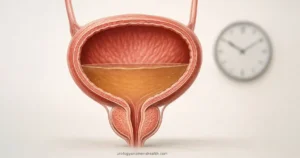
Urinating more than ten times a day at 25. A healthy adult bladder holds around 400–500 mL (roughly 14–17 fl oz) and empties six to eight times in 24 hours. Ten or more, with urgency, is not a small bladder — it is an overactive one, or a sign of high caffeine intake, undiagnosed diabetes, or incomplete emptying. It is measurable and usually treatable.
Waking more than once a night to urinate. At 25 the answer should be zero, occasionally one. Two or more nightly episodes in a young man points toward fluid timing, obstructive sleep apnea, or a bladder that is not emptying fully — not toward “just how I am”.
Persistent low energy, poor morning erections and reduced libido together. That triad is not a personality trait, and it is not automatically overwork. In young men it clusters with obesity and metabolic syndrome, where excess adipose tissue converts testosterone into estradiol and suppresses the hormonal axis. Request a total testosterone drawn before 10am on two separate mornings — a single afternoon sample is close to useless. The link is set out in our piece on how body fat drives down testosterone and erectile function.
Recurrent urinary infections. In women, recurrence is common and often uncomplicated. In men it is not. A young man with two or more culture-confirmed infections in six months needs a structural explanation — incomplete emptying, a stone, a stricture, or an untreated prostatic focus. Repeat prescriptions without imaging is how these get missed for years.
Sharp pain with ejaculation, brushed off as “getting older”. At 30 that phrase means nothing. Painful ejaculation usually reflects prostatic or seminal vesicle inflammation, and it responds far better to early treatment than to a year of stoicism.
What Actually Happens at the Appointment
Most of the avoidance I encounter is not about the symptom. It is about the imagined examination. So here is the actual sequence for a man under 40.
- History, roughly ten minutes. Onset, pattern, sexual history, medications, gym supplements, prior surgery. Answer the sexual history questions accurately — vague answers produce vague investigations.
- Urine sample. Dipstick immediately, microscopy and culture if indicated. First-catch urine if a sexually transmitted infection is on the table.
- Physical examination. Abdomen, then a standing and lying scrotal and penile exam lasting under two minutes. A digital rectal examination is selective, not routine, in this age group — I perform one when prostatitis or pelvic pain is the presenting problem, not for a testicular lump or hematuria.
- Scrotal ultrasound. Ordered same-day for any lump, and often performed in the clinic. Painless, no needles, no radiation.
- Targeted next step. Semen analysis, morning testosterone, a swab, a flow rate with post-void residual, or a discharge with a plan. You should leave knowing what is being tested and when you will hear back.
Bring three things: a list of every symptom with the date it started, any prior urine or blood results on your phone, and the names of any supplements or performance products you take. Undeclared supplements account for more unexplained hormone results in men under 35 than any other cause I encounter. If you want to build that record before you go, our personalized men’s health screening checklist generator produces an age-specific list you can print and take with you.
The screening picture changes at 40 — here is what gets added →Frequently Asked Questions
When should a young man see a urologist instead of his primary care doctor?
Start with primary care for burning urination, a first urinary infection, or general health screening. Go straight to a urologist for anything involving the testicles, visible blood in urine or semen, erection problems lasting beyond three months, or fertility concerns. These need a scrotal examination and often an ultrasound on the same visit. Building a personalized screening list first makes the referral conversation faster.
Is testicular pain that comes and goes still an emergency?
Yes, and this is the most dangerous misconception I encounter. Intermittent torsion is a recognized pattern in which the cord twists, spontaneously untwists, and twists again. Each episode damages the testis, and the salvage window closes while the pain is easing. Any episode of sudden severe testicular pain, even one that resolves, needs same-day assessment for testicular torsion.
I am in my twenties and my erections have become unreliable. Is that really a urology problem?
If the pattern has lasted longer than three months, yes. Penile arteries are narrower than coronary arteries, so endothelial dysfunction often shows up there first. In men under 40 the usual drivers are metabolic rather than psychological, particularly the cluster of excess body fat, suppressed testosterone and erectile difficulty. Request a fasting glucose, lipid panel and two morning testosterone levels.
Will a urologist do a prostate exam on a man in his twenties?
Not routinely. A digital rectal examination is selective in this age group and is reserved mainly for suspected prostatitis or unexplained pelvic pain, where prostate tenderness genuinely changes the diagnosis. It is not performed for a testicular lump, blood in the urine, or fertility assessment. If pelvic pain is your main symptom, our guide to prostatitis in young men explains why the exam is useful there.
How often should a young man check his own testicles?
Once a month, after a warm shower when the scrotal skin is relaxed. You are feeling for a firm lump on the surface of the testis itself, or a change in size or weight compared with last month. The epididymis at the back feels lumpy and soft in everyone. Our testicular self-exam walkthrough shows the technique properly.
References
- American Cancer Society. Key Statistics for Testicular Cancer. Revised 2026. American Cancer Society
- Ramachandra P, Palazzi KL, Holmes NM, Marietti S. Factors influencing rate of testicular salvage in acute testicular torsion at a tertiary pediatric center. West J Emerg Med. 2015;16(1):190-4. PubMed
- Collins MM, Stafford RS, O’Leary MP, Barry MJ. How common is prostatitis? A national survey of physician visits. J Urol. 1998;159(4):1224-8. PubMed
- American Urological Association / SUFU. Microhematuria: AUA/SUFU Guideline (2020, amended 2025). AUA
- American Urological Association / ASRM. Diagnosis and Treatment of Infertility in Men: AUA/ASRM Guideline (2020, amended 2024). AUA
- Alsaikhan B, Alrabeeah K, Delouya G, Zini A. Epidemiology of varicocele. Asian J Androl. 2016;18(2):179-81. PubMed
- Workowski KA, Bachmann LH, Chan PA, et al. Sexually Transmitted Infections Treatment Guidelines, 2021. MMWR Recomm Rep. 2021;70(4):1-187. CDC
Dr. Muhammad Khalid
MBBS · FCPS (Urology) · MCPS (General Surgery) · CHPE · CRSM · IMC #539472
Specialist urologist with 11+ years of clinical experience across tertiary teaching hospitals. Trained at Lady Reading Hospital and Khyber Teaching Hospital, Peshawar. Author or co-author of five peer-reviewed international publications, including in Cureus and the World Journal of Surgery. Procedural expertise: URS, PCNL, RIRS, TURP, TURBT, and major open urological surgery. Full profile →
This article is for educational purposes only and does not constitute medical advice. Always consult your physician or urologist for diagnosis and treatment decisions specific to your condition.