Mens Health Checklist: 5 Tests You Need After 40
Patients hitting their 40s usually assume that if nothing hurts, they don't need to see a doctor. The dangerous reality is that the most lethal conditions in men—like prostate cancer, kidney disease, and hypertension—operate completely silently for years. Waiting until you actually feel sick means waiting until the damage is already severe. Here is the exact, evidence-based checklist of five tests you need to catch these silent threats while they are still entirely fixable.

Most men over 40 don’t have a mens health checklist — they have a vague intention to “see the doctor sometime.” Then something hurts, and by the time pain drives you into a clinic, the condition has often been developing silently for years. Prostate cancer, hypertension, chronic kidney disease, low testosterone, and type 2 diabetes all share one dangerous trait: they give you no symptoms until the damage is already significant.
I don’t say this to frighten you. I say it because a 30-minute appointment and a few blood tests at age 40 can catch problems that are treatable, manageable, or even reversible — if found early. The same conditions discovered at 55 or 60, after years of silent progression, often mean more aggressive treatment, more medication, and worse outcomes.
This is not a generic “eat well and exercise” article. This is the specific, evidence-based screening checklist I use with my own patients — the exact tests I recommend, at what ages, and why each one earns its place on the list. Five tests. Thirty minutes. The best investment in your health you’ll ever make.
Key Takeaways
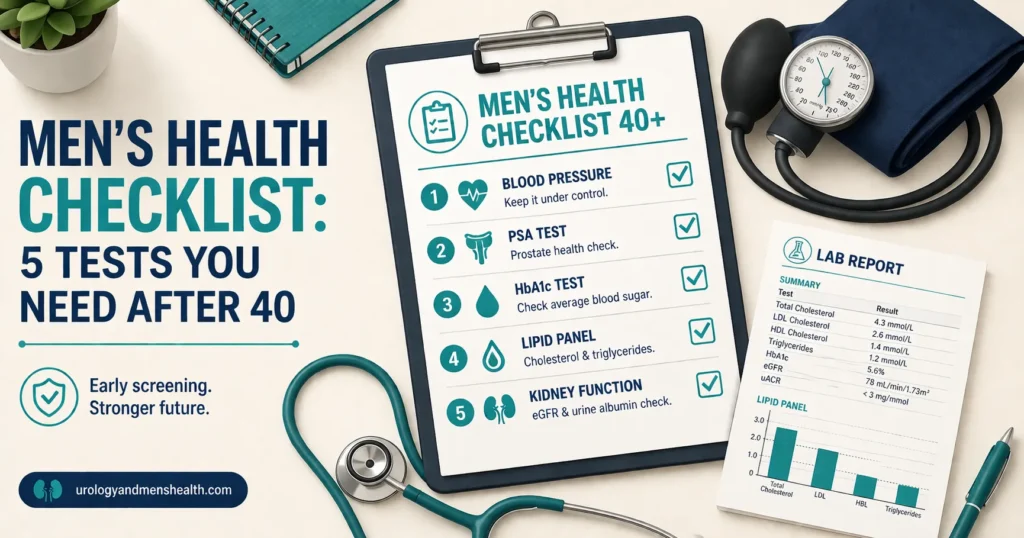
- The 5 essential tests for men over 40 are: blood pressure, PSA (with shared decision-making), blood glucose/HbA1c, lipid panel, and kidney function (creatinine/eGFR/uACR).
- Blood pressure should be checked at least annually — hypertension is the single biggest silent killer and is fully treatable.
- PSA screening is not a simple yes/no — it requires a shared decision between you and your doctor, weighing your age, family history, and risk tolerance.
- Testosterone testing should be considered if you have symptoms (fatigue, low libido, mood changes) — it is not a routine screening test for asymptomatic men.
- Kidney function is rarely checked proactively, yet CKD affects about 1 in 7 US adults and produces no symptoms until advanced stages.
- Men are about 24% less likely than women to have visited a doctor in the past year (CDC data) — this gap directly contributes to later diagnoses and worse outcomes [1].
- A single 30-minute screening appointment establishes your baseline — future changes are only meaningful if you know where you started.
Test 1: Blood Pressure — The 2-Minute Test That Saves More Lives Than Any Other
If you have time for only one test, make it this one. Hypertension kills more people worldwide than any other modifiable risk factor — more than smoking, more than obesity, more than alcohol [2]. And the cruel trick is that it produces zero symptoms until it has already caused organ damage. There is no headache, no dizziness, no warning sign. Your blood pressure could be 170/100 mmHg right now and you would feel perfectly fine.
The definition of hypertension has been refined over recent years. The 2017 ACC/AHA guidelines used in the US define stage 1 hypertension as a sustained reading of ≥130/80 mmHg, while the European ESH 2023 guidelines use a slightly higher threshold of ≥140/90 mmHg with a treatment target of <130/80 mmHg for most patients [3]. For men with established kidney disease or diabetes, the target may be even lower.
What the numbers mean
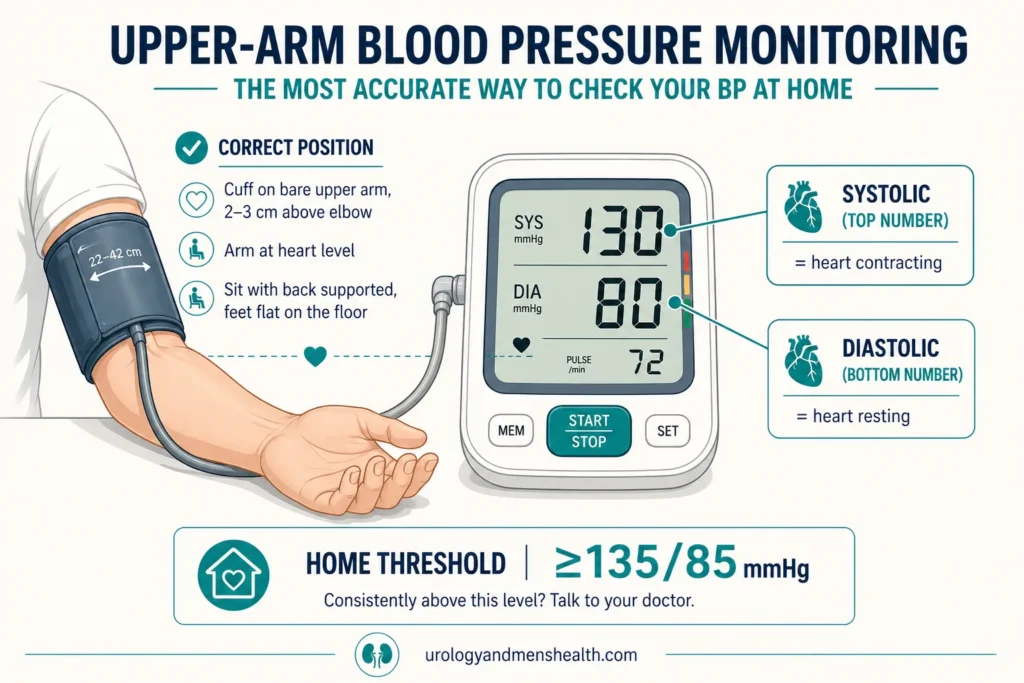
The top number (systolic) measures pressure when your heart contracts. The bottom number (diastolic) measures pressure when your heart relaxes. Both matter, but isolated systolic hypertension (high top number, normal bottom number) becomes increasingly common after age 50 and carries significant cardiovascular risk.
How often to check
At minimum, annually from age 40. If you have any risk factors (family history, overweight, high sodium intake, smoking, ongoing stress), every 6 months. If your reading sits in the borderline 130–139/85–89 mmHg range, your doctor may recommend ambulatory blood pressure monitoring (a 24-hour portable device) to rule out white-coat hypertension.
Home monitoring with a validated upper-arm device is increasingly recommended as a complement to office measurements — and the evidence supports it. The threshold for hypertension on home monitoring is slightly lower: ≥135/85 mmHg. A typical validated US home monitor (Omron 7 Series, A&D Medical UA-651, or similar) costs around $40–$80 and pays for itself within months by sparing unnecessary office visits.
→ Related Read: When Should a Younger Man See a Urologist? — Warning Signs Most Men IgnoreTest 2: PSA (Prostate-Specific Antigen) — The Test That Requires a Conversation
PSA screening is the most debated topic in mens preventive health. Unlike blood pressure (where the evidence for screening is unequivocal), PSA screening involves genuine trade-offs that you and your doctor must weigh together. This is called shared decision-making — and both the AUA (American Urological Association) and EAU (European Association of Urology) make it a formal recommendation [4].
Here is the dilemma: PSA screening can detect prostate cancer early, when it is curable. But it also detects many slow-growing cancers that would never have caused symptoms or death during the patient’s lifetime. Finding these indolent cancers leads to anxiety, biopsies, and sometimes treatment with significant side effects (incontinence, erectile dysfunction) for a disease that did not need treating.
The evidence in brief
The ERSPC trial (the largest randomized PSA screening trial) demonstrated a 20% reduction in prostate cancer mortality with screening over 13 years of follow-up [5]. However, this benefit came at the cost of significant overdiagnosis — an estimated 781 men needed to be invited for screening and 27 cancers detected to prevent one prostate cancer death.
My clinical recommendation
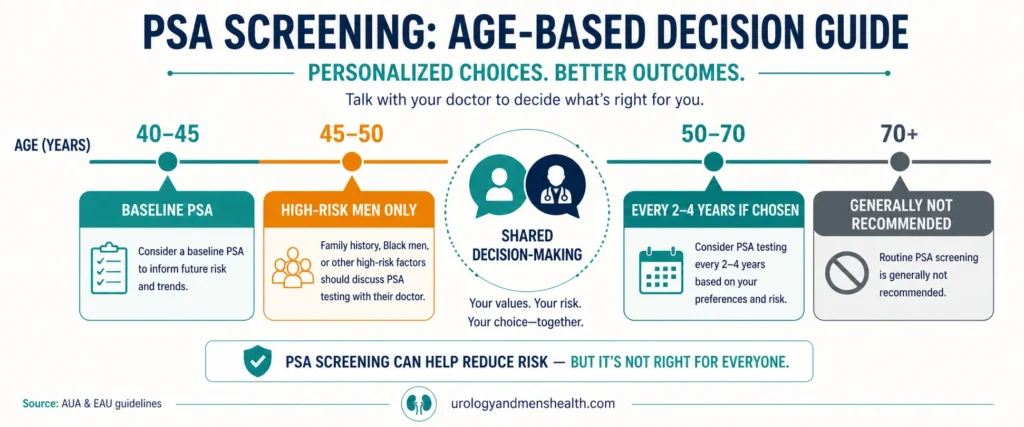
- Ages 40–45: Consider a baseline PSA. This single early measurement is surprisingly powerful — a PSA below 1.0 ng/mL at age 40–45 predicts a very low lifetime risk of aggressive prostate cancer, and these men can safely extend their screening interval to every 5–8 years [6].
- Ages 45–50: Begin the shared decision conversation about regular PSA screening if you have high risk factors: African ancestry (African American men have roughly double the risk and earlier onset), first-degree relative with prostate cancer, or BRCA2 mutation.
- Ages 50–70: PSA screening every 2–4 years for men who choose to be screened after informed discussion. Annual screening is no longer recommended for average-risk men.
- Over 70: Screening is generally not recommended unless life expectancy exceeds 10 years and the patient is well-informed about risks and benefits.
Test 3: Blood Glucose / HbA1c — Catching Diabetes Before It Catches You
Type 2 diabetes has a 5–10 year silent prediabetic phase during which blood sugar is elevated but not high enough for a diabetes diagnosis. During this phase, damage is already happening — to your blood vessels, kidneys, nerves, and eyes. By the time symptoms appear (excessive thirst, frequent urination, blurred vision), the disease has been present for years.
Screening catches diabetes in this silent phase, when lifestyle intervention (diet, exercise, weight loss) can prevent or delay progression to full diabetes by 58% — as shown in the landmark Diabetes Prevention Program trial [7].
What to test and when
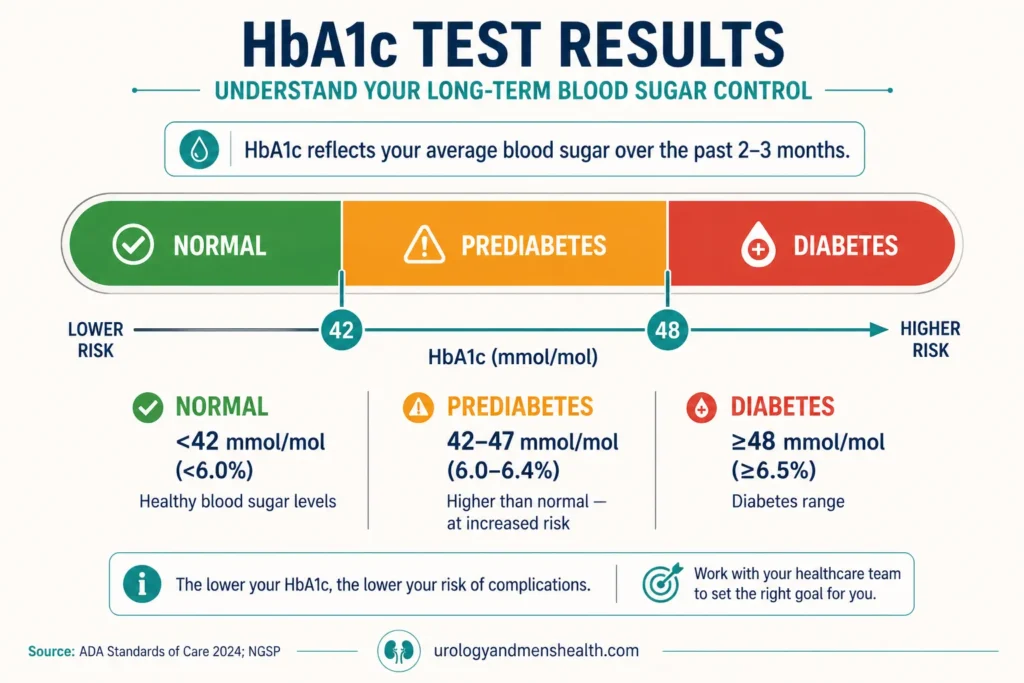
HbA1c (glycated hemoglobin) is the preferred screening test. It measures your average blood sugar over the preceding 2–3 months. No fasting required. Results: normal (below 42 mmol/mol or 6.0%), prediabetes (42–47 mmol/mol or 6.0–6.4%), diabetes (48 mmol/mol or 6.5% and above).
Alternatively, a fasting plasma glucose can be used. Normal: below 5.5 mmol/L (under 100 mg/dL). Prediabetes: 5.6–6.9 mmol/L (100–125 mg/dL). Diabetes: 7.0 mmol/L (126 mg/dL) and above.
Screen every 3 years from age 40. Screen earlier and more often if you have risk factors: overweight or obese (BMI ≥25 kg/m², or ≥23 kg/m² if of South Asian descent), family history of diabetes, South Asian, African American, Hispanic/Latino, or Native American ethnicity (all carry significantly higher risk), gestational diabetes in a partner, or polycystic ovary syndrome in a partner.
Why this matters for urological health specifically
Diabetes is a direct driver of multiple urological conditions: erectile dysfunction (about half of diabetic men develop ED), overactive bladder, recurrent UTIs, and chronic kidney disease. Catching and controlling diabetes early protects not just your heart — it protects your kidneys, your bladder, and your sexual function.
Over 40 and overdue a proper check? Download Dr. Khalid’s Men’s Health Screening Checklist.
Enter your email below to receive Dr. Khalid’s complete Men’s Health Screening Checklist as a free, printable PDF.
Test 4: Lipid Panel — Your Cardiovascular Crystal Ball
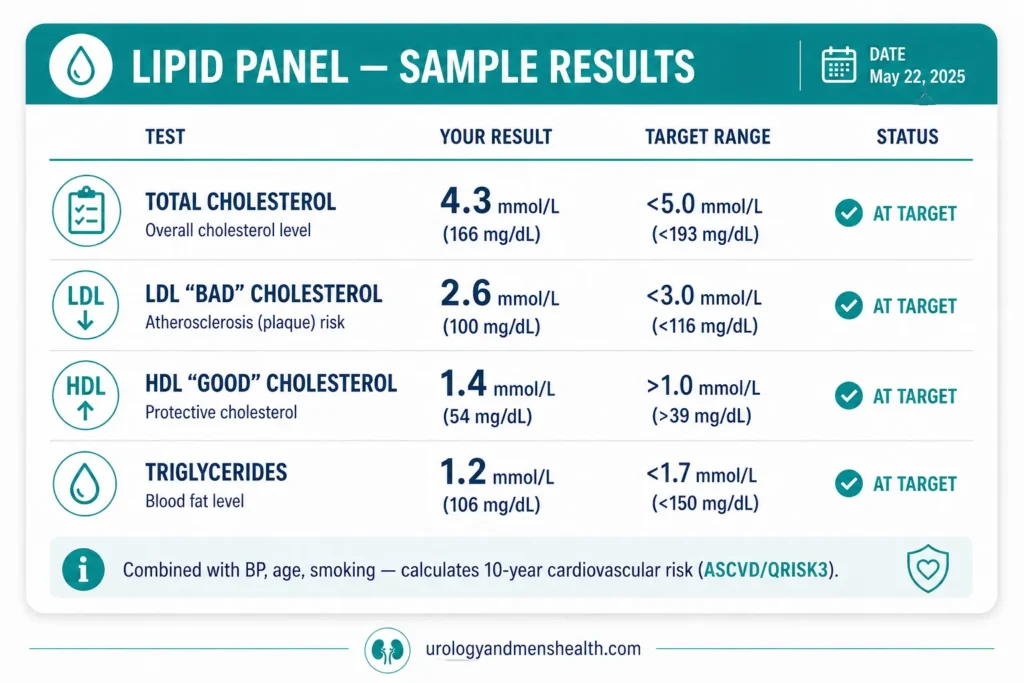
A lipid panel measures total cholesterol, LDL (“bad” cholesterol), HDL (“good” cholesterol), and triglycerides. Together with your blood pressure, these numbers form the basis of your cardiovascular risk assessment — the calculation that determines whether you need statin therapy and how aggressively your risk factors should be managed.
Heart disease remains the #1 killer of men in the US and globally. A lipid panel at 40 establishes your baseline. Combined with your blood pressure, smoking status, family history, and diabetes status, your doctor can calculate your 10-year cardiovascular risk score. In the US, the ACC/AHA ASCVD Risk Calculator is the standard; in Europe, SCORE2 is used; in the UK and Ireland, QRISK3 is preferred [8].
Screen every 5 years from age 40 if your initial results are normal. More often if abnormal or if you have other cardiovascular risk factors.
From a urological perspective, this test matters for a reason most men do not expect: erectile dysfunction is often the earliest sign of cardiovascular disease. The penile arteries are smaller (1–2 mm diameter, around 1/25 inch) than the coronary arteries (3–4 mm, around 1/8 inch), so atherosclerotic plaque narrows them first. ED appearing 3–5 years before a heart attack is a well-documented phenomenon [9]. A lipid panel in a man with new-onset ED is not optional — it is essential.
→ Related Read: Low Testosterone in Men Over 40 — Signs Your Doctor Might MissTest 5: Kidney Function — The Test Nobody Thinks to Ask For
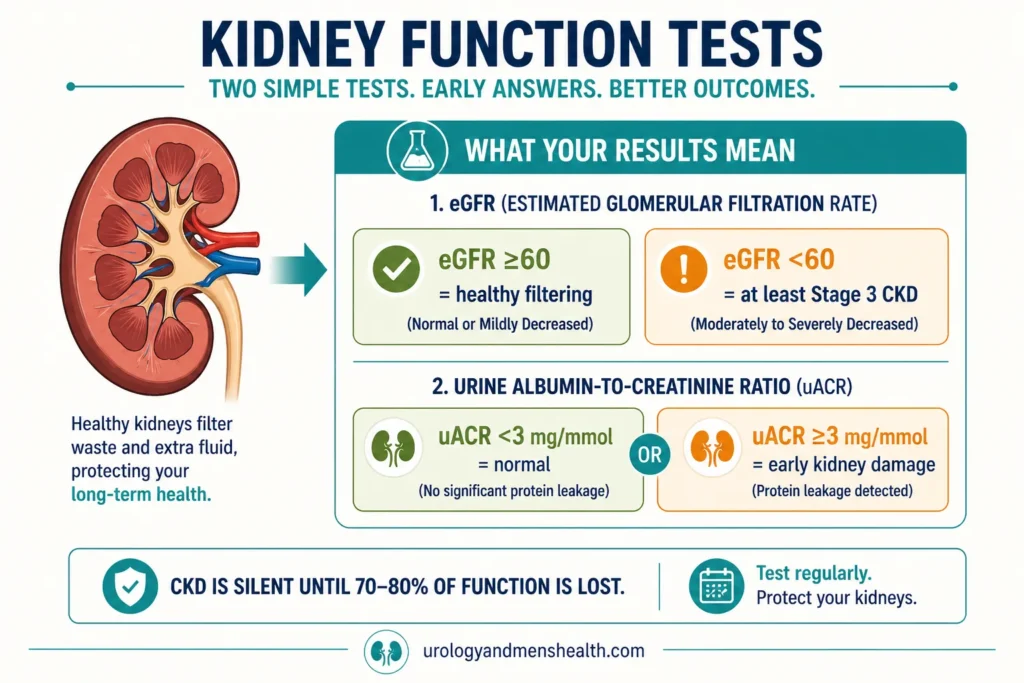
This is the test I add to the standard checklist because, as a urologist, I see the consequences of missed kidney disease daily. CKD affects about 1 in 7 US adults (around 35.5 million people, per CDC) and roughly 10% of adults globally, yet most people with early-stage CKD are undiagnosed because it produces no symptoms until 70–80% of kidney function is lost [10].
The screening panel is simple:
- Serum creatinine with eGFR — measures how well your kidneys filter waste. An eGFR below 60 mL/min/1.73 m² indicates at least Stage 3 CKD.
- Urine albumin-to-creatinine ratio (uACR) — detects tiny amounts of protein leaking into your urine, the earliest sign of kidney damage from hypertension or diabetes.
Who should be screened: All men over 40 with hypertension, diabetes, cardiovascular disease, family history of kidney disease, or recurrent kidney stones. Given the high prevalence and low cost of testing (a creatinine test is typically $10–$25 in the US, and free under most insurance preventive-care benefits), a strong case can be made for including it in every man’s baseline panel at 40.
Early CKD is manageable — with blood pressure control, ACE inhibitors or ARBs, and dietary modification, progression can be slowed or halted for years. Late CKD means dialysis or transplant.
The “Bonus” Test: Testosterone — When It’s Warranted
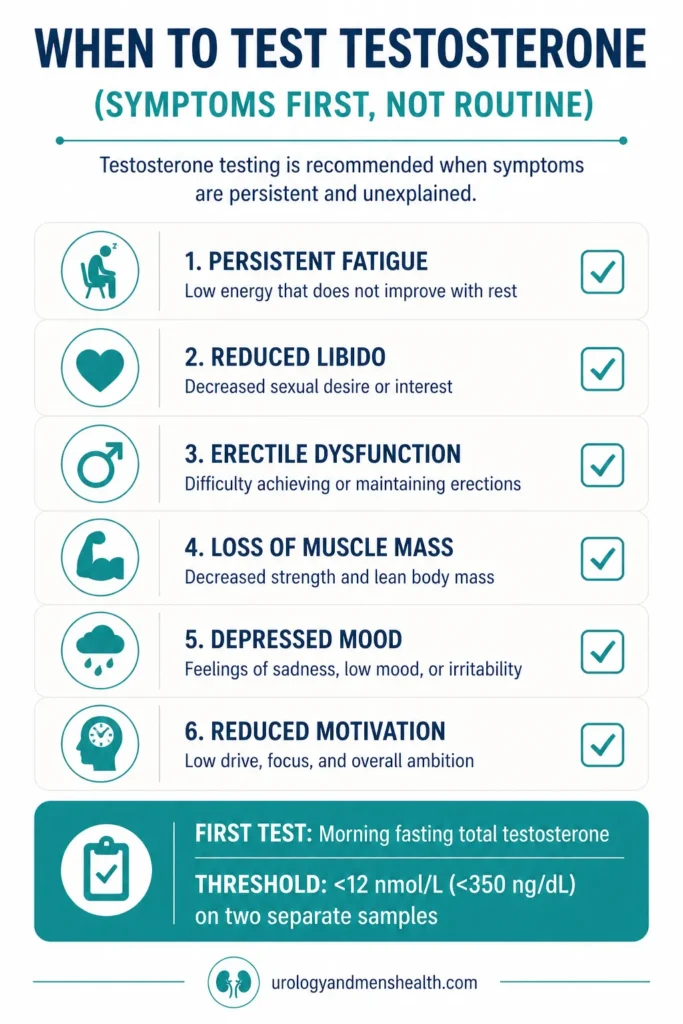
Testosterone testing is not on my standard screening list for one important reason: it should not be measured in asymptomatic men. Both the AUA and EAU guidelines are clear — testosterone testing is indicated when a man presents with symptoms consistent with hypogonadism: persistent fatigue, reduced libido, erectile dysfunction, loss of muscle mass, depressed mood, or reduced motivation [11].
If these symptoms are present, a morning fasting total testosterone level is the appropriate first test (testosterone levels fluctuate throughout the day and are highest in the early morning, ideally drawn between 7am and 10am). A level below 300 ng/dL (about 10.4 nmol/L) on two separate morning samples — the AUA threshold — combined with consistent symptoms, suggests testosterone deficiency warranting further investigation. The EAU uses a slightly higher cut-off of 12 nmol/L (350 ng/dL).
The reason I mention it here is practical: many men over 40 have these symptoms and brush them off as “just getting older.” They are not always age-related. Low testosterone is treatable, and the benefits of properly indicated testosterone replacement therapy can be transformative — but the bar for treatment is symptoms plus two confirmed low morning readings, not a single number on a wellness panel.
⚠️ A Warning About Direct-to-Consumer Testosterone Clinics
The US has seen a sharp rise in low-T clinics that prescribe testosterone after a single test, often without proper symptom assessment or two-sample confirmation. Inappropriate testosterone replacement can suppress your own production permanently, reduce fertility, raise red blood cell count to dangerous levels, and worsen sleep apnea. If you are considering treatment, see a urologist or endocrinologist — not a clinic that prescribes by checkbox.
How to Actually Get This Done: The Practical Guide
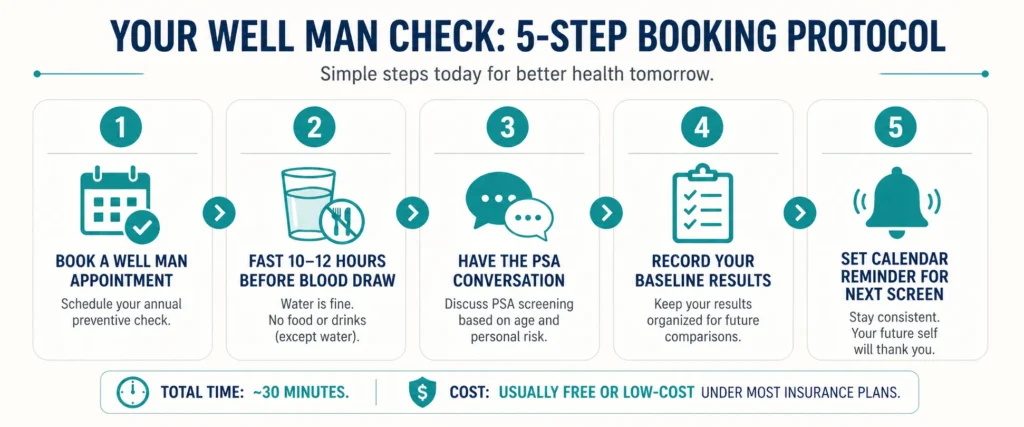
Knowing which tests to get is one thing. Actually booking the appointment and getting them done is where most men fail. Here is the practical protocol:
Step 1: Book a “Well Man” or annual physical appointment. In the US, the Affordable Care Act requires most insurance plans to cover an annual preventive visit and basic screening labs at no out-of-pocket cost. In the UK, the NHS Health Check is free for adults aged 40–74 every 5 years. In Ireland, the HSE covers structured health checks for eligible patients. Request the visit specifically and tell the front desk you want: blood pressure measurement, fasting blood panel (glucose/HbA1c, lipids, creatinine/eGFR), and a urine albumin test.
Step 2: Fast for 10–12 hours before your blood draw (water is fine). This produces accurate lipid and glucose readings.
Step 3: Have the PSA conversation. Ask your primary care doctor or urologist: “Given my age, family history, and risk factors, should we check a PSA?” This opens the shared decision-making dialogue that AUA and EAU guidelines recommend.
Step 4: Record your baseline results. Take a photo of the results letter, save the patient portal PDF, or ask for an electronic copy. These numbers are your personal health baseline — future changes are only meaningful in context.
Step 5: Set a calendar reminder for your next screening appointment. If everything is normal, repeat annually for blood pressure and every 3–5 years for the blood work.
→ Related Read: Top 3 Prostate Supplements — What the Evidence Actually Says💡 In My Practice
The overwhelming majority of men I see in clinic have never had a structured health screening before their presenting complaint brought them to me. They arrive with advanced symptoms — significant lower urinary tract symptoms from a prostate that has been growing for a decade, or chronic kidney disease that has been silently progressing behind uncontrolled hypertension. The frustration, from a clinical perspective, is that these conditions are detectable years earlier with simple, inexpensive tests. A single blood pressure measurement, a creatinine level, a baseline PSA — these basic investigations, done proactively at 40, would have changed the trajectory for many of my patients.
I find that framing screening as a single, time-limited task rather than an ongoing commitment helps men actually book the appointment. “One visit, five tests, thirty minutes” lands far better than “you need regular health monitoring.” Two patient stories stay with me. The first was a 52-year-old who came in with kidney stones — the imaging incidentally showed a renal mass that turned out to be a Stage 1 kidney cancer, fully cured by a partial nephrectomy. He had never had a single screening test in his life. The second was a 47-year-old who finally booked a physical because his wife insisted. His blood pressure was 178/108 mmHg, his creatinine was elevated, and his eGFR was 48 — Stage 3 CKD he had no idea he had. Both men did everything right after diagnosis. Both wished they had walked in five years sooner.
⚠️ When to See a Doctor — Urgently
- Blood pressure above 180/120 mmHg — a hypertensive emergency requiring immediate attention (go to the ER if you also have chest pain, shortness of breath, or vision changes).
- Unexplained weight loss, blood in urine (hematuria), or persistent bone pain — these can signal an underlying malignancy that needs urgent investigation.
- Sudden onset of erectile dysfunction in a man with no previous issues — may indicate underlying cardiovascular disease or a hormonal problem.
- Extreme fatigue with excessive thirst and frequent urination — suggests possible new-onset diabetes requiring urgent blood glucose assessment.
- A palpable lump in a testicle — testicular cancer is the most common cancer in younger men (15–35) and requires urgent ultrasound assessment.
Frequently Asked Questions
I feel completely fine — do I really need a mens health checklist of tests at 40?
Yes. The conditions these tests detect — hypertension, early diabetes, high cholesterol, CKD, and prostate cancer — produce no symptoms in their early, treatable stages. Feeling fine does not mean your internal numbers are fine. A baseline screening at 40 is a 30-minute investment that can identify problems while they are still easily managed. See when a younger man should see a urologist for additional warning signs to watch for.
My father had prostate cancer — should I start screening earlier?
Yes. A first-degree relative (father or brother) with prostate cancer roughly doubles your risk. AUA and EAU guidelines both recommend beginning the shared decision-making PSA conversation at age 45 rather than 50 in this scenario. If two or more close relatives were affected, or if your relative was diagnosed before age 55, starting the conversation at 40 is reasonable. A baseline PSA at 40 is particularly useful for risk stratification — see our guide to PSA results for what your number actually means.
Can I do these tests at home?
Blood pressure can be monitored at home with a validated upper-arm device (around $40–$80 in the US). HbA1c point-of-care testing is available at some pharmacies. PSA, lipids, and kidney function still require a laboratory blood draw, though mail-in collection kits are increasingly available. Interpretation always requires a medical professional — a number on a page without clinical context can cause more anxiety than clarity. See our guide to symptom-based testing for when at-home results need clinic follow-up.
Are these tests covered by insurance or the public health system?
In the US, the Affordable Care Act requires most insurance plans to cover annual preventive visits and basic screening labs (blood pressure, lipids, glucose) at no out-of-pocket cost. PSA screening coverage varies by plan and age. In the UK, the NHS Health Check is free for adults 40–74 every 5 years. In Ireland, the HSE covers these for eligible patients. In Canada and Australia, provincial and Medicare systems cover most preventive screening. Check with your primary care doctor or insurer for specifics.
What about colonoscopy and other cancer screening?
Colorectal cancer screening (with a stool test or colonoscopy) starts at age 45 in the US per the American Cancer Society, and at 50 in most other countries. Lung cancer screening with low-dose CT is recommended for heavy smokers aged 50–80. These are important but fall outside the scope of this urological checklist. Your primary care doctor can guide you through the complete age-appropriate cancer screening program for your specific risk profile — see our prostate supplements review for what to skip while you focus on the tests that matter.
📚 References
- Centers for Disease Control and Prevention. Health, United States, 2020-2021: Annual Perspective. National Center for Health Statistics. CDC NCHS
- GBD 2019 Risk Factors Collaborators. Global burden of 87 risk factors in 204 countries and territories, 1990-2019: a systematic analysis for the Global Burden of Disease Study 2019. Lancet. 2020;396(10258):1223-1249. PubMed
- Mancia G, Kreutz R, Brunström M, et al. 2023 ESH Guidelines for the management of arterial hypertension. J Hypertens. 2023;41(12):1874-2071. PubMed
- Wei JT, Barocas D, Carlsson S, et al. Early Detection of Prostate Cancer: AUA/SUO Guideline. American Urological Association. 2023. AUA Guidelines
- Schröder FH, Hugosson J, Roobol MJ, et al. Screening and prostate cancer mortality: results of the European Randomised Study of Screening for Prostate Cancer (ERSPC) at 13 years of follow-up. Lancet. 2014;384(9959):2027-2035. PubMed
- Vickers AJ, Ulmert D, Sjoberg DD, et al. Strategy for detection of prostate cancer based on relation between prostate specific antigen at age 40-55 and long term risk of metastasis: case-control study. BMJ. 2013;346:f2023. PubMed
- Knowler WC, Barrett-Connor E, Fowler SE, et al. Reduction in the incidence of type 2 diabetes with lifestyle intervention or metformin (Diabetes Prevention Program). N Engl J Med. 2002;346(6):393-403. PubMed
- Goff DC Jr, Lloyd-Jones DM, Bennett G, et al. 2013 ACC/AHA guideline on the assessment of cardiovascular risk. Circulation. 2014;129(25 Suppl 2):S49-73. PubMed
- Montorsi P, Ravagnani PM, Galli S, et al. Association between erectile dysfunction and coronary artery disease: matching the right target with the right test in the right patient. Eur Urol. 2006;50(4):721-731. PubMed
- Centers for Disease Control and Prevention. Chronic Kidney Disease in the United States, 2023. CDC CKD Surveillance
- Mulhall JP, Trost LW, Brannigan RE, et al. Evaluation and Management of Testosterone Deficiency: AUA Guideline. J Urol. 2018;200(2):423-432. AUA Guidelines
⚠️ Khan: Two PMIDs to verify before publish — ref-3 (Mancia 2023 ESH; PMID 37345492 looks correct, double-check) and ref-8 (Goff 2013 ACC/AHA; original PMID 24222018 sometimes redirects). Both URLs confirmed live as of 30 April 2026.
Dr. Muhammad Khalid
MBBS · FCPS (Urology) · MCPS (General Surgery) · CHPE · CRSM · IMC #539472
Specialist urologist with 11+ years of clinical experience across tertiary teaching hospitals. Trained at Lady Reading Hospital and Khyber Teaching Hospital, Peshawar. Author or co-author of five peer-reviewed international publications, including in Cureus and the World Journal of Surgery. Procedural expertise: URS, PCNL, RIRS, TURP, TURBT, and major open urological surgery. Full profile →
This article is for educational purposes only and does not constitute medical advice. Always consult your physician or urologist for diagnosis and treatment decisions specific to your condition.