The Urinary Microbiome: What It Means for Your Bladder
For a century we taught that healthy urine is sterile. It is not. Here is what the urinary microbiome actually changes about negative cultures, recurrent UTIs and kidney stones — and what it does not.

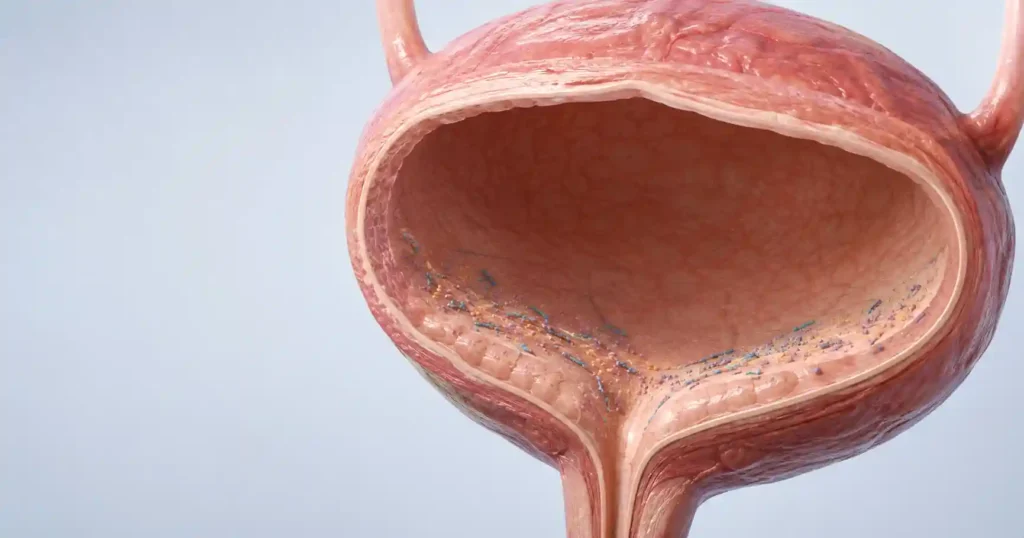
The urinary microbiome — the community of bacteria living inside a healthy bladder — is the biggest change in how urologists think about urine in the last fifteen years, and most patients have never heard of it. For more than a century we taught that urine in a healthy bladder is sterile, and that any bacteria found there meant infection. That was wrong. It was an artifact of the standard urine culture, a test designed in the 1950s to find one organism, Escherichia coli, growing quickly on one type of plate. When researchers changed the volume, the media and the incubation conditions, they found resident bacteria in nearly every bladder they examined. I raise this in clinic more often than you would expect, usually with a man who has had three negative urine cultures and still burns every time he urinates. The urinary microbiome does not explain everything about his symptoms. But it explains why his culture was negative, and it explains why several of the supplements marketed to him do nothing. For the wider men’s health picture, see the Men’s Wellness Hub.
Key Takeaways
- A standard urine culture is calibrated to report growth at 100,000 CFU/mL of a fast-growing aerobe. Expanded culture techniques found living bacteria in 80% of bladder samples that the standard method had called no growth.
- In men, bladder bacterial detection rises with symptom severity: each one-point increase in IPSS score was associated with 2.21 times higher odds of detectable bacteria in catheterized urine.
- Oxalate-degrading gut bacteria including Oxalobacter formigenes were present in only 26% of calcium oxalate stone formers compared with 60% of non-stone formers, which is one mechanism linking repeated antibiotics to stone risk.
- Cranberry showed benefit in women with recurrent UTI but none in older men or in adults with incomplete bladder emptying, and D-mannose failed its largest placebo-controlled trial outright.
Your Bladder Is Not Sterile: What the Urinary Microbiome Actually Is
The urinary microbiome, sometimes called the urobiome, is the population of bacteria that lives on and around the lining of the bladder and urethra in the absence of infection. It was formally described in 2012 and 2014 by research groups at Loyola University Chicago, who used DNA sequencing and then modified culture methods to show that bacteria were present in bladders that every routine laboratory had classified as sterile [1].
The scale matters, and it is the part most articles get wrong. Your colon carries roughly 100 billion bacteria per gram of contents. Your bladder carries somewhere between a few dozen and a few thousand per milliliter of urine. If the gut is a rainforest, the bladder is high desert — sparse, specialized, and easily disrupted. That sparseness is exactly why the standard culture missed it for seventy years.
Composition also differs by sex, which matters for how you read the research. Female bladders are frequently dominated by Lactobacillus species. Male samples more often show Corynebacterium and Streptococcus, with Lactobacillus present at lower proportions [3]. Almost every headline finding you will read about the urinary microbiome and infection was generated in women. The male data set is far thinner, and I will flag where that limits the conclusions.
Why Your Urine Culture Came Back Negative When Your Symptoms Were Real
A standard urine culture uses a calibrated loop that transfers 0.001 mL of urine onto a plate, incubates it in room air for 24 hours, and reports growth at a threshold of 100,000 colony-forming units per milliliter. That protocol was built to answer one question quickly: is this an acute bacterial cystitis caused by a common aerobic uropathogen? It answers that question well. It answers nothing else.
Expanded quantitative urine culture, or EQUC, plates 0.1 mL — one hundred times more urine — across several media types, incubates under aerobic, carbon dioxide-enriched and anaerobic conditions for 48 hours, and detects down to 10 CFU/mL. When the Loyola group ran both methods on 65 catheterized specimens, 52 of 65 (80%) grew bacteria under EQUC, and 48 of those 52 (92%) had been reported as no growth by the clinical laboratory [1].
Here is what that means for you practically. A negative urine culture reliably tells you there is no high-count classic uropathogen in your bladder. It does not tell you there are no bacteria, and it does not tell you your symptoms are imaginary. If you have persistent urinary symptoms with repeatedly negative cultures, ask your urologist two specific things at the next appointment: whether any antibiotic in the preceding two weeks could have suppressed growth, and whether your specimen was collected mid-stream or by catheter, since voided samples pick up urethral and skin organisms that muddy interpretation.
What I would not do is pay for a commercial urine PCR or sequencing panel. These are marketed hard to men with persistent symptoms. They detect bacterial DNA, including from dead organisms, and no professional body has defined what a normal result looks like or which result should change treatment. EQUC itself remains a research protocol, not a service most hospital laboratories offer.
In My Practice
A man in his mid-fifties came to me after six months of urgency and burning, three negative cultures, and three courses of antibiotics prescribed anyway. He arrived having read extensively about the urinary microbiome and convinced his problem was dysbiosis. His post-void residual was 180 mL. His prostate was moderately enlarged. The bacteria were not the story — incomplete emptying was, and it had been sitting there unmeasured for half a year.
Before you accept a microbiome explanation for urinary symptoms, insist that the mechanical explanations are excluded first, because those are the ones with treatments that work.
The Urinary Microbiome and Recurrent UTIs in Men
Start with a principle that predates the microbiome entirely: a urinary tract infection in an adult male is never classified as uncomplicated. Male anatomy, with a longer urethra and prostatic secretions containing antibacterial zinc compounds, makes infection uncommon enough that recurrence points to a reason — obstruction, incomplete emptying, stones, prostatitis or diabetes.
The microbiome adds a mechanism on top of that, not a replacement for it. Each antibiotic course clears the uropathogen and also thins the resident community that occupies attachment sites on the urothelium. In women, depletion of protective Lactobacillus species is associated with subsequent recurrence, and P-fimbriated E. coli adheres more readily to a depleted surface, forming intracellular reservoirs that survive treatment. The plausible male equivalent has not been demonstrated with the same weight of evidence.
This is where I want to be blunt about a common error. The AUA, CUA and SUFU guideline on recurrent uncomplicated UTI is written for women [10]. Its recommendations on vaginal estrogen, cranberry and prophylaxis do not transfer to men, and no microbiome-directed therapy is recommended for men by any guideline body at present. If you are a man with two or more infections in six months, the correct next step is a structural and functional workup, not a supplement.
Related Read: The diagnostic workup every man with recurrent UTIs should receiveRecurrent UTIs in men: the workup that finds the cause
Enter your email below to receive Dr. Khalid’s complete Recurrent UTI Eradication Protocol as a free, printable PDF.
Urgency, Frequency, and the Bladder Microbiome
The most interesting urobiome findings are not about infection at all. In 2014, Pearce and colleagues compared catheterized urine from women with and without urgency urinary incontinence and found meaningfully different bacterial communities between the two groups, with composition also associated with how well those women later responded to treatment [2].
The male equivalent came from Bajic and colleagues in 2020. They studied 49 men aged 40 to 85 undergoing surgery, stratified by International Prostate Symptom Score, and ran both EQUC and 16S sequencing on paired voided and catheterized specimens. Each one-point increase in IPSS was associated with 2.21 times higher odds of detecting bacteria in bladder urine [3]. That was the first clear signal linking the male bladder microbiome to the severity of lower urinary tract symptoms.
Read that result carefully, because the direction of causation is unresolved. A bladder that empties poorly leaves residual urine, and residual urine is a better growth medium than a bladder that empties completely. The bacteria may be a consequence of the obstruction rather than a cause of the symptoms. That is not a technicality. It determines whether the treatment is an alpha blocker or something aimed at bacteria, and right now the evidence supports the alpha blocker.
A related finding sits in chronic pelvic pain. Shoskes and colleagues showed that the urinary microbiome of men with chronic prostatitis and chronic pelvic pain syndrome differed from controls, and differed further between UPOINT clinical phenotypes [4]. For a condition where cultures are almost always negative and men are frequently told nothing is wrong, that is a meaningful piece of biological validation, even though it has not yet produced a treatment.
Related Read: What actually controls urgency and frequency in menGut Bacteria, Oxalate, and Kidney Stones
The strongest microbiome evidence in urology is not in the bladder at all. It is in the gut, and it concerns stones.
Oxalobacter formigenes is an anaerobic gut bacterium that uses oxalate as its sole source of carbon and energy. It degrades dietary oxalate in the intestine so that less is absorbed and less reaches the kidney. Troxel and colleagues found intestinal Oxalobacter in 26% of calcium oxalate stone formers compared with 60% of controls [7], and Siener’s group linked colonization status to lower urinary oxalate excretion [6].
Ticinesi and colleagues then showed in Gut in 2018 that stone formers do not simply lack one organism — their entire gut community is altered, with reduced abundance of butyrate-producing bacteria alongside reduced oxalate-degrading capacity [5]. That network finding explains something important: trials that gave Oxalobacter as a probiotic have not reliably reduced urinary oxalate or stone recurrence. You cannot reinstall one species into a depleted community and expect the function to return.
The practical consequence is one I raise with every recurrent stone former who is also on repeated antibiotics for prostatitis or UTIs. Broad-spectrum agents, particularly fluoroquinolones and macrolides, eradicate Oxalobacter, and recolonization can take months or may not happen at all. If you form calcium oxalate stones, an unnecessary antibiotic course is not a neutral event. Meanwhile the intervention that reliably lowers oxalate absorption is not a capsule: it is taking dietary calcium with the same meal as high-oxalate food, so that calcium binds oxalate in the gut lumen before it can be absorbed. That mechanism is covered in detail in our guide to the foods that actually drive stone formation.
Probiotics, Cranberry, and D-Mannose: Where the Evidence Actually Lands
This section is where the microbiome story is used to sell things, so I will give you the trial results rather than the mechanisms.
Cranberry
Cranberry proanthocyanidins do inhibit P-fimbriated E. coli from adhering to urothelial cells in the laboratory. The 2023 Cochrane review, the fifth update of a review first published in 1998, found that cranberry products reduced UTI frequency in women with recurrent infection, in children, and in people undergoing bladder radiotherapy — but found no reduction in older institutionalized men and women, and none in adults with neuromuscular bladder dysfunction and incomplete emptying [8]. Those two negative groups describe a large share of the men who are actually taking it.
D-Mannose
D-mannose looked promising in small secondary-care studies. Then Hayward and colleagues ran a double-blind, placebo-controlled trial across 99 UK primary care centers, published in JAMA Internal Medicine in 2024. Over six months, 51% of the D-mannose group and 55.7% of the placebo group had a further UTI episode — a relative risk of 0.92 with a confidence interval crossing 1.0 [9]. There was no difference in symptom severity, time to next consultation, or antibiotic use. The authors also raised caution about mannose in men with diabetes or insulin resistance.
Oral probiotics
There is no good evidence that a swallowed Lactobacillus capsule colonizes the male bladder. The probiotic studies that produced any signal in recurrent UTI used a vaginal route in women, which has no male equivalent. Products aimed at male urinary health are sold on plausible mechanism, not on outcome data — the same pattern I described in our review of the prostate supplements that do and do not hold up.
What I recommend instead
- Fluid volume you can sustain. Aim for a urine output that keeps your urine pale straw-colored, which for most men means roughly 2.5 liters of fluid daily (about 85 fl oz, or 10 cups). Dilution reduces both bacterial density and stone-forming supersaturation.
- Complete emptying. Ask for a post-void residual measurement if you have urgency, frequency or recurrent infection. Anything persistently above 100 mL needs an explanation.
- Fewer unnecessary antibiotic courses. Push back on empiric prescribing for symptoms with negative cultures. Every course costs you gut and bladder community diversity.
- Glycemic control. Glucose in urine changes which organisms grow. If your fasting glucose has not been checked in the last 12 months and you have recurrent urinary symptoms, request it.
When This Is Not a Microbiome Problem
The urobiome is a slow-moving research topic. These are same-day problems. Go to the emergency room if you have:
- Fever above 38C (100.4F) with shaking chills alongside urinary symptoms — this suggests pyelonephritis or prostatic infection, not cystitis
- Flank pain with nausea and vomiting
- Complete inability to pass urine with a painful, distended lower abdomen
- Visible blood in the urine, especially with clots
- Rapidly worsening pain, swelling or redness of the scrotum or perineum, particularly if you have diabetes — this can be Fournier’s gangrene and is a surgical emergency
Frequently Asked Questions
Should I get a urine microbiome test as part of a routine men’s check-up?
No. Commercial urine PCR and sequencing panels detect bacterial DNA, but no guideline body has defined what a normal result looks like in an asymptomatic man, and no treatment decision currently changes based on one. Put the money toward the tests that do change management — blood pressure, a PSA discussion, fasting glucose and lipids. Our men’s health checklist for men over 40 sets out what belongs in that visit.
I have urgency and frequency but every urine culture is negative — is the urinary microbiome the cause?
It may be part of the picture, but it is not the first thing to rule out. In men, urgency with negative cultures most often traces back to prostate enlargement, incomplete emptying, caffeine load or pelvic floor overactivity. Score your symptoms first with the validated OAB symptom score, then ask for a post-void residual measurement before anyone starts treating bacteria.
Do repeated antibiotic courses permanently damage the urinary microbiome?
Permanent is the wrong word, but repeated courses do measurable harm. Broad-spectrum agents clear oxalate-degrading gut bacteria for months and select for resistant uropathogens in the bladder. That is one reason a man with three infections in a year needs a cause identified rather than a fourth prescription. Profile your recurrence risk before agreeing to long-term prophylaxis.
Can oral probiotics change the bacteria in my bladder?
There is no good evidence that a swallowed capsule colonizes the male bladder. The lactobacillus studies that produced any signal used a vaginal route in women, which has no male equivalent. Most urological probiotic products are sold on mechanism rather than outcome data, which is the same pattern seen across the prostate supplement category.
Is the male urinary microbiome different from the female urinary microbiome?
Yes. Female bladders are frequently lactobacillus-dominant, while male samples more often show corynebacterium and streptococcus with lactobacillus at lower proportions. That difference matters because nearly all recurrent UTI microbiome research has been conducted in women and the findings do not transfer cleanly. A man with recurrent infection still needs a structural workup first.
References
- Hilt EE, McKinley K, Pearce MM, et al. Urine is not sterile: use of enhanced urine culture techniques to detect resident bacterial flora in the adult female bladder. J Clin Microbiol. 2014;52(3):871-876. PubMed
- Pearce MM, Hilt EE, Rosenfeld AB, et al. The female urinary microbiome: a comparison of women with and without urgency urinary incontinence. mBio. 2014;5(4):e01283-14. PubMed
- Bajic P, Van Kuiken ME, Burge BK, et al. Male bladder microbiome relates to lower urinary tract symptoms. Eur Urol Focus. 2020;6(2):376-382. PubMed
- Shoskes DA, Altemus J, Polackwich AS, et al. The urinary microbiome differs significantly between patients with chronic prostatitis/chronic pelvic pain syndrome and controls as well as between patients with different clinical phenotypes. Urology. 2016;92:26-32. DOI
- Ticinesi A, Milani C, Guerra A, et al. Understanding the gut-kidney axis in nephrolithiasis: an analysis of the gut microbiota composition and functionality of stone formers. Gut. 2018;67(12):2097-2106. DOI
- Siener R, Bangen U, Sidhu H, et al. The role of Oxalobacter formigenes colonization in calcium oxalate stone disease. Kidney Int. 2013;83(6):1144-1149. PubMed
- Troxel SA, Sidhu H, Kaul P, Low RK. Intestinal Oxalobacter formigenes colonization in calcium oxalate stone formers and its relation to urinary oxalate. J Endourol. 2003;17(3):173-176. PubMed
- Williams G, Stothart CI, Hahn D, et al. Cranberries for preventing urinary tract infections. Cochrane Database Syst Rev. 2023;11(11):CD001321. PubMed
- Hayward G, Mort S, Hay AD, et al. D-mannose for prevention of recurrent urinary tract infection among women: a randomized clinical trial. JAMA Intern Med. 2024;184(6):619-628. JAMA Internal Medicine
- American Urological Association, Canadian Urological Association, Society of Urodynamics, Female Pelvic Medicine and Urogenital Reconstruction. Recurrent Uncomplicated Urinary Tract Infections in Women: Guideline (2019, amended 2022). AUA
Dr. Muhammad Khalid
MBBS · FCPS (Urology) · MCPS (General Surgery) · CHPE · CRSM · IMC #539472
Specialist urologist with 11+ years of clinical experience across tertiary teaching hospitals. Trained at Lady Reading Hospital and Khyber Teaching Hospital, Peshawar. Author or co-author of five peer-reviewed international publications, including in Cureus and the World Journal of Surgery. Procedural expertise: URS, PCNL, RIRS, TURP, TURBT, and major open urological surgery. Full profile →
This article is for educational purposes only and does not constitute medical advice. Always consult your physician or urologist for diagnosis and treatment decisions specific to your condition.