Prostate Massage: Facts, Myths & When It’s Dangerous
Men ask me about prostate massage more than almost any other "is this true?" question. Here's what it can actually do, what it can't, and the one situation where it's genuinely dangerous.

Almost every week, a man lowers his voice in my clinic and asks whether prostate massage really does what the internet promises — clears infection, prevents cancer, shrinks an enlarged prostate, or raises testosterone. It is one of the most searched and most misunderstood topics in men’s health. The honest answer is that prostate massage has a narrow but real medical role, a long list of things it cannot do, and one situation where it is genuinely dangerous. As a urologist, I would rather you understand that difference than trust a page selling a device. For the wider picture on keeping this gland healthy, our full Prostate Health Hub ties the topics together. Here, I will walk through exactly what prostate massage is, where it earns its place in medicine, the myths worth ignoring, and how it can quietly distort a PSA result if you get the timing wrong.
Key Takeaways
- Prostate massage has one established medical job — helping collect prostate fluid to diagnose chronic prostatitis — not curing it.
- There is no evidence that prostate massage prevents prostate cancer or shrinks an enlarged prostate.
- In acute bacterial prostatitis, prostate massage is dangerous and can push bacteria into the bloodstream, risking sepsis.
- Avoid prostate massage and ejaculation for 48 hours before a PSA blood test, or the result can read falsely high.
What Prostate Massage Actually Is
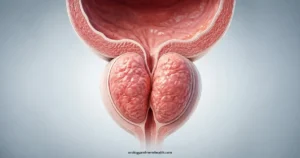
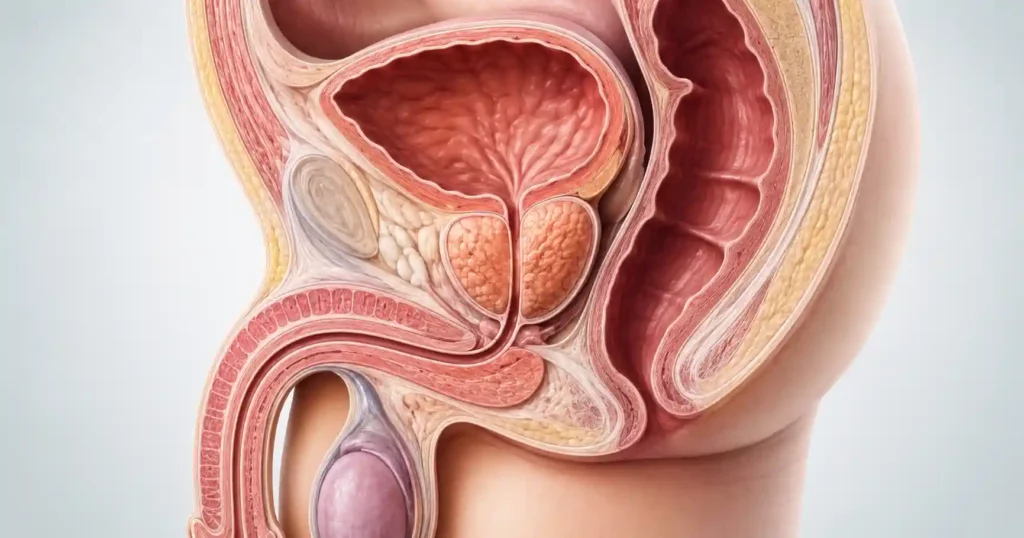
Prostate massage means applying firm, steady pressure to the prostate through the front wall of the rectum, usually with a gloved finger and sometimes with a device. The medical name is prostatic massage, and historically its purpose was practical: to squeeze fluid out of the gland so it could be examined. That fluid is called expressed prostatic secretions, or EPS.
The prostate sits just below the bladder and directly in front of the rectum, wrapped around the tube that carries urine out. That position is the whole reason a finger can reach it at all — only a thin wall of tissue separates the rectum from the back of the gland. The popular term “prostate milking” describes the same mechanical action, usually in a sexual-wellness context rather than a clinical one. The technique is identical; only the intention and setting differ.
The Genuine Medical Uses of Prostate Massage
There are really two. The first, and the most established, is diagnosis. To work out whether a man’s pelvic symptoms come from infection or inflammation, a urologist can collect urine before and after a brief massage — the pre- and post-massage test, sometimes called the 2-glass or 4-glass (Meares-Stamey) test. Comparing the samples helps localize where the problem sits, and the expressed fluid can be examined under a microscope. This is most relevant to chronic prostatitis and pelvic pain syndrome (CPPS), the condition behind most lingering prostate discomfort in younger and middle-aged men.
The second use is treatment, and this is where the claims outrun the evidence. Repetitive prostatic massage has been tried for men with stubborn, treatment-resistant prostatitis. A small, often-quoted study of men who travelled to Manila for massage plus antibiotics reported symptom improvement in a minority of patients[3]. But larger reviews are far less encouraging — one analysis found no meaningful improvement in prostatitis symptom scores when massage was added to antibiotics[4], and a major consensus guideline concluded there is insufficient evidence to recommend prostatic massage as a treatment[2]. In plain terms: it is not a cure, and it is not first-line care.
In My Practice
A man in his forties came to me having paid for weekly “prostate drainage” sessions at a private clinic for months, convinced it would finally clear his pelvic pain. It hadn’t. His symptoms were a textbook chronic pelvic pain syndrome — driven mostly by pelvic floor muscle tension, not trapped fluid — and the massage was treating a problem he didn’t have while his actual triggers went unaddressed.
Massage can ease pressure for some men in the short term, but it treats a symptom, not the underlying cause — which is why I always look for the real driver first.
If you are dealing with ongoing prostate or pelvic symptoms, the most useful first step is to measure them properly rather than guess.
Score your symptoms with the NIH-CPSI Chronic Prostatitis Index →The Myths: What Prostate Massage Can’t Do
It does not prevent prostate cancer. This is the most persistent myth, and it comes from confusing two different things. Some research has linked more frequent ejaculation with a modestly lower prostate cancer risk — but that is ejaculation, not massage, and even that finding is an association, not proof. No study shows that rubbing the gland lowers cancer risk.
It does not shrink an enlarged prostate. Benign prostatic hyperplasia (BPH) is the gland physically growing and squeezing the urethra. Massaging it changes neither its size nor that pressure. If your stream is weak or you are up several times a night, the answer lies in proven options, not manipulation — I cover where the line sits between watchful waiting and intervention in my guide to whether an enlarged prostate actually needs treatment or surgery.
It does not raise testosterone or improve fertility. The prostate does not make testosterone — the testicles do — so massaging it cannot move your hormone levels. There is no credible evidence it improves sperm quality or fertility either.
Weak stream and night-time trips wearing you down? Download Dr. Khalid’s BPH & Enlarged Prostate Guide.
Enter your email below to receive Dr. Khalid’s complete BPH & Enlarged Prostate Guide as a free, printable PDF.
When Prostate Massage Is Dangerous
For a healthy man, gentle prostate massage is generally low-risk — even if it has no proven benefit. But there is one situation where it crosses from pointless to genuinely hazardous: acute bacterial prostatitis. This is a sudden, severe infection where the gland becomes warm, tense, and exquisitely tender, usually with fever, chills, and painful urination. Pressing on an acutely infected prostate can force bacteria out of the gland and into the bloodstream, triggering bacteremia and, in the worst cases, sepsis. For that reason, urologists are taught never to massage the prostate when acute infection is suspected — we diagnose it from a urine culture instead[1].
When to Stop and Get Help
Do not attempt prostate massage — and see a doctor promptly — if any of these apply:
- Fever, chills, or feeling systemically unwell alongside pelvic or urinary pain — this can signal acute prostatitis, a urological emergency.
- Active rectal problems — bleeding hemorrhoids, an anal fissure, or recent rectal surgery, where pressure can worsen bleeding or tear tissue.
- A recent prostate biopsy or prostate surgery — the gland needs time to heal.
- Known or suspected prostate cancer, or a weakened immune system — discuss with your urologist first.
Stop immediately if a massage causes bleeding, severe pain, or fever, and seek care the same day.
Prostate Massage, Ejaculation, and Your PSA Test
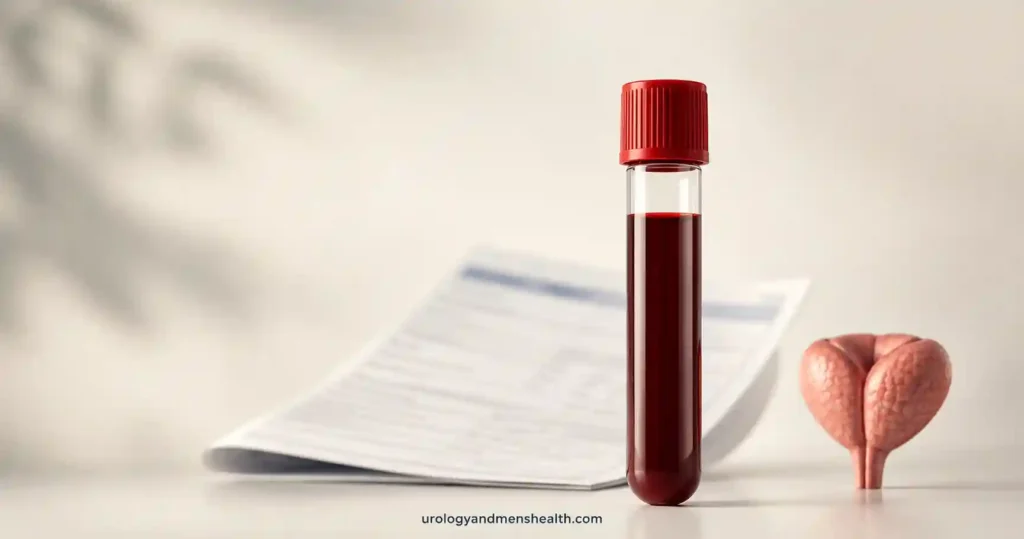
Here is the practical point that catches men out. Stimulating the prostate — by massage, ejaculation, or even vigorous cycling — can temporarily push more PSA into the blood. In a small number of men that bump is large enough to cross a threshold that prompts further testing or worry. So the rule is simple: avoid prostate massage and ejaculation for at least 48 hours before a PSA blood test, and if a rectal exam is planned on the same visit, ask that the blood be drawn first[5]. A falsely high PSA leads to anxiety and sometimes unnecessary procedures that careful timing would have avoided.
If your interest in massage is really about “draining” the prostate, there is a far simpler route that several urologists suggest for men with mild prostatitis-type symptoms: regular ejaculation, roughly every few days. It empties the prostatic ducts the same way, carries less risk, and skips the awkwardness entirely. The benefit is unproven, but it is low-cost, low-risk, and reasonable — which is more than can be said for paying for repeated massage sessions.
Frequently Asked Questions
Does prostate massage cure chronic prostatitis?
No. Prostate massage does not cure chronic prostatitis or chronic pelvic pain syndrome. For a small number of men with stubborn, treatment-resistant symptoms, repeated massage alongside antibiotics has eased symptoms in some studies, but high-quality evidence is weak and most urology guidelines do not recommend it as a standard treatment. It manages pressure, not the underlying cause.
Can prostate massage prevent prostate cancer?
There is no evidence that prostate massage prevents prostate cancer. This myth usually comes from confusing massage with separate research on ejaculation frequency, which is a different activity and still only shows an association, not proof. If you are concerned about your risk, follow a proper prostate cancer screening guide rather than relying on massage.
Is prostate massage safe to do at home?
For a healthy man with no prostate infection, gentle prostate massage is generally low-risk, though it has no proven health benefit. It becomes dangerous if you have a fever, sudden pelvic pain, or an active prostate infection, when manipulation can push bacteria into the bloodstream. Stop immediately and see a doctor if you notice bleeding, severe pain, or fever.
Will prostate massage affect my PSA test?
Yes. Prostate massage can temporarily raise your PSA level, sometimes enough to trigger unnecessary worry or extra testing. Avoid prostate massage, ejaculation, and vigorous cycling for at least 48 hours before a PSA blood test. If a rectal exam and PSA test happen on the same visit, ask that the blood be drawn first so the result stays accurate.
Does prostate massage help an enlarged prostate (BPH)?
No. Prostate massage does not shrink the prostate or relieve the urinary blockage caused by benign prostatic hyperplasia (BPH). An enlarged prostate squeezes the urethra, and rubbing the gland does nothing to change its size or that pressure. Proven options range from medication to minimally invasive procedures, depending on how much the symptoms affect you.
References
- Coker TJ, Dierfeldt DM. Acute Bacterial Prostatitis: Diagnosis and Management. Am Fam Physician. 2016;93(2):114-120. AAFP
- Rees J, Abrahams M, Doble A, Cooper A. Diagnosis and treatment of chronic bacterial prostatitis and chronic prostatitis/chronic pelvic pain syndrome: a consensus guideline. BJU Int. 2015;116(4):509-525. DOI
- Nickel JC, Downey J, Feliciano AE, Hennenfent B. Repetitive prostatic massage therapy for chronic refractory prostatitis: the Philippine experience. Tech Urol. 1999;5(3):146-151. PubMed
- Maeda K, Shigemura K, Fujisawa M. A review of current treatments for chronic prostatitis/chronic pelvic pain syndrome under the UPOINTS system. Int J Urol. 2023;30(5):431-438. DOI
- American Cancer Society. Screening Tests for Prostate Cancer (factors affecting PSA results). 2023. ACS
Dr. Muhammad Khalid
MBBS · FCPS (Urology) · MCPS (General Surgery) · CHPE · CRSM · IMC #539472
Specialist urologist with 11+ years of clinical experience across tertiary teaching hospitals. Trained at Lady Reading Hospital and Khyber Teaching Hospital, Peshawar. Author or co-author of five peer-reviewed international publications, including in Cureus and the World Journal of Surgery. Procedural expertise: URS, PCNL, RIRS, TURP, TURBT, and major open urological surgery. Full profile →
This article is for educational purposes only and does not constitute medical advice. Always consult your physician or urologist for diagnosis and treatment decisions specific to your condition.