How to Shrink Your Prostate Naturally: The Evidence
Men ask me almost weekly how to shrink an enlarged prostate without drugs or surgery. The honest answer surprises most of them — and it starts with separating prostate size from symptoms.

If you are looking for how to shrink your prostate naturally, you are almost certainly living with the daily nuisance of an enlarged prostate — waking at night to urinate, a weak stream, or the sense that your bladder never fully empties. I understand the appeal of fixing this with diet or a supplement instead of a drug or an operation. But I owe you the version I give patients in clinic, not the version on the supplement label. The word shrink is where most of the confusion starts. Reducing the size of the gland and reducing your symptoms are two very different goals, and almost everything sold as a natural prostate remedy quietly targets the second while promising the first. For the full overview of how an enlarged prostate is diagnosed and treated, see our Prostate Health Hub. This article stays on one question: what, if anything, actually makes an enlarged prostate smaller — and what genuinely helps you feel better even when nothing shrinks.
Key Takeaways
- No over-the-counter supplement or food has been shown in high-quality trials to meaningfully shrink an enlarged prostate.
- The only medications proven to reduce prostate size are 5-alpha-reductase inhibitors (finasteride, dutasteride), which take 6 to 12 months and shrink the gland by roughly 20 to 25 percent.
- Saw palmetto, the most popular natural remedy, worked no better than a placebo in the rigorous NIH-funded CAMUS trial — even at three times the usual dose.
- Weight loss, regular exercise, and adjusting evening fluids and caffeine will not shrink your prostate, but they reliably ease symptoms and may slow progression.
Can You Actually Shrink Your Prostate Naturally?
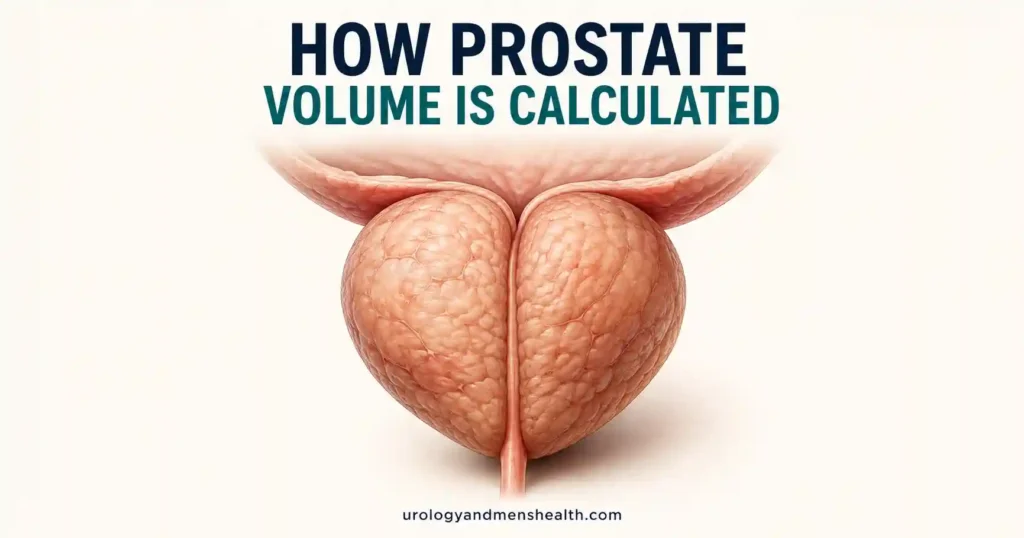
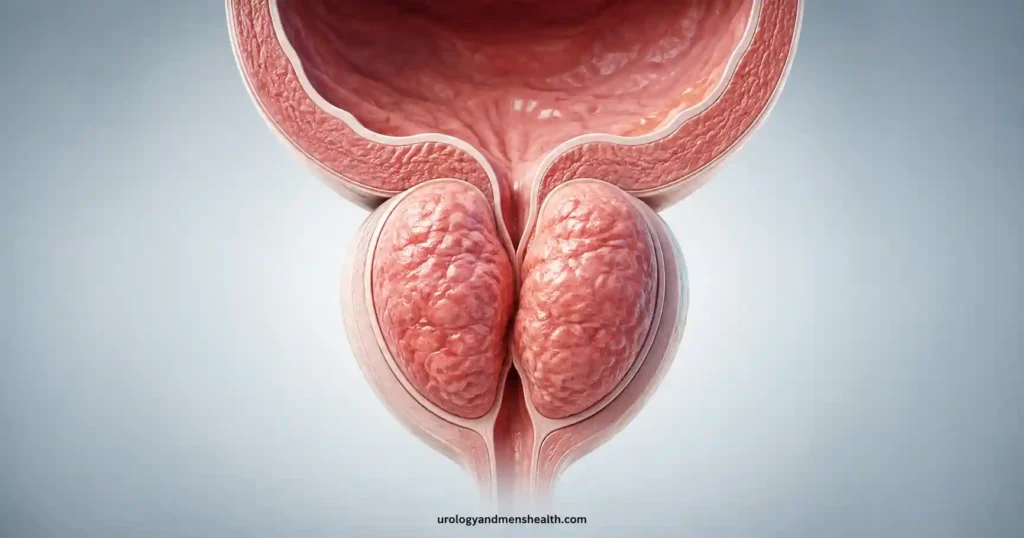
An enlarged prostate — the medical term is benign prostatic hyperplasia, or BPH — is the gradual, non-cancerous growth of the prostate gland that wraps around the urethra, the tube carrying urine out of the bladder. It is one of the most common conditions I treat. By age 60, roughly half of men have some prostate enlargement; by 85, that figure approaches 90 percent [2]. As the gland grows, it squeezes the urethra and irritates the bladder, which is what produces the weak stream, the urgency, and the nighttime trips to the bathroom.
Here is the distinction that matters: the size of your prostate and the severity of your symptoms are only loosely linked. Some men with very large glands have mild symptoms; others with modestly enlarged glands are miserable. That is why “shrink your prostate naturally” is the wrong target for most men. The honest goal is to relieve symptoms and slow the gland’s growth — and for that, you have real, evidence-based options that do not require shrinking anything.
So can natural methods truly make the gland smaller? For the vast majority of men, no. No food, drink, or over-the-counter supplement has been shown in a well-designed trial to meaningfully reduce prostate volume. What they can sometimes do — and this is not nothing — is take the edge off your symptoms. Confusing those two outcomes is the single most common mistake I see men make with this condition.
In My Practice
A man in his sixties came to me last year with a shoebox of supplements — saw palmetto, pumpkin seed oil, beta-sitosterol, a “prostate detox” tea — and a year of worsening nighttime urination. He was frustrated that none of it had shrunk his prostate. When we imaged him, the gland had grown, not shrunk, and he had developed a large pool of residual urine that put him at real risk of going into retention.
The supplements had not harmed him, but the months he spent waiting for them to work were months his condition quietly progressed — which is the true cost of chasing shrinkage instead of managing the disease.
Saw Palmetto and Supplements: What the Evidence Shows
Walk into any pharmacy and you will find a shelf of “prostate support” products. The most popular by far is saw palmetto, an extract from the berries of a dwarf palm. The marketing is confident. The evidence is not.
The most rigorous test of saw palmetto was the CAMUS trial, a double-blind, placebo-controlled study funded by the US National Institutes of Health. Men took saw palmetto at up to three times the standard dose for 72 weeks. The result: it performed no better than a placebo for urinary symptoms, and it did not shrink the prostate [3]. A 2023 Cochrane review and the NIH’s complementary-health center reached the same verdict [4]. Saw palmetto is generally safe, so I do not tell men to throw it out — but I am direct that they should not expect it to change their prostate.
The other common ingredients follow the same pattern. Beta-sitosterol, a plant compound, has shown modest symptom improvement in some short studies but no effect on gland size. Pygeum, pumpkin seed, rye pollen, and zinc have weaker evidence still, and none has been shown to reduce prostate volume. If you want to weigh these by what the data supports rather than by the loudest label, our evidence-based supplement matcher sorts them honestly, and our review of the top prostate supplements goes deeper on the individual trials.
Weak stream and night-time trips wearing you down? Download Dr. Khalid’s BPH & Enlarged Prostate Guide.
Enter your email below to receive Dr. Khalid’s complete BPH & Enlarged Prostate Guide as a free, printable PDF.
Lifestyle Changes That Genuinely Ease Prostate Symptoms
This is where natural approaches earn their place — not by shrinking the prostate, but by improving how you feel and possibly slowing progression. The evidence here is encouraging, and unlike supplements, these changes pay off well beyond your bladder.
Stay physically active. In a pooled analysis of more than 43,000 men, those who were moderately to vigorously active had roughly a 25 percent lower risk of BPH and urinary symptoms than sedentary men [5]. You do not need to train like an athlete — brisk walking most days counts. Prolonged sitting works against you, which I cover in our piece on how sitting all day affects the prostate and bladder.
Lose excess weight. Carrying extra weight, especially around the abdomen, is associated with worse urinary symptoms. Weight loss will not measurably shrink the gland, but it consistently improves how the lower urinary tract behaves.
Adjust your fluids, not just the total. Stop drinking about two hours before bed to cut nighttime urination, and cut back on caffeine and alcohol — both irritate the bladder and drive urgency. Spreading water through the day rather than gulping large volumes at once also helps.
Retrain the bladder. Double voiding (urinating, waiting, then trying again), timed bathroom trips, and pelvic floor exercises reduce the bother of frequency and incomplete emptying. None of this is dramatic, but together these habits often move a man from “bothered most days” to “barely notice it.” The best first step is to put a number on your symptoms — our IPSS prostate symptom score calculator gives you the same validated score I use in clinic, so you can track whether your changes are working.
What Actually Reduces Prostate Size — and When to Escalate
If your goal is true size reduction, exactly one class of treatment delivers it, and it is not natural: 5-alpha-reductase inhibitors (5-ARIs) — the prescription drugs finasteride and dutasteride. They block the conversion of testosterone into dihydrotestosterone (DHT), the hormone that drives prostate growth. Starve the gland of DHT and it physically involutes.
The trade-off is patience and side effects. These drugs work slowly — expect 6 to 12 months for a volume reduction of roughly 20 to 25 percent, and they are most useful for men with truly large prostates [1]. They also lower the long-term risk of acute urinary retention and surgery. The catch is that a minority of men notice reduced libido or erectile changes, which is why this is a shared decision rather than an automatic one.
One more point men often get wrong: alpha-blockers such as tamsulosin relax the muscle around the prostate and bladder neck for fast symptom relief, but they do not shrink the gland at all. When medication is not enough, or when symptoms are severe, surgery becomes the more definitive answer — our hub on enlarged prostate (BPH) treatment and when surgery is needed lays out those options in detail.
When to See a Doctor Without Delay
Most BPH is a quality-of-life problem, not an emergency — but some symptoms need prompt attention. Contact a urologist or go to the emergency room if you experience any of these:
- You suddenly cannot urinate at all despite a full, painful bladder — this is acute urinary retention and needs same-day care.
- Visible blood in your urine, which always warrants evaluation even if it clears on its own.
- Recurrent urinary infections, fevers, or burning with urination.
- Symptoms worsening despite months of lifestyle changes or medication — a sign the condition may be progressing.
Frequently Asked Questions
Can you shrink your prostate naturally, or only manage the symptoms?
For most men, natural methods manage symptoms rather than shrink the gland. No diet or supplement has reduced prostate volume in high-quality trials. What lifestyle changes can do is ease your stream, frequency, and nighttime urination. A sensible first step is to measure how bothersome your symptoms are with our IPSS symptom score before deciding what to change.
Does saw palmetto shrink the prostate?
No. Saw palmetto is the most popular natural prostate remedy, but in the rigorous CAMUS trial it worked no better than a placebo for urinary symptoms — even at three times the usual dose — and it did not shrink the gland. It is generally safe to try, but I tell patients not to expect it to change their prostate size. Our prostate supplements review covers what the evidence shows.
What foods shrink the prostate?
No specific food has been proven to shrink an enlarged prostate. A diet lower in red meat and saturated fat and richer in vegetables is linked with better prostate health overall, but that is about slowing growth and easing symptoms, not reversing enlargement. If you want a structured way to compare options, our supplement matcher is a more honest starting point than marketing claims.
How long does finasteride take to shrink the prostate?
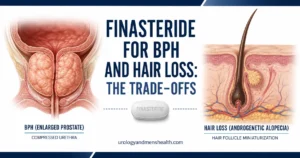
Finasteride and dutasteride are the only treatments proven to reduce prostate size, and they work slowly — expect roughly 6 to 12 months for a volume reduction of about 20 to 25 percent. They suit men with truly large prostates. Because they can lower libido or affect erections in a minority of men, the trade-offs are worth discussing, as our guide to finasteride for BPH explains.
Can losing weight reduce prostate size?
Losing weight is unlikely to shrink the prostate measurably, but it is one of the most effective natural moves you can make for urinary symptoms. Excess weight and inactivity worsen lower urinary tract symptoms, while regular exercise is linked with a meaningfully lower risk of BPH problems. Our article on sitting and prostate health explains why daily movement matters.
References
- Sandhu JS, Bixler BR, Dahm P, et al. Management of Lower Urinary Tract Symptoms Attributed to Benign Prostatic Hyperplasia: AUA Guideline Amendment 2023. J Urol. 2024;211(1):11-19. AUA
- National Institute of Diabetes and Digestive and Kidney Diseases. Prostate Enlargement (Benign Prostatic Hyperplasia). NIDDK
- Barry MJ, Meleth S, Lee JY, et al. Effect of Increasing Doses of Saw Palmetto Extract on Lower Urinary Tract Symptoms: A Randomized Trial (CAMUS). JAMA. 2011;306(12):1344-1351. PubMed
- National Center for Complementary and Integrative Health. Saw Palmetto: Usefulness and Safety. NCCIH
- Parsons JK, Kashefi C. Physical activity, benign prostatic hyperplasia, and lower urinary tract symptoms. Eur Urol. 2008;53(6):1228-1235. PubMed
Dr. Muhammad Khalid
MBBS · FCPS (Urology) · MCPS (General Surgery) · CHPE · CRSM · IMC #539472
Specialist urologist with 11+ years of clinical experience across tertiary teaching hospitals. Trained at Lady Reading Hospital and Khyber Teaching Hospital, Peshawar. Author or co-author of five peer-reviewed international publications, including in Cureus and the World Journal of Surgery. Procedural expertise: URS, PCNL, RIRS, TURP, TURBT, and major open urological surgery. Full profile →
This article is for educational purposes only and does not constitute medical advice. Always consult your physician or urologist for diagnosis and treatment decisions specific to your condition.