BPH and Erectile Dysfunction: Does an Enlarged Prostate Cause ED?
Most men assume an enlarged prostate is the cause of their erection problems. The real story behind BPH and erectile dysfunction — and the medication culprit hiding in plain sight — is far more fixable.

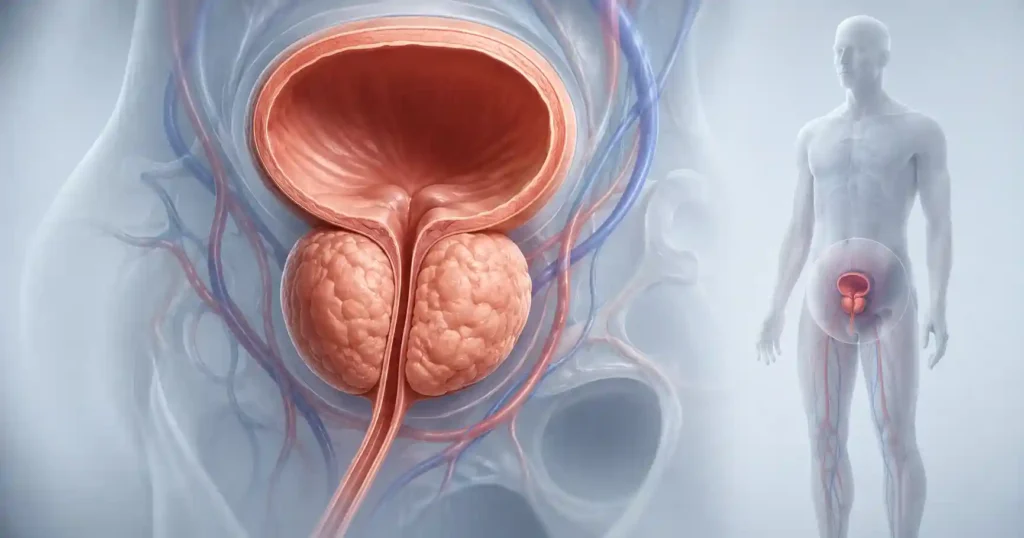
BPH and erectile dysfunction turn up in the same men so often that most assume one must cause the other. The honest answer is more useful than a simple yes. An enlarged prostate does not reach over and switch off your erections — but the two conditions grow from the same soil, and several of the most common BPH medications can quietly change erections or ejaculation. So can prostate surgery. In clinic, this mix-up causes real harm: men stop a drug that was helping their bladder because they blamed it for the wrong problem, or they accept a change to their sex life they could have avoided. This article separates what BPH itself does to erections from what its treatments do — and shows you where the fix is often simple. For the wider picture on prostate symptoms and screening, see our Prostate Health Hub.
Key Takeaways
- An enlarged prostate does not mechanically cause erectile dysfunction — the two share common causes like aging, poor blood vessel health, and metabolic syndrome.
- The strongest link is statistical: in the 12,815-man MSAM-7 survey, worse urinary symptoms predicted worse erections, independent of age and other illnesses.
- BPH medications are a frequent hidden cause — 5-ARIs (finasteride, dutasteride) can reduce erections and libido, while alpha-blockers (especially silodosin) mainly disrupt ejaculation.
- One drug, tadalafil 5 mg daily, is approved to treat both BPH symptoms and erectile dysfunction at once — often the smartest first move when you have both.
Does an enlarged prostate directly cause ED?
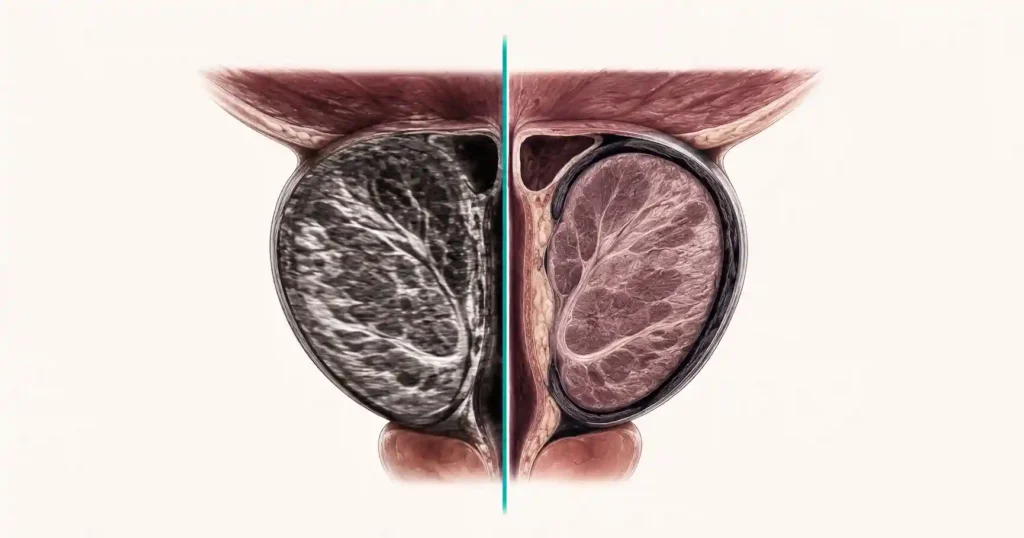
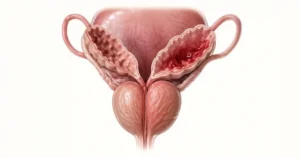
Here is the part that surprises most men: an enlarged prostate, on its own, does not cause erectile dysfunction. The prostate sits just below the bladder and wraps around the urethra, the tube that carries urine out. When it grows, it squeezes that tube and slows your stream. That is a plumbing problem.
An erection is a blood-flow event. When you are aroused, nerves signal the arteries in the penis to relax and fill the erectile tissue with blood. The prostate plays no part in that circuit. A prostate the size of an orange can sit right next to perfectly healthy erection machinery.
So when a man with BPH also has ED, the prostate is not the switch. Something is acting on both systems at once — or a treatment is. That distinction is the whole story, and it changes what you should do about it.
Why BPH and erectile dysfunction so often travel together
If BPH does not cause ED, why do they show up together so reliably? Because they share the same underlying biology. The clearest evidence comes from the MSAM-7 survey of 12,815 men aged 50 to 80: the worse a man’s urinary symptoms, the worse his erections — and urinary symptom severity predicted ED more strongly than diabetes, high blood pressure, or high cholesterol.[2] The link held even after accounting for age.
Three mechanisms drive this overlap. The first is blood vessel health — the same artery disease that starves the penis also lowers blood flow to the bladder and prostate, so both organs suffer together. The second is nitric oxide, the molecule that relaxes smooth muscle to let blood into the penis; the same signal helps relax the bladder neck and prostate, and when it runs low, both jobs falter. The third is an overactive “tightening” pathway (Rho-kinase) plus a revved-up sympathetic nervous system that stiffens smooth muscle in both places.
This is why the AUA treats coexisting BPH and ED as related problems to assess together rather than in separate silos.[4] It is also why the habits that protect your arteries — controlling blood pressure, blood sugar, weight, and activity — tend to help both your stream and your erections.
The hidden culprit: your BPH medication
For a large share of men who notice a sexual change after a BPH diagnosis, the cause is not the prostate at all — it is the prescription. The two main drug classes behave very differently, and telling them apart matters.
Alpha-blockers: usually an ejaculation change, not ED
Alpha-blockers such as tamsulosin, silodosin, alfuzosin, doxazosin, and terazosin relax the bladder neck and prostate to open the stream. Their main sexual effect is on ejaculation, not erection. Silodosin disrupts ejaculation most often — around 22 to 28 percent of men report reduced or “dry” ejaculation — while tamsulosin is lower and alfuzosin and doxazosin lower still.[3] True erectile dysfunction from alpha-blockers is uncommon, under 2 percent, and some men’s erections actually improve. If less semen comes out but your erection is fine, that is the drug doing its job nearby — harmless, and reversible if it bothers you.
5-alpha-reductase inhibitors: the ones that can affect erections
Finasteride and dutasteride shrink the prostate by blocking DHT, the hormone that drives its growth. These are the BPH drugs that can lower erections and dampen desire. In trials, finasteride raised erectile dysfunction to roughly 4 percent versus about 1 to 2 percent on placebo, with reduced libido and smaller ejaculate volume reported too; dutasteride runs slightly higher.[3] The absolute numbers are modest, but the effect is real, which is why the AUA tells clinicians to counsel men about sexual side effects before starting a 5-ARI.[1] A minority report symptoms that linger after stopping.
If your sex life shifted after a BPH prescription, the type of change points to the cause. Match your symptom to your drug with our BPH medication side effect checker, and if you are weighing finasteride specifically, our guide to finasteride side effects lays out the trade-offs.
In My Practice
A man in his late fifties once sat down certain his tamsulosin had caused erectile dysfunction. When I asked him to describe exactly what had changed, it turned out his erections were fine — what had changed was that almost no semen appeared when he climaxed. That is dry ejaculation from the alpha-blocker, and it is harmless. We kept the medication that was helping his stream, and his worry settled within a single visit.
The most useful question I ask is never “do you have ED?” but “what exactly changed, and when did you start the drug?” — the answer almost always points straight to the cause.
Weak stream and night-time trips wearing you down? Download Dr. Khalid’s BPH & Enlarged Prostate Guide.
Enter your email below to receive Dr. Khalid’s complete BPH & Enlarged Prostate Guide as a free, printable PDF.
Does BPH surgery cause erectile dysfunction?
Surgery worries men more than any pill, and here the honest picture is reassuring with one caveat. After the standard operations — TURP (transurethral resection) and HoLEP (laser enucleation) — the common lasting change is retrograde ejaculation: semen travels backward into the bladder instead of out, so orgasm becomes “dry.” This happens to most men after these procedures. It feels different, but it is harmless, and it does not affect the erection itself.
New erectile dysfunction after TURP or HoLEP is far less common, and when it happens it usually tracks with a man’s existing artery and nerve health rather than the surgery alone. If you want to protect ejaculation, the minimally invasive options — UroLift and Rezum — preserve it far better, which is a real consideration for younger or sexually active men.
The practical move is to ask your surgeon the specific question, not the vague one. “Will this affect my sex life?” invites a shrug; “What is your rate of retrograde ejaculation and of new ED with this procedure?” gets you a number. Our guide on when BPH needs surgery walks through how to weigh these options.
What to do if you have both BPH and erectile dysfunction
Start by naming what actually changed — erection, ejaculation, or desire — and when. That single detail usually identifies the cause faster than any test, and it stops men from quitting a drug that was helping their bladder.
If you have both bladder symptoms and ED, there is a neat option. Once-daily tadalafil 5 mg is approved to treat both at the same time. The AUA recommends discussing it for men with BPH whether or not they also have ED (Moderate Recommendation, Grade B).[1] One small pill, two problems — often the smartest first move.
If you are on finasteride or dutasteride and your erections or desire dropped, ask your urologist at your next visit whether you still need it — that depends on your prostate size and PSA — or whether an alpha-blocker or tadalafil would serve you better. Don’t stop it on your own.
And take ED itself seriously, because it is often an early warning sign of heart and blood vessel disease that shows up years before a cardiac event. Measure where you stand with our IIEF-5 erectile function self-assessment, and if ED is new or worsening, our protocol on erectile dysfunction treatment covers what a urologist can offer.
When ED Means See a Doctor Sooner
Erectile dysfunction deserves a proper assessment, not just a prescription. Get medical advice promptly if any of these apply:
- New ED with chest tightness or breathlessness on exertion — ED can precede heart disease by years; ask for a cardiovascular check.
- An erection lasting more than 4 hours (priapism) — this is an emergency; go to the ER.
- ED that started suddenly after a specific injury, pelvic surgery, or a new medication.
- ED alongside a very weak stream or an inability to pass urine — urinary retention needs same-day care.
Frequently Asked Questions
Does an enlarged prostate cause erectile dysfunction?
Not directly. An enlarged prostate squeezes the urethra, which is a plumbing problem, not a nerve or blood-flow problem. Erections depend on healthy arteries and nerves to the penis, which the prostate does not touch. The two conditions cluster because they share causes like aging and poor blood vessel health. For a wider view, see our prostate health hub.
Which BPH medication is least likely to affect my erections or ejaculation?
Among alpha-blockers, alfuzosin and doxazosin tend to disturb ejaculation less than silodosin or tamsulosin. The 5-alpha-reductase inhibitors finasteride and dutasteride are the ones most likely to reduce erections and desire. If your sex life changed after starting a BPH drug, our BPH medication side effect checker can help you match the symptom to the drug.
Can BPH and erectile dysfunction be treated with one medication?
Yes, and it is often the smartest first step. Once-daily tadalafil 5 mg is approved to treat both BPH urinary symptoms and erectile dysfunction at the same time. The AUA says it should be discussed for men with BPH whether or not they also have ED. You can gauge your ED severity first with our IIEF-5 self-assessment.
Will my erections recover if I stop finasteride?
For most men, yes — sexual side effects from finasteride usually improve within weeks of stopping. A small minority report symptoms that persist longer, a pattern still being studied. Never stop a prostate drug on your own, though; your prostate size and PSA decide whether you still need it. Our guide on finasteride side effects explains the trade-offs.
Does BPH surgery like TURP cause impotence?
Usually not in the way men fear. The common lasting change after TURP or HoLEP is dry orgasm — semen flows backward into the bladder rather than out. This is harmless. True new erectile dysfunction is much less common and is often linked to existing vascular health. Our guide on when BPH needs surgery covers how to weigh this.
References
- American Urological Association. Management of Lower Urinary Tract Symptoms Attributed to Benign Prostatic Hyperplasia (BPH): AUA Guideline. J Urol. 2021 (amended 2023). AUA
- Rosen R, Altwein J, Boyle P, et al. Lower urinary tract symptoms and male sexual dysfunction: the Multinational Survey of the Aging Male (MSAM-7). Eur Urol. 2003;44(6):637-649. PubMed
- DeLay KJ, Haney N, Hellstrom WJG. Ejaculatory dysfunction in the treatment of lower urinary tract symptoms. Transl Androl Urol. 2016;5(4):450-459. Transl Androl Urol
- Burnett AL, Nehra A, Breau RH, et al. Erectile Dysfunction: AUA Guideline. J Urol. 2018. AUA
Dr. Muhammad Khalid
MBBS · FCPS (Urology) · MCPS (General Surgery) · CHPE · CRSM · IMC #539472
Specialist urologist with 11+ years of clinical experience across tertiary teaching hospitals. Trained at Lady Reading Hospital and Khyber Teaching Hospital, Peshawar. Author or co-author of five peer-reviewed international publications, including in Cureus and the World Journal of Surgery. Procedural expertise: URS, PCNL, RIRS, TURP, TURBT, and major open urological surgery. Full profile →
This article is for educational purposes only and does not constitute medical advice. Always consult your physician or urologist for diagnosis and treatment decisions specific to your condition.