Nephrectomy: What Kidney Removal Surgery Really Means
Most men told they need a nephrectomy assume the whole kidney has to go. It often doesn't — and the difference between partial and radical removal shapes your kidney function for the next twenty years.

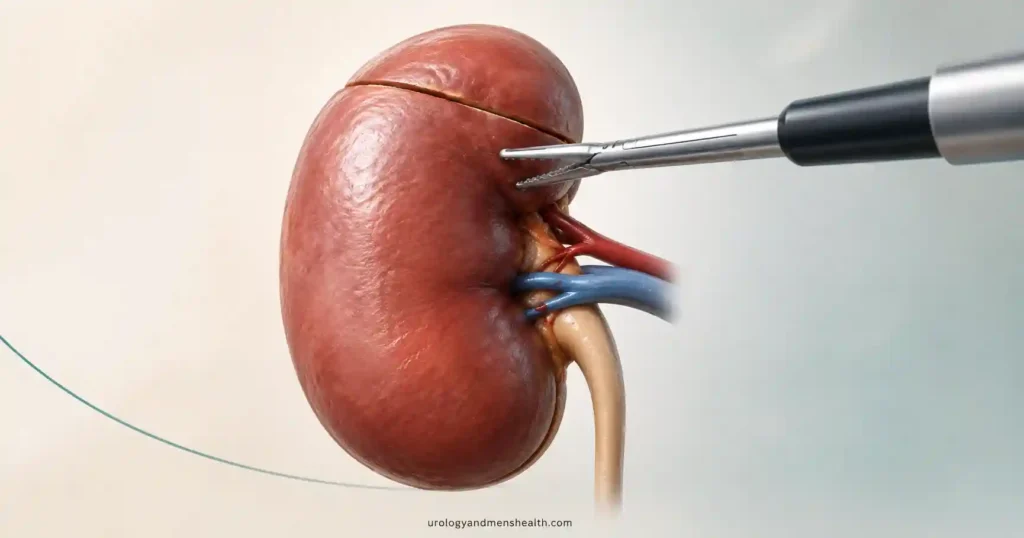
A nephrectomy is the surgical removal of all or part of a kidney, and the word lands harder on most patients than the operation deserves. When I tell a man in clinic that we need to take out part of his kidney, his first question is almost always whether he will end up on dialysis. For the large majority of patients, the answer is no. What matters far more than whether you are having a nephrectomy is which kind you are having. A partial nephrectomy cuts out the tumor and leaves the rest of the kidney filtering. A radical nephrectomy removes the whole kidney together with the fat around it and the fibrous envelope called Gerota’s fascia. For small tumors those two operations produce almost identical cancer outcomes — but very different kidney function fifteen years later. That gap is where the real decision sits, and it is the part most consultations rush past. Here is how the choice actually gets made, what recovery looks like week by week, and what genuinely changes when you have one kidney instead of two. For the wider picture on urological operations and healing, see our Urological Surgery & Recovery hub.
Key Takeaways
- The AUA prioritizes partial nephrectomy for kidney tumors under 4 cm (about 1.6 inches) because it lowers the risk of new or progressive chronic kidney disease without compromising cancer control.
- Radical nephrectomy roughly doubles the immediate drop in filtration rate compared with partial removal — an average fall of about 22 mL/min/1.73 m² versus about 10 mL/min/1.73 m² in a 7,073-patient US veterans cohort.
- One kidney does not do half the work of two. Compensatory enlargement typically restores filtration to around 70–80% of your previous total, not 50%.
- Robotic and laparoscopic kidney removal halve the rate of major postoperative complications compared with open surgery and cut hospital stay by roughly two to three days, with equivalent cancer margins.
- After any nephrectomy you need an annual eGFR blood test, an annual urine albumin test, and blood pressure below 130/80 mmHg for life — this is the single most neglected part of aftercare.
What a nephrectomy actually removes
Three different operations get grouped under one word, and the differences are not cosmetic.
Partial nephrectomy — also called nephron-sparing surgery — removes the tumor plus a thin rim of normal tissue around it. The renal artery is usually clamped for a period called warm ischemia while the tumor is cut out and the defect is sewn closed, then blood flow is restored. Everything that was not diseased keeps working. This is the operation you want if it is technically possible.
Radical nephrectomy removes the entire kidney inside its fatty envelope, along with Gerota’s fascia and the upper ureter. The adrenal gland sitting on top of the kidney is left alone unless imaging suggests the tumor has invaded it. Lymph nodes are sampled only when they look abnormal or the tumor is high-risk. This is a bigger anatomical clearance, and for a large or centrally located tumor it is the safer cancer operation.
Simple nephrectomy removes the kidney without the surrounding fascia and lymphatic clearance. It is used for non-cancer reasons: a kidney destroyed by long-standing obstruction, a chronically infected kidney fuelling repeated sepsis, an unsalvageable stone-wrecked kidney, or severe renal hypertension driven by one shrunken kidney.
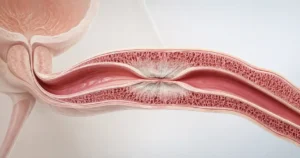
There is a fourth variant worth naming because patients confuse it with the others. A nephroureterectomy takes the kidney, the whole ureter, and a cuff of bladder around the ureteric opening. It is done for cancer of the kidney’s collecting system or ureter, not for tumors in the kidney tissue itself, and the recovery is longer because the bladder is opened.
Most nephrectomies in the United States are done for cancer. Between 2008 and 2017, more than 255,000 Americans had a kidney surgically removed to treat cancer, and a further 58,000 gave a kidney as living donors [7]. If your surgery was prompted by an incidental finding on a scan, the reasons a mass is investigated and what the imaging can and cannot tell you are covered in our guide to kidney masses and renal cell carcinoma.
Partial or radical nephrectomy: how the decision is really made
Tumor size sets the starting point, but it does not settle the argument.
For a cT1a mass — under 4 cm (about 1.6 inches) — the 2021 AUA Renal Mass and Localized Renal Cancer guideline is direct: clinicians should prioritize partial nephrectomy when intervention is indicated, because it minimizes the risk of chronic kidney disease or CKD progression while delivering excellent local cancer control [1]. The same guideline notes that roughly 20–25% of T1a tumors turn out to be benign on final pathology. Removing a whole kidney for a 2.5 cm lesion that was never cancer is a permanent injury for no oncological gain.
For a cT1b mass — 4 to 7 cm (about 1.6 to 2.8 inches) — the 2025 EAU Renal Cell Carcinoma guideline update states that partial nephrectomy is the preferred management option for localized cT1 disease where technically feasible, regardless of whether the surgeon goes open, laparoscopic or robotic [2]. “Technically feasible” is doing a lot of work in that sentence. A 6 cm tumor sitting on the outer surface of the kidney is a very different proposition from a 5 cm tumor wrapped around the renal hilum.
Beyond about 7 cm, or where the tumor is infiltrative, involves the renal vein, or sits so centrally that a partial resection would leave nothing usable behind, radical nephrectomy is the correct operation. The EAU is equally firm in the other direction: do not perform a minimally invasive radical nephrectomy in a T1 patient for whom a partial is achievable by any approach, including open [2]. A smaller scar is not worth a lost kidney.
Then there are the factors that override size entirely. The AUA prioritizes nephron-sparing surgery regardless of tumor dimensions when the patient has an anatomically or functionally solitary kidney, tumors in both kidneys, a known familial kidney cancer syndrome, pre-existing CKD, or protein in the urine [1]. Age matters too — a 48-year-old has four decades of kidney function ahead of him to protect.
Surgeons quantify difficulty using anatomical scoring systems such as the RENAL nephrometry score, which grades tumor size, how exophytic it is, how close it sits to the collecting system, whether it is anterior or posterior, and its position relative to the polar lines. A high complexity score does not forbid a partial nephrectomy — it predicts longer ischemia time, more blood loss, and a higher complication rate, which is information you deserve before consenting.
Two things are worth saying honestly about the evidence, because the nephron-sparing case is often oversold. The only completed randomized trial comparing the two operations, EORTC 30904, enrolled 541 patients with masses of 5 cm or less and a normal opposite kidney. At a median follow-up of 9.3 years, ten-year overall survival was 81.1% after radical nephrectomy and 75.7% after nephron-sparing surgery — the trial failed its non-inferiority test [3]. Only 12 of the 117 deaths were caused by kidney cancer, so the survival gap almost certainly reflects who was enrolled rather than what was cut, and the trial closed early with poor accrual. But it means the guidelines rest on the functional argument backed by large observational data, not on a clean randomized survival win.
In My Practice
The consultation I remember most clearly was a 52-year-old man referred with a 3.8 cm mass on the lower pole of his right kidney. He arrived already scheduled for a radical nephrectomy at another hospital and wanted a second opinion mainly to confirm the date. His creatinine was normal, but his urine dipstick showed protein and he had been diabetic for eleven years. Nobody had connected those two findings to the operation. We did a partial nephrectomy instead. Four years later his eGFR is 61 mL/min/1.73 m² — comfortably out of the danger zone. Had he lost the whole kidney, he would very likely have been in stage 3b CKD by now, with a diabetic nephropathy trajectory running underneath it.
Protein in the urine and long-standing diabetes should change the nephrectomy decision even when tumor size alone would allow radical removal — check the dipstick before you consent.
Open, laparoscopic, or robotic: why the surgical approach matters
Approach is a separate question from how much kidney comes out, and patients routinely conflate the two.
Open surgery uses a single flank or subcostal incision, typically 15 to 20 cm (about 6 to 8 inches), sometimes with a rib resected. It gives the widest exposure and remains the right choice for very large tumors, tumor extending into the renal vein or vena cava, and heavily scarred fields from previous surgery.
Laparoscopic surgery uses three or four ports of 5 to 12 mm plus a slightly larger site to extract the specimen. For radical nephrectomy in a T2 tumor not suitable for partial removal, this is the standard approach in most centers.
Robot-assisted surgery uses similar port sites but adds wristed instruments and magnified three-dimensional vision. That articulation matters most for partial nephrectomy, where the surgeon has to excise a tumor and sew the kidney closed against the clock while the artery is clamped.
The comparative data favour the minimally invasive route for perioperative recovery without sacrificing cancer control. A meta-analysis of 19 comparative studies including at least 3,551 patients found that robot-assisted partial nephrectomy carried a 40% lower relative risk of any postoperative complication and a 50% lower relative risk of major complications than open partial nephrectomy, with fewer transfusions, less blood loss, and a hospital stay shorter by about 2.6 days. Positive surgical margin rates and short-term change in eGFR were the same for both [5].
The trade-off is warm ischemia time. In the primary analysis, robotic cases had marginally longer clamp times, though that difference vanished when the analysis was restricted to studies with comparable tumor complexity [5]. Ask your surgeon two concrete questions: how many partial nephrectomies of this complexity they perform each year, and what their typical warm ischemia time is. Both correlate with outcome more strongly than the brand of equipment.
Where robotic platforms genuinely change outcomes in urology — and where they are marketingNephrectomy Recovery: Your Week-by-Week Plan and Kidney Function Checklist
Enter your email below to receive Dr. Khalid’s complete Urology Surgery Recovery Guide as a free, printable PDF.
The first 72 hours after kidney removal surgery
Most of what frightens patients in the first three days is normal and temporary. Knowing the sequence in advance removes a great deal of it.
Hours 0 to 6. You wake in a recovery unit with a urinary catheter, a drip, and usually a drain near the incision. The catheter is there so the team can measure urine output hourly — it is a monitor of your remaining kidney, not a sign anything has gone wrong. Pain is controlled with a combination of regional block, paracetamol, and short-course opioid. Non-steroidal anti-inflammatories such as ibuprofen are generally withheld in the early period after kidney surgery.
Hours 6 to 24. You sit out of bed and take sips of clear fluid. Shoulder-tip pain after laparoscopic or robotic surgery is common and comes from residual carbon dioxide irritating the diaphragm; it settles within a day or two. The nursing team will push you to walk sooner than you feel ready, and they are right to. Early mobilization is the most effective single measure against clots and chest infection.
Day 2. The catheter usually comes out. Diet advances as bowel sounds return. Bloods are checked — expect creatinine to be higher than your pre-operative value, and expect it to keep improving over subsequent weeks as the remaining kidney adapts.
Day 3. The drain comes out once output is low and clear. Bowel function returning is the practical gate for discharge. After minimally invasive surgery, most patients go home on day 2 or 3; after open surgery, day 4 to 6 is more typical.
One point on the catheter: if you have been catheterized and then cannot pass urine after it is removed, that is a recognized post-surgical problem rather than a sign your kidney has failed. Our guide to postoperative urinary retention explains why it happens and how it is managed.
Nephrectomy recovery timeline: week 1 to week 12
The wound heals in weeks. The abdominal wall takes closer to three months, and this is where people get into trouble by feeling well too early.
Weeks 1 to 2. Walking indoors several times a day, gradually extending distance. No lifting beyond about 2 kg (roughly 4 lb) — a kettle, not a suitcase. Keep the incision dry for the first 48 hours, then shower normally and pat dry. Constipation from opioids is close to universal; start a stool softener on day one rather than waiting for the problem. Fatigue in this window is profound and expected.
Weeks 2 to 4. Driving is reasonable once you are off opioids and can perform an emergency stop without guarding — test this stationary in your own car first. Desk-based work is often possible from week 2 or 3 after minimally invasive surgery, week 4 or later after open. Lifting limit rises to about 5 kg (roughly 11 lb).
Weeks 4 to 8. Reintroduce cardiovascular exercise before resistance work: brisk walking, stationary cycling, swimming once the wound is fully sealed. Direct abdominal loading — sit-ups, planks, heavy deadlifts — stays off the table. This is when your histology result is discussed and your surveillance imaging schedule is set based on final stage and grade.
Weeks 8 to 12. Progressive return to full lifting and gym work, building load over two to three weeks rather than resuming your previous programme in one session. Manual labourers and anyone whose job involves repeated lifting above 20 kg (about 44 lb) should expect 10 to 12 weeks after open surgery. This is also when your first meaningful post-operative eGFR should be measured — earlier readings are still settling.
Build a personalized day-by-day recovery schedule for your specific urological operationLiving with one kidney: what actually changes
The assumption that losing one kidney halves your filtration is wrong, and the correction is genuinely reassuring.
How far you fall depends heavily on which operation you had. In a cohort of 7,073 US veterans undergoing partial or radical nephrectomy between 2004 and 2013, the immediate decline in eGFR after radical removal was about twice as large as after partial removal — an average fall of roughly 22 mL/min/1.73 m² compared with roughly 10 mL/min/1.73 m². Significantly more radical nephrectomy patients still had an eGFR below 60 mL/min/1.73 m² at six months, and low eGFR both before and after surgery predicted worse long-term survival [4].
That is where the long-term risk lives, and it is worth being precise rather than either alarmist or dismissive. In a study linking 96,217 US living kidney donors to national registry data, the estimated risk of end-stage kidney disease fifteen years after donation was 30.8 per 10,000 donors, compared with 3.9 per 10,000 in matched healthy people who kept both kidneys. Estimated lifetime risk was 90 per 10,000 donors [6]. The relative increase is real and roughly eight-fold; the absolute risk remains under 1%. Cancer patients start from a worse baseline than screened donors, so the numbers are not directly transferable — but they establish the shape of the risk.
What follows from that is a short, specific surveillance list. The NIDDK is explicit that people with a solitary kidney need monitoring of kidney function and blood pressure, since the recognized complications are albuminuria, a reduced filtration rate, and hypertension [7]. In practice this means:
- An annual eGFR blood test — ask for it by name at your yearly review; it will not always be ordered automatically once you are discharged from urology.
- An annual urine albumin-to-creatinine ratio. This is the earliest signal that the remaining kidney is under strain, and it changes before creatinine does.
- Blood pressure below 130/80 mmHg. If you are already on treatment, ask whether an ACE inhibitor or angiotensin receptor blocker is appropriate — both lower pressure and slow protein leak.
- Nephrology referral if your eGFR falls below 45 mL/min/1.73 m², if albuminuria is confirmed on repeat testing, or if you are diabetic with pre-existing CKD. The AUA specifically flags these thresholds [1].
- Care with NSAIDs and contrast. Occasional ibuprofen is not forbidden, but regular use is a bad habit with one kidney. Tell every clinician ordering a contrast scan that you have a solitary kidney.
On contact sport, be pragmatic rather than fearful. A single kidney sits with less protective redundancy, so boxing, rugby, and American football carry a consequence that a two-kidney athlete does not face. Discuss the specific sport with your surgeon rather than accepting a blanket ban. If you want to understand what the stage numbers on your blood results actually mean, our explainer on the stages of chronic kidney disease covers how eGFR maps to stage and what each stage requires, and you can check where your own reading sits using the CKD stage calculator.
Complications and red flags after a nephrectomy
Serious complications are uncommon, but the ones that matter declare themselves in the first two to three weeks, which is usually after you have gone home.
Bleeding is the complication surgeons watch hardest for in the first 24 hours, and the reason a drain is left in place. Urine leak is specific to partial nephrectomy: if the collecting system was opened and the repair weeps, drain output stays high and clear, and the fix is usually a ureteric stent rather than reoperation. Ileus — a temporarily paralyzed bowel — causes distension, nausea and vomiting, and resolves with bowel rest.
Incisional hernia is the late complication of open flank surgery, and it is largely preventable by respecting the lifting restrictions during weeks 4 to 12. Flank bulge is different: weakness of the abdominal wall muscles from nerve injury during a flank incision. It looks like a hernia, is not one, and rarely needs surgery.
Venous thromboembolism is the risk that most often gets underestimated at home, because it arrives once patients have stopped walking as much as they did on the ward. Keep moving.
When to Call and When to Go to the ER
Contact your surgical team the same day if you develop any of the following:
- Temperature above 38°C (100.4°F), or shaking chills
- Spreading redness, increasing pain, or discharge from the incision
- Calf pain, tenderness, or swelling in one leg
- A noticeable drop in how much urine you are passing over 24 hours
- Persistent vomiting with a distended, tight abdomen
Go to the emergency room immediately for chest pain or sudden breathlessness, heavy bright-red bleeding from the wound, or passing no urine at all for 8 hours. Tell the triage nurse in your first sentence that you have had a kidney removed and give the date — it changes which drugs and contrast agents are safe for you.
Frequently Asked Questions About Nephrectomy
How much kidney function will I lose after a radical nephrectomy?
Less than half, in most cases. The immediate drop averaged about 22 mL/min/1.73 m² in a large US veterans cohort, roughly double the fall seen after partial nephrectomy. Over six to twelve months the remaining kidney enlarges and increases its filtration, typically settling at 70 to 80% of your previous total. Check where your reading sits with the CKD stage calculator once you are three months post-surgery.
Is a partial nephrectomy always the better choice than removing the whole kidney?
No. It is preferred for tumors under 4 cm and usually for those up to 7 cm, because it protects kidney function. But for large, central, or infiltrative tumors, or where the renal vein is involved, radical removal is the safer cancer operation. Complex partial resections also carry more bleeding and urine-leak risk. The tumor’s anatomy on your scan decides this — see our guide to kidney masses and renal cell carcinoma.
How long after a nephrectomy before I can lift weights or return to the gym?
Cardiovascular exercise can restart around week 4 to 6, but direct abdominal loading waits until week 8 to 12 while the abdominal wall regains strength. Rushing this is the main cause of incisional hernia after open flank surgery. Build load over two to three weeks rather than resuming your old programme in one session. Our post-operative recovery timeline tool maps this against your specific operation.
Should I avoid ibuprofen permanently after having a kidney removed?
Not permanently, but treat it as a drug you use occasionally rather than routinely. Non-steroidal anti-inflammatories reduce blood flow through the glomerulus, and with one kidney you have no reserve absorbing that hit. Avoid them entirely in the first six weeks, when dehydrated, or if your eGFR is under 60 mL/min/1.73 m². Our explainer on the stages of chronic kidney disease covers which readings warrant stricter caution.
Does robotic nephrectomy give better cancer outcomes than open surgery?
No — the cancer outcomes are equivalent. Pooled data from 19 comparative studies found identical positive surgical margin rates and similar short-term kidney function between robotic and open partial nephrectomy. What robotic surgery genuinely improves is recovery: roughly half the rate of major complications, fewer transfusions, and about 2.6 fewer days in hospital. Our review of robotic surgery in urology separates the real gains from the marketing.
References
- Campbell SC, Clark PE, Chang SS, et al. Renal Mass and Localized Renal Cancer: Evaluation, Management, and Follow-Up. AUA Guideline. 2021 (amended). AUA
- European Association of Urology Renal Cell Carcinoma Guidelines Panel. EAU Guidelines on Renal Cell Carcinoma: 2025 Update. EAU Guidelines. 2025. Uroweb
- Van Poppel H, Da Pozzo L, Albrecht W, et al. A prospective, randomised EORTC intergroup phase 3 study comparing the oncologic outcome of elective nephron-sparing surgery and radical nephrectomy for low-stage renal cell carcinoma. Eur Urol. 2011;59(4):543-552. PubMed
- Streja E, Kalantar-Zadeh K, Molnar MZ, et al. Radical versus partial nephrectomy, chronic kidney disease progression and mortality in US veterans. Nephrol Dial Transplant. 2018;33(1):95-101. PubMed
- Xia L, Wang X, Xu T, Guzzo TJ. Systematic Review and Meta-Analysis of Comparative Studies Reporting Perioperative Outcomes of Robot-Assisted Partial Nephrectomy Versus Open Partial Nephrectomy. J Endourol. 2017;31(9):893-909. PubMed
- Muzaale AD, Massie AB, Wang MC, et al. Risk of end-stage renal disease following live kidney donation. JAMA. 2014;311(6):579-586. PubMed
- National Institute of Diabetes and Digestive and Kidney Diseases. Solitary or Single-functioning Kidney. Last reviewed October 2020. NIDDK
Dr. Muhammad Khalid
MBBS · FCPS (Urology) · MCPS (General Surgery) · CHPE · CRSM · IMC #539472
Specialist urologist with 11+ years of clinical experience across tertiary teaching hospitals. Trained at Lady Reading Hospital and Khyber Teaching Hospital, Peshawar. Author or co-author of five peer-reviewed international publications, including in Cureus and the World Journal of Surgery. Procedural expertise: URS, PCNL, RIRS, TURP, TURBT, and major open urological surgery. Full profile →
This article is for educational purposes only and does not constitute medical advice. Always consult your physician or urologist for diagnosis and treatment decisions specific to your condition.