Orchidopexy: What It Is, Why It’s Done, and When
Orchidopexy usually takes under an hour and the child goes home the same day — yet almost everything that determines the result was decided months before he reached the operating room.

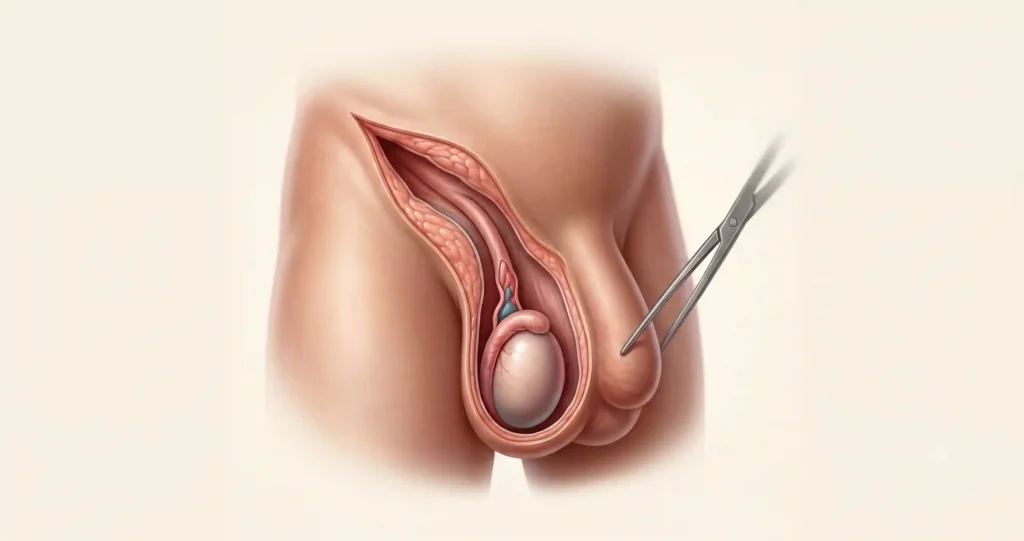
Orchidopexy is the operation that brings an undescended testicle down out of the groin or abdomen and fixes it inside the scrotum, where it belongs. It is one of the most commonly performed operations in pediatric urology, and one of the most commonly performed late. In my experience the surgery itself is rarely the difficult part — a straightforward palpable testis takes well under an hour and the child goes home the same day. What determines the long-term result is how many months that testis spent sitting at body-core temperature before anyone acted. Germ cells inside a testis held outside the scrotum are lost progressively, not all at once, and no operation gives them back. This article covers what the procedure does, the timing window that actually matters, what happens in theater, a realistic recovery timeline, and why the calculation changes completely once a male has been through puberty.
Key Takeaways
- The American Urological Association sets referral at six months corrected age if the testis has not descended on its own, with surgery in the following year — so the target window closes at roughly 18 months.
- Ultrasound before referral is explicitly not recommended: it localizes a non-palpable testis with only about 45% sensitivity and mostly buys delay.
- Surgery reduces cancer risk but does not remove it. In a Swedish cohort of 16,983 men, testicular cancer risk was 2.23 times the general population after orchidopexy before age 13, versus 5.40 times when done at 13 or later.
- Most boys are back at nursery or school within a week; straddle toys, bikes and contact sport wait about four weeks.
- After puberty, with one undescended testis and a normal partner testis, removal is often the better option than repositioning — the retained testis almost never produces sperm.
What Orchidopexy Actually Does
An undescended testicle — the medical term is cryptorchidism — means the testis stopped somewhere along its normal migration path and never reached the scrotum. It affects roughly 1% to 3% of full-term male infants and between 15% and 30% of premature ones, because the final stage of descent happens late in the third trimester [1]. Premature birth simply interrupts the journey partway.
About 70% of undescended testes can be felt on careful examination — usually in the inguinal canal or the superficial inguinal pouch just outside it. Of the 30% that cannot be felt, roughly 55% turn out to be inside the abdomen, around 30% are in the inguinal-scrotal region after all, and about 15% are absent or “vanishing,” having been lost in utero to a vascular accident [1]. That distribution matters, because it dictates whether the operation is a small groin incision or a laparoscopy.
The scrotum is not decorative. It holds the testis roughly 2 to 3 degrees Celsius (about 4 to 5 degrees Fahrenheit) below core body temperature, and spermatogonia — the stem cells that will one day become sperm — do not tolerate core temperature well. A testis parked in the groin is being slowly cooked. Orchidopexy stops that clock and, secondarily, puts the testis somewhere a man can actually examine it for the rest of his life. This procedure sits within our wider urological surgery and recovery hub, which covers what to expect around any urological operation.
Why the Timing Window Matters More Than the Operation
The AUA cryptorchidism guideline, published in 2014 and revalidated in 2025, is unambiguous. If a testis identified as undescended at birth has not come down by six months corrected for gestational age, the child should be referred to a surgical specialist, and that specialist should operate within the following year [1]. European Association of Urology and ESPU guidance is tighter still, favoring surgery between 6 and 12 months, with 18 months as the outer limit [7][3].
Six months is not arbitrary. Spontaneous descent does happen — it is common in the first three months, particularly in premature infants — but it becomes very unlikely after six months corrected age [1]. Waiting past that point is no longer watchful waiting. It is just waiting.
What is being lost during that wait is measurable. The fertility index — spermatogonia per seminiferous tubule — starts to fall after the first year in an undescended testis, and the longer the testis stays out of position, the higher the rate of germ cell loss and the worse the adult semen parameters [1]. Testes operated on at nine months grow better afterwards than testes operated on at three years. Untreated cryptorchidism behaves like a progressive condition, not a static birth anomaly. That distinction is the whole argument for early surgery, and it also explains why a man born with an undescended testis may end up in a fertility clinic decades later — a pathway covered in our guide to what a urologist looks for in male infertility.
Here is the uncomfortable part. Guideline adherence is poor almost everywhere it has been measured. A German national analysis of 2019 data found only 15% of hospital-treated boys and 5% of those treated in private practice had their orchidopexy before their first birthday, a decade after the national guideline set that target [4]. If your son has an undescended testicle, assume the system will drift and push the referral date yourself.
In My Practice
The referrals that frustrate me most are not the complicated intra-abdominal testes. They are the two-year-olds whose parents were told at the six-week check that “it will probably come down on its own” and were never re-examined. The testis was palpable in the groin the whole time. Nobody was negligent — the child simply fell through the interval between well-child visits, and the surgical clock ran while everyone waited for reassurance that was never going to arrive.
If your son’s testicle is not sitting in the scrotum at the six-month check, ask for a urology or pediatric surgery referral at that appointment rather than agreeing to review it in six months.
What Happens During Orchidopexy Surgery
Every orchidopexy is done under general anesthesia, almost always as a day case, usually with a caudal or local block so the child wakes comfortable. What happens next depends entirely on whether the testis can be felt.
Palpable testis. The surgeon makes a small incision — typically 2 to 3 cm (about an inch) — in the groin crease, or a single scrotal incision for a low-lying testis. The spermatic cord is freed from its attachments to gain length, and the patent processus vaginalis, which is effectively a small hernia sac and is present in most of these boys, is divided and closed. The testis is then seated in a pouch created between the skin and the dartos muscle of the scrotum, which holds it down without needing a stitch through the testis itself.
Non-palpable testis. The child is examined again under anesthesia, because a relaxed abdominal wall makes some testes suddenly findable. If it is still not palpable, diagnostic laparoscopy follows — this is the reference standard, and it both locates the testis and treats it in the same sitting [1]. This is also why guidelines advise against ordering an ultrasound first: it will not change what happens in theater.
High intra-abdominal testis. When the testicular vessels are too short to reach the scrotum, the surgeon divides them deliberately and relies on collateral blood supply from the vas deferens — the Fowler-Stephens approach. A systematic review of 61 studies found pooled success rates of 80% for the single-stage procedure and 85% for the two-stage version, with the staged approach favored on odds-ratio comparison [5]. If your surgeon proposes two operations six months apart, that is why.
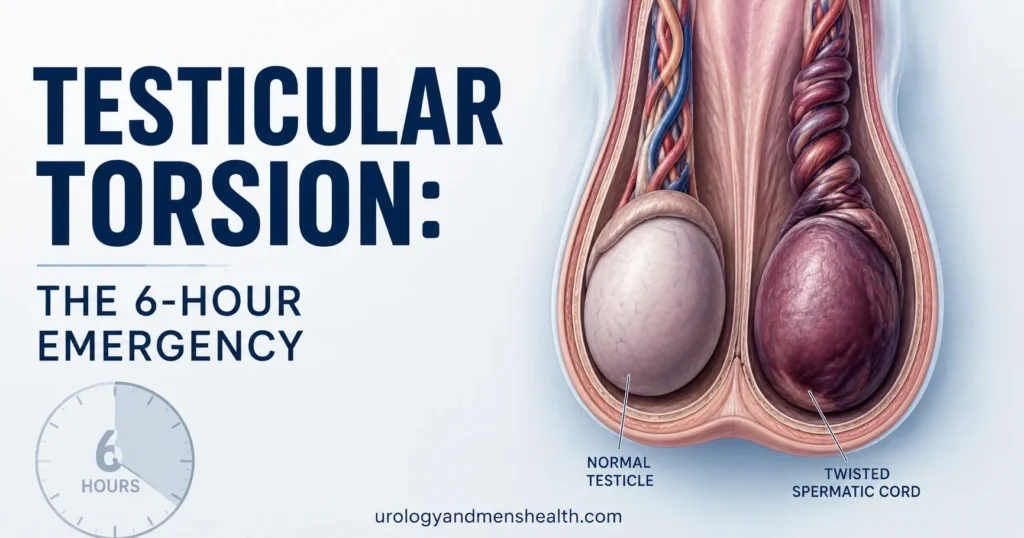
One point of confusion worth clearing up: the word “orchidopexy” is also used for the fixation stitches placed at emergency scrotal exploration for a twisted testicle. Same word, entirely different indication and urgency.
Related: the six-hour window in testicular torsion, and why fixation is done on both sidesUndescended testicle corrected? Get the testicular self-check guide your son will need for life.
Enter your email below to receive Dr. Khalid’s complete Testicular Cancer Self-Check Guide as a free, printable PDF.
Orchidopexy Recovery: The Realistic Timeline
Orchidopexy recovery is genuinely easier than most parents brace for, and the main risk to the result is a toddler who feels well too soon.
- Days 0 to 2: Bruising and scrotal swelling are expected and often look worse than they are. Alternating acetaminophen (paracetamol) and ibuprofen at weight-based doses is usually enough. Keep the wound dry for the first 48 hours.
- Days 3 to 7: Most children return to nursery or school. Sutures are absorbable — nothing needs removing. Bathing is fine once the dressing is off.
- Weeks 2 to 3: No straddle toys, ride-on cars, bicycles or trampolines. This is the single instruction parents most often relax early, and it is the one that puts tension on a fresh repair.
- Week 4 onward: Contact sport, swimming lessons and rough play are normally cleared, though confirm at your post-operative appointment.
Sudden, severe scrotal pain at any point after the first few days is not part of normal recovery and should never be attributed to “post-op soreness.” If that happens, work through the acute testicular pain triage tool and treat a positive result as an emergency room visit, not a phone call in the morning.
When to Call the Surgical Team Today
Contact the operating team the same day — or attend the emergency room if you cannot reach them — for any of the following in the first two weeks:
- Fever above 38°C (100.4°F)
- Scrotal swelling that is increasing rather than settling after day three
- Spreading redness, or cloudy or foul-smelling discharge from the wound
- Pain that is worsening rather than easing, or not controlled by regular analgesia
- You can no longer feel the testicle in the scrotum where it was placed
Orchidopexy in Teenagers and Adults
Once a male has been through puberty, the arithmetic changes and the answer often stops being “bring it down.”
AUA guidance states that removal of the undescended testis may be performed where the contralateral testis is normal and the patient is post-pubertal, or where the testis is markedly hypoplastic or has very short vessels [1]. The rationale is blunt: the retained testis contributes almost nothing, and it carries the cancer risk that surveillance cannot fully manage.
A 2024 series examined orchiectomy specimens from 23 post-pubertal patients, mean age 21 years, all with testes in the inguinal canal. One had a seminoma — about 4% of the cohort. Among the remaining 22, not one showed normal spermatogenesis, and seminiferous tubules were absent altogether in 19 [6]. That is what “we can bring it down but it will not do anything” looks like under a microscope.
The exception is bilateral disease. When both testes are undescended, removing them means lifelong testosterone replacement, so repositioning plus long-term surveillance is usually preferred despite the residual malignancy risk. If you are an adult in this situation, ask your urologist specifically: what is my testosterone level now, is there any realistic sperm-production potential on semen analysis, and what does the surveillance schedule involve? Then push for a decision within one to two clinic visits rather than drifting. Whichever route you take, learn to examine what remains — our guide to recognizing testicular lumps and performing a self-exam covers exactly what a suspicious finding feels like.
Risks, Complications, and Why Follow-Up Never Really Ends
Orchidopexy for a palpable testis is a low-complication operation, but it is not a no-complication operation. The recognized risks are wound infection, hematoma, injury to the vas deferens or testicular vessels, testicular atrophy from compromised blood supply, and re-ascent of the testis out of the scrotum. Atrophy is uncommon after standard inguinal repair and considerably more common after Fowler-Stephens procedures, where the main vessels have been deliberately divided [5][3].
The claim that gets overstated most often is cancer prevention. Orchidopexy reduces testicular cancer risk; it does not normalize it. In the Swedish cohort of 16,983 surgically treated men followed for 209,984 person-years, relative risk versus the general population was 2.23 for surgery before age 13 and 5.40 for surgery at 13 or older [2]. Early surgery roughly halves the excess risk. It does not erase it.
It is worth holding the honest counterweight alongside that. A number-needed-to-treat analysis of the same Swedish data estimated that around 372 boys would need orchidopexy by age six, rather than later, to prevent one case of testicular cancer, and roughly 5,315 to prevent one cancer death [8]. Early surgery is still the right call — the fertility argument alone carries it — but no parent should be told their son will get cancer if the operation slips by a year. That is not what the numbers say.
Practical follow-up: expect a review around six months after surgery to confirm the testis is still low in the scrotum and has not shrunk. Beyond that, the surveillance is lifelong and it is the patient’s own hands doing it. From adolescence onward, a monthly self-examination of both testes is the realistic screening tool — there is no blood test or scan program for this population.
Use the guided testicular self-exam walkthrough — a step-by-step check that takes two minutesFrequently Asked Questions About Orchidopexy
Is orchidopexy still worth doing if my son is already four years old?
Yes. The germ cell loss that has already occurred cannot be reversed, but the loss continues for as long as the testis stays out of position, so surgery still protects what remains. It also moves the testis somewhere it can be examined for life, which matters given the ongoing cancer risk. The fertility outlook is less favorable than it would have been at nine months, particularly if both sides were affected — a semen analysis in early adulthood is the honest way to find out, and our overview of male infertility assessment explains what that testing involves.
Does orchidopexy remove the testicular cancer risk that comes with an undescended testicle?
No, and any source that says otherwise is wrong. Surgery reduces the risk substantially when done before puberty — relative risk of 2.23 versus the general population, compared with 5.40 for surgery at 13 or older — but the testis remains at higher-than-average risk permanently. That is why self-examination from adolescence onward is not optional. Learning what a suspicious testicular lump actually feels like is the single most useful thing a man with this history can do.
My son had orchidopexy years ago — can that testicle still twist?
Fixation in a dartos pouch reduces the chance of torsion but does not make it impossible, and orchidopexy for an undescended testis is not performed with torsion prevention as its aim. Sudden severe testicular pain, often with nausea and vomiting, is an emergency at any age and regardless of previous surgery. Do not wait to see if it settles. Our guide to the six-hour window in testicular torsion covers the symptom pattern and why the delay costs the testis.
How soon after orchidopexy can a boy go back to school and sport?
Most children return to nursery or school within three to seven days. The restriction that matters is on anything that puts pressure or traction on the groin and scrotum: no straddle toys, bicycles or trampolines for two to three weeks, and no contact sport for about four weeks. If sudden severe scrotal pain develops during that window, do not assume it is normal healing — work through the acute testicular pain triage tool and act on the result the same day.
Can an adult with an undescended testicle have orchidopexy, or is removal the only option?
Repositioning is technically possible in adults, but with one undescended testis and a normal partner testis, guidelines support removal instead — post-pubertal undescended testes almost never produce sperm, and one series found no normal spermatogenesis in any of 22 tumor-free specimens. If both testes are undescended, they are usually retained for hormone production, with orchidopexy plus lifelong surveillance. Either way, ask your urologist for a decision within one or two visits, and start monthly checks using the guided self-exam walkthrough.
References
- Kolon TF, Herndon CDA, Baker LA, et al. Evaluation and Treatment of Cryptorchidism: AUA Guideline. American Urological Association. Published 2014; validity confirmed 2025. AUA
- Pettersson A, Richiardi L, Nordenskjold A, et al. Age at surgery for undescended testis and risk of testicular cancer. N Engl J Med. 2007;356(18):1835-1841. PubMed
- Pakkasjärvi N, Taskinen S. Surgical treatment of cryptorchidism: current insights and future directions. Front Endocrinol (Lausanne). 2024;15:1327957. PubMed
- Schmedding A, van Wasen F, Lippert R. Are we still too late? Timing of orchidopexy. Eur J Pediatr. 2023;182(3):1221-1227. PubMed
- Elyas R, Guerra LA, Pike J, et al. Is staging beneficial for Fowler-Stephens orchiopexy? A systematic review. J Urol. 2010;183(5):2012-2018. PubMed
- Ergül RB, Bayramoğlu Z, Keçeli AM, Dönmez Mİ. Risk for testicular germ cell tumors and spermatogenesis failure in post-pubertal undescended testes. Int Urol Nephrol. 2024;56(7):2269-2274. PubMed
- EAU/ESPU Guidelines on Paediatric Urology: Management of Undescended Testes. European Association of Urology. 2025. EAU
- Higgins M, Smith DE, Gao D, Wilcox D, Cost NG, Saltzman AF. The impact of age at orchiopexy on testicular cancer outcomes. World J Urol. 2020;38(10):2531-2536. PubMed
Dr. Muhammad Khalid
MBBS · FCPS (Urology) · MCPS (General Surgery) · CHPE · CRSM · IMC #539472
Specialist urologist with 11+ years of clinical experience across tertiary teaching hospitals. Trained at Lady Reading Hospital and Khyber Teaching Hospital, Peshawar. Author or co-author of five peer-reviewed international publications, including in Cureus and the World Journal of Surgery. Procedural expertise: URS, PCNL, RIRS, TURP, TURBT, and major open urological surgery. Full profile →
This article is for educational purposes only and does not constitute medical advice. Always consult your physician or urologist for diagnosis and treatment decisions specific to your condition.