Kidney Mass & Renal Cell Carcinoma: A Urologist’s Guide
Discovering a "complex cyst" or "kidney lesion" on an unrelated scan usually triggers immediate, late-night panic. Yet the reassuring truth is that most kidney masses found by accident are small, highly treatable, and rarely require removing the whole kidney. Here is what I explain in clinic.

If you are reading this, someone has likely told you that you have a kidney mass & renal cell carcinoma — and the words are sitting somewhere in your head, probably from a search bar at 2 a.m. I see this every week in clinic. A man comes in for back pain or an unrelated CT scan, and the report mentions a “renal lesion” or “complex cyst.” His next 48 hours are spent reading worst-case stories online.
Here is what you need to hear first: most kidney masses found incidentally are small, treatable, and have excellent outcomes. A simple cyst is almost never cancer. A small solid mass under 4 cm has a 5-year survival above 93% when treated. Even when the diagnosis turns out to be cancer, modern surgery preserves the kidney in most cases. This guide walks you through what your scan actually means, how the Bosniak classification works, when biopsy is appropriate, and what realistic treatment looks like — written in the same words I use across the desk in clinic.
Key Takeaways
- Most kidney cysts are benign. Bosniak I and II cysts have a malignancy risk under 3% and need no follow-up.
- A solid enhancing mass is treated as cancer until proven otherwise — but around 20% of small solid masses turn out to be benign on final pathology.
- The classic triad of flank pain, blood in urine, and a palpable mass is now rare. Over 60% of renal cell carcinomas are found incidentally on scans done for other reasons.
- Stage I RCC has a 5-year relative survival of around 93% in US data. Early diagnosis is decisive.
- Partial nephrectomy is the standard of care for small tumors wherever technically possible — kidney function matters for the rest of your life.
Why You’re Reading This: The Incidental Finding That Changes a Day
Twenty years ago, kidney cancer was usually diagnosed in late stage. A man would come in with weight loss, blood in the urine, and a mass you could feel through the abdominal wall. By then, the cancer had often spread.
That picture has changed. The widespread use of ultrasound and CT scanning for unrelated complaints — back pain, gallstones, abdominal discomfort, kidney stones — now picks up small kidney masses in patients who feel completely well [1]. Around 60-70% of renal cell carcinomas in the US are now diagnosed incidentally, and most of those tumors are still confined to the kidney [2]. That is good news, even if the way you found out feels brutal.
The first job is to figure out what kind of mass you have. Not every “lesion on the kidney” is cancer. Some are simple cysts that will never cause a problem. Some are benign tumors. Some are renal cell carcinoma. The pathway from a one-line radiology report to an actual diagnosis goes through three steps: characterizing the mass on imaging, deciding whether biopsy is useful, and choosing a management plan. We will walk through each.
→ Related Read: Blood in Urine (Hematuria): The 7 Causes Every Man Must KnowWhat Actually Counts as a Kidney Mass: Cysts vs. Solid Tumors vs. RCC
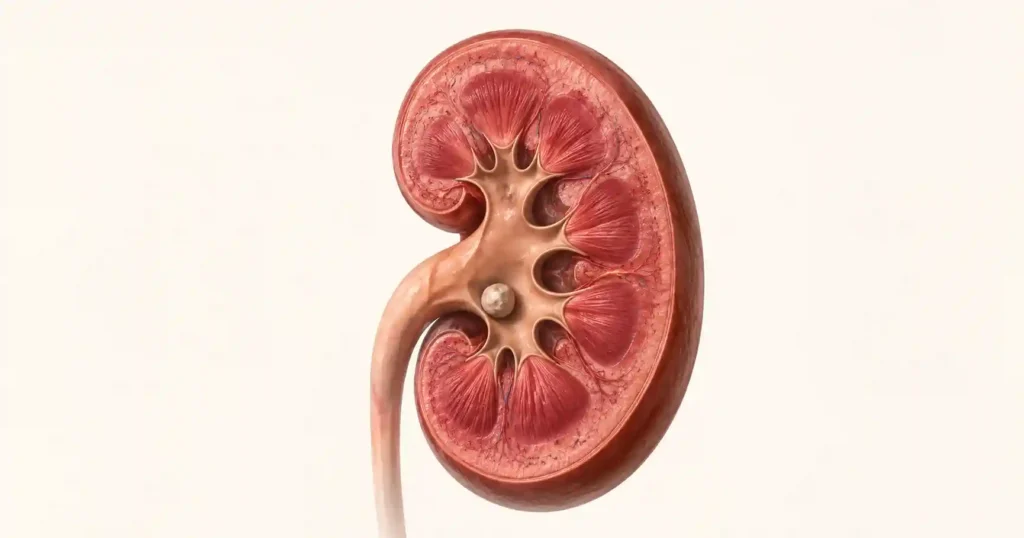
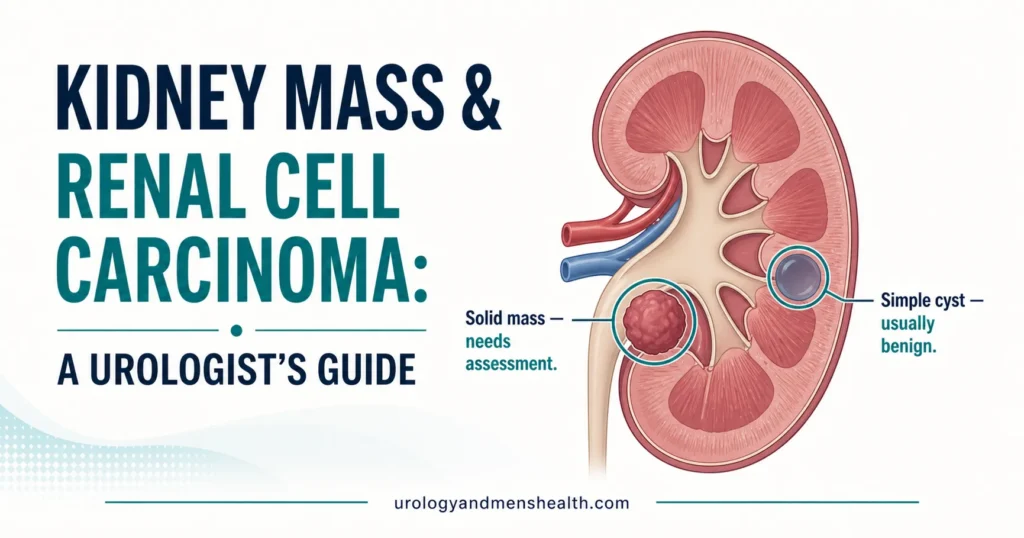
“Kidney mass” is a deliberately vague term. On a radiology report it covers anything from a tiny fluid-filled bubble to a large solid tumor. The first split is between cystic (fluid-filled) and solid (tissue). That distinction is everything.
Simple Cysts: Almost Never Cancer
A simple kidney cyst is a thin-walled balloon of clear fluid inside or attached to the kidney. They are extraordinarily common. By age 50, around 1 in 4 adults has at least one simple cyst. By age 70, more than half of people do [3]. They are not cancer, they do not usually grow into cancer, and unless they get very large or bleed, they cause no symptoms.
If your scan report says “simple renal cyst” or “Bosniak I,” and the radiologist did not flag any internal complexity, you can largely stop worrying. Most of these need no follow-up at all.
Complex Cysts: A Spectrum, Not a Diagnosis
Things get more interesting when a cyst has features the radiologist cannot dismiss — internal walls (called septa), thickened borders, calcifications, or areas that take up contrast dye. These are complex cysts, and they are graded using the Bosniak classification, which we cover in the next section.
Solid Masses: Treated as Cancer Until Proven Otherwise
A solid kidney mass — meaning tissue rather than fluid — that takes up contrast on a CT or MRI is treated as renal cell carcinoma until proven otherwise. About 80% of small solid enhancing masses are RCC. The other 20% are benign — usually oncocytomas (a benign tumor that mimics RCC) or angiomyolipomas (which contain fat and are usually identifiable on imaging) [4].
This is why your urologist’s tone shifts when the report says “solid enhancing mass” rather than “simple cyst.” It is not because they have decided you have cancer. It is because the working assumption — until imaging or biopsy says otherwise — has to be that you do.
💡 In My Practice
I had a patient in his late 50s who came in with a 3 cm solid mass found during a CT for a kidney stone. He was convinced it was a death sentence. After multiphase imaging and a partial nephrectomy, the final pathology came back as an oncocytoma — completely benign. He still needed surgery to get the diagnosis, but he kept his kidney and his prognosis was identical to anyone without a tumor.
The point: even with a solid mass, around 1 in 5 patients gets a benign diagnosis at the end. Do not assume the worst before the pathology is back.
The Bosniak Classification: How Cysts Are Graded I to IV
The Bosniak classification is the system radiologists use to rank cystic kidney lesions by their probability of being malignant. It was updated in 2019 to use multiphase CT or MRI as the standard, and to refine the category boundaries [5]. There are five categories.
Bosniak I — Simple Cyst
Thin wall, no septa, no calcifications, no enhancement. Pure fluid inside. Malignancy risk: under 1%. No follow-up needed. If the radiologist labels it Bosniak I, you can move on with your life.
Bosniak II — Minimally Complex
A few thin septa or small calcifications, but no enhancement. Malignancy risk: under 3%. No follow-up needed in most cases.
Bosniak IIF — The Watch-and-Wait Group
The “F” stands for follow-up. These cysts have more septa, slightly thicker walls, or more calcification than Bosniak II, but still no clear enhancement. Malignancy risk: around 5-10%. The standard approach is repeat imaging at 6 months, then yearly for 5 years. If nothing changes, the lesion is presumed benign.
Bosniak III — Indeterminate
Thickened walls or septa that take up contrast (enhance). Malignancy risk: around 50%. This is the category where surgery is usually the answer because imaging cannot tell you whether you are looking at cancer or a benign complex cyst. A urology referral is mandatory.
Bosniak IV — Cystic Cancer
Clear solid components within the cyst that enhance with contrast. Malignancy risk: around 90%. These are renal cell carcinoma until proven otherwise, and they get treated as cancer.
Bosniak in One Line
- I and II: Reassure and discharge.
- IIF: Watch over 5 years; most stay stable.
- III: Surgery, because imaging cannot rule out cancer.
- IV: Treat as cancer.
Solid Kidney Masses: Why Most Small Ones Are Still Cancer Until Proven Otherwise
If your scan shows a solid enhancing mass rather than a cyst, the conversation is different. Here is what the evidence actually says about what these masses turn out to be.
For solid renal masses 4 cm or smaller (called small renal masses or SRMs), the breakdown looks roughly like this [4][6]:
- Clear cell RCC (~70%): The most common type and the one most people mean by “kidney cancer.”
- Papillary RCC (~10-15%): Usually less aggressive, often picked up smaller.
- Chromophobe RCC (~5%): Rare, generally indolent, excellent prognosis.
- Oncocytoma (~5%): A benign tumor that on imaging is essentially indistinguishable from RCC. Diagnosis is made on pathology after surgery or biopsy.
- Angiomyolipoma and other benign (~5%): Often identifiable on imaging because they contain fat.
So when your urologist tells you “this is treated as cancer until proven otherwise,” what they mean is: the pre-test probability of cancer is around 80%, and we cannot reliably tell which 20% are benign without tissue or surgery. That is why the workup is aggressive. It is not because they think you definitely have cancer.
Size Matters — A Lot
Tumor size at diagnosis is one of the strongest predictors of outcome. Roughly speaking [7]:
- Under 2 cm (about ¾ inch): Slow-growing in most cases, very low metastatic risk, often eligible for active surveillance.
- 2-4 cm (¾ to 1½ inches): Standard small renal mass; partial nephrectomy or thermal ablation are first-line.
- 4-7 cm (1½ to 2¾ inches): Still kidney-sparing surgery in many cases, but radical nephrectomy enters the conversation.
- Over 7 cm: Higher chance of advanced disease; staging scans (chest CT and bone imaging if indicated) become standard.
This is the single biggest reason incidental discovery is a quiet good-news story. Tumors found because of an unrelated scan are usually small. Tumors found because of symptoms are usually not.
→ Related Read: Kidney Stones — A Complete Guide from a UrologistSymptoms That Suggest Trouble (and Why Most Cancers Have None)
The classic medical-school teaching is the “triad of renal cell carcinoma“: flank pain, blood in the urine, and a palpable abdominal mass. In modern practice, fewer than 1 in 10 patients present this way [2]. By the time all three are present together, the cancer is usually advanced. Most early renal cell carcinomas cause no symptoms at all. They are silent.
That said, here are the symptoms that should always trigger urological assessment:
Visible Blood in the Urine (Hematuria)
Visible blood in the urine — pink, red, or tea-colored — is the symptom most worth taking seriously. It can come from anywhere along the urinary tract, but RCC and bladder cancer are both on the list. Even one episode of painless visible hematuria warrants a urology evaluation, full stop. Microscopic hematuria (blood only seen on a urine test) is more common and usually benign, but persistent microscopic hematuria still needs investigation.
Persistent Flank or Loin Pain
A dull, constant ache in the flank — not the sharp wave-like pain of a kidney stone — that does not settle over weeks deserves imaging. Most flank pain is musculoskeletal or stone-related. Cancer is uncommon. But “uncommon” does not mean zero.
A Lump in the Abdomen
A mass you can feel through the abdominal wall is now rare at presentation but always significant. Anyone who finds a firm lump in the upper abdomen should see a doctor within a week.
Unexplained Weight Loss, Night Sweats, or a Constant Low-Grade Fever
RCC is unusual in that it can produce paraneoplastic symptoms — body-wide effects driven by substances the tumor releases. These include weight loss, fevers, night sweats, fatigue, anemia, and unexplained high blood pressure or high calcium levels on blood tests. None of these are specific to kidney cancer, but in combination with any urinary symptom they warrant scanning.
Varicocele That Appears Suddenly on the Right Side
This is a classical urology pearl. A new right-sided varicocele in an adult man can be caused by a kidney tumor obstructing the right gonadal vein. Most varicoceles are left-sided and benign. A new right-sided one in a man over 40 needs a kidney scan.
⚠️ When to See a Doctor — Urgently
- Visible blood in the urine — even one episode
- A firm lump you can feel in the abdomen
- Unexplained weight loss of more than 5% body weight over 3 months
- A new right-sided varicocele in a man over 40
- Persistent flank pain that does not settle over 4-6 weeks
- Any combination of the above
None of these prove cancer. But all of them buy you a scan and a urology opinion within weeks, not months.
How a Kidney Mass Is Diagnosed: The Imaging and Biopsy Pathway
The diagnostic pathway from “incidental finding” to “treatment plan” is more standardized than most patients realize. Here is what should happen, in the order it should happen.
Step 1: Multiphase Contrast-Enhanced CT or MRI
If a mass is found on ultrasound or a non-contrast CT, the next step is almost always a multiphase CT with intravenous contrast (or an MRI if you cannot have contrast). This single test does most of the diagnostic work. Multiphase imaging captures the kidney before, during, and after contrast, and lets the radiologist measure how much the mass enhances — meaning how much contrast it takes up. Solid enhancement above 15-20 Hounsfield units is the imaging signature of a vascular tumor and is the single most useful finding [5].
If your kidney function is borderline, contrast-enhanced MRI is preferred over CT because gadolinium MRI contrast is generally safer for the kidneys than iodinated CT contrast.
Step 2: Bosniak or Solid-Mass Categorization
The radiologist categorizes the mass: simple cyst, complex cyst with a Bosniak grade, or solid enhancing mass. Most of the management decision flows from this single categorization.
Step 3: Staging Scans (Solid Masses Only)
If the mass is solid and suspicious for cancer, the urologist orders chest imaging (usually a CT) to look for lung metastases, blood tests including kidney function and full blood count, and a urine test. Bone scans and brain scans are not routine — they are only done if symptoms suggest spread.
Step 4: Renal Mass Biopsy — When Yes, When No
This is the most misunderstood part of the pathway. Most kidney tumors are not biopsied before surgery. The reason is that for a solid enhancing mass, the imaging diagnosis of RCC is correct around 80% of the time, surgery is going to happen anyway in most cases, and biopsy carries a small risk of bleeding (around 4%) and a small risk of false negative results [8].
Renal mass biopsy is recommended in specific situations:
- Active surveillance candidates — to confirm cancer histology before committing to long-term watching
- Patients planning thermal ablation rather than surgery — to confirm the diagnosis before ablating
- Suspicion of lymphoma, metastasis from another primary cancer, or infection — where the treatment changes if the mass is not RCC
- Frail or elderly patients where avoiding unnecessary surgery is a priority
- Bilateral or genetic-syndrome cases where multiple tumors need histology
Biopsy is not recommended for very small tumors (under 2 cm where it is technically harder), large obvious tumors that are going to come out anyway, or cystic masses (where biopsy is unreliable).
💡 In My Practice
The most common reason patients get anxious at this stage is the gap between the radiology report and the urology consult. The report says “renal mass, RCC cannot be excluded,” and then they wait two weeks. Use those two weeks to do three things: get a copy of the actual scan and the report on a disc; arrange your blood tests (urea, creatinine, eGFR, full blood count, calcium) so the urologist has them on the day; and write down your questions.
The single most useful question is: “Based on these images, what is the realistic spectrum of what this could be, and what would change your management plan?” Any decent urologist will give you a real answer.
Over 40 and overdue a proper check? Download Dr. Khalid’s Men’s Health Screening Checklist.
Enter your email below to receive Dr. Khalid’s complete Men’s Health Screening Checklist as a free, printable PDF.
Treatment Options: Surveillance, Ablation, Partial Nephrectomy, Radical Surgery
Treatment for a kidney mass is one of the cleaner decisions in urology because the algorithm is well-defined. The four main options sit on a spectrum from least invasive to most invasive, and the right one depends on tumor size, location, your kidney function, your age, your other medical conditions, and your preference.
Active Surveillance
For small renal masses (typically under 2 cm, sometimes up to 4 cm) in older or frailer patients, active surveillance is a legitimate first option. The mass is monitored with serial imaging — usually every 6 months for the first 2 years, then yearly. The average growth rate of a small RCC is around 3 mm (about ⅛ inch) per year, and the metastatic risk during surveillance is around 1-2% [9].
Active surveillance is not the same as ignoring the tumor. It means committing to follow-up scans and switching to treatment if the tumor grows past a threshold (commonly 4 cm), grows rapidly, or develops worrying features.
Thermal Ablation (Cryoablation or Radiofrequency Ablation)
Thermal ablation uses a needle inserted through the skin (under CT or ultrasound guidance) to either freeze (cryoablation) or burn (radiofrequency or microwave ablation) the tumor. It avoids surgery, preserves kidney function, and has a much shorter recovery. Cancer-specific outcomes for tumors under 4 cm are reasonable but not quite as good as surgery in most studies [10].
Ablation is most appropriate for older patients, patients with significant other medical conditions, or anyone in whom surgery is high-risk. Most US guidelines now consider ablation a reasonable alternative to surgery for cT1a tumors (under 4 cm) in selected patients [11].
Partial Nephrectomy — The Standard for Small Tumors
Partial nephrectomy means removing only the tumor and a small margin of normal kidney, leaving the rest of the kidney intact. For tumors under 7 cm where it is technically possible, this is the standard of care in modern urology [11]. Cancer outcomes are equivalent to removing the whole kidney, and you keep your kidney function — which matters for cardiovascular health and life expectancy down the line.
Partial nephrectomy is now most often done robotically, with several small abdominal incisions and a brief warm ischemia time (the period when the renal artery is clamped). Open partial nephrectomy is still performed for complex tumors or in centers without robotic platforms. Both approaches give equivalent cancer outcomes when done by experienced surgeons.
Radical Nephrectomy — When the Whole Kidney Has to Go
Radical nephrectomy removes the entire kidney, the surrounding fat, and sometimes the adrenal gland and nearby lymph nodes. It is reserved for tumors where partial nephrectomy is not technically feasible: large tumors (usually over 7 cm), tumors centrally located near the renal vessels or collecting system, or tumors with venous extension into the renal vein or inferior vena cava.
One healthy kidney is normally sufficient for full kidney function, and most patients live without restriction after radical nephrectomy. The trade-off is that you have less renal reserve if the remaining kidney is ever damaged later in life — which is why partial nephrectomy is preferred whenever the tumor allows it.
Systemic Therapy for Metastatic Disease
If kidney cancer has spread beyond the kidney at the time of diagnosis (Stage IV), surgery is sometimes still part of the plan, but the main treatment is systemic therapy. The current standard for advanced clear cell RCC is combination therapy with immune checkpoint inhibitors (such as nivolumab plus ipilimumab) or an immune checkpoint inhibitor combined with a targeted tyrosine kinase inhibitor [12]. These regimens have transformed advanced RCC outcomes over the last decade and are the reason why even Stage IV survival numbers have moved upward.
→ Related Read: CKD Explained — Stages, Symptoms, and When to WorrySurvival Rates: What the Numbers Actually Mean for You
Survival statistics for renal cell carcinoma depend heavily on the stage at diagnosis. The most current US data, from the National Cancer Institute’s SEER database, breaks down 5-year relative survival roughly as follows [13]:
- Localized disease (cancer confined to the kidney): around 93%
- Regional disease (spread to nearby lymph nodes or tissues): around 71%
- Distant disease (metastatic): around 15-17%
- All stages combined: around 78%
A few things worth understanding about these numbers.
“5-Year Relative Survival” Has a Specific Meaning
It is the percentage of people with the cancer who are still alive 5 years after diagnosis, compared to the general population matched for age and sex. A 93% relative survival means that someone diagnosed with localized RCC has 93% of the survival expected of someone the same age without the cancer. It is a measure of the cancer’s impact on lifespan, not a death sentence ticking down.
These Numbers Are Already Out of Date — In Your Favor
SEER 5-year survival is calculated from people diagnosed years ago. The systemic therapy revolution of the late 2010s and 2020s has meaningfully improved metastatic RCC outcomes, but it has not yet fully shown up in published 5-year survival figures. Stage IV survival in 2026 is better than the published 15-17% figure suggests [12].
Stage I Outcomes Are Genuinely Excellent
This is the message I most want patients to internalize. If your kidney cancer is found incidentally, small, and confined to the kidney, you have an extremely high probability of long-term cure. Most of those patients die of something else — usually decades later, of unrelated causes. The challenge with kidney cancer is not curing early-stage disease. It is finding it before it spreads. You found yours.
💡 In My Practice
I tell patients with newly diagnosed Stage I RCC three things at the first consultation. One: the cancer is real, but the prognosis is excellent — better than most people expect when they hear the word cancer. Two: the surgery is well-tolerated, partial nephrectomy preserves kidney function in most cases, and recovery to normal activity takes 4-6 weeks. Three: after surgery, follow-up is structured (scans every 6 months for the first 2 years, then yearly for 5 years total), but it is not lifelong intense surveillance — most recurrences happen in the first 2-3 years.
I also tell them: kidney cancer in 2026 is not the disease it was in 1990. The treatment landscape has moved decisively in the patient’s favor, and we have many more options than urologists had a generation ago.
Frequently Asked Questions
Is a kidney mass always renal cell carcinoma?
No. Around 80% of small solid enhancing kidney masses turn out to be renal cell carcinoma on final pathology, but the other 20% are benign — most often oncocytomas or angiomyolipomas. Cysts are different again: a Bosniak I or II cyst has a malignancy risk under 3%. The label “kidney mass” covers a wide spectrum, and the workup is designed to figure out which kind you have. Hematuria is the symptom that most often triggers the scan that finds these masses.
What size kidney mass is considered dangerous?
Tumor size is one of the strongest predictors of behavior. Masses under 2 cm rarely metastasize and are often watched. Tumors 2-4 cm are typical small renal masses where partial nephrectomy or ablation are first-line. Tumors over 7 cm carry a higher risk of spread and need full staging scans. That said, size is only one factor — histology, location, and growth rate all matter. A 1.5 cm aggressive papillary RCC behaves differently from a 6 cm oncocytoma. See our kidney stone size chart for context on a different kidney size question.
Can a kidney cyst turn into cancer?
Simple Bosniak I and II cysts essentially never turn into cancer. They can sit unchanged for decades. Bosniak IIF cysts (the watch-and-wait group) carry a 5-10% malignancy risk and need follow-up imaging. Bosniak III lesions sit at around 50% malignancy risk, and Bosniak IV are treated as cancer. So while a true simple cyst is not a precursor to cancer, complex cysts with thick walls, septa, or enhancement can be — which is why the Bosniak grade matters more than the word “cyst” itself.
Do I need a biopsy before kidney cancer surgery?
Most kidney tumors are not biopsied before surgery. For a solid enhancing mass on multiphase CT, the diagnosis of RCC is correct around 80% of the time, and most patients are going to surgery anyway. Renal mass biopsy is offered selectively — for active surveillance candidates, before thermal ablation, when there is suspicion of metastasis from another cancer, or in frail patients where avoiding unnecessary surgery is a priority. The decision is made between you and your urologist based on what would change the management plan.
What is the survival rate for renal cell carcinoma?
5-year relative survival for kidney mass renal cell carcinoma depends almost entirely on stage at diagnosis. US SEER data shows around 93% for localized (Stage I-II) disease, around 71% for regional disease, and around 15-17% for metastatic disease. The all-stages figure is around 78%. Modern systemic therapy has improved metastatic outcomes beyond what published 5-year figures show. The single most important factor in your prognosis is whether the cancer is still confined to the kidney — and most incidentally found tumors are.
Will I lose my kidney if I have RCC?
In most cases, no. Partial nephrectomy — removing only the tumor and a small margin of healthy kidney — is the standard of care for tumors under 7 cm whenever it is technically possible. Cancer outcomes are equivalent to removing the whole kidney, and you keep your kidney function. Radical nephrectomy (removing the whole kidney) is reserved for large, central, or vascular-involved tumors. Even after radical nephrectomy, one healthy kidney is normally enough for full kidney function. Chronic kidney disease after surgery is uncommon when partial nephrectomy is feasible.
📚 References
- Hollingsworth JM, Miller DC, Daignault S, Hollenbeck BK. Rising incidence of small renal masses: a need to reassess treatment effect. Journal of the National Cancer Institute. 2006;98(18):1331-1334. PubMed
- Capitanio U, Bensalah K, Bex A, et al. Epidemiology of Renal Cell Carcinoma. European Urology. 2019;75(1):74-84. PubMed
- Tada S, Yamagishi J, Kobayashi H, et al. The incidence of simple renal cyst by computed tomography. Clinical Radiology. 1983;34(4):437-439. PubMed
- Frank I, Blute ML, Cheville JC, et al. Solid renal tumors: an analysis of pathological features related to tumor size. Journal of Urology. 2003;170(6 Pt 1):2217-2220. PubMed
- Silverman SG, Pedrosa I, Ellis JH, et al. Bosniak Classification of Cystic Renal Masses, Version 2019: An Update Proposal and Needs Assessment. Radiology. 2019;292(2):475-488. PubMed
- Kutikov A, Fossett LK, Ramchandani P, et al. Incidence of benign pathologic findings at partial nephrectomy for solitary renal mass presumed to be renal cell carcinoma on preoperative imaging. Urology. 2006;68(4):737-740. PubMed
- Thompson RH, Hill JR, Babayev Y, et al. Metastatic renal cell carcinoma risk according to tumor size. Journal of Urology. 2009;182(1):41-45. PubMed
- Marconi L, Dabestani S, Lam TB, et al. Systematic Review and Meta-analysis of Diagnostic Accuracy of Percutaneous Renal Tumour Biopsy. European Urology. 2016;69(4):660-673. PubMed
- Pierorazio PM, Johnson MH, Ball MW, et al. Five-year analysis of a multi-institutional prospective clinical trial of delayed intervention and surveillance for small renal masses: the DISSRM registry. European Urology. 2015;68(3):408-415. PubMed
- Pierorazio PM, Johnson MH, Patel HD, et al. Management of Renal Masses and Localized Renal Cancer: Systematic Review and Meta-Analysis. Journal of Urology. 2016;196(4):989-999. PubMed
- Campbell SC, Uzzo RG, Karam JA, Chang SS, Clark PE, Souter L. Renal Mass and Localized Renal Cancer: Evaluation, Management, and Follow-Up: AUA Guideline: Part II. Journal of Urology. 2021;206(2):209-218. AUA Guidelines
- Motzer RJ, Jonasch E, Agarwal N, et al. Kidney Cancer, Version 3.2022, NCCN Clinical Practice Guidelines in Oncology. Journal of the National Comprehensive Cancer Network. 2022;20(1):71-90. PubMed
- National Cancer Institute. SEER Cancer Statistics: Kidney and Renal Pelvis Cancer. Surveillance, Epidemiology, and End Results Program. SEER
Dr. Muhammad Khalid
MBBS · FCPS (Urology) · MCPS (General Surgery) · CHPE · CRSM · IMC #539472
Specialist urologist with 11+ years of clinical experience across tertiary teaching hospitals. Trained at Lady Reading Hospital and Khyber Teaching Hospital, Peshawar. Author or co-author of five peer-reviewed international publications, including in Cureus and the World Journal of Surgery. Procedural expertise: URS, PCNL, RIRS, TURP, TURBT, and major open urological surgery. Full profile →
This article is for educational purposes only and does not constitute medical advice. Always consult your physician or urologist for diagnosis and treatment decisions specific to your condition.