Nocturia Specialist: Which Doctor to See, When Surgery Helps
Most men who search for a nocturia specialist end up in a urology clinic, and roughly half of them are in the wrong room. Here is how a three-day bladder diary decides which doctor you actually need — and when an operation is worth it.

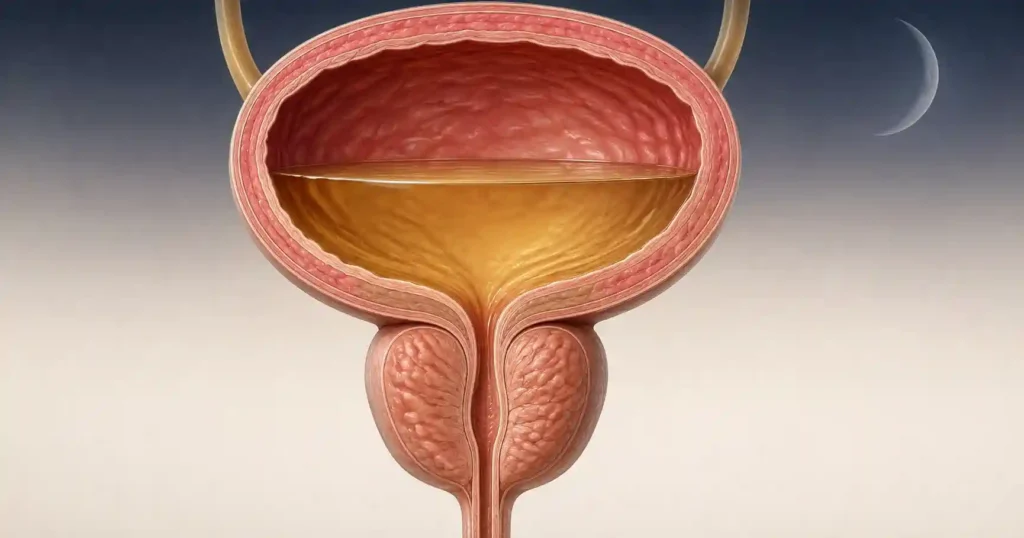
Searching for a nocturia specialist almost always lands a man in a urology clinic, and in my experience roughly half of those men are sitting in the wrong room. Waking at night to urinate is not a prostate diagnosis. It is a symptom produced by at least four separate mechanisms, only two of which a urologist can fix. Getting the order right matters, because the man whose kidneys are simply producing too much urine after midnight will not be helped by an operation on his prostate — and I have met several who found that out the expensive way. The single test that sorts this out costs nothing and takes three days. For the wider picture of how prostate size, symptoms, and surgery fit together, see our Prostate Health Hub. This article covers who should assess you, in what order, and what an operation realistically changes.
Key Takeaways
- A three-day bladder diary, not a prostate exam, is what identifies the cause of nocturia in most men.
- When more than one-third of your 24-hour urine output is produced at night, the problem sits in the kidneys, heart, or sleep — not the prostate.
- In a 2025 multicenter study of men undergoing prostate enucleation, 45% had complete resolution of nocturia, 30% were unchanged and 6% got worse [3].
- Predominant overactive bladder symptoms were the only significant predictor of no improvement after prostate surgery [3].
- Isolated nocturia — nighttime voiding with no other urinary symptoms — is not an indication for BPH surgery.
Nocturia Is Four Different Problems Wearing One Symptom
The International Continence Society defines nocturia as waking to void one or more times per night. Clinically, one void rarely bothers anyone. Two or more is where men start losing sleep, and where the condition begins to carry real consequences — daytime fatigue, falls in older men, and worse blood pressure control.
Four mechanisms produce it, and they are not variations of the same thing.
- Nocturnal polyuria. Your kidneys make a disproportionate share of the day’s urine while you sleep. Total 24-hour output is normal; the timing is wrong. This is the commonest cause in men over 60.
- Global polyuria. You produce too much urine around the clock — above roughly 40 mL per kilogram of body weight in 24 hours. Uncontrolled diabetes, high fluid intake, and diabetes insipidus sit here.
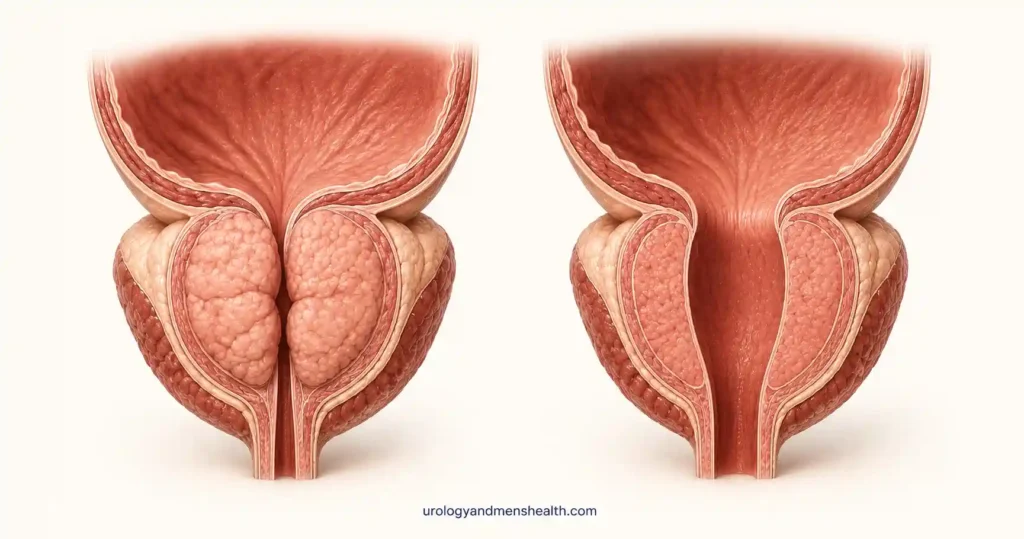
- Reduced bladder storage. The bladder cannot hold a normal volume. Bladder outlet obstruction from an enlarged prostate, detrusor overactivity, bladder stones, and bladder cancer all shrink functional capacity.
- Sleep disorder. You are waking for another reason and urinating because you happen to be awake — or, with obstructive sleep apnea, the apneic events themselves drive urine production.
Most older men have two of these running at once. That is precisely why single-lever treatments disappoint. If you want the mechanism-by-mechanism breakdown of why the bladder wakes you, our detailed guide to why you wake at night to urinate covers the physiology in more depth than I can here.
The Three-Day Bladder Diary Decides Almost Everything
The 2026 AUA guideline on lower urinary tract symptoms attributed to BPH is explicit on this point: when a man reports predominantly storage symptoms or isolated nocturia, a frequency-volume chart should be obtained to establish the cause [1]. I would put it more bluntly. Without a diary, any nocturia treatment decision is a guess.
Here is what to do. Buy a measuring jug. For three consecutive days — including at least one work day and one rest day — record the clock time and volume in millilitres of every void, day and night. Mark which voids happened after you went to bed and before you got up for good. Record what you drank and when. That is the whole test.
Then do one calculation: nighttime volume divided by total 24-hour volume. In men over 65, a nighttime fraction above one-third defines nocturnal polyuria — this is the threshold used in the pivotal desmopressin trials [7]. In younger men the threshold is closer to 20%. A man producing 780 mL of a 1,100 mL daily total between midnight and 6 a.m. has a kidney timing problem, and no prostate procedure will change that number.
| What your three-day diary shows | What it points to | Who should assess you first |
|---|---|---|
| Night volume above one-third of the 24-hour total; daytime voided volumes normal | Nocturnal polyuria | Primary care doctor — heart, kidney, medication timing, sleep screen |
| Every void small, day and night, with urgency | Reduced bladder storage or detrusor overactivity | Urologist |
| Total 24-hour output above roughly 40 mL per kg body weight | Global polyuria — diabetes, high intake, diabetes insipidus | Primary care doctor, then endocrinology if glucose is normal |
| Two or three large night voids, loud snoring, daytime sleepiness | Obstructive sleep apnea | Sleep medicine — request a home sleep study |
| Small voids with weak stream, hesitancy, and a sense of incomplete emptying | Bladder outlet obstruction | Urologist |
One caution about this table: it tells you where to start, not what is wrong. Two patterns frequently coexist — obstruction plus nocturnal polyuria is the classic pairing in a 72-year-old — and the diary tells you which one is doing the most damage to your sleep. That is the number worth treating first.
Which Nocturia Specialist Should You Actually See?
Start with your primary care doctor, with the completed diary in hand. Ask specifically for: a urinalysis, a fasting glucose or HbA1c, serum creatinine and eGFR, serum sodium, and a review of every medication you take with attention to when you take it. A loop diuretic swallowed at 6 p.m. will empty into your bladder at 11 p.m. — moving that dose six hours earlier fixes some men entirely.
Go to a urologist when the diary shows small voided volumes, when you have a weak stream or hesitancy, when there is blood in your urine, when you have had urinary infections, or when you cannot empty completely. Bring an IPSS score with you — question 7 is the nocturia item, and the ratio of your storage score to your voiding score tells the urologist a great deal before he examines you.
Ask for a sleep study if you snore, if your partner has seen you stop breathing, if you wake unrefreshed, or if you void three or more times a night with large volumes. Ask for a cardiology or nephrology opinion if you have ankle swelling that disappears overnight, breathlessness lying flat, or a reduced eGFR. Ask for endocrinology if your 24-hour output is high and your glucose is normal.
Get the printable three-day bladder diary that tells you which nocturia doctor to see
Enter your email below to receive Dr. Khalid’s complete OAB & Incontinence Guide as a free, printable PDF.
When Prostate Surgery Helps Nocturia — and When It Does Not
This is where honest counselling separates a good result from a disappointed patient. Prostate surgery relieves obstruction. It does not change how much urine your kidneys make overnight, and it does not reliably calm an overactive bladder.
The most useful recent data comes from a 2025 multicenter study of 120 men who underwent endoscopic enucleation of the prostate with voiding diaries before and after. At a median of 15 months, 45% had complete resolution of nocturia, 19% improved partially, 30% were unchanged, and 6% were worse. Median time to improvement was six months. On regression analysis, predominant overactive bladder symptoms was the only significant predictor of non-response [3]. Note what the investigators did before they operated: men with isolated nocturia were not offered surgery at all.
Older evidence points the same direction. In a study of men undergoing TURP, the nocturia item improved by an average of 1.1 points on the IPSS — the smallest improvement of all seven IPSS subscores [4]. In a HoLEP series, 54% of men had what the authors classed as unsatisfactory nocturia improvement, and older age and metabolic syndrome predicted that outcome [5].
So the rule I use in clinic is this: operate on the obstruction, not on the nocturia. If you have a poor flow rate, a raised post-void residual, an enlarged obstructing prostate, and nocturia among several other symptoms, surgery is reasonable and your nights will probably improve. If nocturia is your only complaint and your flow is normal, an operation is the wrong tool. When surgery is genuinely on the table, the choice between techniques matters too — our guide to enlarged prostate treatment and when surgery is warranted sets out the thresholds the AUA uses [8].
In My Practice
A retired schoolteacher came back to see me eight months after a technically clean TURP. His flow rate had gone from 8 to 22 mL per second, his residual was negligible, and he was still up four times a night — angrier about the nights than he had ever been before the operation. Nobody had given him a diary before surgery. When he finally kept one, 780 mL of an 1,100 mL daily output was arriving between midnight and dawn, and his ankles were swelling by every afternoon. He was in heart failure, mildly, and had been for a while.
Nocturia that survives a technically perfect prostate operation is almost always a urine-production problem that was there before the surgeon arrived — and a preoperative diary would have predicted it.
What Works When the Kidneys Are Making Urine at the Wrong Time
Nocturnal polyuria in older men is usually a fluid redistribution problem. Fluid that pools in the legs during the day returns to the circulation when you lie flat, the heart’s atria stretch, natriuretic peptides rise, and the kidneys offload it — at 2 a.m.
The measures that actually shift the numbers are unglamorous and worth four weeks of effort before you consider a drug:
- Elevate your legs above hip level for 60 to 90 minutes in the late afternoon, and wear graduated compression stockings during the day if you have visible ankle edema. You are moving the fluid out before bedtime rather than during sleep.
- Shift diuretic timing to at least six hours before bed, after asking the prescribing doctor. Never stop the drug on your own.
- Cut dietary sodium toward 2,000 mg per day (roughly 5 g of salt, about one teaspoon). High salt intake drives nighttime urine output independently of everything else.
- Stop fluids two hours before bed, and count the alcohol — a beer at 9 p.m. suppresses vasopressin exactly when you need it working.
- Treat the underlying edema. Untreated heart failure, low albumin, and calcium channel blocker leg swelling all present at the urology clinic first.
Low-dose desmopressin is the only drug that targets nocturnal polyuria directly, and US prescribing has become more complicated than the guidelines imply. Both FDA-approved low-dose nocturia products — the nasal spray and the sublingual tablet — have been discontinued by their manufacturers, so American men are now prescribed generic desmopressin off-label at low dose. The concern is unchanged: it carries a boxed warning for hyponatremia, which can be severe and, in older patients, dangerous. The safe protocol is a normal baseline serum sodium, a repeat sodium within seven days, another at about one month, and periodic checks thereafter, with more frequent monitoring over age 65 [7]. It should not be combined with loop diuretics or systemic glucocorticoids, and it is inappropriate if you have heart failure or an eGFR below 50. If your doctor offers desmopressin without ordering a sodium level, ask why.
Sleep Apnea: The Cause Urologists Miss Most Often
Obstructive sleep apnea causes nocturia through a mechanism that has nothing to do with the bladder. Each apneic event generates strongly negative intrathoracic pressure against a closed airway. The right atrium stretches, atrial natriuretic peptide is released, sodium and water excretion rise, and urine is produced during precisely the hours you are trying to sleep.
A 2026 series from a urology clinic that referred men with three or more nightly voids for home sleep studies is instructive. Among those who started treatment, targeted urological drugs alone reduced nocturia from an average of 4.33 to 3.44 voids per night, which did not reach statistical significance. Adding CPAP brought it to 2.38, and that reduction did [6]. The bladder drugs were not useless — they were simply treating the smaller half of the problem.
If you snore, wake with a dry mouth or headache, have a collar size above 43 cm (17 inches), or have blood pressure that resists three medications, ask for a home sleep study before you agree to any prostate procedure. The overlap between apnea, hypertension, and nighttime voiding is covered in more detail in our article on the sleep apnea and hypertension connection.
Red Flags: When Nocturia Is Not Just Nocturia
Book an urgent appointment — within days, not months — if new nighttime urination arrives with any of these:
- Visible blood in the urine, at any age, even once and painless
- Unexplained weight loss, intense thirst, or blurred vision — check for diabetes the same week
- Breathlessness lying flat, or ankle swelling that has appeared over weeks
- Fever with back or flank pain
- Straining to pass urine, or passing only small dribbles with a full-feeling bladder
- New nocturia with bone pain or a family history of prostate cancer
Frequently Asked Questions
Which nocturia specialist should I see if tamsulosin has not helped?
Not automatically a surgeon. Go back to your primary care doctor with a completed three-day diary and ask for a serum sodium, a fasting glucose, a medication timing review, and a sleep apnea screen. If the diary shows small voided volumes with urgency both day and night, the problem is storage rather than obstruction, and an overactive bladder symptom score is a more useful next step than an operating list.
Does prostate surgery fix nocturia?
Partly, and less reliably than any other urinary symptom. In a 2025 multicenter study of prostate enucleation, 45% of men had complete resolution, 19% improved partially, 30% were unchanged, and 6% worsened at a median 15 months. Improvement took a median of six months to appear. If you are weighing techniques, our comparison of TURP, HoLEP, Aquablation and UroLift sets out what each procedure does and does not deliver.
What counts as nocturnal polyuria on a bladder diary?
In men over 65, producing more than one-third of your total 24-hour urine volume during the hours you are in bed. In younger men the threshold is around 20%. Measure every void in millilitres for three consecutive days, mark the ones after lights-out, and divide. This single fraction separates men who need a kidney, heart, or sleep assessment from men who need a urologist.
Can treating sleep apnea reduce nocturia more than bladder medication?
In men who have both, frequently yes. A 2026 clinic series found urological medication alone dropped nightly voids from 4.33 to 3.44 without reaching significance, while adding CPAP brought the figure to 2.38 with a statistically significant reduction. The hormonal link between apnea, testosterone, and nighttime voiding is covered in our article on sleep apnea, nocturia and testosterone.
Is low-dose desmopressin safe if I am over 65?
It can be, with monitoring that is not optional. Desmopressin carries a boxed warning for hyponatremia, and age is an independent risk factor. Your sodium must be normal before starting, rechecked within seven days, again at about one month, and periodically after that. It should not be used alongside loop diuretics or systemic steroids, or if you have heart failure or significantly reduced kidney function.
References
- Goueli R, Badlani GH, Welliver C, et al. Management of Lower Urinary Tract Symptoms Attributed to Benign Prostatic Hyperplasia: AUA Guideline (2026) Part I: Presentation and Evaluation. J Urol. 2026. AUA
- Cameron AP, Chung DE, Dielubanza EJ, et al. The AUA/SUFU Guideline on the Diagnosis and Treatment of Idiopathic Overactive Bladder. J Urol. 2024;212(1):11-20. AUA
- Depaquit TL, Aguero C, Uleri A, et al. Persistence of nocturia after BPH surgery: a multicenter study. World J Urol. 2025;43(1):379. PubMed
- Wada N, Numata A, Hou K, et al. Nocturia and sleep quality after transurethral resection of the prostate. Int J Urol. 2014;21(1):81-85. PubMed
- Lv K, Wu Y, Huang S, et al. Age and metabolic syndrome are associated with unsatisfactory improvement in nocturia after holmium laser enucleation of the prostate. Front Surg. 2023;9:1063649. PMC
- Kudlata P, et al. Improving Nocturia Management Through Sleep Apnea Diagnosis and Treatment. Neurourol Urodyn. 2026. doi:10.1002/nau.70187. Journal
- NOCTIVA (desmopressin acetate) nasal spray: US prescribing information. US Food and Drug Administration; 2017. FDA
- Goueli R, Badlani GH, Welliver C, et al. Management of Lower Urinary Tract Symptoms Attributed to Benign Prostatic Hyperplasia: AUA Guideline (2026) Part III: Procedural/Surgical Management. J Urol. 2026. PubMed
Dr. Muhammad Khalid
MBBS · FCPS (Urology) · MCPS (General Surgery) · CHPE · CRSM · IMC #539472
Specialist urologist with 11+ years of clinical experience across tertiary teaching hospitals. Trained at Lady Reading Hospital and Khyber Teaching Hospital, Peshawar. Author or co-author of five peer-reviewed international publications, including in Cureus and the World Journal of Surgery. Procedural expertise: URS, PCNL, RIRS, TURP, TURBT, and major open urological surgery. Full profile →
This article is for educational purposes only and does not constitute medical advice. Always consult your physician or urologist for diagnosis and treatment decisions specific to your condition.