Exercise After Vasectomy: When You Can Lift, Run, Swim and Have Sex
The pain settles in days; the sealed vessels in your scrotum take two weeks. Here is how long to wait for each activity, and why a hematoma is what you are protecting against.

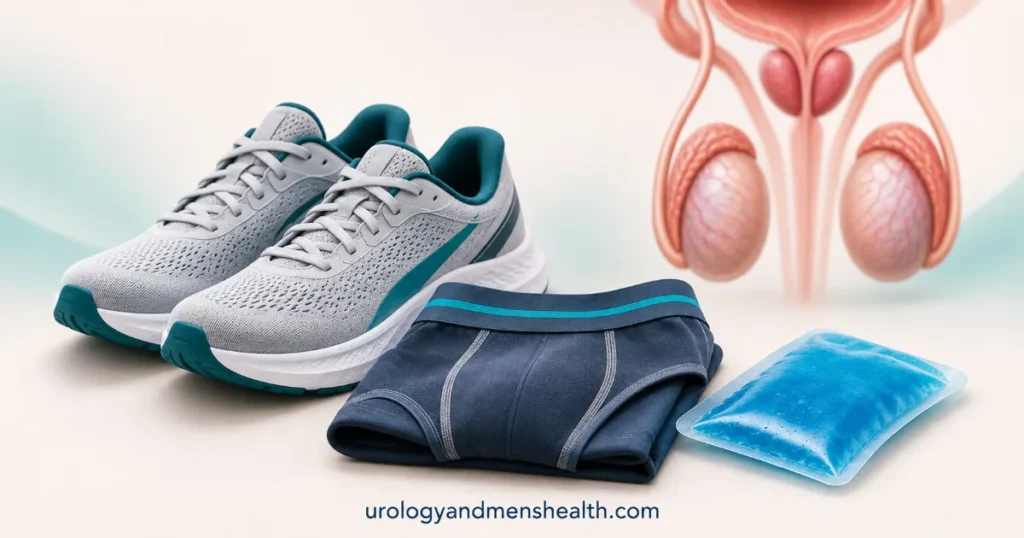
Exercise after vasectomy is where most men get impatient. The operation takes about 20 minutes, the pain settles in a few days, and by the weekend you feel ready for the gym, a round of golf or a run. The scrotum is less forgiving than it looks. Its skin is loose and its blood vessels are fragile, so bleeding into it, called a hematoma, can build quietly into a swollen, bruised, painful lump that takes weeks to settle. Most of the activity advice after vasectomy exists to prevent exactly that. This guide sets out, activity by activity, how long to wait: showering, bathing and swimming, driving, work, lifting, running, cycling, contact sport and sex, plus the one rule that has nothing to do with healing and everything to do with avoiding a pregnancy. For the procedure itself and the first days afterward, see our vasectomy recovery guide, and for related topics, the Sexual Health hub.
Key Takeaways
- Most aftercare guidance advises no sport or exercise for at least 2 weeks after vasectomy, and no heavy exercise, gym work, cycling or contact sport for 4 weeks.
- A short shower is usually fine after 48 hours; long baths and swimming wait about 2 weeks, until the wound has healed.
- Sex can resume once it is comfortable, but you are not sterile yet: the 2026 AUA guideline allows a semen test from 8 weeks, and contraception continues until that test clears you.
- Symptomatic hematoma and infection affect about 1 to 2% of men; early heavy activity is the most common trigger I see.
Why Activity After Vasectomy Causes Problems
A vasectomy cuts and seals the vas deferens, the tubes that carry sperm from each testicle. The small vessels that run alongside each tube are sealed too, but those seals are fresh for the first couple of weeks. Lifting, straining and impact raise the pressure in the veins of the scrotum, and jolting movements tug on the cut ends.
Because scrotal skin stretches so easily, a small leak does not stay small. Blood spreads into the loose tissue and forms a hematoma. The 2026 American Urological Association (AUA) guideline puts symptomatic hematoma and infection at about 1 to 2% of men [1]. Technique matters too: the guideline cites a randomized trial in which hematoma occurred in 12.2% of men after a conventional incision but 1.8% after the no-scalpel technique. Your activity in the first fortnight is the part you control.
How Long After Vasectomy Can I Exercise, Shower or Drive?
The timings below follow published aftercare guidance from MSI Reproductive Choices, one of the largest vasectomy providers in the UK [2], and match what I advise in clinic. Your own surgeon may adjust them, especially after a more difficult procedure.
| Activity | Usual earliest time | Why |
|---|---|---|
| Short shower | After 48 hours | Dressing stays dry for the first 2 days |
| Driving | After 48 hours, short trips first | Braking and long sitting pull on a sore scrotum |
| Desk work | After 1 to 2 days | Little strain; longer if the job is physical |
| Long bath, swimming | About 2 weeks, once the wound has healed | Soaking an open wound raises infection risk |
| Walking, light exercise | Gentle walking from day 1; exercise after 2 weeks | Fresh vessel seals in the first fortnight |
| Heavy lifting, gym, running | 2 weeks for lifting; 4 weeks for heavy exercise | Straining and impact drive hematoma |
| Cycling, contact sport, skiing | 4 weeks | Direct pressure and blows to the scrotum |
| Sex and ejaculation | When comfortable, often within a week | Not sterile yet: contraception continues |
Wear firm, supportive underwear or a jockstrap day and night for the first week and during any exercise for the first month. It limits movement of the testicles and is the simplest thing you can do to reduce swelling.
Running, Golf and the Gym After Vasectomy
Different sports load the scrotum in different ways, which is why a single “two weeks” answer does not fit everyone.
- Running causes repetitive bouncing. Start with a short, easy jog at 2 weeks in supportive underwear, and build over the following two weeks.
- Golf involves twisting rather than impact. Putting and chipping are usually fine at 1 to 2 weeks; a full swing and carrying a bag wait until 2 weeks.
- Weights make you brace and hold your breath, which raises venous pressure. Light machine work at 2 weeks, heavy squats and deadlifts at 4 weeks.
- Cycling puts the saddle against a healing area for an hour at a time. I advise 4 weeks, which matches the published guidance.
- Football, rugby, martial arts and squash risk a direct blow. Wait 4 weeks and wear a protective cup when you return.
If you are planning travel around your procedure, the same reasoning applies to long flights; our guide to flying after urological surgery covers the practical points.
In My Practice
A 38-year-old personal trainer came back on day 6 with a scrotum the size of a grapefruit and a deep purple bruise up into the groin. He had felt fine on day 4 and had gone back to demonstrating squats to clients. The hematoma settled with rest, support and pain relief, but it took nearly five weeks, far longer than the two weeks off he had been trying to avoid.
Feeling fine at day 4 is normal; the vessels underneath are still sealing for another 10 days.
Sex After Vasectomy: Comfort Comes Before Sterility
Sex and ejaculation are safe as soon as they are comfortable, which for most men is within a week. The AUA guideline asks surgeons to reassure men that vasectomy is not associated with sexual dysfunction or any change in ejaculation [1]. You still produce fluid; it simply no longer carries sperm once the tubes have cleared.
That clearing is the part men forget. Sperm already stored beyond the cut remain for weeks. The 2026 AUA guideline says a post-vasectomy semen sample may be submitted as early as 8 weeks after the procedure, and that contraception can stop only once that sample shows no sperm, or only rare non-moving sperm (100,000 per mL or fewer) on a fresh sample tested within 2 hours [1]. Until your clinic confirms that result, keep using contraception. Ejaculating regularly in the meantime helps clear the remaining sperm. If you ever rethink the decision, our guide to vasectomy reversal explains your options.
Call Your Surgeon the Same Day If
Stop activity and get the area checked if you notice:
- Swelling that keeps growing, or a firm, tense lump larger than a golf ball
- Bruising spreading up into the groin or down onto the penis with increasing pain
- Fever, or red, hot skin with discharge from the wound
- Pain that worsens after day 3 instead of easing
To plan your return to work, sport and travel around the procedure date, use our day-by-day recovery planner.
Had a vasectomy? Get the men's fertility guide, including the semen test that confirms you are clear
Enter your email below to receive Dr. Khalid’s complete Male Fertility & Semen Analysis Guide as a free, printable PDF.
Frequently Asked Questions About Exercise After Vasectomy
How long after vasectomy can I lift weights?
Avoid heavy lifting for at least 2 weeks and heavy gym work for 4 weeks. Lifting makes you brace and hold your breath, which raises pressure in the scrotal veins while the sealed vessels are still fresh. Start with light machine weights at 2 weeks. Our vasectomy recovery guide covers the first days in detail.
When can I shower or take a bath after a vasectomy?
A short shower is usually fine after 48 hours, once the dressing can come off. Long soaks in the bath and swimming should wait about 2 weeks, until the wound has fully healed, because soaking an open wound raises infection risk. Pat the area dry gently. Use our recovery planner to schedule the other milestones.
Can I go running or cycling after vasectomy?
Gentle running can usually start at about 2 weeks in supportive underwear, building up over the following fortnight. Cycling and contact sport wait 4 weeks, because the saddle and direct blows put pressure on a healing area. Exercise after vasectomy that causes new swelling is a signal to stop for a week.
How soon can I have sex after a vasectomy, and when am I sterile?
Sex is fine once it is comfortable, often within a week. You are not sterile yet: the 2026 AUA guideline allows a semen test from 8 weeks, and contraception continues until it shows no sperm or only rare non-moving sperm. If you reconsider later, see our guide to vasectomy reversal.
Is a lump in the scrotum after vasectomy normal?
A small, tender pea-sized lump at each cut is common and usually settles over weeks. A lump that keeps growing, feels tense, or comes with spreading bruising suggests a hematoma and needs same-day review. Fever or discharge suggests infection. The AUA puts symptomatic hematoma and infection at about 1 to 2% of men.
References
- American Urological Association. Vasectomy: AUA Guideline. Unabridged, 2026. AUA
- MSI Reproductive Choices. Vasectomy aftercare. Patient guidance. MSI Reproductive Choices
Dr. Muhammad Khalid
MBBS · FCPS (Urology) · MCPS (General Surgery) · CHPE · CRSM · IMC #539472
Specialist urologist with 11+ years of clinical experience across tertiary teaching hospitals. Trained at Lady Reading Hospital and Khyber Teaching Hospital, Peshawar. Author or co-author of five peer-reviewed international publications, including in Cureus and the World Journal of Surgery. Procedural expertise: URS, PCNL, RIRS, TURP, TURBT, and major open urological surgery. Full profile →
This article is for educational purposes only and does not constitute medical advice. Always consult your physician or urologist for diagnosis and treatment decisions specific to your condition.