Mounjaro Erectile Dysfunction: Does Tirzepatide Cause ED?
Most men worried about Mounjaro erectile dysfunction have the drug backwards: the largest study so far found fewer ED diagnoses on tirzepatide than on semaglutide. Here is what that does and does not mean.

Mounjaro erectile dysfunction is now one of the questions I field almost weekly, usually from a man who has lost 15 kg (about 33 lb), feels better than he has in a decade, and is quietly convinced the drug has taken something from him in the process. The worry is reasonable. Any medication that changes appetite, energy, body composition and hormone levels this quickly could plausibly change erections too. The evidence, so far, points firmly in the other direction. The largest study to date — a propensity-matched cohort of men with type 2 diabetes — found that men taking tirzepatide were diagnosed with erectile dysfunction, or prescribed a PDE5 inhibitor, less often than matched men taking semaglutide, dulaglutide or sitagliptin [1]. That is not a marginal difference, and it is not what most men expect to read. Below is what tirzepatide does and does not appear to do to erectile function, why the brand name printed on your pen changes the question, and what to check if your own erections have genuinely worsened. For the wider picture on male sexual function, start with the Sexual Health Hub.
Key Takeaways
- No study has shown tirzepatide causes erectile dysfunction, and the largest cohort to date found a 30-45% lower rate of ED diagnosis or PDE5-inhibitor prescription than three comparator drugs.
- Mounjaro and Zepbound are the identical molecule; almost all the ED evidence comes from men with type 2 diabetes, who already carry one of the strongest ED risk factors there is.
- Most men who report “ED on Mounjaro” still wake with erections — what has dropped is desire, driven by a large calorie deficit and roughly a quarter of lost weight coming from lean mass.
- New erectile dysfunction in a man with diabetes is a cardiovascular warning sign in its own right and should be assessed, not attributed to the newest drug on the list.
Does Mounjaro Cause Erectile Dysfunction? The Short Answer
No. There is no controlled trial, pharmacovigilance signal or cohort study showing that tirzepatide causes erectile dysfunction, and sexual dysfunction does not appear as a labelled adverse reaction. The signal that does exist runs the opposite way: men on tirzepatide are diagnosed with ED less often than men on comparable drugs [1].
Three qualifications matter before you take that as reassurance. First, the strongest evidence is observational, not randomised, which means it can show association but cannot prove the drug is doing the protecting. Second, sexual function has almost never been a primary endpoint in a weight-loss trial, so the data we have is a by-product of studies designed to measure something else [7]. Third — and this is the one that resolves most clinic conversations — a drop in desire is not erectile dysfunction, and the two get merged constantly in the way men describe the problem.
The broader class picture across all GLP-1 medicines is covered separately in my review of GLP-1 drugs and erectile dysfunction. This page is about tirzepatide specifically, because it behaves differently enough from semaglutide that lumping them together loses real information.
Mounjaro, Zepbound and Tirzepatide: Why the Name on the Pen Matters
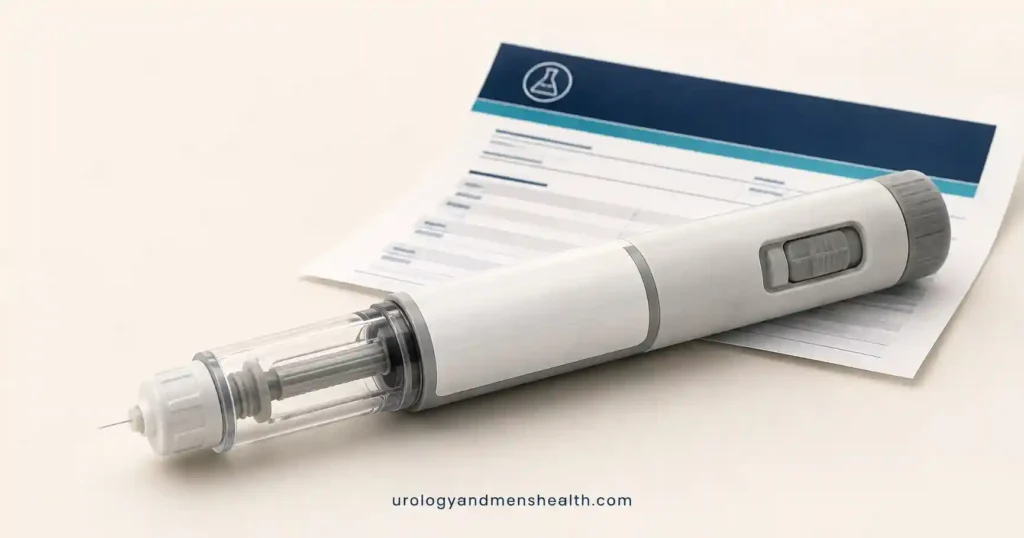
Mounjaro and Zepbound contain the same active drug, tirzepatide, at the same strengths, given the same way — once weekly by subcutaneous injection. What separates them is regulatory, not pharmacological. In the United States, Mounjaro is approved for glycemic control in type 2 diabetes, while Zepbound carries the chronic weight management approval and, since December 2024, an approval for moderate-to-severe obstructive sleep apnea in adults with obesity. Brand naming differs by country, so the reliable move is to check the active ingredient on your carton rather than the brand.
This is not trivia. It determines which evidence applies to you. Nearly all the erectile function data on tirzepatide comes from men with type 2 diabetes — the Mounjaro population. Diabetes is one of the most powerful risk factors for ED there is: as many as three in four men with diabetes are affected, driven by chronic hyperglycemia damaging the endothelium lining the penile arteries and the small autonomic nerves that trigger the erection in the first place [5].
So a man starting Mounjaro usually already has a strong, long-standing reason for erectile difficulty that predates the injection by years. If his erections change in month two, the drug is the most recent variable, not necessarily the responsible one. A man starting Zepbound for obesity without diabetes has a different baseline risk and a thinner evidence base to draw on.
What the Mounjaro Erectile Dysfunction Data Actually Shows
The anchor study is a 2025 retrospective cohort by Cowart and colleagues using the TriNetX federated health records network, covering May 2022 to May 2025 [1]. They took men aged 18 to 70 with type 2 diabetes and no prior history of ED, then ran three separate 1:1 propensity-score-matched comparisons. The outcome counted was a recorded ED diagnosis or a PDE5-inhibitor prescription. Tirzepatide came out lower in all three.
| Tirzepatide compared with | Relative risk of ED (95% CI) | Direction |
|---|---|---|
| Sitagliptin (a DPP-4 inhibitor) | 0.70 (0.64-0.76) | 30% lower |
| Injectable semaglutide (Ozempic) | 0.67 (0.62-0.72) | 33% lower |
| Dulaglutide (Trulicity) | 0.55 (0.51-0.59) | 45% lower |
Read those numbers with the limitations attached. This is claims and records data, not a trial. A PDE5-inhibitor prescription is a proxy for ED, and proxies pick up noise — a man may be prescribed sildenafil after a single bad night. Propensity matching balances the variables you thought to measure and nothing else, so residual confounding is live: men who get tirzepatide may differ from men who get dulaglutide in ways no database records. The authors themselves call for randomised confirmation.
A second line of evidence comes from the FDA Adverse Event Reporting System. A Stanford urology group analysed reports from late 2003 to early 2024 and found only 182 male sexual dysfunction reports across the entire GLP-1 class, with a reporting odds ratio of 0.41 (95% CI 0.36-0.48) [4]. An odds ratio below 1 means sexual dysfunction is reported less often for these drugs than for medicines in general. That is not proof of protection — spontaneous reporting systems cannot produce risk estimates, and men rarely file federal paperwork about their erections — but it is the opposite of the safety signal you would expect if the class were causing widespread harm.
The most direct evidence is also the smallest. An Italian controlled pilot enrolled 83 men with obesity and metabolic hypogonadism and assigned them to tirzepatide, no drug treatment, or transdermal testosterone for two months [3]. The tirzepatide group improved more on the IIEF-5 erectile function score than either comparator — including the group actually receiving testosterone. Take that as a signal worth testing, not a finding to act on: 28 men in the tirzepatide arm, two months, unblinded, and baseline differences between the groups.
Starting a GLP-1? Get the ED Action Plan: how to tell a libido dip from real erectile dysfunction
Enter your email below to receive Dr. Khalid’s complete ED & Sexual Function Action Plan as a free, printable PDF.
Why a Drug That Makes You Tired Can Still Improve Erections
An erection is a plumbing event before it is anything else. Sexual stimulation triggers the endothelium lining the cavernosal arteries to release nitric oxide. Nitric oxide raises cGMP inside the smooth muscle of the arterioles and the sinusoidal spaces, that muscle relaxes, blood floods in, and the expanding tissue compresses the draining veins against the tunica albuginea so the blood stays put. Every step of that sequence depends on a healthy endothelium. Obesity and hyperglycemia degrade nitric oxide availability directly, which is why metabolic disease and ED travel together so reliably.
Tirzepatide agonises both GIP and GLP-1 receptors, and in the SURMOUNT-1 trial that dual action produced a mean weight reduction of 20.9% at the 15 mg dose over 72 weeks [2]. A change of that magnitude improves glycemia, blood pressure and lipids simultaneously. It also strips fat tissue, and fat tissue expresses aromatase — the enzyme that converts testosterone into estradiol. Lose the fat and that conversion falls, which is exactly the pattern the Italian pilot recorded: estradiol down, total, free and bioavailable testosterone up [3]. I have kept the hormone story short here deliberately; the full testosterone evidence, including the 2026 reversal, sits in GLP-1 drugs and testosterone levels. The same mechanism in reverse — fat gain driving testosterone down and ED up — is covered in obesity, testosterone and ED.
Now the part that gets left out of the optimistic write-ups. The SURMOUNT-1 body composition substudy used DXA scanning and found that of the weight lost on tirzepatide, roughly 75% was fat and roughly 25% was lean mass [6]. Losing a quarter of your weight loss as muscle, while eating substantially less than before and often feeling nauseated, produces fatigue and flattened libido that men reasonably interpret as a sexual problem. The vascular machinery is improving. The man operating it is running on a deficit.
In My Practice
The men who come to me convinced Mounjaro has caused erectile dysfunction almost never describe an erectile problem once I ask carefully. They describe absence of interest. Two questions separate the groups within about ninety seconds: do you still wake with erections, and when you do want sex, does the erection arrive and hold? A man who wakes hard three mornings a week and performs normally when he is actually in the mood does not have ED. He has a libido that has been flattened by eating 1,200 calories a day and losing muscle at the same time.
Before changing anything about the drug, separate desire from erectile capacity — the two problems have completely different workups and completely different fixes.
If Your Erections Got Worse After Starting Mounjaro, Check These Five Things
- Track your morning erections for two weeks. Note on a phone calendar whether you wake with an erection. Three or more mornings in a fortnight means the vascular and neurological hardware is intact, and the problem is desire, situation or partner-related — not organic ED.
- Put a number on it before and after. Score yourself on the IIEF-5, the validated five-question instrument urologists use, and repeat it at 12 weeks so you are comparing measurements rather than memories.
- Defend your lean mass. Aim for roughly 1.2 to 1.6 g of protein per kg of body weight daily and two resistance sessions a week from the day you start the drug. This is the single modifiable factor behind the fatigue and low drive that get misfiled as ED.
- Review the rest of your prescriptions with the doctor who prescribes them. Blood pressure often falls as weight comes off, and doses get adjusted. Thiazide diuretics and older beta-blockers both affect erectile function. Ask specifically whether any recent change could be contributing before you blame the injection.
- Request a morning total testosterone and SHBG if desire and energy both dropped together. Draw the sample before 10 am on two separate days. That combination points at a hormonal cause rather than a vascular one, and it needs measuring, not guessing.
On timing: do not judge your erections during the dose-escalation phase, when nausea and calorie intake are at their most disrupted. Give it 12 weeks at a stable dose before drawing conclusions. And do not stop tirzepatide on your own because of erectile symptoms — sexual dysfunction is not a labelled reason to discontinue, and abruptly stopping a drug controlling your blood sugar creates a far larger problem than the one you were trying to solve.
When This Needs a Doctor, Not a Dose Change
Book an appointment within a week, rather than waiting out the 12 weeks, if any of the following apply:
- Erections stopped suddenly and completely, including no morning or overnight erections at all
- New erectile dysfunction alongside chest tightness, jaw or arm discomfort, or breathlessness on exertion — the AUA notes that ED and cardiovascular disease share the same vascular pathway, and the erectile symptom often arrives first [8]
- Dizziness or fainting on standing, which can follow dehydration from GI side effects combined with blood pressure medication that is now too strong for your reduced weight
- New pain on erection, or a bend or lump developing in the shaft
- Vomiting severe enough that you cannot keep fluids down — that needs urgent attention on its own terms, independent of any sexual symptom
Frequently Asked Questions
Is Mounjaro erectile dysfunction listed as a side effect on the label?
No. Sexual dysfunction is not a labelled adverse reaction for tirzepatide under either brand name. The labelled profile is dominated by gastrointestinal effects. Absence from a label is not proof that something never happens, but it does mean the effect was not seen at a rate separating it from placebo across the registration programme. The same is true of semaglutide, which I cover in does Wegovy or Ozempic cause ED.
Does Mounjaro lower testosterone?
The available data points the other way. A controlled pilot in men with obesity and metabolic hypogonadism found total, free and bioavailable testosterone all rose on tirzepatide over two months, while estradiol fell, most likely because losing fat tissue reduces aromatase-driven conversion of testosterone to estradiol. The full evidence, including the 2026 data, is set out in GLP-1 drugs and testosterone levels.
Is Mounjaro or Ozempic worse for erections?
In the only direct comparison available, tirzepatide performed better. Men with type 2 diabetes on tirzepatide had a 33% lower risk of a new ED diagnosis or PDE5-inhibitor prescription than propensity-matched men on injectable semaglutide. That is observational data from health records, not a randomised head-to-head trial, so treat it as a reason not to worry rather than a reason to switch drugs.
My sex drive dropped on Mounjaro but my erections still work. Is that the drug?
Probably, and it is not erectile dysfunction. A large sustained calorie deficit reduces libido on its own, and about a quarter of the weight lost on tirzepatide is lean mass, which compounds the fatigue. Confirm which problem you actually have by scoring yourself on the IIEF-5 erectile function self-assessment and by tracking morning erections for two weeks before you raise it with your prescriber.
Should I stop Mounjaro if my erections have got worse?
Not on your own, and not before 12 weeks at a stable dose. Erectile symptoms are not a labelled reason to discontinue tirzepatide, and stopping a drug that is controlling your blood sugar or your weight creates a larger problem than it solves. Bring the 12-week IIEF-5 score and the morning erection record to your prescriber and ask for a medication review and a morning testosterone level before any change is made.
References
- Cowart K, Murphy C, Carris N. Association of tirzepatide with erectile dysfunction in people with type 2 diabetes. J Diabetes Complications. 2025;39(10):109116. doi:10.1016/j.jdiacomp.2025.109116. PubMed
- Jastreboff AM, Aronne LJ, Ahmad NN, et al. Tirzepatide once weekly for the treatment of obesity. N Engl J Med. 2022;387(3):205-216. doi:10.1056/NEJMoa2206038. PubMed
- La Vignera S, Cannarella R, Garofalo V, et al. Short-term impact of tirzepatide on metabolic hypogonadism and body composition in patients with obesity: a controlled pilot study. Reprod Biol Endocrinol. 2025;23(1):92. doi:10.1186/s12958-025-01425-9. PubMed
- Pourabhari Langroudi A, Chen AL, Basran S, et al. Male sexual dysfunction associated with GLP-1 receptor agonists: a cross-sectional analysis of FAERS data. Int J Impot Res. 2025;37(8):661-667. doi:10.1038/s41443-025-01061-2. PubMed
- Kounatidis D, Vallianou NG, Rebelos E, et al. The impact of glucagon-like peptide-1 receptor agonists on erectile function: friend or foe? Biomolecules. 2025;15(9):1284. doi:10.3390/biom15091284. PubMed
- Look M, Dunn JP, Kushner RF, et al. Body composition changes during weight reduction with tirzepatide in the SURMOUNT-1 study of adults with obesity or overweight. Diabetes Obes Metab. 2025;27(5):2720-2729. doi:10.1111/dom.16275. PubMed
- Fuentes-Mendoza JM, Concepcion-Zavaleta MJ, Mendoza-Godoy JJ, et al. Beyond metabolism: sexual dysfunction and weight-loss drugs. Sex Med Rev. 2026;14(1):qeaf074. doi:10.1093/sxmrev/qeaf074. PubMed
- Burnett AL, Nehra A, Breau RH, et al. Erectile dysfunction: AUA guideline. J Urol. 2018;200(3):633-641. AUA
Dr. Muhammad Khalid
MBBS · FCPS (Urology) · MCPS (General Surgery) · CHPE · CRSM · IMC #539472
Specialist urologist with 11+ years of clinical experience across tertiary teaching hospitals. Trained at Lady Reading Hospital and Khyber Teaching Hospital, Peshawar. Author or co-author of five peer-reviewed international publications, including in Cureus and the World Journal of Surgery. Procedural expertise: URS, PCNL, RIRS, TURP, TURBT, and major open urological surgery. Full profile →
This article is for educational purposes only and does not constitute medical advice. Always consult your physician or urologist for diagnosis and treatment decisions specific to your condition.