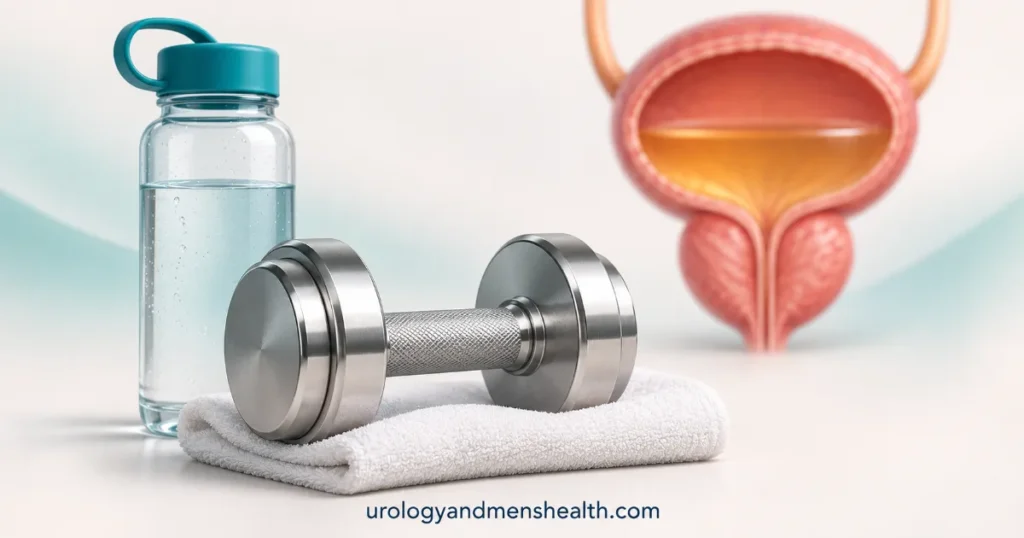
Baths, Swimming and Hot Tubs After TURP
A shower is fine from day one; a hot tub can wait six weeks. In between, two risks decide every answer: infection from standing water and bleeding from heat.


Taking a bath after TURP sounds like a small question until you are home, sore and wanting a long soak. The short answer: a shower is fine from the start, a short warm bath is usually fine once the catheter is out and the bleeding has settled, and pools, the sea, hot tubs and saunas wait longer, each for its own reason. Two risks drive every answer here. The first is infection, because the inside of your prostate is a raw, healing surface after a transurethral resection of the prostate (TURP) and standing water carries bacteria. The second is bleeding, because heat widens blood vessels in the pelvis. I will be honest at the outset: there are no clinical trials on bathing after prostate surgery. What follows is surgeon consensus and the reasoning behind it, so you can apply it to your own situation. For the full recovery picture, see the Urological Surgery & Recovery hub.
Key Takeaways
- Showering is fine with the catheter still in; switch to a waterproof night bag in the shower rather than a cloth-backed leg bag.
- Do not take a bath or swim while the catheter is in, because standing water raises infection risk along the tube.
- Once the catheter is out and urine is clear, a short warm bath is reasonable; pools usually wait about 4 weeks and the sea, lakes and hot tubs about 6.
- Hot tubs and saunas combine heat-driven bleeding risk with heavy bacterial loads, so they come last.
Bath After TURP: Catheter In vs Catheter Out
Whether your catheter is still in changes the answer more than anything else.
With the catheter in: showers are fine. Memorial Sloan Kettering’s catheter guidance is clear that you can shower with a catheter, but should not take a bath or swim until it is removed, because sitting in water puts you at risk of infection [1]. The catheter is a tube running straight into your bladder; bath water sitting around the point where it enters the penis gives bacteria a short route inside. Use a waterproof night bag in the shower, as cloth-backed leg bags stay wet for hours afterward. Our catheter care guide covers daily cleaning in detail.
With the catheter out: the urethra closes up quickly, and the main remaining concern is the healing surface inside the prostate. A short, warm (not hot) bath of 10 to 15 minutes is reasonable once your urine is clear or only faintly pink. Avoid bubble bath and bath oils for the first few weeks, as they irritate the urethra and can make stinging on passing urine worse.
Water Activities After TURP: Shower, Pool, Sea, Hot Tub
| Activity | Usual earliest time | Main reason to wait |
|---|---|---|
| Shower | From the day you get home, catheter in or out | None; keep it short at first if you feel light-headed |
| Short warm bath | After the catheter is out and urine is clear | Infection risk with the catheter in |
| Swimming pool | About 4 weeks | Chlorinated but shared water; exertion of swimming |
| Sea, lakes, rivers | About 6 weeks | Untreated water with a higher bacterial load |
| Hot tub, sauna, steam room | About 6 weeks | Heat widens blood vessels; warm shared water breeds bacteria |
Swimming is also exercise. The NHS advises avoiding heavy lifting and intense exercise for about 6 weeks after TURP [2], so when you return to the pool, start with gentle lengths rather than a hard training session. Our guide to lifting and the gym after TURP covers the exertion side.
Why Hot Tubs and Saunas Come Last
Heat makes blood vessels dilate, meaning they widen and carry more blood. In the pelvis, that means more blood flowing under the healing prostate surface. The British Association of Urological Surgeons reports that about 1 in 5 men has some bleeding 10 to 14 days after discharge, when the scab inside the prostate separates [3]. A long hot soak during that window is the kind of thing that turns a little pink urine into a night in the emergency room.
Hot tubs add a second problem. Warm, shared, agitated water is an ideal environment for bacteria, and chlorine levels in hot tubs drop quickly with heat and use. A urinary infection on top of a healing prostate is worth avoiding. Infection in men has its own warning signs, set out in our page on UTIs in men and when to worry.
In My Practice
A retired engineer booked a spa weekend for his wife’s birthday, eight days after his TURP, reasoning that warm water would be soothing. After an hour in the hot tub he passed clots that night and needed a catheter and bladder washout. His prostate had been healing perfectly up to that point.
Warm and short is fine once the catheter is out; hot and long waits until 6 weeks.
Get Help the Same Day If
Contact your surgeon’s team or go to the ER if, after a bath or swim, you notice:
- Blood clots, or red urine that does not clear after a few hours of drinking extra water
- Difficulty or inability to pass urine
- Fever, shivering or worsening burning
- Cloudy, foul-smelling urine together with feeling unwell
To see where bathing and swimming fit alongside driving, work and other activities, check the post-operative recovery timeline tool, and for the TURP-specific weeks, our TURP recovery timeline.
Home after prostate surgery? Get the recovery guide with what is normal week by week and when to call
Enter your email below to receive Dr. Khalid’s complete Urology Surgery Recovery Guide as a free, printable PDF.
Frequently Asked Questions About Bathing After TURP
When can I take a hot bath after cystoscopy and TURP prostate surgery?
A short warm bath is usually fine once your catheter is out and your urine is clear. A genuinely hot, long bath is better left for about 6 weeks, because heat widens pelvic blood vessels during the window when the healing scab separates. Showers are fine from the start. See our TURP recovery timeline for the other milestones.
Can I shower with a catheter after TURP?
Yes. Showering is fine with the catheter in. Use a waterproof night bag rather than a cloth-backed leg bag, wash gently around the tip of the penis with soap and water, and dry the area afterward. Do not take a bath or swim until the catheter is out. Our catheter care guide walks through the daily routine.
How long after TURP can I go swimming?
Most surgeons advise about 4 weeks for a chlorinated pool and about 6 weeks for the sea, lakes or rivers, and never while a catheter is in. Start with gentle lengths, because swimming is exertion as well as water exposure. Our page on exercise after TURP explains the exertion limits.
Is a hot tub after prostate surgery dangerous?
It is not dangerous once you have healed, but it is the last water activity to return to, usually around 6 weeks. Heat raises bleeding risk while the prostate surface is healing, and warm shared water carries more bacteria. If you develop fever or burning after any soak, read our guide to UTIs in men and contact your doctor.
References
- Memorial Sloan Kettering Cancer Center. About your urinary (Foley) catheter: how to clean and care for it. Patient education. MSK
- NHS. Transurethral resection of the prostate (TURP): risks and recovery. Reviewed 2025. NHS
- British Association of Urological Surgeons. Transurethral resection of the prostate (TURP) for benign disease: patient information leaflet. 2023. BAUS
Dr. Muhammad Khalid
MBBS · FCPS (Urology) · MCPS (General Surgery) · CHPE · CRSM · IMC #539472
Specialist urologist with 11+ years of clinical experience across tertiary teaching hospitals. Trained at Lady Reading Hospital and Khyber Teaching Hospital, Peshawar. Author or co-author of five peer-reviewed international publications, including in Cureus and the World Journal of Surgery. Procedural expertise: URS, PCNL, RIRS, TURP, TURBT, and major open urological surgery. Full profile →
This article is for educational purposes only and does not constitute medical advice. Always consult your physician or urologist for diagnosis and treatment decisions specific to your condition.