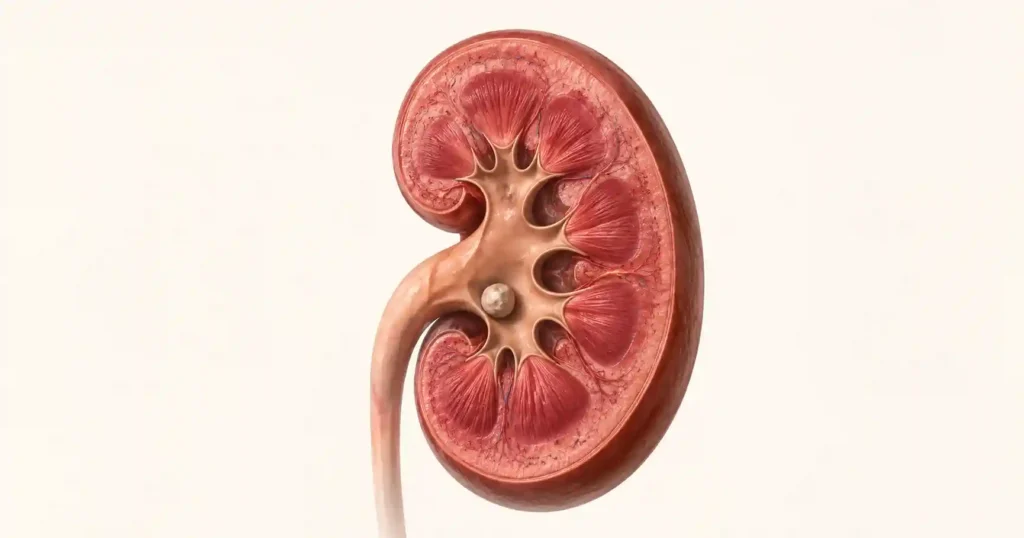
Flying After Kidney Stone Surgery: When Is It Safe?
Most patients can fly within days of kidney stone surgery — but a stent, a low-grade fever, or a long-haul flight changes the math. Here's how I time it for my patients.

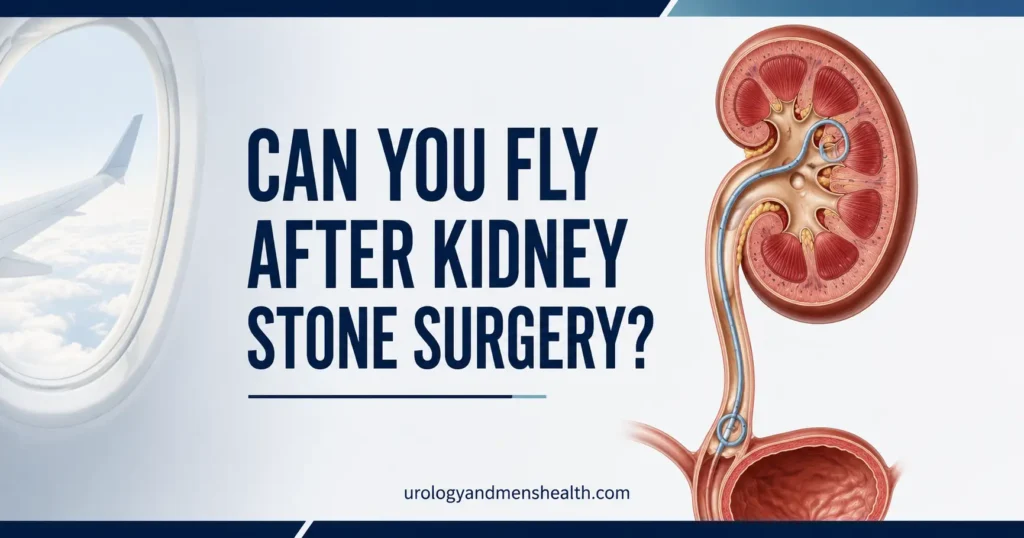
Flying after kidney stone surgery is one of the most common questions I get the moment a patient is discharged — usually because a wedding, a work trip, or a long-planned holiday is already sitting on the calendar. The honest answer is that most people can fly sooner than they fear, but the timing depends on which procedure you had, whether you still have a stent inside you, and how far you are traveling from decent medical care. A short domestic hop two days after a ureteroscopy is a very different proposition from a 14-hour long-haul flight a week after a percutaneous operation. In this guide I’ll give you realistic timelines for each type of stone surgery, explain what it actually feels like to fly with a ureteric stent, and lay out the small number of warning signs that mean you should change your ticket rather than board. For the bigger picture on stones themselves, our Kidney Stones Hub ties all of this together.
Key Takeaways
- After most ureteroscopy and shock wave (ESWL) procedures, a short flight is reasonable within 24 to 48 hours once your pain is controlled and you are passing urine normally.
- A ureteric (JJ) stent is safe to fly with — it holds no air and is unaffected by cabin pressure — but the dry cabin makes dehydration and stent discomfort noticeably worse.
- After percutaneous surgery (PCNL), wait at least 5 to 7 days and get your surgeon’s sign-off, mainly because of bleeding and clot risk on longer flights.
- A fever above 38°C (100.4°F), worsening flank pain, or heavy bleeding means you should postpone — these can signal an infection that turns dangerous fast when you’re hours from a hospital.
How Soon Can You Fly After Kidney Stone Surgery?
There is no single answer, because “stone surgery” covers several very different procedures. The right window depends on how much your body was physically disturbed — and on how far you’re traveling once you’re in the air. The differences between the operations are worth understanding, which I cover in detail in our guide to URS, PCNL and RIRS and which one is right.
Ureteroscopy (URS) and RIRS
Ureteroscopy and retrograde intrarenal surgery are done through the natural urinary passage — a thin scope passes up through the urethra and bladder, so there is no external wound. Most patients tolerate a short domestic flight within 1 to 2 days once pain is settled and urine is flowing. For a long-haul flight I usually suggest waiting 3 to 5 days, because a stent and a freshly irritated ureter are simply more comfortable to manage on home soil [2].
Shock Wave Lithotripsy (ESWL)
ESWL breaks the stone from outside the body using focused sound waves, with no incision and no scope. Many patients can fly within 24 to 48 hours. The catch is that you are still passing fragments afterward, so renal colic — the cramping pain of a fragment moving — can strike mid-flight. If you’re in this situation, the practical hydration and pain measures in our article on how to pass a kidney stone fast are worth reading before you travel.
Percutaneous Surgery (PCNL)
PCNL is the big one. The surgeon makes a small tract through your back directly into the kidney to remove large or complex stones, and a drainage tube is sometimes left in place. There is a real bleeding risk for several days afterward, so I ask patients to wait at least 5 to 7 days — often closer to two weeks for long-haul — and never to fly without their surgeon’s clearance. The combination of recent bleeding and a long, immobile flight is exactly the scenario you want to avoid.
Flying With a Ureteric Stent: Why the Dry Cabin Is Your Real Enemy
Most people leave stone surgery with a ureteric stent — a soft, flexible plastic tube that runs from the kidney to the bladder and keeps the ureter open while it heals. The first thing patients ask is whether cabin pressure will affect it. It will not. The stent contains no air or gas, so changes in cabin pressure simply don’t act on it.
The genuine problem is the cabin itself. Aircraft air is extremely dry, often sitting at 10 to 20% humidity, which pulls fluid out of you over a long flight. Dehydration concentrates your urine, and concentrated urine irritates a stented bladder — meaning more urgency, more frequency, an ache in the flank when you pass urine, and sometimes a little blood [1]. None of that is dangerous, but it’s miserable when you’re strapped into seat 34B.
The fix is unglamorous: drink steadily throughout the flight, aim for an aisle seat, and empty your bladder before boarding and at every reasonable opportunity. To work out a sensible daily fluid target for your body weight, our hydration calculator gives you a number to aim at. If your stent symptoms are already troubling you on the ground, our detailed guide to managing stent pain covers what helps and what doesn’t.
Preparing for urological surgery? Download Dr. Khalid’s Urology Surgery Recovery Guide.
Enter your email below to receive Dr. Khalid’s complete Urology Surgery Recovery Guide as a free, printable PDF.
The Two Travel Risks That Actually Matter: Infection and Clots
Forget cabin pressure. The two things that genuinely worry me when a stone patient flies are infection and blood clots — because both are far more serious when you’re at altitude or in a country where you don’t know the nearest hospital.
Stone surgery and a stent both raise your risk of a urinary infection, and a simple urinary infection can escalate to urosepsis — a body-wide infection — within hours [3]. The mechanism is straightforward: bacteria behind a partly obstructed or instrumented urinary tract get a foothold and flood the bloodstream. On a plane, you are hours from the antibiotics and fluids that treat it. A fever above 38°C (100.4°F), shaking chills, worsening flank pain, or foul-smelling urine after stone surgery is a medical emergency, not something to sleep off until landing.
The second risk is a clot in the leg veins (a deep vein thrombosis, or DVT). Recent surgery makes your blood more prone to clotting, a long flight keeps your legs still, and a dry cabin thickens the blood further — three pressures stacking on top of each other [4]. The risk is highest after PCNL and longer procedures. Walk the aisle every hour, do ankle pumps in your seat, hydrate, consider graduated compression stockings, and ask your surgeon whether you need any specific clot prevention if a long flight falls soon after your operation.
In My Practice
I had a patient who flew long-haul just three days after a ureteroscopy because he didn’t want to lose a non-refundable holiday. He drank almost nothing on the flight, arrived dehydrated, and spiked a fever the next morning — he spent the first two days of his trip in a foreign emergency department being treated for a stented-kidney infection. The procedure had gone perfectly; the travel decision was the problem.
Almost every post-surgery travel complication I see traces back to dehydration or to ignoring an early fever — both of which are entirely preventable with planning.
Cabin Pressure and Altitude: What’s Real and What’s Myth
A commercial cabin is pressurized to the equivalent of roughly 6,000 to 8,000 feet (1,800 to 2,400 m) of altitude, not sea level. At that pressure, any trapped gas inside the body expands by about 25 to 30%. This is the real reason surgeons restrict flying after certain operations — but it applies to procedures that introduce gas into a closed space, such as some abdominal, eye, or bowel surgery.
Endoscopic stone surgery (URS and RIRS) and ESWL introduce no free gas into your body. There is nothing inside you for the pressure change to act on — the stent, the ureter, and the kidney are unaffected by altitude. PCNL creates a small tract through the kidney, but here the limiting factor is bleeding and recovery time, not cabin pressure. The slightly lower oxygen in a cabin is also irrelevant for an otherwise healthy kidney patient.
So the fear that “altitude will damage my kidney or shift my stent” is, for stone patients, essentially a myth. The genuine limiters are the four I keep returning to: bleeding, infection, clots, and uncontrolled pain. Get those squared away and the altitude takes care of itself.
Your Fit-to-Fly Checklist and When to Postpone
If you’re cleared to travel, a little preparation removes almost all of the avoidable risk. Run through this before you go:
- Get written clearance from your surgeon, especially after PCNL or for any long-haul flight within a week of surgery.
- Carry your operative note or discharge summary, plus your stent type and scheduled removal date, in your hand luggage — not in checked baggage.
- Pack any prescribed painkillers and antibiotics in your carry-on, in case checked luggage is delayed.
- Know your stent removal date and arrange it. A stent left in too long can encrust and become difficult to remove, so never let one overstay abroad.
- Book an aisle seat, carry a refillable water bottle, and do regular ankle exercises.
- Identify the nearest hospital or ER at your destination before you land.
- Make sure your travel insurance covers a recent procedure — and declare it, or a claim can be refused.
If you’re unsure how your recovery should be progressing day by day, our post-operative recovery timeline tool maps out what’s normal at each stage, which makes it easier to judge whether you’re genuinely fit to board.
When to Postpone Your Flight
Do not fly — and contact your surgeon or go to the emergency room first — if you have any of the following after stone surgery:
- A temperature above 38°C (100.4°F), shaking chills, or feeling profoundly unwell — possible urosepsis.
- Heavy or persistent blood in your urine, or passing clots.
- Severe flank or abdominal pain that your prescribed painkillers are not controlling.
- Vomiting that stops you keeping fluids down, or a noticeable drop in how much urine you’re passing.
- Calf pain, swelling, or breathlessness — possible clot.
Frequently Asked Questions
How soon can you fly after kidney stone surgery if you only had a ureteroscopy?
After a straightforward ureteroscopy, a short domestic flight is usually fine within 24 to 48 hours, once your pain is controlled and you are passing urine normally. For a long-haul flight I’d wait 3 to 5 days. The procedure type matters most here, and our comparison of the different stone operations explains why recovery differs so much between them.
Is it safe to fly with a ureteric stent in place?
Yes. A ureteric stent contains no air or gas, so cabin pressure has no effect on it. The real issue is that dry cabin air worsens dehydration, which makes stent symptoms — urgency, frequency, and a flank ache when you urinate — more noticeable. Drinking steadily helps; our guide to managing stent discomfort covers the rest.
Can cabin pressure dislodge a kidney stent or move a leftover stone?
No. Cabin pressure acts on trapped gas, and there is no gas around a stent, a stone, or inside the ureter and kidney after endoscopic stone surgery or ESWL. The genuine travel risks are bleeding, infection, and clots — not altitude. For background on stones generally, see our Kidney Stones Hub.
What should I do if I get severe flank pain or a fever while traveling after stone surgery?
A fever above 38°C (100.4°F) or shaking chills after stone surgery can mean a serious infection — go to the nearest emergency room without delay, as this needs antibiotics and fluids quickly. For cramping fragment pain without fever, hydrate and use your prescribed painkillers; our guide on passing a stone explains what eases colic.
How long after PCNL can I take a long-haul flight?
After percutaneous (PCNL) surgery I advise waiting at least 5 to 7 days, and often closer to two weeks for a long-haul flight, because of bleeding and clot risk. Always get your surgeon’s specific clearance. Checking your recovery timeline against what’s expected helps you judge whether flying after kidney stone surgery is reasonable yet.
References
- European Association of Urology. Guidelines on Urolithiasis. 2024. EAU
- American Urological Association. Surgical Management of Stones Guideline. 2023. AUA
- European Association of Urology. Guidelines on Urological Infections. 2024. EAU
- National Institute for Health and Care Excellence. Venous thromboembolism in over 16s: reducing the risk (NG89). 2018, updated 2019. NICE
Dr. Muhammad Khalid
MBBS · FCPS (Urology) · MCPS (General Surgery) · CHPE · CRSM · IMC #539472
Specialist urologist with 11+ years of clinical experience across tertiary teaching hospitals. Trained at Lady Reading Hospital and Khyber Teaching Hospital, Peshawar. Author or co-author of five peer-reviewed international publications, including in Cureus and the World Journal of Surgery. Procedural expertise: URS, PCNL, RIRS, TURP, TURBT, and major open urological surgery. Full profile →
This article is for educational purposes only and does not constitute medical advice. Always consult your physician or urologist for diagnosis and treatment decisions specific to your condition.