Protein Powder and Kidney Damage: What the Evidence Actually Shows
Gym forums warn that protein powder causes kidney damage. In a healthy kidney, it doesn't — but two situations change that, and one of them gets misread constantly. Here's where I draw the line in clinic.

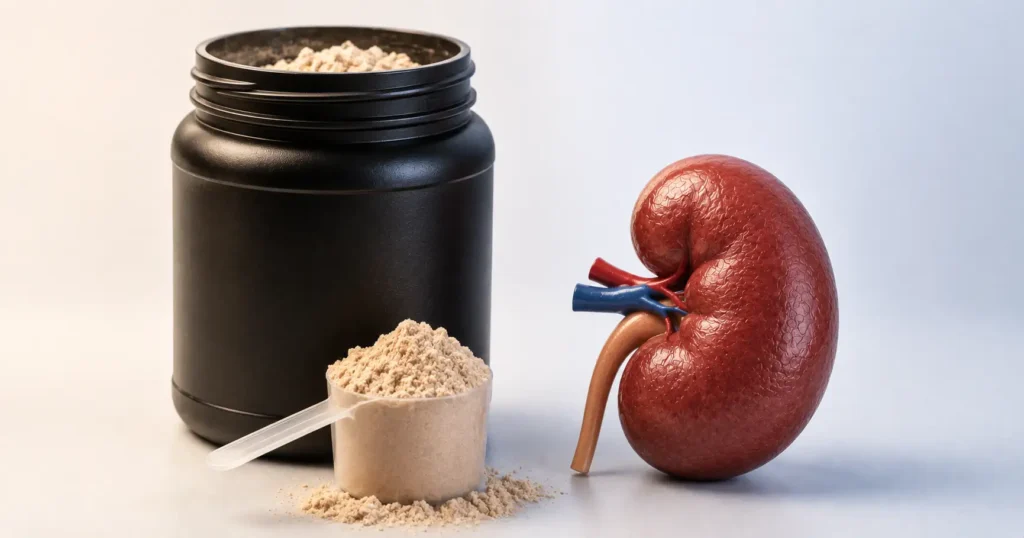
If you have ever searched protein powder and kidney damage online, you have hit two camps that flatly contradict each other: one says whey is quietly wrecking your kidneys, the other says that is a myth invented by people who hate the gym. As a urologist, I get this question almost weekly — usually from a man in his 20s or 30s who lifts, drinks one or two shakes a day, and just had routine bloodwork come back with a flag next to his kidney numbers. So here is the clinical version, not the forum version. For the broader picture of how the kidneys work and fail, our Kidney Stones Hub covers the fundamentals. The short answer: in a person with normal kidney function, protein powder does not cause kidney disease. But there are two real situations — one misread far too often, and one genuinely overlooked — where the protein in your shaker bottle matters. Both are worth understanding before you either panic or wave the concern away.
Key Takeaways
- In adults with normal kidney function, a high-protein intake — including whey powder — raises filtration as a normal adaptation and does not cause kidney disease.
- A “high” creatinine in a muscular person who eats a lot of protein often reflects muscle mass, not kidney damage; creatinine-based eGFR can under-read a lean, muscular man’s true kidney function.
- The genuine kidney risk from heavy animal protein, whey included, is kidney stones — not kidney failure — through higher urinary uric acid and calcium and lower citrate.
- If you have existing kidney disease, a single kidney, diabetes or high blood pressure with early kidney signs, or a stone history, get an eGFR and urine test before a high-protein regimen.
The real story on protein powder and kidney damage
The fear comes from a real piece of science that got stretched too far. In the 1980s, the Brenner hypothesis proposed that processing large amounts of protein forces the kidney’s filtering units to work harder, and that this sustained pressure damages them over decades. That observation holds up in one group: people who already have kidney disease, where lowering protein genuinely slows the decline. The error was extrapolating it to healthy people. The high-protein-diet-and-kidney-health debate has been running on that single leap ever since.
The evidence in healthy people points the other way. A 2018 systematic review and meta-analysis in the Journal of Nutrition pooled 28 trials and more than 1,300 healthy adults and found that high-protein diets did not worsen kidney function [1]. Filtration rate did rise on more protein — but in a healthy kidney that is an adaptive response well within its capacity, not injury. Think of it like a fit heart handling a run: the rate climbs, the work gets done, and it settles. That is reserve, not damage.
Why your creatinine looks high (and why it usually isn’t damage)
Here is the part that sends men to my clinic. The “kidney flag” on a gym-goer’s labs is almost always a serum creatinine slightly above range, or an estimated GFR slightly below it. Creatinine is a breakdown product of creatine stored in muscle. More muscle, and more dietary or supplemental creatine, means more creatinine circulating in the blood — with the kidneys filtering perfectly normally.
The catch is that eGFR formulas estimate kidney function from creatinine, assuming an average build. In a lean, heavily muscled man, that assumption breaks, and the formula systematically under-reads his real function. The fix is simple: never diagnose kidney disease off a single creatinine. A cystatin C — a marker that ignores muscle — or a urine albumin test settles it. Creatine supplements raise creatinine the same way, which I cover in our guide to creatine and kidney function. If you want a rough read on your own numbers, our CKD Stage (eGFR) Calculator walks you through it.
In My Practice
A 32-year-old powerlifter came to me genuinely frightened. His routine bloodwork had flagged a low eGFR, his primary care doctor had said the word “kidneys,” and he had cut every protein source he could think of for three weeks. He was lean, heavily muscled, and ate around 200 grams of protein a day. His urine was clean, his blood pressure was normal, and a cystatin C — which ignores muscle — put his kidney function squarely in the normal range.
His “kidney problem” was an artifact of how the eGFR formula treats muscle, not a disease — and one misread number had cost him three weeks of needless worry.
The one real kidney risk: protein and kidney stones
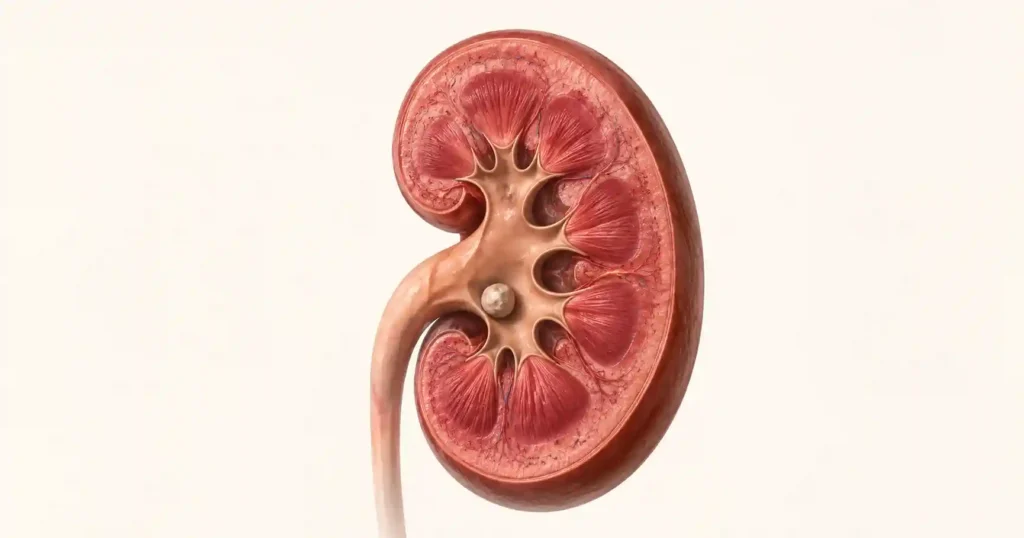
When men ask me about whey protein and kidney function, this is the part that actually matters — and it is not kidney failure, it is stones. Whey and most powders are animal protein. A heavy animal-protein load raises the acid the kidney must clear, which lowers urinary citrate (the natural compound that blocks crystals from forming) while pushing up uric acid and calcium in the urine. That combination is the recipe for calcium oxalate and uric acid stones.
This is not fringe opinion. The American Urological Association’s kidney-stone guideline advises stone formers to limit nondairy animal protein and to drink enough to keep urine output above 2.5 liters a day (about 85 fl oz / 10 cups) [3]. So if you have ever passed a stone and you are doing two scoops a day on top of a meat-heavy diet, that is the part of this conversation that deserves your attention — far more than any worry about the powder itself “damaging” the kidney.
High blood pressure and worried about your kidneys? Download Dr. Khalid’s Blood Pressure & Kidney Protection Guide.
Enter your email below to receive Dr. Khalid’s complete Blood Pressure & Kidney Protection Guide as a free, printable PDF.
Who actually needs to limit protein powder
For everyone else, here is the honest risk hierarchy. The people who should be cautious with a high-protein regimen are those whose kidneys are already compromised or under strain: anyone with existing chronic kidney disease at any stage; anyone with a single (solitary) kidney; anyone with diabetes or high blood pressure who already shows early kidney signs such as protein in the urine; and recurrent stone formers.
The distinction is sharp in the data. The long-running Nurses’ Health Study found that high nondairy animal protein accelerated kidney-function decline only in women who already had mild kidney impairment — and not in those with normal function [2]. That single line is the whole argument. And for most men, blood pressure does far more kidney harm than any protein shake; it is worth understanding how high blood pressure damages your kidneys. If your function is already reduced, our guide to the stages of chronic kidney disease explains exactly where dietary protein fits.
When to Get Your Kidneys Checked
Protein powder is not the problem for most men — but if any of these apply to you, get kidney function tested before loading up, and do not act on a single creatinine reading:
- Known chronic kidney disease, or a single (solitary) kidney
- Diabetes or high blood pressure, especially with foamy urine or known protein in the urine
- A previous kidney stone, particularly a uric acid or calcium oxalate stone
- Visible swelling in the legs or ankles, or a creatinine that is trending upward across repeated tests
How to use protein powder without worrying
If you have normal kidney function and no stone history, the practical rules are short. A daily intake in the range many strength-training adults use — roughly 1.6 to 2.2 grams of protein per kilogram of body weight — is well tolerated by healthy kidneys. Powder is just a convenient way to reach that target; the kidney does not distinguish a chicken breast from a scoop.
- Hydrate to match the load. If you are stone-prone, drink enough to keep your urine pale and your output above 2.5 liters daily.
- Get a baseline if you carry risk. Before starting a high-protein regimen with diabetes, high blood pressure, one kidney, or a stone history, ask your primary care doctor or urologist for an eGFR, a urinalysis, and a urine albumin-to-creatinine ratio — then recheck in 6 to 12 months.
- Don’t self-diagnose off one creatinine. If a single result is flagged, ask whether a cystatin C or a repeat test is warranted before you cut protein or panic.
- Buy third-party-tested powder. Some products carry heavy-metal contaminants; a powder is only as clean as its independent testing.
Frequently Asked Questions
Is protein powder bad for your kidneys if you are otherwise healthy?
No. In an adult with normal kidney function, a higher protein intake raises the filtration rate for a while, but a 2018 review in the Journal of Nutrition found no decline in kidney function on high-protein diets. The kidney is adapting to a bigger workload, not being injured. If you want reassurance, you can check your own numbers with our CKD Stage (eGFR) Calculator.
Does protein powder raise your creatinine?
Most of the worry about protein powder and kidney damage starts here. Protein powder can nudge creatinine up, and so can creatine and a muscular build — but that is not kidney injury. Creatinine is a muscle breakdown product, so more muscle means more in the blood with the kidneys working normally. Before acting on one flagged result, read what a high creatinine result actually means.
Can whey protein cause kidney stones?
Heavy animal-protein intake — and whey is animal protein — raises uric acid and calcium in the urine and lowers citrate, which together favor calcium oxalate and uric acid stones. It does not cause kidney failure, but if you have formed a stone before, two scoops a day is worth rethinking. Our Kidney Stones Hub covers prevention in detail.
How much protein is safe for your kidneys per day?
For someone with normal kidney function, the range many strength-training adults use — roughly 1.6 to 2.2 grams per kilogram of body weight daily — is well tolerated, whether it comes from food or powder. The picture changes if you already have reduced function; our guide to the stages of chronic kidney disease explains where dietary protein fits.
Should I get my kidneys checked before taking protein powder?
If you have diabetes, high blood pressure, a single kidney, existing kidney disease, or a history of stones, yes — ask for an eGFR, a urinalysis, and a urine albumin-to-creatinine ratio first, then recheck in 6 to 12 months. For most men, by the way, blood pressure harms the kidneys far more than protein does.
References
- Devries MC, Sithamparapillai A, Brimble KS, et al. Changes in Kidney Function Do Not Differ between Healthy Adults Consuming Higher- Compared with Lower- or Normal-Protein Diets: A Systematic Review and Meta-Analysis. J Nutr. 2018;148(11):1760-1775. Journal of Nutrition
- Knight EL, Stampfer MJ, Hankinson SE, et al. The impact of protein intake on renal function decline in women with normal renal function or mild renal insufficiency. Ann Intern Med. 2003;138(6):460-467. PubMed
- Pearle MS, Goldfarb DS, Assimos DG, et al. Medical Management of Kidney Stones: AUA Guideline. J Urol. 2014;192(2):316-324. AUA
Dr. Muhammad Khalid
MBBS · FCPS (Urology) · MCPS (General Surgery) · CHPE · CRSM · IMC #539472
Specialist urologist with 11+ years of clinical experience across tertiary teaching hospitals. Trained at Lady Reading Hospital and Khyber Teaching Hospital, Peshawar. Author or co-author of five peer-reviewed international publications, including in Cureus and the World Journal of Surgery. Procedural expertise: URS, PCNL, RIRS, TURP, TURBT, and major open urological surgery. Full profile →
This article is for educational purposes only and does not constitute medical advice. Always consult your physician or urologist for diagnosis and treatment decisions specific to your condition.