Ureteral Stent Removal: What It Feels Like & Recovery
Most men dread the stent more than the stone. When patients ask me whether ureteral stent removal will hurt, here's the honest answer — and what the first 48 hours afterward actually look like.

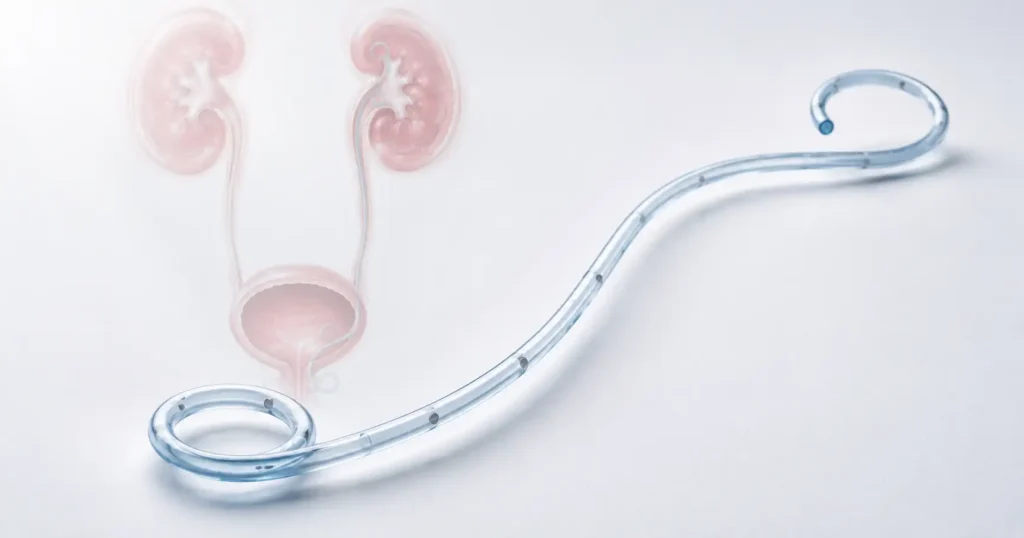
Ureteral stent removal is the part of stone treatment that makes most patients more anxious than the surgery itself. By this point you have usually had a stent — a soft, hollow tube (also written ureteric stent, and often called a double-J or DJ stent) — sitting between your kidney and bladder for one to four weeks, and you have felt every bit of it: the flank twinge when you pee, the urge that never fully settles, the pink-tinged urine. So the natural question is whether taking it out will be worse. I remove stents in clinic every week, and the honest answer is that removal is brief — usually seconds — but the experience varies depending on how it is done. This guide walks through what actually happens during a ureteral stent removal, the two methods urologists use, what the discomfort is really like, and what counts as normal versus a reason to call afterward. For the wider picture of stone surgery and aftercare, see our Surgery & Recovery Hub.
Key Takeaways
- A ureteral stent is usually removed 1–4 weeks after stone surgery; the removal itself takes seconds, not minutes.
- There are two methods: a dangling extraction string that is pulled out, or a quick flexible cystoscopy done in the office.
- The sharp sensation during removal lasts only as long as the stent is sliding out — typically 3 to 5 seconds.
- Mild burning, urgency, and blood-tinged urine for 24–48 hours afterward are expected; fever or being unable to urinate are not.
What a Ureteral Stent Does — and Why It Has to Come Out
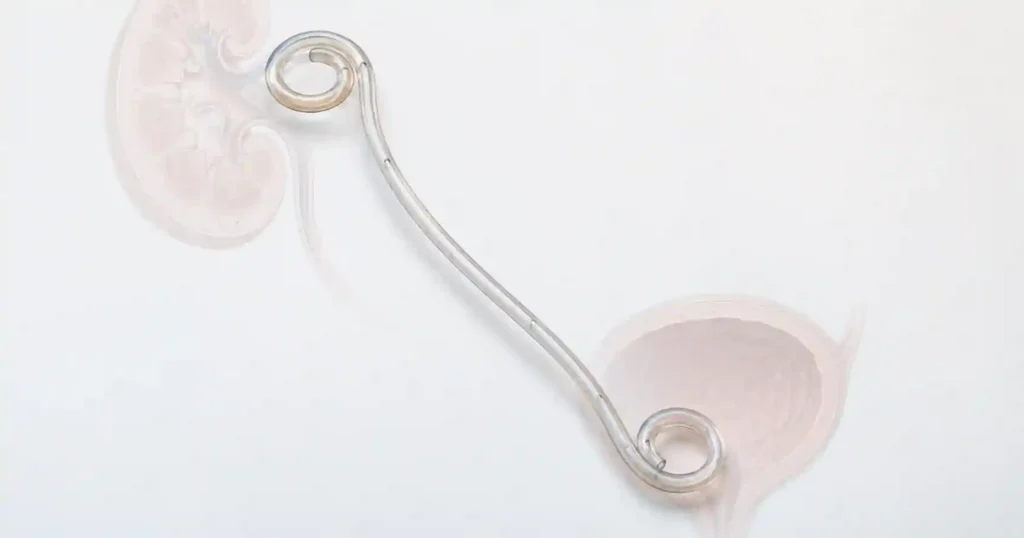
A ureteral stent is a soft, hollow tube about the width of a thin drinking straw. One curl sits inside your kidney, the other inside your bladder, and the shaft runs down the ureter — the narrow tube urine travels through. Its only job is to keep that pathway open and draining while everything settles after a procedure.
Urologists place a stent after stone procedures such as ureteroscopy, RIRS (flexible ureteroscopy), or shockwave lithotripsy when the ureter is swollen, when stone fragments still need to pass, or when a ureteral access sheath was used. The AUA notes a stent is not always necessary after an uncomplicated ureteroscopy[1], but it is still common whenever the surgeon wants insurance against post-operative swelling blocking the kidney. The type of stone surgery you had often decides whether you needed one.
It comes out because it is a foreign body, and your body knows it. Within days the stent surface starts to collect bacteria and mineral crust, and stent-related symptoms — flank ache, urgency, blood-tinged urine — build the longer it stays. Studies using the standard stent symptom questionnaire show these symptoms reduce quality of life in up to 80% of patients while the stent is in place[2]. That is exactly why the AUA recommends keeping stent dwell time as short as the situation safely allows[1].
How a Ureteral Stent Is Removed: String vs Cystoscopy
There are two standard ways to take a stent out, and which one you get usually comes down to whether your surgeon left a removal string attached.
Extraction string. Some stents are left with a thin thread that exits through the urethra, often taped to your thigh or to a dressing. To remove the stent, that string is pulled in one steady, continuous motion and the whole stent slides out. It takes seconds, needs no camera, and can be done by a nurse — or, with explicit instruction from your urologist, sometimes by you at home. Strings are used specifically to shorten dwell time and avoid a second visit[1], and many patients say they would choose string removal again over a scope[4].
Flexible cystoscopy. If there is no string, the stent is removed with a flexible cystoscope — a thin, bendable camera passed through the urethra into the bladder. The urologist grasps the bladder coil and withdraws the scope and stent together. It is an office procedure done with numbing lidocaine gel, not general anesthesia, and usually takes a few minutes start to finish. A flexible scope is gentler than the older rigid type, particularly for men, whose longer urethra makes rigid instruments more uncomfortable[3].
Preparing for urological surgery? Download Dr. Khalid’s Urology Surgery Recovery Guide.
Enter your email below to receive Dr. Khalid’s complete Urology Surgery Recovery Guide as a free, printable PDF.
Does Ureteral Stent Removal Hurt? An Honest Answer
Here is the honest version: there is a brief, strange, sharp sensation as the stent slides up and out — most people describe it as a quick pulling or stinging zing rather than deep pain — and it is over in about three to five seconds. The discomfort tracks the moment the stent is moving, not the whole appointment.
With string removal, you feel a short tug and a flicker of urgency, then it is done. With cystoscopic removal, there is the added sensation of the scope itself; the numbing gel takes the edge off, but men generally feel more than women because of the longer urethra. Research on cystoscopic removal finds a meaningful share of patients report moderate discomfort, yet using a flexible scope and an unhurried technique measurably lowers the pain reported[3].
If you are dreading it, that reaction is the most predictable part of the whole process — and usually the most overblown. Managing the stent while it was still in is often the harder stretch; if that part has been rough, our guide to controlling stent pain before removal covers what actually helps.
In My Practice
The patients who struggle most with stent removal are almost always the ones who spent the whole week before it bracing for agony. I have watched a man grip the edge of the table with his eyes shut, ready for the worst, and open them a second later genuinely surprised that it was already finished.
For most people the dread of removal is far larger than the few seconds the procedure actually takes.
Recovery After Stent Removal: The First 48 Hours
For a day or two after the stent is out, your bladder and ureter are still irritated from having had a tube in them, so some symptoms are expected and not a cause for worry. Mild burning when you urinate, needing to go more often or more urgently, a dull ache in the flank as you pee (the old reflux sensation fading), and pink or lightly blood-tinged urine all fall inside normal.
These settle quickly. Drink enough water that your urine runs pale — roughly 2 to 2.5 liters across the day (around 70–85 fl oz) unless your doctor has restricted your fluids — and each trip to the bathroom should feel a little better than the last. Most people are back to baseline within 24 to 48 hours. You can track how your symptoms trend with our stent symptom tracker, and our post-operative recovery timeline sets expectations for the wider stone-surgery recovery.
When to Call After Stent Removal
Some symptoms after removal are not part of normal recovery. Contact your urologist the same day — or go to the emergency room — if you have any of the following:
- A temperature of 38°C (100.4°F) or higher, or shaking chills — this can signal a kidney infection and needs same-day assessment, not waiting it out.
- You cannot pass urine at all, or only in tiny amounts with a full, painful bladder — go to the ER; this needs urgent attention.
- Heavy bleeding or clots that block your urine stream, rather than light pink urine that clears with fluids.
- Flank pain that worsens after 48 hours instead of improving, or pain that simple painkillers do not touch — ask to be seen and whether a scan is needed to rule out a blocked kidney.
Frequently Asked Questions
Does ureteral stent removal hurt?
Ureteral stent removal causes a brief, sharp pulling sensation rather than lasting pain, and it is over in roughly three to five seconds as the stent slides out. Cystoscopic removal adds mild discomfort from the scope, eased by numbing gel; string removal is a quick tug. For most people the anticipation is worse than the event — and if the stent pain before removal was the hard part, you are not alone.
Can I remove my own ureteral stent at home using the string?
Only if your urologist has specifically told you to and shown you how. Some stents are left with an extraction string for exactly this purpose, but many surgeons prefer to remove it themselves to confirm the stent comes out whole. Never pull a string you were not instructed to pull, and never cut or tug one that feels stuck.
How long after kidney stone surgery is the stent removed?
Most ureteral stents stay in for one to four weeks, depending on the surgery, how much swelling there was, and whether fragments still need to pass. The AUA recommends minimizing how long a stent dwells to reduce symptoms. Your exact timing depends on the type of stone surgery you had and your surgeon’s plan.
Is blood in my urine normal after ureteral stent removal?
Yes. Pink or lightly blood-tinged urine for 24 to 48 hours after removal is expected, because the bladder and ureter were irritated by the stent. It should lighten with each void as you drink fluids, and a stent symptom tracker helps you see the trend. Heavy bleeding or clots blocking your stream are not normal and need same-day review.
Why does it still burn when I pee after the stent is out?
A short period of burning and urgency after removal is normal irritation from the tube that was sitting in your bladder, along with the mild reflux the stent allowed. It usually fades within one to two days as you stay well hydrated. If burning worsens, comes with fever, or lasts beyond a few days, it can mean a urinary infection and should be checked.
References
- American Urological Association. Surgical Management of Kidney and Ureteral Stones: AUA Guideline. American Urological Association. 2024. AUA
- Joshi HB, Stainthorpe A, MacDonagh RP, et al. Indwelling ureteral stents: evaluation of symptoms, quality of life and utility. J Urol. 2003;169(3):1065-1069. PubMed
- Shin YS, Kim SD, You JH, et al. Clinical significance of ureteral stent removal by flexible cystoscopy on pain and satisfaction in young males: a prospective randomised control trial. Urolithiasis. 2016;44(2):149-153. PubMed
- Kim DJ, Son JH, Jang SH, et al. Rethinking of ureteral stent removal using an extraction string; what patients feel and what is patients’ preference?: a randomized controlled study. BMC Urol. 2015;15:121. PubMed
Dr. Muhammad Khalid
MBBS · FCPS (Urology) · MCPS (General Surgery) · CHPE · CRSM · IMC #539472
Specialist urologist with 11+ years of clinical experience across tertiary teaching hospitals. Trained at Lady Reading Hospital and Khyber Teaching Hospital, Peshawar. Author or co-author of five peer-reviewed international publications, including in Cureus and the World Journal of Surgery. Procedural expertise: URS, PCNL, RIRS, TURP, TURBT, and major open urological surgery. Full profile →
This article is for educational purposes only and does not constitute medical advice. Always consult your physician or urologist for diagnosis and treatment decisions specific to your condition.