Hydration and Kidney Health: The Truth About Water Intake
Most people blindly follow the "eight glasses a day" rule, assuming more water automatically equals healthier kidneys. The clinical reality is that this number is a complete myth, and forced overhydrating can actually drop your blood sodium to dangerous levels. Here is the exact, evidence-based fluid intake I recommend to protect your system.

Hydration and kidney health are linked far more tightly than most patients realize — and far more strangely than wellness culture admits. “Drink 8 glasses of water a day.” You have heard it your entire life. Your mother said it. Influencers repeat it. Bottled-water companies built empires on it. There is just one problem: no scientific study ever established 8 glasses as a universal requirement. The number traces back to a 1945 US Food and Nutrition Board recommendation that was taken out of context and has never been validated by clinical research [1].
That does not mean hydration is unimportant — it matters profoundly, especially for your kidneys. But the relationship between water intake and kidney function is more nuanced than “more is always better.” For kidney stone formers, adequate hydration is the single most impactful preventive measure ever studied. For patients with advanced kidney disease, excessive water intake can be actively harmful. And for the average healthy person, your kidneys are remarkably efficient at maintaining balance across a wide range of fluid intakes.
As a urologist, I manage the consequences of both ends of the hydration spectrum — the stone former who drinks 1 liter (about 34 fl oz) a day and the anxious over-hydrator who drinks 6 liters (about 200 fl oz) and presents with dangerously low blood sodium. This article is the evidence-based middle ground.
Key Takeaways
- The “8 glasses a day” rule has no scientific basis — your optimal water intake depends on body size, climate, activity level, and kidney health status.
- For kidney stone formers, the target is urine output of 2.5 liters per day (about 85 fl oz / 10 cups). This typically requires 3 to 3.5 liters of total fluid intake daily (about 100 to 120 fl oz).
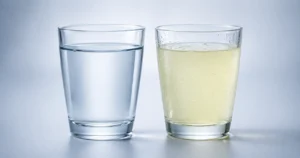
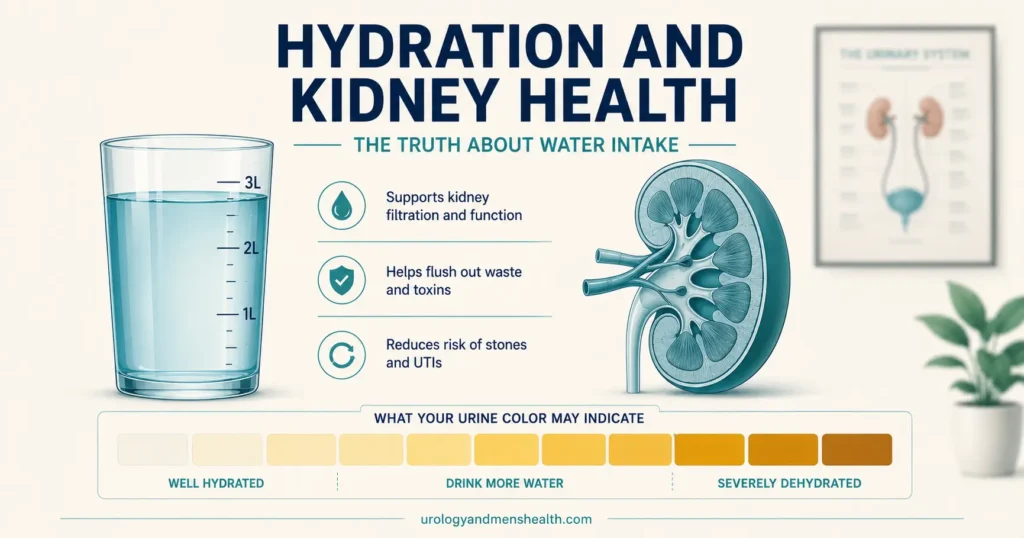
- Urine color is the best practical hydration indicator — aim for pale straw yellow. Dark amber means under-hydrated. Completely clear means possibly over-hydrated.
- Overhydration is a real danger — drinking more than 4 to 5 liters daily without increased losses can cause hyponatremia (dangerously low sodium), which can be fatal.
- For most healthy adults without kidney stones, advanced kidney disease, or heart failure, drinking when thirsty is a reliable strategy — the thirst mechanism is well-calibrated in normal kidney function.
- Not all fluids count equally — water and lemon water are ideal, moderate coffee is fine, but sugar-sweetened drinks, excessive alcohol, and large volumes of black tea can worsen kidney health.
- Patients in CKD Stage 4 or 5 may need to restrict fluids, not increase them — blanket “drink more water” advice can be harmful in this population.
What Your Kidneys Actually Do With Water
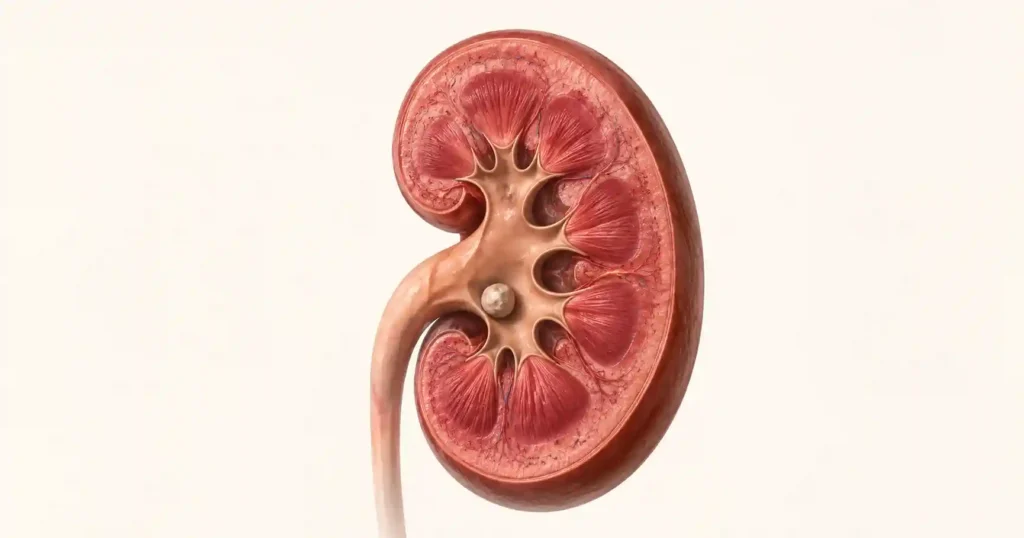
To understand hydration properly, you need to understand what your kidneys actually do. They are not simple drainpipes. Each kidney contains approximately 1 million nephrons — tiny functional units that filter your blood, reclaim what your body needs, and excrete what it does not.
Your kidneys filter approximately 180 liters of plasma per day (around 47 gallons). Of that enormous volume, only 1 to 2 liters (34 to 68 fl oz) ends up as urine — the other 178 liters or so are reabsorbed back into circulation [2]. This means your kidneys are already operating an extraordinarily efficient water recycling system. They concentrate urine dramatically when you are dehydrated (to conserve water) and dilute it substantially when you have drunk excess (to dump the surplus).
This regulatory flexibility has limits. In chronic dehydration, the kidneys must work harder to concentrate urine, which increases the concentration of stone-forming salts (calcium, oxalate, uric acid) and reduces the concentration of protective substances (citrate, magnesium). Over time, this creates conditions that favor crystal formation — the first step toward kidney stones.
At the other extreme, chronic overhydration dilutes blood sodium to dangerous levels (hyponatremia), overwhelms the kidneys’ ability to excrete free water, and in severe cases causes cerebral edema — brain swelling that can be fatal.
How Hydration and Kidney Health Are Connected
The link between hydration and kidney health runs in both directions. Adequate hydration protects the kidneys; dehydration and overhydration both stress them. The strength of that link depends on your kidney status.
In a person with normal kidney function and no stone history, hydration matters but rarely produces a clinical problem in either direction — the kidneys absorb the swings. In a stone former, hydration becomes the dominant variable: a 5-year randomized trial showed that simply increasing fluid intake to produce more than 2 liters of urine per day reduced stone recurrence by 40 to 50 percent [6]. No medication or supplement comes close to that effect size. In a CKD patient, hydration becomes a careful balancing act managed by the nephrologist, not a “drink more water” instruction.
The practical takeaway: generic hydration advice is wrong because there is no generic patient. Your target depends on which of those three categories you fall into. A measurement tool can help you find a starting number — our hydration calculator uses body weight, climate, and activity level to estimate your baseline intake.
In My Practice
The hydration conversation is one I have in nearly every kidney stone consultation, and two patterns dominate. The first is the patient who drinks very little plain water and relies almost entirely on black tea — sometimes 5 or 6 cups daily — which is both low-volume relative to body need and one of the highest dietary oxalate sources I see. The second is the over-hydrator: a patient told once to “drink more water” who has been forcing 4 or 5 liters daily for years without any specific target. They arrive in clinic with bloating, frequent low-grade hyponatremia on routine labs, and a great deal of anxiety. Both are problematic, and both respond to the same intervention: a concrete, measurable target instead of vague advice.
What works in clinic is replacing “drink more water” with two numbers — a daily fluid intake (in milliliters or liters, written down) and a daily urine color check (pale straw yellow, judged from the second void of the day, not the first morning sample). Patients who write the target on their fridge and check urine color twice a day hit the goal far more reliably than patients given a vague instruction.
How Much Water Do You Actually Need? (The Evidence-Based Answer)
The answer depends entirely on who you are and what is going on with your kidneys.
If you are a healthy adult without kidney stones
The National Academies of Sciences (US) suggests an adequate intake of approximately 3.7 liters (about 125 fl oz / 15 cups) of total water per day for men — but that figure includes water from all sources, including food (which contributes about 20 percent of daily fluid intake) [3]. The practical drinking target is roughly 2.5 to 3 liters of fluid per day (about 85 to 100 fl oz), adjusted for activity level, climate, and body size.
The single point most often missed by wellness culture: your thirst mechanism works. In healthy individuals with normal kidney function, thirst is a well-calibrated physiological signal. Drinking when you are thirsty and monitoring urine color (pale straw yellow) is a perfectly adequate hydration strategy for most people. You do not need to carry a water bottle at all times, set hydration alarms, or force yourself to drink when you are not thirsty [4]. If you want a more precise starting estimate based on your body weight and climate, our hydration calculator generates a personalized daily target.
If you are a kidney stone former
Here, the stakes change. The EAU Urolithiasis Guidelines (2024) recommend that stone formers maintain a urine output of at least 2.5 liters per day (about 85 fl oz) [5]. The American Urological Association medical-management guideline recommends the same target. This is the single most evidence-based intervention in stone prevention — the Borghi 1996 randomized trial demonstrated a 40 to 50 percent reduction in stone recurrence with increased fluid intake targeting more than 2 liters of urine output [6].
To achieve 2.5 liters of urine output, most people need to drink approximately 3 to 3.5 liters of total fluid per day (about 100 to 120 fl oz, or roughly 12 to 14 cups). That is more than the average person drinks, and it requires conscious effort — especially overnight, which is when most stones form due to concentrated urine.
The practical stone-former hydration protocol I use in clinic:
- Drink a full 250 to 300 mL glass of water on waking, before coffee or tea.
- Use a marked 1-liter (about 34 fl oz) bottle as your tracking unit. Aim to finish bottle 1 by lunch and bottle 2 by mid-afternoon. Bottle 3 (smaller) goes through the evening and before bed.
- Drink a full 250 mL glass before bed, regardless of nocturia history.
- If you wake to urinate during the night, drink another small glass before going back to sleep.
- Add about half a lemon (around 30 mL of juice, providing roughly 5 mEq of citrate) to 2 to 3 glasses daily — citrate is a natural stone inhibitor.
- Check urine color twice a day (mid-morning and late afternoon — never the first morning void). Target: pale straw yellow.
If you have chronic kidney disease
This is where generic “drink more water” advice becomes potentially dangerous. In early CKD (Stages 1 to 3), maintaining adequate hydration is generally encouraged and may help preserve remaining kidney function. However, in advanced CKD (Stages 4 to 5), and particularly in patients approaching or on dialysis, the kidneys may lose their ability to excrete water efficiently. Excess fluid intake in those patients leads to fluid overload — peripheral edema, breathlessness, and dangerous blood pressure spikes.
CKD patients should follow their nephrologist’s specific fluid guidance, which is individualized based on residual urine output, kidney function, and dialysis status. There is no universal “drink more water” rule for CKD — and any source telling you otherwise does not understand the complexity of kidney disease management. If you have hypertension as well, the interaction matters: see our guide on high blood pressure and kidney damage for how the two conditions compound each other.
The Overhydration Problem: When “More Water” Becomes Dangerous
Hyponatremia — dangerously low blood sodium — is the serious consequence of overhydration. It occurs when water intake exceeds the kidneys’ maximal free water excretion rate, which is approximately 0.8 to 1.0 liters per hour (27 to 34 fl oz per hour) in healthy adults [7].
This is not a rare or theoretical risk. The clinical scenarios I see referred for it are predictable: the marathon runner who drank water at every aid station and finished symptomatic, the patient on a thiazide diuretic who started a new “wellness” routine of forced water intake, the psychiatric patient on SSRIs who developed primary polydipsia, and increasingly the wellness-culture adherent who treats hydration as a competition. Symptoms range from nausea and headache (mild) to confusion, seizures, and death (severe).
The populations most at risk for overhydration hyponatremia are: elderly patients on thiazide diuretics, endurance athletes, individuals on SSRIs or MDMA (ecstasy), and patients with SIADH (syndrome of inappropriate ADH secretion). It can also happen to anyone who consistently drinks well beyond their needs over months and years.
The practical guideline: for stone formers, 3 to 3.5 liters daily (about 100 to 120 fl oz) is the evidence-based range. Going beyond 4 liters provides no additional stone prevention benefit and begins to carry risk. For the general population, drinking to thirst with an upper practical ceiling of about 3 liters daily is more than adequate.
Which Fluids Help (and Which Hurt) Your Kidneys
Not all fluids contribute equally to kidney health. The type of fluid matters as much as the volume.
Best choices
Water — the gold standard. Tap water is perfectly adequate in most developed countries and is often mineral-rich (calcium, magnesium), which can benefit stone formers. Mineral water and sparkling water are equally acceptable. There is no evidence that alkaline water provides any additional kidney benefit over regular water.
Lemon water — an excellent choice for stone formers specifically. Lemons are the richest common dietary source of citrate, which inhibits calcium stone formation. Squeeze half a lemon into a glass of water, 2 to 3 times daily. This is one of the few dietary modifications with genuine, measurable impact on stone risk.
Coffee (moderate) — perhaps surprisingly, moderate coffee intake (2 to 3 cups daily) is associated with a slightly reduced risk of CKD and kidney stones in observational studies [8]. The mild diuretic effect of caffeine is offset by the volume of water consumed with it. Coffee does not “dehydrate” you — that is a persistent myth, and a 2014 study by Killer and colleagues demonstrated no measurable dehydration with up to 4 cups daily of moderate coffee intake [13].
Drink with caution
Black tea — a significant source of oxalate, particularly when consumed in large quantities (4 to 6 cups daily, common in South Asian, British, and Irish households). For calcium oxalate stone formers, this is one of the most commonly missed dietary risk factors I identify. Switching to green tea (much lower oxalate) or adding more milk to each cup (the calcium binds the oxalate in the gut before absorption) significantly reduces the impact.
Fruit juice — provides citrate (beneficial) but also significant fructose and calories. One glass of orange juice daily is reasonable for stone formers. More than that adds unnecessary sugar without additional benefit.
Limit or avoid
Sugar-sweetened beverages — soft drinks and commercial juices. The Nurses’ Health Study found that sugar-sweetened cola consumption was associated with a 23 percent increase in kidney stone risk, while sugar-sweetened non-cola was associated with a 33 percent increase [9]. The fructose drives uric acid production and increases urinary calcium excretion. Common offenders for US readers: Coca-Cola, Mountain Dew, Pepsi, sweetened iced teas (Snapple, Arizona), and most flavored Gatorade products. Sodium-loaded drinks compound the problem — for context on how sodium intake affects kidney pressure, see our guide on high blood pressure and kidney damage.
Excessive alcohol — alcohol is a net dehydrator. Despite increasing urine output acutely (by suppressing ADH), it produces net fluid loss. Beer is particularly problematic for stone formers because it is high in purines (raising uric acid) while also causing dehydration. The myth that “beer flushes out kidney stones” is dangerous nonsense with no evidence behind it.
➡ Related: How to Pass a Kidney Stone Fast — What I Tell My PatientsSeasonal Hydration: Why Kidney Stones Spike in Summer
There is a well-documented seasonal pattern in kidney stone presentations — incidence peaks in late summer and early autumn, approximately 6 to 8 weeks after the hottest periods [10]. The mechanism is straightforward: higher ambient temperatures increase insensible fluid losses through sweat, concentrating the urine and creating supersaturation conditions for crystal formation.
This pattern is particularly relevant in hot regions — the American Southeast, Texas, the Middle East, South Asia, and Australia all report higher stone incidence than temperate regions. Climate change projections suggest kidney stone incidence will increase globally as temperatures rise, with an estimated 1.6 to 2.2 million additional stone cases per year in the US alone by 2050 [11].
The practical implication: if you are a stone former living in a hot climate, you need to increase fluid intake during summer months beyond your winter baseline. An additional 500 mL to 1 liter per day (17 to 34 fl oz, or 2 to 4 extra glasses) may be necessary to maintain adequate urine dilution when sweating heavily. Construction workers, landscapers, roofers, and outdoor athletes in summer are the population I see most often for first-time stone presentations after a heat wave.
The Nighttime Hydration Gap: When Most Stones Form
This is one of the most underappreciated aspects of stone prevention. Urine concentration peaks during the night and early morning — a period of 6 to 8 hours during which no fluid is consumed. This is the window when crystallization is most likely to begin [12]. The morning void is almost always the most concentrated urine of the day, which is why some patients notice their first symptom of a stone upon waking.
The simple fix I give every stone former: drink a full glass of water before bed, and another if you wake during the night (for any reason, including nocturia). It does not need to be a liter — even 250 to 300 mL (about 8 to 10 fl oz) before bed measurably reduces overnight urine concentration. If you want to know what your urine color tells you about overnight hydration, our urine color decoder walks through what each shade actually means clinically.
Some patients worry that drinking before bed will worsen nighttime urination. In practice, the trade-off is worth it. One additional bathroom visit at night is a minor inconvenience compared to the agony of another kidney stone episode. For most patients, one extra glass before bed adds only a modest increase to nocturia frequency.
Worried about a stone coming back? Download Dr. Khalid’s 7-Day Kidney Stone Prevention Meal Plan.
Enter your email below to receive Dr. Khalid’s complete 7-Day Kidney Stone Prevention Meal Plan as a free, printable PDF.
Hydration Myths That Need Correcting
Myth: Clear urine means optimal hydration
Wrong. Completely colorless urine means you are drinking more than your kidneys need and they are simply dumping the excess. This is wasteful at best and potentially dangerous if sustained at very high volumes. The target is pale straw yellow, not clear. Think diluted lemonade, not water.
Myth: You need to drink 8 glasses (2 liters) minimum
No study has ever validated that number for the general population. Your optimal intake depends on body size, activity level, climate, and kidney health. A 200-pound (90 kg) construction worker in Phoenix needs far more than a 130-pound (60 kg) office worker in Boston. Use urine color and thirst as your guides, not an arbitrary number.
Myth: Coffee dehydrates you
No. At typical consumption levels (up to 4 to 5 cups daily), coffee produces a net positive fluid balance. The water content of the coffee outweighs the mild diuretic effect of caffeine. The 2014 Killer trial confirmed no dehydration with moderate coffee intake [13].
Myth: Alkaline water is better for your kidneys
No clinical evidence supports this claim. Your kidneys maintain blood pH within a very tight range (7.35 to 7.45) regardless of what you drink. Alkaline water does not meaningfully alter urinary pH, does not prevent kidney stones (except potentially uric acid stones, for which prescription potassium citrate is far more effective), and is not superior to regular water for general kidney health.
Myth: You should force yourself to drink even when not thirsty
Only if you are a kidney stone former with a specific hydration target, or if you have another medical reason to maintain high fluid intake. For the general healthy population, your thirst mechanism is an adequate guide. Overriding it consistently by forcing excess intake serves no purpose and can cause harm.
Myth: Beer flushes out kidney stones
This is one of the most persistent and dangerous myths in kidney stone folklore. Beer increases acute urine output (by suppressing ADH), which creates the illusion of “flushing.” But alcohol causes net dehydration, beer contains purines that raise uric acid, and the overall effect is to increase stone risk, not decrease it. No urological guideline anywhere in the world recommends beer for stone prevention.
➡ Related: The Kidney Stone Diet — My Clinical Protocol for PreventionWhen to See a Doctor — Urgently
- Dark brown or cola-colored urine — may indicate severe dehydration, rhabdomyolysis (muscle breakdown), or liver disease. Seek medical attention the same day.
- Blood in urine (pink, red, or brown) — always requires investigation. Do not assume it is “just dehydration.” Hematuria can indicate kidney stones, UTI, or more serious pathology.
- Inability to keep fluids down (persistent vomiting) — dehydration can accelerate rapidly, especially in hot climates. IV fluid replacement may be needed.
- Confusion, severe headache, or seizures after drinking large volumes of water — may indicate hyponatremia (water intoxication). This is a medical emergency.
- Significant reduction in urine output (less than 500 mL / about 17 fl oz in 24 hours) despite normal fluid intake — may indicate acute kidney injury. Seek urgent medical assessment.
Frequently Asked Questions
Does drinking more water improve kidney function in healthy people?
In healthy kidneys, drinking more water does not “improve” function — your kidneys are already operating optimally across a wide intake range. The connection between hydration and kidney health is most relevant in two groups: kidney stone formers (where increased fluid prevents stones by diluting urine — this is prevention, not improvement) and people with early CKD (where adequate hydration may help preserve remaining function by reducing the kidneys’ concentrating workload). No study has shown that excess water intake in healthy people provides kidney “detox” or performance enhancement — your kidneys do not need to be flushed like a plumbing system. For more on what the kidneys actually do with what you drink, see our complete kidney stones guide.
Can dehydration cause kidney damage?
Acute severe dehydration can cause prerenal acute kidney injury — a temporary decline in function due to reduced blood flow. This is usually reversible with fluid replacement. Chronic low-grade dehydration is a well-established risk factor for kidney stones and may contribute to CKD progression in vulnerable populations, particularly agricultural workers exposed to chronic heat stress (the so-called Mesoamerican nephropathy seen in Central American sugarcane workers and similar populations) [14]. For most people in temperate climates, mild day-to-day fluctuations in hydration do not cause lasting damage.
Is sparkling water as good as still water for preventing kidney stones?
Yes. Carbonated water hydrates identically to still water and has no measurable effect on stone risk. The carbonation does not affect kidney function or urinary chemistry. Some patients find sparkling water more palatable, which helps them meet their fluid targets — in which case it is a perfectly acceptable primary fluid. The caveat: flavored sparkling waters (LaCroix flavored, Bubly, Spindrift) may contain added citric acid, sodium, or sweeteners that could affect stone risk depending on the formulation. Plain sparkling water (Perrier, San Pellegrino, Topo Chico, store-brand seltzer) is ideal.
How do I know if I’m drinking too much water?
If your urine is consistently completely clear and colorless throughout the day (not just the first morning void, which is normally concentrated), you are likely drinking more than necessary. Other signs of overhydration include: needing to urinate more than 10 to 12 times per day, bloating, nausea, or headache after drinking. If you are drinking more than 4 liters daily (about 135 fl oz) without increased losses from exercise or heat, consider reducing. The goal is pale yellow urine, not clear. Our urine color decoder walks through what each shade means.
Should kidney stone patients drink water at night?
Yes — this is one of the most important and underused stone prevention strategies. Overnight urine is the most concentrated of the day, and the 6 to 8 hours of sleep without fluid intake create the highest-risk window for crystal formation. Drinking a full glass before bed and another if you wake during the night significantly reduces this risk. The minor inconvenience of an extra bathroom trip is trivially small compared to the pain of a recurrent stone. For the broader stone prevention protocol, see my full clinical protocol.
References
- Valtin H. “Drink at least eight glasses of water a day.” Really? Is there scientific evidence for “8 x 8”? Am J Physiol Regul Integr Comp Physiol. 2002;283(5):R993–R1004. PubMed
- Hall JE. Guyton and Hall Textbook of Medical Physiology. 14th ed. Elsevier; 2020. Chapters 26–28 (Renal Physiology).
- Institute of Medicine (US) Panel on Dietary Reference Intakes. Dietary Reference Intakes for Water, Potassium, Sodium, Chloride, and Sulfate. Washington DC: National Academies Press; 2005. NAP
- Perrier ET, Armstrong LE, Bottin JH, et al. Hydration for health hypothesis: a narrative review of supporting evidence. Eur J Nutr. 2021;60(3):1167–1180. PubMed
- Skolarikos A, Neisius A, Petrik A, et al. EAU Guidelines on Urolithiasis. European Association of Urology. 2024. EAU
- Borghi L, Meschi T, Amato F, Briganti A, Novarini A, Giannini A. Urinary volume, water and recurrences in idiopathic calcium nephrolithiasis: a 5-year randomized prospective study. J Urol. 1996;155(3):839–843. PubMed
- Rosner MH, Kirven J. Exercise-associated hyponatremia. Clin J Am Soc Nephrol. 2007;2(1):151–161. PubMed
- Kanbay M, Siriopol D, Copur S, et al. Effect of coffee consumption on renal outcome: a systematic review and meta-analysis. J Ren Nutr. 2021;31(1):5–20. PubMed
- Ferraro PM, Taylor EN, Gambaro G, Curhan GC. Soda and other beverages and the risk of kidney stones. Clin J Am Soc Nephrol. 2013;8(8):1389–1395. PubMed
- Fakheri RJ, Goldfarb DS. Association of nephrolithiasis prevalence rates with ambient temperature in the United States. J Urol. 2011;185(1):162–166. PubMed
- Brikowski TH, Lotan Y, Pearle MS. Climate-related increase in the prevalence of urolithiasis in the United States. Proc Natl Acad Sci USA. 2008;105(28):9841–9846. PubMed
- Rodgers AL. Effect of mineral water containing calcium and magnesium on calcium oxalate urolithiasis risk factors. Urol Int. 1997;58(2):93–99. PubMed
- Killer SC, Blannin AK, Jeukendrup AE. No evidence of dehydration with moderate daily coffee intake: a counterbalanced cross-over study in a free-living population. PLoS One. 2014;9(1):e84154. PubMed
- Glaser J, Lemery J, Rajagopalan B, et al. Climate change and the emergent epidemic of CKD from heat stress in rural communities: the case for heat stress nephropathy. Clin J Am Soc Nephrol. 2016;11(8):1472–1483. PubMed
Dr. Muhammad Khalid
MBBS · FCPS (Urology) · MCPS (General Surgery) · CHPE · CRSM · IMC #539472
Specialist urologist with 11+ years of clinical experience across tertiary teaching hospitals. Trained at Lady Reading Hospital and Khyber Teaching Hospital, Peshawar. Author or co-author of five peer-reviewed international publications, including in Cureus and the World Journal of Surgery. Procedural expertise: URS, PCNL, RIRS, TURP, TURBT, and major open urological surgery. Full profile →
This article is for educational purposes only and does not constitute medical advice. Always consult your physician or urologist for diagnosis and treatment decisions specific to your condition.