Male Infertility Causes & Treatments : Urologist Guide
Couples struggling to conceive usually hand me a massive folder of the wife's ultrasound and hormone labs, while the husband has never even had a basic semen analysis. This deeply flawed approach delays answers for years. In truth, male infertility is not a permanent sentence; it is often a mechanical or chemical issue that can be reversed once we actually bother to look. Here is the unfiltered medical breakdown of the actual causes and the specific treatments that work.

The most common male infertility causes are sitting in plain sight, yet often go undiagnosed for years. Here’s a statistic that surprises most couples: in approximately 50% of infertility cases, a male factor is either the primary cause or a significant contributor [1]. Yet in many clinical settings — particularly in South Asia, the Middle East, and parts of Europe — the default assumption is still that infertility is “a woman’s problem.” The woman undergoes months of hormonal investigations, ultrasound scans, and sometimes invasive procedures before anyone thinks to check the man’s semen analysis.
I see the consequences of this delay regularly. A couple arrives after two or three years of failed conception, carrying a folder full of the wife’s investigations. The husband has never had a single test. When I finally analyze his semen, the answer has been there all along — a clinical varicocele suppressing his sperm count, or an undiagnosed hormonal imbalance, or — in one memorable case — complete azoospermia (zero sperm) caused by testosterone injections prescribed by an online clinic without a single word about fertility consequences.
Male infertility is not a sentence. Many causes are treatable or correctable — if they’re actually identified. This article is the conversation I wish every man received before his partner was subjected to years of unnecessary investigation alone.
📋 Key Takeaways
- Male factors contribute to approximately 50% of all infertility cases — yet men are often the last to be investigated
- A semen analysis is the single most important first-line test — it should be performed early in any infertility work-up, not as an afterthought
- Varicocele (dilated testicular veins) is the most common correctable cause of male infertility, present in up to 40% of infertile men, and surgical repair improves semen parameters in 60–70% of cases [2]
- Testosterone replacement therapy (TRT) shuts down sperm production — this is one of the most common iatrogenic causes of male infertility I see in clinic
- Sperm quality declines with age, but male fertility does not have a sharp “cliff” like female menopause — men can father children into their 60s and beyond, albeit with reduced efficiency and increased genetic risk [3]
- Lifestyle factors — heat exposure, smoking, obesity, alcohol, and anabolic steroids — are all evidence-based, modifiable causes of reduced sperm quality [4]
The Semen Analysis: Your Most Important First Test
A semen analysis is cheap, non-invasive, and provides an enormous amount of clinical information. It should be one of the first investigations performed when a couple presents with infertility — ideally within the first month of the work-up. The fact that it’s often delayed for months or years reflects cultural stigma, not clinical logic.
The World Health Organization (WHO) 6th Edition (2021) reference values for semen analysis are [5]:
Volume: ≥1.4 mL (about ¼ teaspoon). Low volume may suggest ejaculatory duct obstruction, retrograde ejaculation, or incomplete collection.
Sperm concentration: ≥16 million per mL. Below this is termed oligozoospermia (low sperm count).
Total sperm count: ≥39 million per ejaculate.
Progressive motility: ≥30%. This measures the percentage of sperm swimming forward effectively. Below this is asthenozoospermia (poor motility).
Total motility: ≥42%.
Normal morphology: ≥4% (strict Kruger criteria). Below this is teratozoospermia (abnormal shape). This value shocks many men — 96% of sperm being “abnormal” is actually normal. The bar for what counts as morphologically perfect is extremely high.
Critical point: A single abnormal semen analysis does not constitute a diagnosis. Semen parameters fluctuate significantly — illness, fever, stress, medications, and even the time since last ejaculation can all affect results. The WHO and EAU guidelines require at least two analyses, 1–3 months apart, before drawing conclusions [2][5].
→ Try our free Semen Analysis Interpreter to make sense of your lab report against WHO 2021 reference valuesHow to Produce an Accurate Sample
This matters more than most men realize. An improperly collected sample produces misleading results — typically falsely low. Follow these rules:
Abstinence window: 2–7 days without ejaculation before the test. Less than 2 days can give a low count; more than 7 days can reduce motility.
Complete collection: The first portion of the ejaculate contains the highest sperm concentration. If any is spilled, the results will be artificially low. Inform the lab if the collection was incomplete.
Container: Use a sterile, wide-mouthed container provided by the lab. Never use a condom — most contain spermicidal lubricant. If collection must occur at home, deliver the sample to the lab within 60 minutes, kept at body temperature (inside a jacket pocket, not in a bag exposed to cold).
Timing: Produce the sample preferably at the lab itself, if facilities allow. This eliminates transport-related degradation.
The Major Male Infertility Causes
1. Varicocele — The Most Common Correctable Cause
A varicocele is an abnormal dilation of the pampiniform venous plexus — the network of veins draining the testicle. Think of it as varicose veins of the scrotum. Varicoceles are present in approximately 15% of all men and up to 40% of men presenting with infertility [2]. They’re far more common on the left side (85%) due to the anatomy of the left testicular vein, which drains vertically into the left renal vein (making it more susceptible to reflux).
The mechanism of damage is primarily heat. The pooled venous blood raises intrascrotal temperature by 1–2°C (about 2–4°F) — enough to impair spermatogenesis (sperm production), which is temperature-sensitive and requires the scrotal environment to be 2–3°C (about 4–5°F) below core body temperature [6]. Varicoceles also increase oxidative stress and reduce testosterone production in the affected testis.
Surgical repair (varicocelectomy) improves semen parameters in 60–70% of men and leads to spontaneous pregnancy in approximately 30–40% of couples [7]. The microsurgical subinguinal approach has the lowest recurrence rate (1–2%) and complication rate. I consider varicocelectomy for men with a clinically palpable varicocele, abnormal semen parameters, and a partner with normal or correctable female fertility.
→ Related Read: Varicocele and Male Fertility — When Is Surgery Worth It?2. Hormonal Imbalances
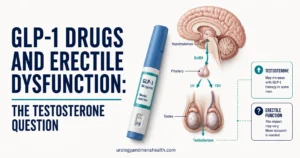
The hormonal cascade driving sperm production starts in the brain. The hypothalamus releases GnRH (gonadotropin-releasing hormone), which signals the pituitary to release LH (luteinizing hormone) and FSH (follicle-stimulating hormone). LH drives testosterone production in the Leydig cells. FSH, together with intratesticular testosterone, drives spermatogenesis in the Sertoli cells. A disruption at any level can impair fertility.
Hypogonadotropic hypogonadism (low LH and FSH) — caused by pituitary tumors, chronic opioid use, obesity, or exogenous testosterone — is potentially reversible. Remove the cause and spermatogenesis can recover. Hypergonadotropic hypogonadism (high LH and FSH with low testosterone) — seen in Klinefelter syndrome, testicular failure, or post-chemotherapy — is more difficult to treat as it reflects primary testicular damage.
→ Related Read: Low Testosterone in Men Over 40 — Signs Your Doctor Might Miss3. TRT-Induced Infertility — A Growing Iatrogenic Problem
This deserves its own section because it’s one of the most preventable causes of male infertility I encounter. When a man takes exogenous testosterone — whether prescribed by a doctor, obtained from an online TRT clinic, or self-administered from gym suppliers — his pituitary stops producing LH and FSH. Without FSH, Sertoli cells cannot support spermatogenesis. Within 3–6 months, most men become azoospermic [8].
The tragedy is that many of these men were not counseled about this effect. Some were prescribed TRT for “low energy” or “optimization” with testosterone levels in the normal range. Some were bodybuilders using supraphysiological doses. In both cases, the pathway to recovery is the same: stop the testosterone, wait for the HPG axis to recover (6–12 months, sometimes longer), and consider hCG or clomiphene citrate to stimulate endogenous production during the recovery period [9].
Recovery is not guaranteed. A minority of men — particularly those who’ve used high doses for extended periods — develop persistent impairment of spermatogenesis even after TRT cessation. This is why the EAU guidelines explicitly state: TRT is contraindicated in men wishing to preserve fertility [2].
→ Use our Low Testosterone Symptom Quiz (AMS/ADAM scale) before assuming you need TRT4. Obstructive Causes
Obstructive azoospermia — zero sperm in the ejaculate due to a physical blockage — accounts for approximately 40% of azoospermia cases. The testes are producing sperm normally, but the sperm cannot reach the ejaculate. Causes include: prior vasectomy, congenital bilateral absence of the vas deferens (CBAVD, associated with the CFTR gene mutations that cause cystic fibrosis), ejaculatory duct obstruction, and post-infectious scarring (e.g., from epididymitis or sexually transmitted infections) [10].
The good news: obstructive azoospermia is often surgically correctable. Vasovasostomy (vasectomy reversal), vasoepididymostomy, and transurethral resection of the ejaculatory ducts (TURED) can restore sperm to the ejaculate. When surgical reconstruction isn’t possible, sperm can be retrieved directly from the testis or epididymis (TESE, micro-TESE, or PESA) for use with intracytoplasmic sperm injection (ICSI) in IVF.
→ Related Read: Vasectomy — What No One Tells You Before You Have It Done5. Non-Obstructive Azoospermia — The Most Challenging Diagnosis
Non-obstructive azoospermia (NOA) means the testes are not producing sperm — or producing them in such small quantities that none reach the ejaculate. Causes include genetic conditions (Klinefelter syndrome, Y-chromosome microdeletions), cryptorchidism (undescended testes), post-chemotherapy or radiotherapy testicular failure, and idiopathic (unknown cause).
Even in NOA, there is hope. Micro-TESE (microsurgical testicular sperm extraction) — a procedure where the urologist uses an operating microscope to identify and extract individual foci of spermatogenesis within the testis — has a sperm retrieval rate of approximately 40–60% in experienced centers [11]. These sperm can then be used with ICSI. For men with Klinefelter syndrome specifically, micro-TESE retrieval rates of 40–70% have been reported.
Lifestyle Factors That Damage Sperm — and What the Evidence Shows
Unlike the female oocyte (egg), which is fixed at birth, sperm are produced continuously — the full cycle of spermatogenesis takes approximately 74 days. This means that lifestyle exposures affecting sperm quality are potentially reversible within 3 months of eliminating the exposure. This is both an opportunity and a warning.
Heat Exposure
The testes are external to the body specifically because spermatogenesis requires a temperature 2–3°C (about 4–5°F) below core body temperature. Anything that raises scrotal temperature impairs sperm production: tight underwear, prolonged laptop use on the lap, frequent hot baths or saunas, extended sitting (long-haul truck drivers, office workers), and heated car seats. A Finnish study showed that regular sauna use (more than 2 sessions per week) was associated with reduced sperm concentration and motility, but parameters recovered within 3 months of stopping [12].
Smoking
Cigarette smoking impairs every measurable semen parameter: concentration drops by 15–23%, motility by 10–17%, and morphology is worse in smokers versus non-smokers [4]. The mechanism involves increased oxidative stress, heavy metal exposure (cadmium, lead), and direct DNA fragmentation of sperm. Cessation improves parameters over 3–6 months.
Obesity
Obesity impairs fertility through multiple mechanisms: increased aromatization of testosterone to estradiol (reducing intratesticular testosterone), elevated scrotal temperature from thigh fat, increased oxidative stress, and insulin resistance affecting Sertoli cell function. Men with a BMI above 30 have significantly lower sperm concentration and total motile sperm count compared to men with normal BMI [13]. This is the same obesity-testosterone-ED hormonal triangle that drives much of what I see in male sexual health clinics — the metabolic and the reproductive consequences travel together.
Alcohol
Heavy alcohol consumption (more than 14 standard drinks per week, or about 1 bottle of wine + 4 beers) is directly toxic to Leydig cells and Sertoli cells, reducing both testosterone and sperm production. Moderate consumption appears to have minimal impact on fertility in most studies, though the data is not entirely consistent [14].
Anabolic Steroids
Anabolic androgenic steroids (AAS) — used by bodybuilders and increasingly by image-conscious younger men — suppress the HPG axis even more aggressively than therapeutic TRT. Supraphysiological doses cause azoospermia in over 90% of users within 3–6 months [15]. Recovery after cessation is variable: most men recover spermatogenesis within 12 months, but a significant minority (up to 20%) have persistent impairment even years later, particularly after prolonged high-dose use.
→ Related Read: Is It ED or Heart Disease? Why Morning Wood Is a ‘Check Engine’ LightDownload Your Free Clinical Action Plan
Enter your email below to download Dr. Khalid’s complete Evidence-Based ED Action Plan as a free, printable PDF.
Does Male Fertility Decline With Age?
Yes — but not in the binary way that female fertility does. Women have a finite reserve of oocytes that depletes to menopause. Men continue to produce sperm throughout life. However, sperm quality does decline with age, and this has measurable consequences:
Sperm volume and motility decrease gradually after age 40 [3]. Total motile sperm count declines by approximately 3% per year after age 40.
DNA fragmentation increases with age. Sperm from older men have higher rates of DNA damage, which is associated with reduced fertilization rates, lower implantation rates, higher miscarriage rates, and increased risk of de novo genetic mutations in offspring [16].
Time to conception increases. A large European study found that men over 40 took significantly longer to achieve pregnancy with a partner, even after adjusting for female age [3].
The practical implication: don’t assume unlimited time. While men don’t have a menopause, delaying fatherhood into the late 40s and 50s does carry biological consequences — both for conception rates and for the genetic health of offspring.
The Work-Up: What a Proper Male Fertility Evaluation Looks Like
A thorough male fertility work-up should include:
1. History: Duration of infertility, previous pregnancies (with current or previous partners), sexual history (frequency, timing, erectile/ejaculatory function), medical history (cryptorchidism, mumps, STIs, surgeries), medication history (TRT, anabolic steroids, opioids, finasteride, SSRIs), and lifestyle (smoking, alcohol, heat exposure, occupation).
2. Physical examination: Testicular size (normal: 15–25 mL by orchidometer), consistency, varicocele assessment (with and without Valsalva maneuver), epididymal fullness, vas deferens palpation (absent in CBAVD), and secondary sexual characteristics (gynecomastia, body hair distribution).
3. Semen analysis (×2): As described above — two analyses, 1–3 months apart, with correct abstinence and collection protocol.
4. Hormonal profile: Total testosterone (fasting, morning), FSH, LH, prolactin, estradiol, SHBG. FSH is particularly important: elevated FSH (greater than 12 IU/L) suggests impaired spermatogenesis and correlates with reduced testicular reserve.
5. Ultrasound: Scrotal ultrasound to assess testicular volume, rule out intratesticular pathology, and confirm varicocele. Transrectal ultrasound (TRUS) if ejaculatory duct obstruction is suspected.
6. Genetic testing (when indicated): Karyotype (for azoospermia or severe oligozoospermia under 5 million per mL), Y-chromosome microdeletion testing, CFTR mutation analysis (if CBAVD is found).
Treatment Options: What Can Actually Be Done
Treatment depends entirely on the cause — which is why proper diagnosis matters so much.
Varicocelectomy: Microsurgical repair for clinically significant varicocele with abnormal semen parameters. Improves parameters in 60–70% of men. Spontaneous pregnancy rate: 30–40% [7].
Hormonal therapy: Clomiphene citrate or hCG for men with hypogonadotropic hypogonadism or TRT-induced suppression. These agents stimulate the pituitary to produce LH and FSH, driving endogenous testosterone and sperm production [9].
Surgical sperm retrieval + ICSI: For obstructive or non-obstructive azoospermia. TESE or micro-TESE to obtain sperm, combined with IVF/ICSI for fertilization.
Vasectomy reversal (vasovasostomy): For post-vasectomy infertility. Success rates of 75–95% for sperm return and 30–75% for pregnancy, depending on the interval since vasectomy [17].
Lifestyle modification: For men with mild-moderate oligozoospermia and identifiable lifestyle factors. Weight loss, smoking cessation, heat avoidance, anabolic steroid cessation. Allow 3 months (one spermatogenesis cycle) to reassess.
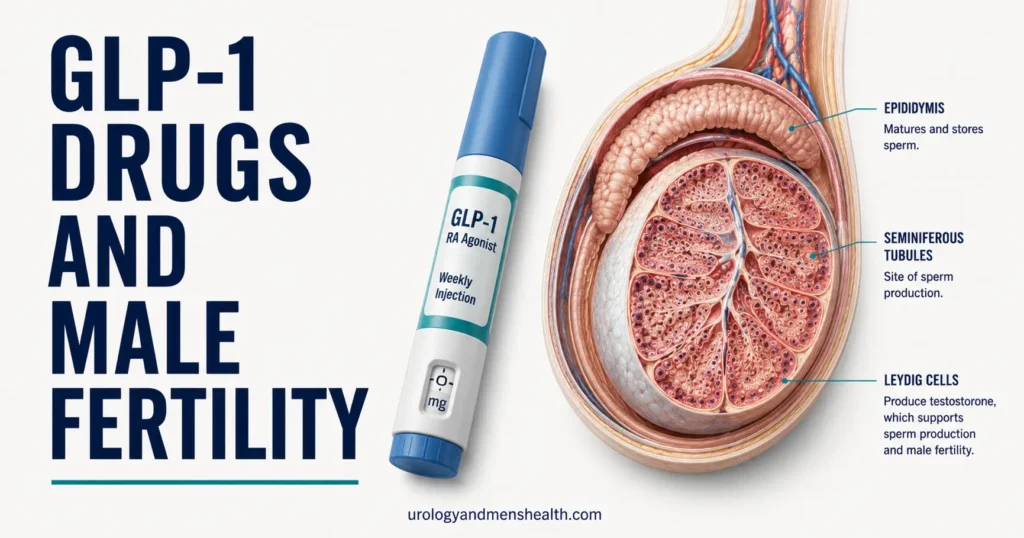
→ Related Read: How GLP-1 weight-loss drugs affect male fertilityAntioxidant supplementation: There is moderate-quality evidence that oral antioxidants (vitamin C, vitamin E, CoQ10, selenium, zinc, L-carnitine) may improve semen parameters and reduce sperm DNA fragmentation in subfertile men. The Males, Antioxidants, and Infertility (MOXI) trial was disappointing for live birth rates, but smaller studies and meta-analyses suggest benefit for semen parameters specifically [18]. I consider antioxidants a low-risk adjunct — not a standalone treatment.
💡 In My Practice
The pattern I encounter most consistently is a couple who have been trying to conceive for 18–24 months, during which the wife has undergone a full gynecological work-up — hormonal panels, HSG, pelvic ultrasound, sometimes diagnostic laparoscopy — before anyone ordered a semen analysis. When I finally see the husband, the result is nearly always a clear abnormality: in my experience, the most common finding is a grade 2 or 3 varicocele with oligoasthenozoospermia — low count combined with poor motility. These are among the most treatable presentations in reproductive urology, yet the delay in diagnosis is measured in years.
Cultural dynamics in our region play a significant role. For many families — and some referring primary care doctors — it remains the unspoken assumption that difficulty conceiving is the woman’s burden to carry and investigate. A man presenting himself for semen analysis is still, in some settings, perceived as an admission of weakness. I address this directly in clinic: I explain that semen analysis is no more personal than a blood test, and that identifying a correctable male factor protects the female partner from further unnecessary and invasive investigation. Framing it this way — as protecting his wife — tends to produce immediate cooperation.
The most concerning trend I have seen over the past three to four years is a rise in iatrogenic azoospermia from testosterone. Young men in their late 20s and early 30s — some gym-users, some prescribed TRT for non-specific fatigue or “optimization” by online clinics operating without proper andrology protocols — presenting with zero sperm counts. Several of these men had testosterone levels that were borderline low at most, and none had received fertility counseling before starting. Some recover after a structured cessation protocol with hCG and clomiphene; others face a prolonged and uncertain course. One patient with two years of high-dose anabolic steroid use took 22 months post-cessation before his count reached a level compatible with natural conception. His wife was 34 by the time they achieved pregnancy. That timeline was entirely preventable.
On lifestyle modifications: I am consistent in telling patients that the spermatogenesis cycle is approximately 74 days — meaning that improvements they make today will not show in a semen analysis for at least three months. This is important because men often test themselves a few weeks after making changes, see no improvement, and give up. I ask them to make the changes first, repeat the analysis in 12 weeks, and only then assess the response. In men who take this seriously — particularly those who lose significant weight or stop smoking — the improvements in motility and concentration can be dramatic.
One case remains with me. A couple came referred after five years of investigation, three failed IUI cycles, and a recommendation for IVF. The husband had a semen analysis showing a count of 3 million per mL — severely oligospermic. He had never been examined. On examination, I found bilateral varicoceles — the right subclinical, the left grade 3. He underwent microsurgical bilateral varicocelectomy. Six months later his count was 18 million per mL with markedly improved motility. They conceived spontaneously three months after that. The wife never needed IVF. That outcome is precisely why the male work-up must happen at the beginning of the fertility investigation, not as an afterthought.
⚠️ When to See a Doctor — Urgently
- 12 months of unprotected intercourse without conception — this is the standard definition of infertility. If the female partner is over 35, seek evaluation after 6 months. Both partners should be investigated simultaneously
- A new testicular lump or swelling — while varicoceles are common, any new lump must be urgently investigated by ultrasound to exclude testicular cancer, which peaks in men aged 20–40
- Sudden testicular pain with swelling — testicular torsion is a surgical emergency requiring treatment within 6 hours. Epididymo-orchitis (infection) also requires prompt antibiotic treatment to prevent permanent damage to fertility
- History of undescended testis (cryptorchidism) in childhood — even if surgically corrected, cryptorchidism is a risk factor for both infertility and testicular cancer. Fertility should be assessed proactively if conception is planned
- Blood in the semen (hematospermia) for more than 4 weeks — while usually benign and self-limiting, persistent hematospermia warrants investigation to exclude infection, obstruction, or rarely, malignancy
Frequently Asked Questions
Can a man with zero sperm count still have biological children?
Yes — in many cases. Azoospermia (zero sperm in the ejaculate) doesn’t necessarily mean zero sperm production. If the cause is obstructive (blocked vas deferens, ejaculatory duct obstruction), sperm can be retrieved surgically from the testis or epididymis (TESE, PESA) and used with IVF/ICSI. Even in non-obstructive azoospermia, where the testes are producing very little or no sperm, micro-TESE — a microsurgical procedure that searches for focal areas of spermatogenesis within the testis — has a sperm retrieval rate of 40–60% in experienced centers. The critical step is determining why there are no sperm, which requires hormonal, genetic, and imaging assessment. A focused review starts with a proper semen analysis interpretation followed by hormonal profiling.
Does laptop heat actually damage sperm?
The evidence says yes. Spermatogenesis is exquisitely temperature-sensitive — it requires the scrotum to be 2–3°C (about 4–5°F) below core body temperature, which is why the testes are external. Placing a laptop directly on the lap raises scrotal temperature by 1–2.8°C (about 2–5°F) within 15–30 minutes, even with a lap pad underneath. A study published in Human Reproduction showed that regular laptop-on-lap use was associated with reduced sperm motility and increased DNA fragmentation [19]. The practical advice: use a desk. If you must use a laptop on your lap, use a thick barrier and take frequent breaks. The same principle applies to tight underwear, prolonged sitting, hot baths, and heated car seats.
How long after stopping testosterone injections will my sperm come back?
Recovery of spermatogenesis after stopping exogenous testosterone typically takes 6–12 months, though it can take longer — up to 24 months in some men. The speed of recovery depends on the dose used, the duration of use, and individual HPG axis resilience. hCG (human chorionic gonadotropin) and clomiphene citrate can accelerate recovery by stimulating LH and FSH production while your axis reboots. However, recovery is not guaranteed — a minority of men, particularly those who used high-dose anabolic steroids for years, may have persistent oligozoospermia or azoospermia. This is why fertility counseling before starting TRT is essential.
Should men take supplements to improve sperm quality?
There is moderate-quality evidence that certain oral antioxidants — including vitamin C, vitamin E, CoQ10, selenium, zinc, and L-carnitine — may improve semen parameters, particularly in men with elevated sperm DNA fragmentation. However, the largest randomized controlled trial (the MOXI trial) found no significant improvement in live birth rates with antioxidant supplementation compared to placebo. My approach: antioxidants are a low-cost, low-risk adjunct that may help optimize sperm quality — but they are not a substitute for diagnosing and treating the underlying cause of infertility. Don’t rely on supplements instead of getting properly investigated. If you’re also experiencing ED, that’s another signal to see a urologist rather than self-treat.
Is male infertility genetic?
It can be, particularly in severe cases. Genetic causes account for approximately 15–20% of severe male infertility. The most common genetic causes are: Klinefelter syndrome (47,XXY), present in about 1 in 600 men, causing primary testicular failure; Y-chromosome microdeletions, affecting regions (AZFa, AZFb, AZFc) critical for spermatogenesis; and CFTR gene mutations, which cause congenital bilateral absence of the vas deferens (CBAVD). Genetic testing is recommended for all men with azoospermia or severe oligozoospermia (sperm count below 5 million per mL). The results guide treatment and provide important information about the likelihood of sperm retrieval and the genetic implications for offspring.
📚 References
- Agarwal A, Mulgund A, Hamada A, Chyatte MR. A unique view on male infertility around the globe. Reprod Biol Endocrinol. 2015;13:37. PubMed
- Salonia A, Bettocchi C, Boeri L, et al. EAU Guidelines on Sexual and Reproductive Health. European Association of Urology. 2024. EAU Guidelines
- Hassan MAM, Killick SR. Effect of male age on fertility: evidence for the decline in male fertility with increasing age. Fertil Steril. 2003;79(Suppl 3):1520-1527. PubMed
- Sharma R, Harlev A, Agarwal A, Esteves SC. Cigarette smoking and semen quality: a new meta-analysis examining the effect of the 2010 World Health Organization laboratory manual. Eur Urol. 2016;70(4):635-645. PubMed
- World Health Organization. WHO Laboratory Manual for the Examination and Processing of Human Semen, 6th edition. Geneva: WHO; 2021. WHO
- Durairajanayagam D, Agarwal A, Ong C. Causes, effects and molecular mechanisms of testicular heat stress. Reprod Biomed Online. 2015;30(1):14-27. PubMed
- Baazeem A, Belzile E, Ciampi A, et al. Varicocele and male factor infertility treatment: a new meta-analysis and review of the role of varicocele repair. Eur Urol. 2011;60(4):796-808. PubMed
- Liu PY, Swerdloff RS, Christenson PD, et al. Rate, extent, and modifiers of spermatogenic recovery after hormonal male contraception: an integrated analysis. Lancet. 2006;367(9520):1412-1420. PubMed
- Wheeler KM, Sharma D, Kavoussi PK, et al. Clomiphene citrate for the treatment of hypogonadism. Sex Med Rev. 2019;7(2):272-276. PubMed
- Jarow JP, Espeland MA, Lipshultz LI. Evaluation of the azoospermic patient. J Urol. 1989;142(1):62-65. PubMed
- Bernie AM, Mata DA, Ramasamy R, Schlegel PN. Comparison of microdissection testicular sperm extraction, conventional testicular sperm extraction, and testicular sperm aspiration for nonobstructive azoospermia: a systematic review and meta-analysis. Fertil Steril. 2015;104(5):1099-1103. PubMed
- Shefi S, Tarapore PE, Walsh TJ, et al. Wet heat exposure: a potentially reversible cause of low semen quality in infertile men. Int Braz J Urol. 2007;33(1):50-56. PubMed
- Sermondade N, Faure C, Fezeu L, et al. BMI in relation to sperm count: an updated systematic review and collaborative meta-analysis. Hum Reprod Update. 2013;19(3):221-231. PubMed
- Ricci E, Al Beitawi S, Cipriani S, et al. Semen quality and alcohol intake: a systematic review and meta-analysis. Reprod Biomed Online. 2017;34(1):38-47. PubMed
- Nieschlag E, Vorona E. Mechanisms in Endocrinology: Medical consequences of doping with anabolic androgenic steroids: effects on reproductive functions. Eur J Endocrinol. 2015;173(2):R47-R58. PubMed
- Wyrobek AJ, Eskenazi B, Young S, et al. Advancing age has differential effects on DNA damage, chromatin integrity, gene mutations, and aneuploidies in sperm. Proc Natl Acad Sci USA. 2006;103(25):9601-9606. PubMed
- Goldstein M, Tanrikut C. Microsurgical management of male infertility. Nat Clin Pract Urol. 2006;3(7):381-391. PubMed
- Steiner AZ, Hansen KR, Barnhart KT, et al. The effect of antioxidants on male factor infertility: the Males, Antioxidants, and Infertility (MOXI) randomized clinical trial. Fertil Steril. 2020;113(3):552-560. PubMed
- Sheynkin Y, Jung M, Yoo P, et al. Increase in scrotal temperature in laptop computer users. Hum Reprod. 2005;20(2):452-455. PubMed

Dr. Muhammad Khalid
MBBS · FCPS (Urology) · MCPS (Gen. Surgery) · CHPE · CRSM · IMC #539472
Specialist urologist with 11+ years of clinical experience across tertiary teaching hospitals. Trained at Lady Reading Hospital and Khyber Teaching Hospital, Peshawar. Author of 5 peer-reviewed international publications in Cureus, WJSA, and AJBS. Procedural expertise: URS, PCNL, RIRS, TURP, TURBT, and major open urological surgery. Full profile →
This article is for educational purposes only and does not constitute medical advice. Always consult your physician or urologist for diagnosis and treatment decisions specific to your condition.