GLP-1 Drugs and Kidney Stones: Do They Raise Risk?
Patients on GLP-1 drugs like Ozempic and Mounjaro keep asking me whether their weight-loss injection will trigger a kidney stone. The honest answer surprised me — here's what the data shows.

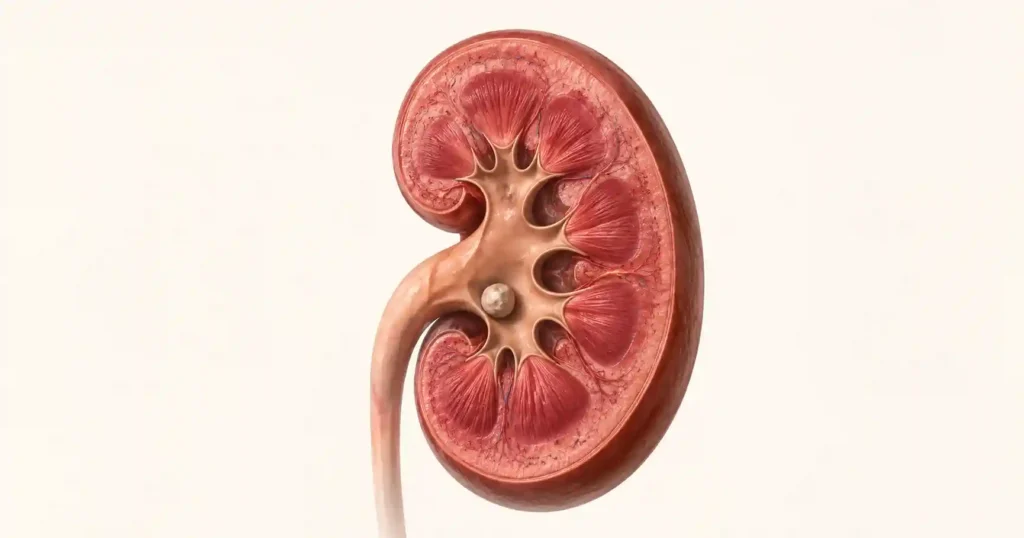
GLP-1 drugs and kidney stones are now landing in the same sentence in my clinic almost every week. A man starts Ozempic or Mounjaro, loses 15 kilos (around 33 lb), feels transformed — then reads a forum post claiming the injection will hand him a kidney stone, and the worry undoes the good. So which is it? I went back to the data, and the honest answer is more reassuring, and more practical, than either the fear or the hype suggests. The drug molecule itself does not appear to seed stones. The largest study to date found no rise in stone risk at all, and several datasets point the other way. The genuine risk lives somewhere most patients never think to look: the side effects. The nausea, the lost appetite, the days you barely drink — that is where stones are actually made or avoided. For the full picture on stone disease, our Kidney Stones Hub gathers everything in one place. Here is what I tell every patient starting one of these drugs.
Key Takeaways
- The largest study so far (semaglutide vs metformin, ~31,000 adults) found no increase in kidney stone risk despite major weight loss.
- Obesity itself raises stone risk, so by treating it, GLP-1 drugs may slightly lower risk for some men — not raise it.
- The real stone danger on these drugs is dehydration from nausea, vomiting, and a blunted urge to drink — not the medication.
- Aim for a urine output of about 2.5 liters a day (pale-straw urine); this single habit cuts stone recurrence by more than half.
Do GLP-1 Drugs Cause Kidney Stones?
Let me answer the headline question directly: based on the strongest evidence available right now, GLP-1 drugs do not appear to cause kidney stones. The largest analysis to date, presented at the American Society of Nephrology’s Kidney Week in 2025, compared roughly 31,000 adults started on semaglutide against a matched group started on metformin. Over an average follow-up of two to three years, the rate of new urinary stones was essentially the same in both groups — and that held true even though the semaglutide patients lost substantially more weight.[2]
That said, the picture is not perfectly clean. An earlier review of Veterans Health Administration records pointed the opposite way, hinting at slightly more stones among GLP-1 users. Those older signals came from observational data, where the men prescribed these drugs were often heavier and sicker to begin with — exactly the patients who form stones anyway. When researchers account for that, the apparent link tends to fade.
So if you are starting Ozempic, Wegovy, Mounjaro, or Zepbound, the molecule itself is not the thing to fear. For a complete grounding in how stones form and what drives them, our guide on kidney stone symptoms, causes and treatment walks through the mechanics.
Why GLP-1 Drugs Might Actually Lower Your Stone Risk
Here is the part that surprises most patients. Carrying excess weight is itself one of the clearest risk factors for kidney stones. In a study of more than 240,000 people, heavier individuals were significantly more likely to form stones than lean ones.[3] The reason is biochemical: obesity and insulin resistance push the kidney to excrete more calcium, oxalate, and uric acid, and they make the urine more acidic — close to a perfect recipe for stone crystals.
GLP-1 drugs work on exactly those upstream problems. They drive meaningful weight loss and improve insulin sensitivity, which should, in theory, shift urine chemistry back toward a stone-resistant state. Several real-world analyses through 2025 have started to show precisely that — a modest reduction in stone events among GLP-1 users, in some cases independent of blood-sugar control. The evidence is still early and largely from conference data rather than long-term trials, so I would not call these drugs a stone treatment. But the direction of travel is reassuring, not alarming.
These medications are now being studied across nearly every corner of men’s health. If you are weighing the wider trade-offs before you start, I have written separately on how GLP-1 drugs affect erections and testosterone, which raises its own questions worth knowing about.
Worried about a stone coming back? Download Dr. Khalid’s 7-Day Kidney Stone Prevention Meal Plan.
Enter your email below to receive Dr. Khalid’s complete 7-Day Kidney Stone Prevention Meal Plan as a free, printable PDF.
The Real Risk Is Dehydration, Not the Drug
If the drug is largely off the hook, where do stones actually come from on these medications? Almost always from one thing: not drinking enough. GLP-1 drugs work partly by slowing the stomach and blunting appetite, and during the first weeks — and after every dose increase — they commonly cause nausea, vomiting, and diarrhea. Many of my patients describe simply not feeling like drinking anything at all.
When fluid intake drops, urine becomes concentrated. Concentrated urine is supersaturated urine, and that is the physical state in which calcium oxalate and uric acid crystals fall out of solution and clump into a stone. The drug did not make the stone — the empty water bottle did. This is the same mechanism behind stones in people who chronically under-hydrate, which is why getting your fluid intake right does more to prevent stones than any single food rule.
In My Practice
A man in his forties came into clinic last year with classic renal colic three weeks after his tirzepatide dose was stepped up. His urine on the dipstick was the color of apple juice. When I asked, he admitted he had barely kept fluids down for days — everything made him queasy, so he had quietly stopped drinking.
On these drugs, the nausea window is the danger window: protecting your fluid intake through each dose increase matters more than anything else you can do.
You can estimate your own daily target with our hydration calculator for stone prevention, which adjusts for your weight and climate rather than relying on the old “eight glasses” rule.
How to Protect Your Kidneys While Taking GLP-1 Drugs
The good news is that the one real risk — dehydration — is also the most controllable. Five habits cover almost all of the protection you need:
- Hit a urine output of about 2.5 liters a day (roughly 3 liters / 100 fl oz of fluid going in). The AUA names this the single most effective stone-prevention step, cutting recurrence by more than half.[1] The easiest daily gauge is color: aim for pale straw, not dark yellow.
- Sip steadily rather than gulping. Small, frequent amounts are far easier on a queasy stomach. Keep a bottle within reach on the nausea-prone days right after each dose increase.
- If you have ever passed a stone, ask for a 24-hour urine collection before or soon after starting, so any abnormal calcium, oxalate, or citrate can be corrected early rather than discovered after the next attack.
- Do not cut dietary calcium. Calcium from food (around 1,000–1,200 mg per day) actually lowers stone risk by binding oxalate in the gut before it reaches your kidneys.
- Add a daily glass of lemon water or low-sugar citrus. The citrate it delivers is a natural inhibitor of calcium crystal formation.
When to Go to the ER
A kidney stone on a GLP-1 drug can occasionally tip into an emergency, especially if vomiting is already keeping you from drinking. Seek urgent care if you develop:
- Severe one-sided flank or back pain that comes in waves and will not settle
- Visible blood in your urine, or urine that turns pink, red, or brown
- Fever or chills with the pain — a possible sign of an infected, blocked kidney
- Vomiting so persistent that you cannot keep any fluids down
Frequently Asked Questions
Do GLP-1 drugs like Ozempic cause kidney stones?
On current evidence, no — GLP-1 drugs do not appear to directly cause kidney stones. The largest study so far found no increase in stone risk versus metformin. The real danger comes from dehydration when side effects stop you drinking. You can gauge your own susceptibility with our kidney stone risk profiler.
Can semaglutide make an existing kidney stone worse?
Semaglutide will not chemically enlarge a stone you already have. But if its side effects leave you dehydrated, concentrated urine can speed the growth of existing crystals. Keeping urine pale and dilute is the best brake on stone progression — our guide on how kidney stones form and grow explains why.
How much water should I drink on Mounjaro or Wegovy to avoid stones?
Aim high enough to produce about 2.5 liters of urine a day, which usually means drinking close to 3 liters (around 100 fl oz). Pale straw-colored urine is the everyday signal you have hit it. Our hydration calculator gives you a personalized daily target based on your weight and climate.
I feel too nauseous to drink on my GLP-1 dose — what should I do?
Sip small amounts often rather than forcing big glasses, and try cold water, ice chips, or diluted electrolyte drinks, which many people tolerate better when queasy. If nausea is severe enough to stop fluids for more than a day, contact your prescriber, because the dose may need adjusting. Staying hydrated protects your kidneys through the worst of it.
I have had a kidney stone before — is it safe to start a GLP-1 drug?
For most prior stone formers, yes, and the weight loss may even help. But tell your urologist first, and ask whether a 24-hour urine test is worth doing so any chemical risk can be corrected from the start. Knowing your baseline — our risk profiler is a starting point — lets you take precautions from day one.
References
- American Urological Association. Medical Management of Kidney Stones: AUA Guideline. 2014 (amended 2019). AUA
- Ganesan C, Kim SH, Chang TC, et al. GLP-1 Receptor Agonist Semaglutide and Risk of Incident Urinary Stone Disease. J Am Soc Nephrol. 2025 (ASN Kidney Week abstract). JASN
- Taylor EN, Stampfer MJ, Curhan GC. Obesity, Weight Gain, and the Risk of Kidney Stones. JAMA. 2005;293(4):455-462. JAMA
Dr. Muhammad Khalid
MBBS · FCPS (Urology) · MCPS (General Surgery) · CHPE · CRSM · IMC #539472
Specialist urologist with 11+ years of clinical experience across tertiary teaching hospitals. Trained at Lady Reading Hospital and Khyber Teaching Hospital, Peshawar. Author or co-author of five peer-reviewed international publications, including in Cureus and the World Journal of Surgery. Procedural expertise: URS, PCNL, RIRS, TURP, TURBT, and major open urological surgery. Full profile →
This article is for educational purposes only and does not constitute medical advice. Always consult your physician or urologist for diagnosis and treatment decisions specific to your condition.