DASH Diet for Blood Pressure: A Urologist’s Meal Plan
When I recommend the DASH diet, patients usually assume I am just offering generic "eat healthy" advice before inevitably writing them a prescription. In truth, this is a highly validated medical intervention capable of dropping your systolic pressure by up to 14 points in two weeks. Here is the actual, step-by-step structure you need to make the diet work, rather than just guessing at the grocery store.

The DASH diet for blood pressure is the single most-validated dietary intervention in modern cardiology — it drops systolic blood pressure by 8 to 14 mmHg in two weeks, often matching what a starter dose of a BP medication would achieve [1]. That is not a marketing claim. The original Dietary Approaches to Stop Hypertension trial was a tightly controlled feeding study published in the New England Journal of Medicine, and every major guideline body — the AHA, AUA, NICE, and the European Society of Hypertension — now lists DASH as first-line lifestyle therapy. So why do most men I see in clinic with stage 1 or stage 2 hypertension say they “tried it and it didn’t work”? Because they tried the food list without the structure, and the structure is where the BP drop lives. This article gives you the structure.
Key Takeaways
- The DASH diet drops systolic BP by 8-14 mmHg within 2 weeks when sodium is kept under 1,500 mg/day — equivalent to one starter-dose antihypertensive.
- The mechanism is not salt restriction alone; potassium intake of 3,500-4,700 mg/day drives natriuresis and relaxes vascular smooth muscle.
- 75% of dietary sodium comes from processed bread, deli meat, canned soup, and restaurant food — not the salt shaker.
- Men following DASH plus sodium restriction have shown BP drops comparable to a single-drug regimen in the DASH-Sodium trial.
- If your eGFR is below 60 or you take an ACE inhibitor or ARB, get a potassium level checked before pushing high-potassium foods.
What the DASH Diet Actually Is (and What It Isn’t)
DASH stands for Dietary Approaches to Stop Hypertension. It is not low-carb, not low-fat in any meaningful sense, not vegetarian, and not a weight-loss diet — though weight loss often follows. It is a structured eating pattern built around eight food-group targets, designed by NIH researchers in the 1990s and tested in two landmark trials: DASH (1997) and DASH-Sodium (2001) [1][2].
The pattern is high in vegetables, fruits, whole grains, and low-fat dairy. It is moderate in lean protein and nuts. It is deliberately low in red meat, added sugars, and — critically — sodium. The key shift most men miss is that DASH is not about subtracting salt. It is about adding potassium, magnesium, and calcium from whole foods, which together do most of the BP work.
Why It Works: The Mechanism in Plain English
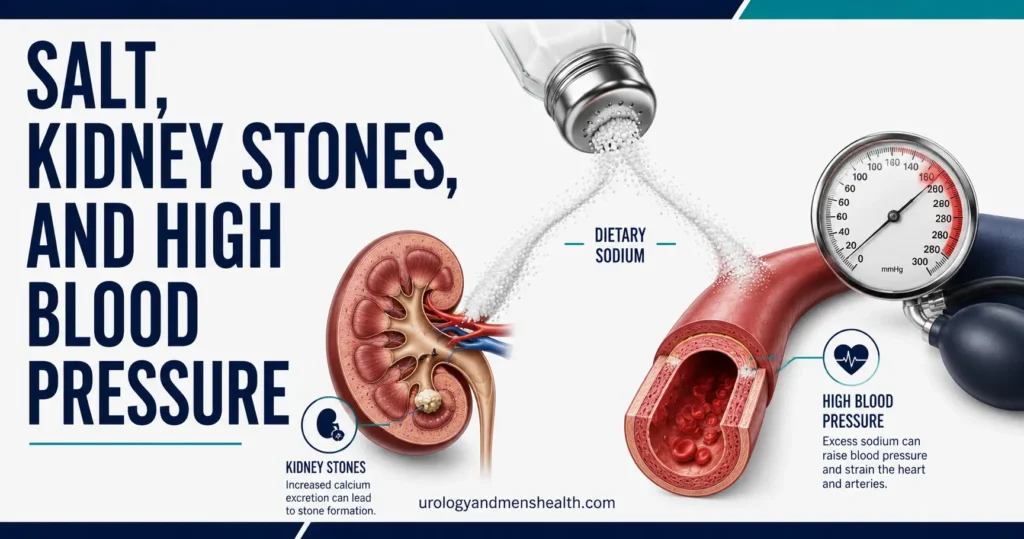
Your kidneys regulate blood pressure by deciding how much sodium and water stay in circulation. When sodium intake is high, the kidneys retain water to dilute it, blood volume rises, and so does pressure against your arterial walls. Potassium does the opposite — it triggers natriuresis (sodium excretion) and relaxes the smooth muscle in your arteries through nitric oxide pathways [3].
The DASH diet works because it shifts the sodium-to-potassium ratio dramatically. The average American consumes about 3,400 mg of sodium and 2,600 mg of potassium daily — a ratio that biases the kidneys toward fluid retention. DASH inverts that: under 1,500 mg sodium and 4,700 mg potassium, a ratio that actively offloads sodium and water. The BP drop follows mechanically.
The 8 Daily Targets That Define DASH
These are the official NHLBI targets for a 2,000 kcal day, which is roughly what an average-build man eating to maintain weight will land at. Scale up by 15-20% if you are larger or more active.
- Whole grains: 6-8 servings/day. One serving = 1 slice whole wheat bread, 1/2 cup brown rice or oatmeal, 1 oz dry cereal. Refined white bread, white rice, and most breakfast cereals do not count.
- Vegetables: 4-5 servings/day. One serving = 1 cup raw leafy greens, 1/2 cup cooked vegetables, 1/2 cup vegetable juice (low-sodium).
- Fruits: 4-5 servings/day. One serving = 1 medium fruit, 1/4 cup dried fruit, 1/2 cup fresh/frozen/canned (in juice, not syrup).
- Low-fat or fat-free dairy: 2-3 servings/day. One serving = 1 cup milk or yogurt, 1.5 oz cheese.
- Lean meats, poultry, fish: 6 oz or less per day. Trim visible fat. Bake, broil, or grill — never fry.
- Nuts, seeds, legumes: 4-5 servings/week. One serving = 1/3 cup nuts, 2 tbsp seeds, 1/2 cup cooked beans or lentils. Unsalted only.
- Fats and oils: 2-3 servings/day. One serving = 1 tsp soft margarine or olive oil, 1 tbsp mayonnaise, 2 tbsp salad dressing.
- Sweets and added sugars: 5 or fewer servings/week. One serving = 1 tbsp sugar, jam, or jelly; 1/2 cup sorbet.
The sodium target is what most plans get wrong. Standard DASH allows up to 2,300 mg/day. The lower-sodium version — DASH-Sodium — caps it at 1,500 mg/day and produces roughly twice the BP drop [2]. If your goal is meaningful pressure reduction without medication, 1,500 mg is the target.
In My Practice
The pattern I see most often is a man in his 50s who has been told by his primary care doctor to “cut out salt,” so he stops adding it to his food and assumes he is now on DASH. Two months later his BP has barely moved, he is frustrated, and his doctor is escalating him to a second antihypertensive. When I sit down and walk through his actual food log, the issue is invariably the same — two slices of supermarket bread at breakfast (460 mg sodium), a deli turkey sandwich for lunch (1,200 mg), and a frozen meal for dinner (900 mg). He has not added salt to anything. He is also at 2,560 mg of sodium for the day before he even thinks about a snack.
The salt shaker is rarely the problem. Processed food and restaurant meals are where the sodium hides, and that is where the DASH conversation has to start.
A Realistic 7-Day DASH Meal Plan
This is a working week of meals that hit the DASH targets at roughly 1,500 mg sodium. Portions assume a 2,000 kcal day for an average-build adult man. Adjust upward by 15-20% if you are larger or training hard. All sodium values are approximate and assume unsalted or low-sodium variants where available.
Monday
- Breakfast: 1 cup oatmeal with 1/2 cup blueberries, 1 tbsp chopped walnuts, 1 cup low-fat milk. Coffee unsweetened.
- Lunch: Large mixed-greens salad with 4 oz grilled chicken, 1/2 cup chickpeas, cucumber, tomato, 2 tbsp olive oil and lemon dressing. 1 medium apple.
- Dinner: 4 oz baked salmon, 1 cup roasted broccoli, 1/2 cup brown rice. 1 cup mixed berries for dessert.
- Snack: 1 oz unsalted almonds, 1 small banana.
Tuesday
- Breakfast: 2 scrambled eggs (1 yolk, 2 whites) with sautéed spinach and tomato, 1 slice whole grain toast with 1 tsp olive oil. 1 orange.
- Lunch: Lentil soup (homemade, low-sodium) — 1.5 cups, with a side of mixed leaves and 1 oz feta. 1 small whole wheat pita.
- Dinner: 4 oz lean ground turkey stir-fry with bell peppers, snap peas, garlic, ginger, 1 tbsp low-sodium soy sauce, served over 1/2 cup quinoa.
- Snack: 1 cup plain low-fat Greek yogurt with 1/2 cup strawberries.
Wednesday
- Breakfast: Smoothie with 1 cup low-fat milk, 1 banana, 1/2 cup frozen mango, 1 tbsp ground flaxseed, 1 scoop unflavoured whey or pea protein.
- Lunch: Whole wheat wrap with 3 oz roasted chicken (home-roasted, not deli), avocado, lettuce, tomato, mustard. Side of carrot sticks and hummus (2 tbsp).
- Dinner: Baked white fish (4 oz cod or tilapia) with roasted sweet potato and steamed asparagus. 1 cup mixed green salad with olive oil and balsamic.
- Snack: 1 pear, 1 oz unsalted walnuts.
Thursday
- Breakfast: 1/2 cup overnight oats with chia seeds, 1 cup low-fat milk, 1/2 cup raspberries, 1 tsp honey.
- Lunch: Quinoa bowl with 1/2 cup quinoa, 4 oz grilled tofu or chicken, roasted vegetables, 1 tbsp olive oil. 1 small orange.
- Dinner: Chicken breast (4 oz) baked with rosemary and lemon, served with 1 cup steamed green beans and 1/2 cup wild rice.
- Snack: 1 cup low-fat plain yogurt with 1 tbsp slivered almonds.
Friday
- Breakfast: 2 slices whole grain toast with 1 tbsp natural peanut butter and sliced banana. 1 cup low-fat milk.
- Lunch: Large salad with 4 oz grilled salmon (leftover-friendly), mixed greens, 1/2 avocado, cherry tomatoes, cucumber, 2 tbsp vinaigrette. 1 apple.
- Dinner: Vegetable and bean chili (homemade, low-sodium) with 1/2 cup brown rice and a small side salad.
- Snack: 1 oz unsalted pistachios.
High blood pressure and worried about your kidneys? Download Dr. Khalid’s Blood Pressure & Kidney Protection Guide.
Enter your email below to receive Dr. Khalid’s complete Blood Pressure & Kidney Protection Guide as a free, printable PDF.
Saturday
- Breakfast: Vegetable omelette (2 eggs, 1 yolk) with mushrooms, peppers, spinach. 1 slice whole grain toast, 1 medium grapefruit.
- Lunch: Tuna salad (water-packed, low-sodium) on whole grain bread with lettuce and tomato, made with Greek yogurt instead of mayo. Carrot sticks.
- Dinner: Lean steak (4 oz sirloin, trimmed) with baked potato (skin on, 1 tsp olive oil — no butter or salt), grilled zucchini and peppers.
- Snack: 1 cup mixed berries with 2 tbsp low-fat Greek yogurt.
Sunday
- Breakfast: Whole grain pancakes (homemade with whole wheat flour) topped with 1/2 cup blueberries and 1 tbsp pure maple syrup. 1 cup low-fat milk.
- Lunch: Mediterranean plate: 1/2 cup hummus, 1 small whole wheat pita, mixed olives (rinsed), cucumber, tomato, red onion, 1 oz feta. 1 apple.
- Dinner: Baked chicken thigh (skin off, 5 oz) with roasted root vegetables (carrots, parsnips, sweet potato) and 1 cup steamed kale tossed with garlic and lemon.
- Snack: 1 oz dark chocolate (70% or higher) and 1 small handful unsalted almonds.
If meal planning by hand sounds like too much, use the DASH Diet Daily Compliance Scorer to track your servings against the targets above for the first two weeks. Most men I see who stick with it past day 14 see a measurable BP drop on home monitoring by day 21.
Where the Sodium Actually Hides
If you take nothing else from this article, take this: the CDC estimates that about 75% of the sodium in the average American diet comes from packaged, processed, and restaurant food, not from the salt shaker at the table [4]. You can throw the salt away and still hit 3,000 mg/day if your other food choices stay the same.
Here are the highest-impact culprits I tell patients to audit first:
- Bread and rolls. A single slice of supermarket whole wheat bread averages 150-230 mg sodium. Two slices for a sandwich plus two for breakfast toast is already 600-900 mg before the filling.
- Deli and cured meats. Two ounces of deli turkey or ham averages 500-700 mg sodium. Bacon, salami, and pepperoni are higher.
- Canned soup. One cup of standard canned soup runs 700-1,200 mg sodium. “Reduced sodium” versions still hit 400-600 mg per cup.
- Frozen meals. A single microwave dinner ranges from 700-1,500 mg sodium. Some hit 2,000 mg in one tray.
- Pizza. One slice of standard frozen or chain pizza = 600-900 mg sodium. Three slices is your entire daily budget.
- Sauces and condiments. One tablespoon of soy sauce = 920 mg. Ketchup, BBQ sauce, salad dressing, and salsa all carry 100-300 mg per tablespoon.
- Cheese. One ounce of cheese averages 150-400 mg sodium depending on type. Cottage cheese is one of the highest at 400 mg per half cup.
- Restaurant food. A single chain restaurant entrée commonly contains 2,000-4,000 mg sodium — more than two days’ worth on DASH-Sodium.
If you want a quick gut-check on a specific food, use the Hidden Sodium Calculator before you eat it, not after. The trick is to read the Nutrition Facts label and remember that anything over 20% Daily Value for sodium in one serving is high — and one serving is often half what people actually eat.
What BP Drop to Expect, and How Fast
The original DASH trial recorded average systolic drops of 5.5 mmHg in normotensive participants and 11.4 mmHg in hypertensive participants over 8 weeks — without sodium restriction [1]. When DASH was combined with sodium reduction to 1,500 mg/day in the DASH-Sodium trial, the systolic drop in hypertensive subjects reached an average of 11.5 mmHg, with the steepest reduction occurring within the first 2 weeks [2]. Diastolic drops were proportionate — typically 4-6 mmHg.
To put that in clinical perspective, a 10 mmHg reduction in systolic BP cuts the risk of stroke by roughly 27% and the risk of major cardiovascular events by about 20% [5]. That is a meaningful, drug-equivalent outcome from food alone.
The trajectory I see in clinic when men actually follow the structure:
- Days 1-7: Modest drop, 2-4 mmHg systolic. Fluid shifts begin as sodium intake falls.
- Days 8-14: Larger drop, total 6-10 mmHg systolic. Potassium and magnesium effects on vascular tone become measurable.
- Days 15-30: Plateau at the new baseline, often 8-14 mmHg lower than starting. Further gains come from weight loss if BMI is over 27.
If you are not seeing a drop by day 21, the issue is almost always one of three things: hidden sodium you have not accounted for, alcohol intake exceeding 2 drinks daily, or undiagnosed secondary hypertension. The third is where a urologist becomes relevant — see the article on renal hypertension for the kidney-driven causes most GPs miss.
Related read: 7 evidence-based ways to lower blood pressure naturally →DASH When You Also Have Kidney Stones or CKD
This is where DASH gets interesting from a urology standpoint. The same dietary pattern that drops blood pressure also reduces kidney stone recurrence. The DASH-style diet — high in fruits, vegetables, low-fat dairy, and low in animal protein and sodium — has been shown to reduce calcium oxalate stone risk by roughly 40-45% in observational cohorts [6]. The high calcium intake from dairy binds dietary oxalate in the gut before it reaches the kidneys, and the high potassium intake reduces urinary calcium excretion.
If you have both hypertension and a history of stones, DASH is structurally close to ideal. The kidney stone prevention protocol overlaps substantially with DASH-Sodium, with the main addition being a hard target for daily urine output of 2.5 liters.
If You Have CKD or Take Blood Pressure Medication, Read This First
The high-potassium intake that makes DASH work is the same feature that can be dangerous if your kidneys cannot excrete potassium properly. Before starting DASH:
- Get a basic metabolic panel checked if your eGFR is below 60, or if you have any history of kidney disease.
- If you take an ACE inhibitor (lisinopril, ramipril, enalapril), an ARB (losartan, valsartan, telmisartan), spironolactone, or a potassium-sparing diuretic, your potassium can climb on a high-potassium diet — sometimes into dangerous territory.
- If your potassium is already at the upper end of normal (above 4.8 mEq/L), modify the DASH targets downward — substitute white potatoes and bananas with apples, berries, and lower-potassium vegetables.
- Symptoms of high potassium include muscle weakness, irregular heartbeat, and tingling. If you experience these, stop and get a blood test.
Common Reasons Men Fail on DASH (and How to Fix Them)
I have watched a lot of men start this diet with genuine commitment and quit by week three. The reasons cluster predictably.
- “I cut salt but my BP didn’t move.” You probably did not cut sodium — you cut the salt shaker. Audit your bread, deli meat, soup, and restaurant meals first. Aim for under 1,500 mg/day, not “less than I used to eat.”
- “The food is bland.” Sodium is not the only flavor. Lemon, vinegar, garlic, fresh herbs, smoked paprika, cumin, black pepper, and chili all carry flavor without sodium. The first 10 days taste flatter because your taste buds are recalibrating; by week 3 a salty restaurant meal will taste over-seasoned.
- “I can’t follow it eating out.” Stop ordering from chains. Look up the nutrition information before you go — most chain restaurant meals exceed 2,000 mg sodium per entrée. When you must eat out, request no added salt, dressing on the side, and skip the bread.
- “I’m hungry all the time.” You are likely under-eating fat or protein. DASH is not low-fat — it is moderate fat from healthy sources. If hungry, add an extra tablespoon of olive oil, a small handful of nuts, or another egg.
- “My weight isn’t dropping.” Weight loss is not the goal of DASH — BP reduction is. That said, if you are overweight, every pound lost drops systolic BP by roughly 1 mmHg. Combine DASH with a 300-500 kcal daily deficit for combined effects.
- “My family won’t eat this way.” They probably will, if you stop announcing it as a diet. DASH meals look like normal home-cooked dinners — the change is portion ratios and what’s not on the plate. Cook one meal for the household, adjust your own portions.
When DASH Isn’t Enough — and When to See a Doctor
DASH plus sodium restriction is powerful, but it has a ceiling. If your starting systolic BP is over 160 mmHg or your diastolic is over 100 mmHg, you are in stage 2 hypertension and need medication concurrent with lifestyle change — not instead of it. Waiting for DASH alone to bring stage 2 BP into range is dangerous; the cardiovascular and renal damage from sustained pressures at that level happens silently and quickly.
You should see your primary care doctor or a urologist within 2 weeks if:
- Your home BP readings consistently exceed 140/90 mmHg over 7 days despite 3-4 weeks of DASH adherence.
- You have BP over 180/110 mmHg at any single reading — this is a hypertensive urgency and warrants same-week assessment, sooner if accompanied by headache, chest pain, vision changes, or shortness of breath.
- You develop new flank pain, blood in your urine, or notice your urine output dropping while on DASH — these can signal renal artery stenosis or other secondary causes.
- You are on diuretics, ACE inhibitors, or ARBs and develop muscle weakness or palpitations — this can indicate electrolyte derangement.
Track every reading. The single most useful tool for the BP conversation with your doctor is a structured 14-day log of morning and evening readings — use the BP Log & Trend Tracker to generate a printable PDF you can bring to your appointment.
Frequently Asked Questions
How quickly does the DASH diet lower blood pressure?
Most men see a measurable drop within 14 days, with the steepest reduction in the first 2 weeks. The DASH-Sodium trial showed an average systolic drop of 11.5 mmHg by week 8 in hypertensive participants on the 1,500 mg sodium version. If you are not seeing any movement by day 21, the issue is usually hidden sodium you have not accounted for. Track your intake with the DASH Compliance Scorer to find where the gap is.
Can the DASH diet for blood pressure replace my medication?
If you are on a single antihypertensive for stage 1 hypertension and your BP drops below 130/80 mmHg consistently for several weeks on DASH, your doctor may consider tapering. Never stop or reduce your dose on your own — discontinuation rebound can spike BP dangerously. For stage 2 hypertension (≥160/100 mmHg), DASH is an essential addition to medication but rarely a replacement. Discuss with your primary care doctor.
Is the DASH diet meal plan safe if I have kidney disease?
If your eGFR is above 60 and your potassium is in the normal range, yes — DASH is generally safe and beneficial. If your eGFR is below 60 or you take an ACE inhibitor, ARB, or potassium-sparing diuretic, the high potassium intake (4,700 mg/day) can be dangerous. Get a basic metabolic panel checked first, and read the high blood pressure and kidney damage article for the full kidney-BP picture.
What is the difference between DASH and DASH-Sodium?
Standard DASH allows up to 2,300 mg sodium/day. DASH-Sodium caps sodium at 1,500 mg/day and produces roughly twice the BP-lowering effect. The 2001 DASH-Sodium trial confirmed that the lower the sodium intake, the greater the BP drop — particularly in older adults, African Americans, and people with existing hypertension. If your goal is meaningful BP reduction, the 1,500 mg target is what you want.
Can I drink alcohol on the DASH diet?
The DASH framework permits moderate alcohol — defined as no more than 2 drinks per day for men. However, alcohol itself raises blood pressure dose-dependently. If your BP is not responding to DASH as expected, cutting alcohol to zero for 3 weeks is the single fastest experiment to run. Many men I see in clinic recover an additional 5-7 mmHg of systolic drop when they cut alcohol entirely.
Do I have to give up red meat completely?
No. DASH limits lean meat, poultry, and fish to 6 oz or less per day combined — that is roughly two 3 oz portions, which is a small steak or a chicken breast. Red meat is permitted in moderation, but processed red meats (sausage, bacon, deli ham, salami) should be eliminated because of their sodium content. A 4 oz lean sirloin twice a week fits comfortably within the DASH structure.
References
- Appel LJ, Moore TJ, Obarzanek E, et al. A clinical trial of the effects of dietary patterns on blood pressure (DASH). N Engl J Med. 1997;336(16):1117-1124. PubMed
- Sacks FM, Svetkey LP, Vollmer WM, et al. Effects on blood pressure of reduced dietary sodium and the DASH diet (DASH-Sodium). N Engl J Med. 2001;344(1):3-10. PubMed
- Aaron KJ, Sanders PW. Role of dietary salt and potassium intake in cardiovascular health and disease. Mayo Clin Proc. 2013;88(9):987-995. PubMed
- Centers for Disease Control and Prevention. Sources of Sodium in Your Diet. CDC Sodium Reduction Initiative. CDC
- Ettehad D, Emdin CA, Kiran A, et al. Blood pressure lowering for prevention of cardiovascular disease and death: a systematic review and meta-analysis. Lancet. 2016;387(10022):957-967. PubMed
- Taylor EN, Fung TT, Curhan GC. DASH-style diet associates with reduced risk for kidney stones. J Am Soc Nephrol. 2009;20(10):2253-2259. PubMed
Dr. Muhammad Khalid
MBBS · FCPS (Urology) · MCPS (General Surgery) · CHPE · CRSM · IMC #539472
Specialist urologist with 11+ years of clinical experience across tertiary teaching hospitals. Trained at Lady Reading Hospital and Khyber Teaching Hospital, Peshawar. Author or co-author of five peer-reviewed international publications, including in Cureus and the World Journal of Surgery. Procedural expertise: URS, PCNL, RIRS, TURP, TURBT, and major open urological surgery. Full profile →
This article is for educational purposes only and does not constitute medical advice. Always consult your physician or urologist for diagnosis and treatment decisions specific to your condition.