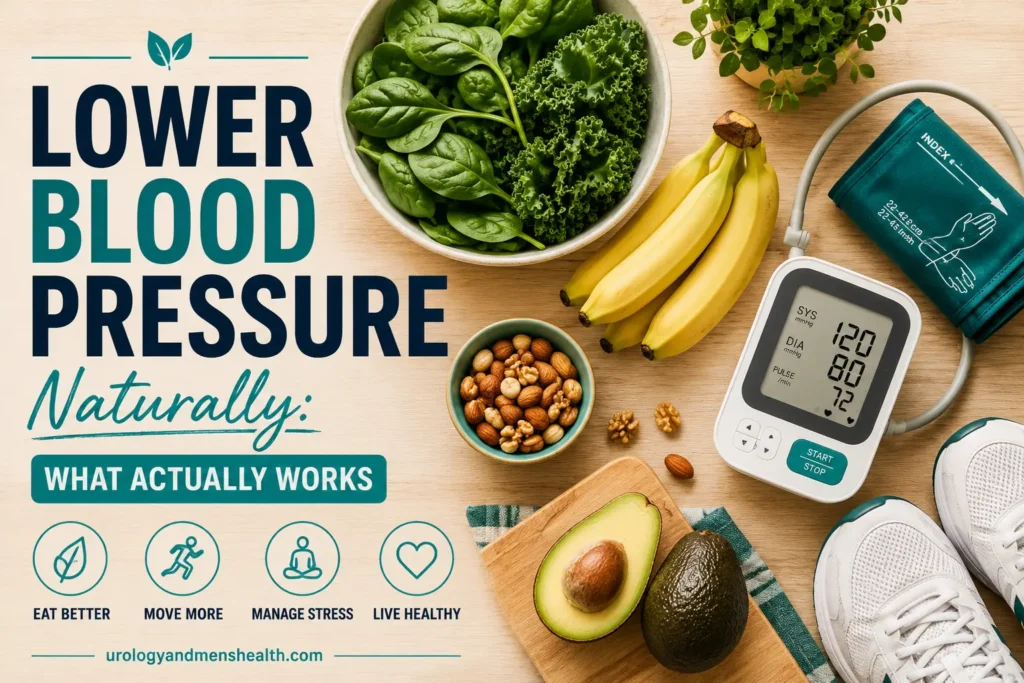
Lower Blood Pressure Naturally: What Actually Works
When men try to lower their blood pressure without pills, they often waste time and money on hyped-up supplements with zero scientific proof. The clinical reality is that genuine, targeted lifestyle changes can drop your numbers by up to 20 points—the exact equivalent of taking two prescription medications. But you have to stop treating internet marketing as medical science. Here is exactly how I rank every natural intervention in clinic, from the medically proven to the absolute wastes of money.

If you want to lower blood pressure naturally, the honest answer is yes — within limits. Combined lifestyle changes can reduce systolic blood pressure by 10–20 mmHg, equivalent to one or even two medications[1]. For some people with Stage 1 hypertension and no organ damage, lifestyle alone is genuinely enough. For others, it is a clinical complement to medication, not a replacement.
The problem is that the internet treats every natural intervention as equal. Garlic supplements get the same airtime as the DASH diet. Meditation gets the same weight as cutting sodium. The actual evidence is wildly uneven — some changes have decades of randomized controlled trial data, others have biological plausibility but minimal clinical proof, and some are pure marketing.
This article ranks every natural blood pressure intervention by the evidence behind it — from the strategies with the largest, most reliable effect to the ones that are probably wasting your money. As a clinician who treats hypertension and its kidney consequences daily, my job is to tell you what works, what might work, and what definitely doesn’t.
Is your blood pressure putting your kidneys at risk? Take the free BP & Kidney Damage Risk AssessmentHigh blood pressure and worried about your kidneys? Download Dr. Khalid’s Blood Pressure & Kidney Protection Guide.
Enter your email below to receive Dr. Khalid’s complete Blood Pressure & Kidney Protection Guide as a free, printable PDF.
Key Takeaways
- The DASH diet is the most powerful dietary intervention — reducing systolic BP by 8–14 mmHg, equivalent to a single medication[1]
- Cutting sodium below 2,300 mg/day (about 1 teaspoon of salt) lowers BP by 5–6 mmHg on its own, and by up to 11 mmHg combined with the DASH diet[2]
- Regular aerobic exercise (150 minutes/week of moderate activity) reduces systolic BP by 5–8 mmHg — and the effect is maintained only with ongoing exercise[3]
- Every 5 kg (about 11 lb) of weight loss reduces systolic BP by approximately 4–5 mmHg — the highest-return single intervention for overweight patients[4]
- Potassium-rich foods (bananas, potatoes, spinach) counter sodium’s BP-raising effect — aim for 3,500–4,700 mg/day from food, not supplements[5]
- Limiting alcohol to 2 standard drinks/day or fewer reduces systolic BP by 4 mmHg[6]
- Garlic, beetroot juice, and magnesium have modest evidence — useful add-ons, not replacements for proven interventions
- Lifestyle changes alone are appropriate for Stage 1 hypertension (130–139/80–89 mmHg) without organ damage for 3–6 months. If BP does not reach target by then, medication is needed
Tier 1: The “Strong Evidence” Interventions (These Genuinely Work)
The interventions in this tier have been tested in large randomized controlled trials with consistent, reproducible effects on blood pressure. If you are serious about lowering your BP without medication — or alongside medication — these are your tools.
1. The DASH diet — the most powerful dietary change available
The Dietary Approaches to Stop Hypertension (DASH) diet was specifically designed to lower blood pressure naturally and has been validated in multiple RCTs. The landmark DASH-Sodium trial in the New England Journal of Medicine showed a systolic BP reduction of 11.5 mmHg when DASH was combined with sodium restriction — comparable to a single antihypertensive medication[2].
The DASH diet is not a fad or a brand. It is a pattern of eating that emphasizes:
- Fruits and vegetables: 8–10 servings per day (potassium, magnesium, fiber)
- Whole grains: 6–8 servings per day
- Low-fat dairy: 2–3 servings per day (calcium without saturated fat)
- Lean protein: Fish, poultry, beans, and nuts
- Limited saturated fat, red meat, sweets, and sugary drinks
The mechanism is multifactorial: high potassium content promotes sodium excretion, calcium and magnesium support vascular relaxation, and the overall pattern reduces arterial stiffness and oxidative stress. It works. Unlike single-nutrient supplements, it addresses the entire cardiovascular risk profile simultaneously. You can score your daily DASH compliance using our DASH Diet Daily Compliance Scorer to see where your eating pattern actually sits.
2. Sodium reduction — the single most impactful mineral change
The relationship between sodium intake and blood pressure is one of the most extensively studied in medicine. Reducing sodium from the typical Western intake (3,400–4,000 mg/day) to below 2,300 mg/day (about 1 teaspoon of salt total) lowers systolic BP by 5–6 mmHg in hypertensive patients[2]. Some patients — older adults, those of African descent, and patients with chronic kidney disease — are “salt-sensitive” and see even larger reductions.
The practical challenge is that approximately 75% of dietary sodium comes from processed and restaurant food, not the salt shaker. You cannot meaningfully cut sodium by simply not adding salt at the table — you have to address the food sources themselves. Track your daily intake with our Sodium Intake Tracker or run a meal through the Hidden Sodium Calculator if you want to see where it is actually coming from.
High-impact sodium reductions:
- Cook at home using fresh ingredients — this alone can halve sodium intake
- Read nutrition labels: target foods with less than 140 mg sodium per serving
- Replace salt with lemon juice, herbs, spices, garlic, and vinegar
- Avoid the worst offenders: deli meats, canned soups, bread, cheese, soy sauce, frozen pizza, and fast-food meals
- When eating out, ask for no added salt and choose grilled over fried options
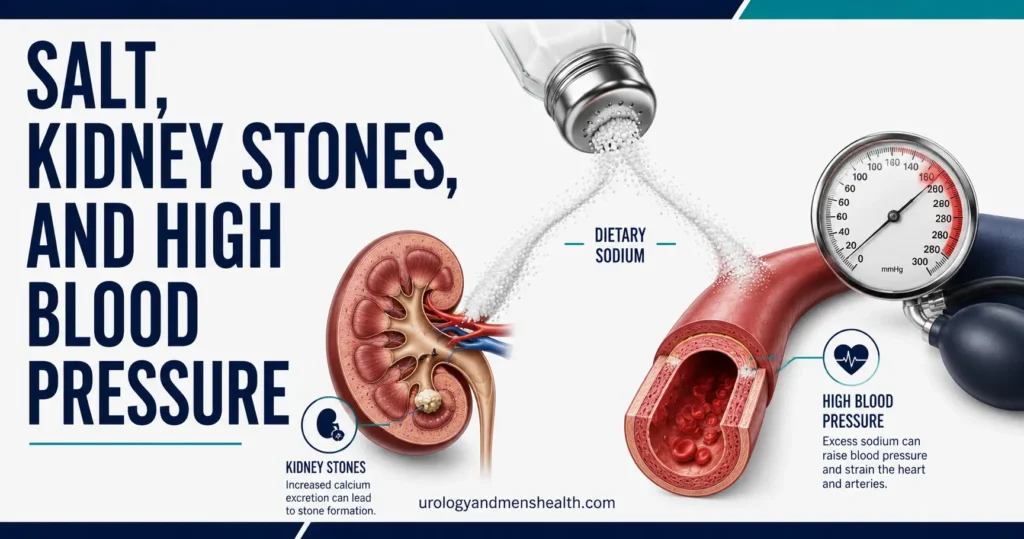
There is an important connection here for my urology patients: excess sodium does not just raise blood pressure — it also increases urinary calcium excretion, which directly raises kidney stone risk. For men managing both hypertension and stone disease, sodium restriction addresses both conditions at once. I cover this overlap in detail in The Kidney Stone Diet: A Clinical Protocol for Prevention.
Related Read: High Blood Pressure and Your Kidneys — The Silent Damage Nobody Talks About3. Weight loss — the highest return per kilogram
Body weight is one of the strongest predictors of blood pressure. The relationship is approximately linear: for every 1 kg (2.2 lb) of weight lost, systolic BP drops by approximately 1 mmHg[4]. A 10 kg (22 lb) weight loss can therefore produce a 10 mmHg reduction — rivaling the DASH diet in magnitude.
The mechanism involves reduced sympathetic nervous system activity (the body’s “fight or flight” wiring that constricts blood vessels), lower insulin resistance (which affects sodium handling at the kidney), and reduced arterial stiffness. Visceral abdominal fat is particularly problematic because it produces inflammatory signals and adipokines that directly affect vascular tone.
For overweight or obese patients with hypertension, weight loss should be the first and most aggressively pursued intervention. Even modest weight loss (5–7% of body weight) produces clinically meaningful BP reductions and improves the response to medications if they are eventually needed.
4. Aerobic exercise — the daily antihypertensive
Regular aerobic exercise reduces systolic BP by 5–8 mmHg in hypertensive patients[3]. This effect is comparable to many first-line medications. The 2023 ESC/ESH hypertension guidelines recommend a minimum of 150 minutes per week of moderate-intensity aerobic exercise (brisk walking, cycling, swimming) or 75 minutes of vigorous exercise (running, interval training).
Key points about exercise and blood pressure:
- The BP-lowering effect begins within 2–4 weeks of starting regular exercise
- The effect is maintained only with ongoing exercise — stop, and your BP returns to baseline within 2–3 weeks
- Resistance training (weights) also reduces BP, though the effect is smaller (~3–4 mmHg systolic). It complements, not replaces, aerobic exercise
- Isometric exercises (wall sits, handgrip exercises) have shown surprisingly large BP reductions — up to 8 mmHg in the Edwards 2023 meta-analysis[7] — though the evidence base is still smaller than for aerobic exercise
- Exercise is safe for most hypertensive patients. Avoid heavy maximal lifting (which causes the Valsalva pressure spike) if BP is above 180/110, but do not avoid activity altogether
5. Potassium — sodium’s natural counterbalance
Potassium works in direct opposition to sodium at the kidney level: it promotes sodium excretion (called natriuresis) and relaxes blood vessel walls. Increasing potassium intake to the recommended 3,500–4,700 mg/day lowers systolic BP by approximately 4–5 mmHg[5].
The best approach is through food, not supplements — potassium pills can cause dangerous hyperkalemia (a high blood potassium level that can stop the heart), especially in patients with CKD or those taking ACE inhibitors or ARBs. Excellent dietary sources include:
- Bananas — 422 mg per medium banana
- Potatoes (with skin) — 926 mg per medium potato
- Sweet potatoes — 541 mg per medium
- Spinach (cooked) — 839 mg per cup
- Avocados — 485 mg per half
- Beans (white, kidney) — 600–700 mg per cup
- Yogurt — 573 mg per cup
- Salmon — 534 mg per fillet
Caution for kidney patients: If your eGFR is below 45 or you have been told you have CKD Stage 3b or worse, do not increase potassium intake without first asking your doctor to check a recent eGFR and a serum potassium level. Damaged kidneys cannot excrete potassium efficiently, and dangerously high levels can cause cardiac arrhythmias.
6. Alcohol reduction
Cutting alcohol intake from heavy to moderate (or none) lowers systolic BP by approximately 4 mmHg[6]. The relationship is dose-dependent: one standard drink per day is associated with minimal risk, but each additional drink raises systolic BP by approximately 1 mmHg. Binge drinking causes acute BP spikes that can be dangerous.
For men, the recommendation is a maximum of 2 standard drinks per day (one US standard drink = 12 fl oz of regular beer, 5 fl oz of wine, or 1.5 fl oz of spirits). For patients with resistant hypertension, complete abstinence is worth a 4-week trial to see if it improves control.
Tier 2: The “Promising but Limited Evidence” Interventions
These interventions have biological plausibility and some positive clinical data, but the studies are typically small, short, or inconsistent. They are reasonable add-ons to Tier 1 strategies — never replacements.
Beetroot juice / dietary nitrate
Beetroot juice is rich in inorganic nitrate, which the body converts to nitric oxide — a potent vasodilator that relaxes blood vessel walls. Several small trials have shown systolic BP reductions of 3–10 mmHg with daily intake of 250–500 ml (about 8–17 fl oz) of beetroot juice[8]. The effect appears most pronounced in older adults and those with higher baseline BP.
The evidence is promising but limited by small sample sizes, short study durations (usually 2–4 weeks), and possible publication bias. If you enjoy beetroot juice, it is a reasonable addition. Be aware it colors urine and stool red — which can cause unnecessary alarm if you are not expecting it.
Garlic supplements
Garlic contains allicin, which has vasodilatory and ACE-inhibitory properties in laboratory studies. Meta-analyses of clinical trials show a modest systolic BP reduction of approximately 3–5 mmHg[9]. Aged garlic extract appears to be better tolerated and more consistently effective than raw garlic or garlic powder.
My position: garlic supplements are unlikely to harm you (apart from the smell), and there may be a small genuine benefit. But a 3 mmHg reduction is clinically marginal — it will not replace medication for anyone with established hypertension. Use it alongside, not instead of, proven strategies.
Magnesium
Magnesium plays a role in vascular smooth muscle relaxation and is often low in Western diets. Meta-analyses show a systolic BP reduction of approximately 2–4 mmHg with supplementation of 300–500 mg/day[10]. The effect is larger in people who are genuinely magnesium-deficient.
Good dietary sources include dark leafy greens, nuts, seeds, whole grains, and dark chocolate (in moderation). Magnesium supplements are generally safe but can cause diarrhea at higher doses.
Stress management and meditation
Chronic psychological stress raises BP through sustained sympathetic nervous system activation. Interventions such as mindfulness-based stress reduction (MBSR), transcendental meditation, and cognitive behavioral therapy have shown variable results — some studies report 5–10 mmHg reductions, others show no significant effect[11].
The challenge is that stress interventions are difficult to standardize and study in controlled trials. My clinical view is that stress management is clearly beneficial for overall health and probably contributes to better BP control, but quantifying its independent effect on BP is hard. Pursue it for its own sake, regardless of what the BP data shows.
Related Read: Best Home Blood Pressure Monitors for Men — A Doctor’s Review 2026Tier 3: The “Probably Doesn’t Work” Category
These interventions are heavily marketed but have weak or contradictory evidence. Spending time and money on them diverts attention from interventions that actually work.
CoQ10 (Coenzyme Q10)
Early small studies suggested CoQ10 might lower BP by 10+ mmHg, but larger, better-designed trials have been disappointing. The most rigorous Cochrane review found no significant BP-lowering effect[12]. At current evidence levels, CoQ10 cannot be recommended specifically for blood pressure.
Omega-3 fish oil supplements
Omega-3 fatty acids from fish have cardiovascular benefits (mainly triglyceride reduction and anti-inflammatory effects), but their BP-lowering effect is minimal — approximately 1–2 mmHg at standard doses[13]. Eating oily fish 2–3 times per week is sensible for overall cardiovascular health, but do not take fish oil capsules expecting meaningful BP reduction.
Apple cider vinegar
Despite widespread online claims, there are virtually no human clinical trials showing a blood pressure benefit from apple cider vinegar. The evidence consists almost entirely of animal studies and anecdotes. I do not recommend it for BP management.
Homeopathic remedies
No homeopathic preparation has demonstrated a blood pressure effect beyond placebo in any rigorous clinical trial. This is consistent with the broader scientific consensus that homeopathy lacks efficacy beyond placebo for any condition.
When Lifestyle Changes Are Enough — and When They’re Not
This is the clinical question that matters most, and the answer depends on your specific situation:
Lifestyle alone may be sufficient if:
- Your BP is in the Stage 1 range (130–139/80–89 mmHg)
- You have no organ damage (normal kidney function, no left ventricular hypertrophy on ECG, no retinal changes on fundoscopy)
- Your 10-year cardiovascular risk is low to moderate
- You are willing and able to implement and sustain multiple lifestyle changes simultaneously
In this scenario, the ESC/ESH guidelines allow a 3–6 month trial of lifestyle modification before starting medication[14]. This matters: you must monitor your BP at home during this period and have it reassessed at the end of the trial. If your BP has not reached target after 3–6 months of genuine lifestyle effort, medication should be started without further delay. If you are not sure where to start with overall health screening at this age, our 40+ Men’s Health Checklist walks through the tests that matter most.
Medication is needed alongside lifestyle changes if:
- Your BP is Stage 2 or higher (≥140/90 mmHg)
- You have existing organ damage — kidney disease, heart disease, diabetes
- You have high cardiovascular risk based on age, smoking status, cholesterol, family history
- Lifestyle measures have been tried and BP remains above target
To be clear: lifestyle changes are never wasted, even when medication is also needed. They improve the effectiveness of medication, allow lower doses to be used, and address cardiovascular risk factors that pills alone cannot. The framing is not “lifestyle OR medication” — it is “lifestyle AND medication when necessary.”
Monitoring Your Progress: Home Blood Pressure Measurement
If you are using lifestyle changes to manage your blood pressure, home monitoring is essential. You cannot improve what you do not measure. A validated upper-arm cuff monitor (not a wrist device) is the gold standard for home use. You can log your readings and watch the trend with our Blood Pressure Log & Trend Tracker.
How to measure correctly:
- Sit quietly for 5 minutes before measuring — no talking, no phone, no crossed legs
- Use the correct cuff size (a cuff that is too small gives falsely high readings)
- Measure at the same time each day — ideally morning before medication and again in the evening
- Take two readings 1 minute apart and record the average
- Home BP below 135/85 mmHg is equivalent to clinic BP below 140/90 mmHg. Home readings are typically 5 mmHg lower than clinic readings because the white-coat effect is absent
Keep a log (paper or app) and bring it to your next appointment. Trends over weeks and months are more important than any single reading.
Related Read: DASH Diet for Blood Pressure — Practical Meal PlanIn My Practice
The most consistent conversation I have about natural blood pressure management begins with a patient who has found something on the internet — usually garlic extract, black seed oil, or some branded herbal formula — and wants to know if it can replace their amlodipine. My response is always calibrated to their numbers. If their BP is 148/92, no supplement on the planet will bring that to target without medication. If their BP is 134/84 and they have no organ damage, lifestyle changes absolutely deserve a structured trial first. The distinction is clinical, not philosophical — and making that distinction explicit in the consultation is what allows the patient to trust the recommendation rather than dismiss it as bias toward prescribing.
The dietary factor that most surprises my patients when I raise it is the sodium content of traditional food preparation. A single tablespoon of commercial mango pickle contains approximately 1,200–1,500 mg of sodium — nearly the entire daily target for a hypertensive patient — and many of my patients consume this with every meal, alongside milky chai, street food, and salt-heavy curry preparations. When I calculate their actual daily sodium intake with them in the consultation, making it specific and numerical rather than generic, the reaction is almost always genuine surprise followed by motivation to change. Nobody has shown them the actual numbers before. That specificity makes the advice stick in a way that “cut down on salt” never does.
I have had several patients successfully taper off antihypertensive medication after losing 12–15 kg (about 26–33 lb) through caloric restriction and regular walking. The common thread in every successful case is not the specific intervention itself but the consistency of home blood pressure monitoring during the process. I teach every patient attempting lifestyle modification to take two readings every morning and two in the evening, record them in a written or digital log, and bring the log to every follow-up. The data changes behavior. Patients who monitor consistently stay motivated; those who do not tend to significantly underestimate how elevated their BP remains between clinic visits.
I am increasingly convinced that unrecognized obstructive sleep apnea is one of the most common causes of apparently treatment-resistant hypertension I encounter. A man who snores heavily, is overweight, and whose BP fails to respond adequately to two or three antihypertensive agents should be screened for sleep apnea — not because the connection is obscure, but because treating it can produce BP reductions that months of dietary counseling failed to achieve. I now routinely ask about snoring, witnessed apneas, and daytime sleepiness in every hypertensive patient, and the frequency with which this line of questioning opens a new diagnostic avenue continues to surprise me.
When to See a Doctor — Urgently
- BP consistently above 180/120 mmHg — this is a hypertensive crisis. Do not attempt to manage this with lifestyle changes. Go to the ER, especially if accompanied by headache, chest pain, visual changes, or confusion
- BP above 160/100 mmHg with symptoms — headache, nosebleeds, dizziness, or palpitations alongside high readings warrant same-day medical review
- New diagnosis of Stage 2 hypertension (≥140/90 mmHg) — lifestyle changes alone are not appropriate as first-line. Medication should be started alongside lifestyle modification
- Lifestyle changes tried for 3–6 months with no improvement — if your home readings remain above 135/85 mmHg despite genuine dietary and exercise changes, medication is needed
- Any symptoms of organ damage — foamy urine (kidney), chest pain (heart), visual changes (retina), or sudden weakness (stroke). These mean your blood pressure has already caused harm and require urgent medical attention
Frequently Asked Questions
Can I come off blood pressure medication if I lose weight and change my diet?
It is possible, but it must be done under medical supervision — never on your own. Some patients who achieve significant weight loss (10+ kg / 22+ lb) and adopt the DASH diet find their BP normalizes and their doctor gradually reduces and eventually stops their medication. This requires consistent home monitoring, regular reviews with your primary care doctor, and a realistic understanding that BP may rise again if lifestyle changes slip. Abruptly stopping medication without medical guidance risks dangerous BP rebound. See the DASH meal plan for the dietary structure that makes this realistic.
How quickly do lifestyle changes lower blood pressure?
Most lifestyle interventions produce measurable BP reductions within 2–4 weeks. Sodium reduction and weight loss tend to show the fastest results. The DASH diet’s full effect is typically seen within 2 weeks. Exercise requires 2–4 weeks of consistent activity. The key is sustained effort — a single week of healthy eating will not produce lasting change. Track the trend with our Blood Pressure Log & Trend Tracker rather than reacting to single readings.
Is coffee bad for blood pressure?
The relationship between coffee and blood pressure is more nuanced than most people think. Caffeine causes an acute spike of 5–10 mmHg lasting 1–3 hours, but regular coffee drinkers develop tolerance to this effect. Large observational studies show no increased hypertension risk — and possibly a slight protective effect — with moderate coffee intake (3–4 cups/day)[15]. If you are already a regular coffee drinker, you do not need to stop. If you are taking your BP at home, avoid caffeine for 30 minutes before the reading.
Does drinking water lower blood pressure?
Adequate hydration supports cardiovascular health, but there is no evidence that drinking extra water beyond normal needs directly lowers blood pressure. Dehydration can acutely raise BP (reduced blood volume triggers vasoconstriction), so staying hydrated is sensible — but water is not an antihypertensive. Read more on hydration and the urinary system in our guide on hydration and kidney health.
Are “natural” blood pressure supplements safe?
Not all supplements marketed as “natural” are safe or effective. Some herbal preparations contain undisclosed pharmaceutical ingredients (including actual antihypertensive drugs), heavy metals, or substances that interact with prescribed medications. If you want to try a supplement, discuss it with your doctor first, purchase from reputable sources, and never use supplements as a substitute for prescribed medication without medical agreement.
References
- Appel LJ, et al. A clinical trial of the effects of dietary patterns on blood pressure (DASH trial). N Engl J Med. 1997;336(16):1117–1124. PubMed
- Sacks FM, et al. Effects on blood pressure of reduced dietary sodium and the Dietary Approaches to Stop Hypertension (DASH) diet. N Engl J Med. 2001;344(1):3–10. PubMed
- Cornelissen VA, Smart NA. Exercise training for blood pressure: a systematic review and meta-analysis. J Am Heart Assoc. 2013;2(1):e004473. PubMed
- Neter JE, et al. Influence of weight reduction on blood pressure: a meta-analysis of randomized controlled trials. Hypertension. 2003;42(5):878–884. PubMed
- Aburto NJ, et al. Effect of increased potassium intake on cardiovascular risk factors and disease: systematic review and meta-analyses. BMJ. 2013;346:f1378. PubMed
- Roerecke M, et al. The effect of a reduction in alcohol consumption on blood pressure: a systematic review and meta-analysis. Lancet Public Health. 2017;2(2):e108–e120. PubMed
- Edwards JJ, et al. Exercise training and resting blood pressure: a large-scale pairwise and network meta-analysis of randomised controlled trials. Br J Sports Med. 2023;57(20):1317–1326. PubMed
- Siervo M, et al. Inorganic nitrate and beetroot juice supplementation reduces blood pressure in adults: a systematic review and meta-analysis. J Nutr. 2013;143(6):818–826. PubMed
- Ried K. Garlic lowers blood pressure in hypertensive individuals, regulates serum cholesterol, and stimulates immunity: an updated meta-analysis. J Nutr. 2016;146(2):389S–396S. PubMed
- Zhang X, et al. Effects of magnesium supplementation on blood pressure: a meta-analysis of randomized double-blind placebo-controlled trials. Hypertension. 2016;68(2):324–333. PubMed
- Goldstein CM, et al. Current perspectives on the use of meditation to reduce blood pressure. Int J Hypertens. 2012;2012:578397. PubMed
- Ho MJ, et al. Coenzyme Q10 supplementation for managing blood pressure. Cochrane Database Syst Rev. 2016;3:CD007435. PubMed
- Miller PE, et al. Long-chain omega-3 fatty acids eicosapentaenoic acid and docosahexaenoic acid and blood pressure: a meta-analysis of randomized controlled trials. Am J Hypertens. 2014;27(7):885–896. PubMed
- Williams B, et al. 2018 ESC/ESH Guidelines for the management of arterial hypertension. Eur Heart J. 2018;39(33):3021–3104. PubMed
- Grosso G, et al. Coffee, caffeine, and health outcomes: an umbrella review. Annu Rev Nutr. 2017;37:131–156. PubMed
Dr. Muhammad Khalid
MBBS · FCPS (Urology) · MCPS (General Surgery) · CHPE · CRSM · IMC #539472
Specialist urologist with 11+ years of clinical experience across tertiary teaching hospitals. Trained at Lady Reading Hospital and Khyber Teaching Hospital, Peshawar. Author or co-author of five peer-reviewed international publications, including in Cureus and the World Journal of Surgery. Procedural expertise: URS, PCNL, RIRS, TURP, TURBT, and major open urological surgery. Full profile →
This article is for educational purposes only and does not constitute medical advice. Always consult your physician or urologist for diagnosis and treatment decisions specific to your condition.