Renal Hypertension: When Kidneys Raise Your BP
If you are on multiple blood pressure medications and your readings are still 160/100, generic advice to "reduce stress" is wasting your time. The clinical reality is that your kidneys actually control your blood pressure, and undiagnosed kidney disease is the primary culprit in nearly 30% of resistant cases. Throwing standard pills at a kidney problem will never work. Here is the exact screening strategy I use in clinic to fix it.

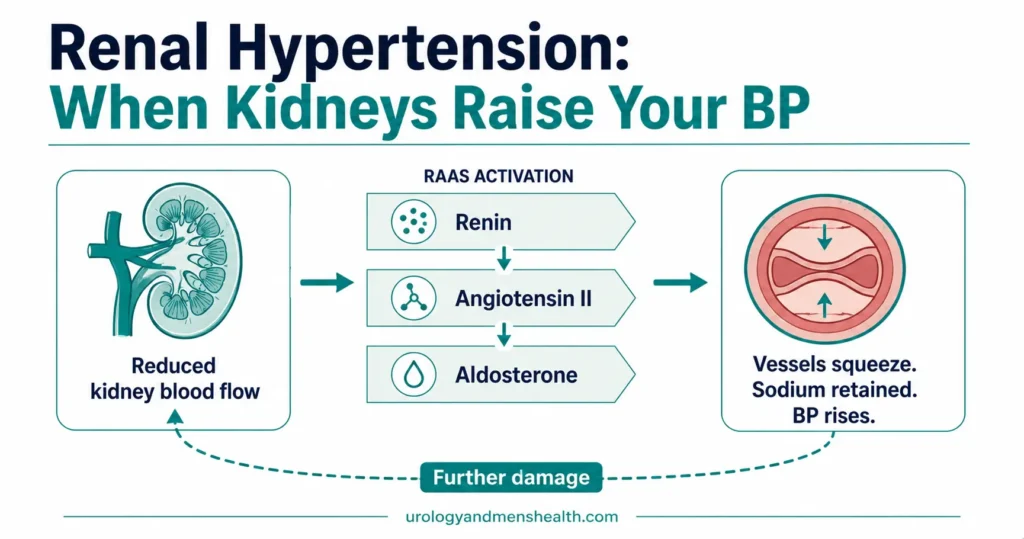
Renal hypertension is the cause your three failed blood pressure medications have probably never been screened for. Your readings are still 160/100. You have been told to “reduce salt and stress.” Nobody has checked your kidneys. This scenario plays out in my clinic with troubling regularity, and it represents one of the most under-diagnosed causes of treatment-resistant high blood pressure.
High blood pressure caused or worsened by kidney disease accounts for up to 5–10% of all hypertension cases [1]. In patients with resistant hypertension (BP that will not respond to three or more drugs), that figure climbs to 20–30% [2]. The kidneys are not innocent bystanders in the blood pressure story. In many cases they are the primary driver.
Understanding this connection matters because the treatment approach changes fundamentally. You cannot fix a kidney-driven blood pressure problem with the same strategy used for ordinary essential hypertension. Getting the diagnosis right is the difference between a lifetime of escalating medications and actually addressing the root cause.
Key Takeaways
- Renal hypertension means your kidneys are actively causing or worsening your high blood pressure — fundamentally different from essential (primary) hypertension and treated differently.
- Two distinct types exist: renoparenchymal (kidney tissue damage from CKD or diabetes) and renovascular (narrowed renal arteries) — confusing them leads to wrong treatment decisions.
- If your BP resists 3+ medications, worsens suddenly, or appeared before age 30, request specific kidney tests today: serum creatinine, eGFR, and urine albumin-to-creatinine ratio.
- A creatinine rise of more than 30% within 2 weeks of starting an ACE inhibitor or ARB is a strong warning sign of bilateral renal artery stenosis — never stop the drug yourself, but report it the same day.
- ACE inhibitors and ARBs are first-line because they directly block the renin-angiotensin-aldosterone system the kidneys are overactivating — but require creatinine and potassium monitoring at 1–2 weeks.
- The relationship is bidirectional — high BP scars kidneys, scarred kidneys raise BP further. Breaking this cycle early is what preserves long-term kidney function.
How Your Kidneys Control Blood Pressure (The Mechanism Most Patients Don’t Know)
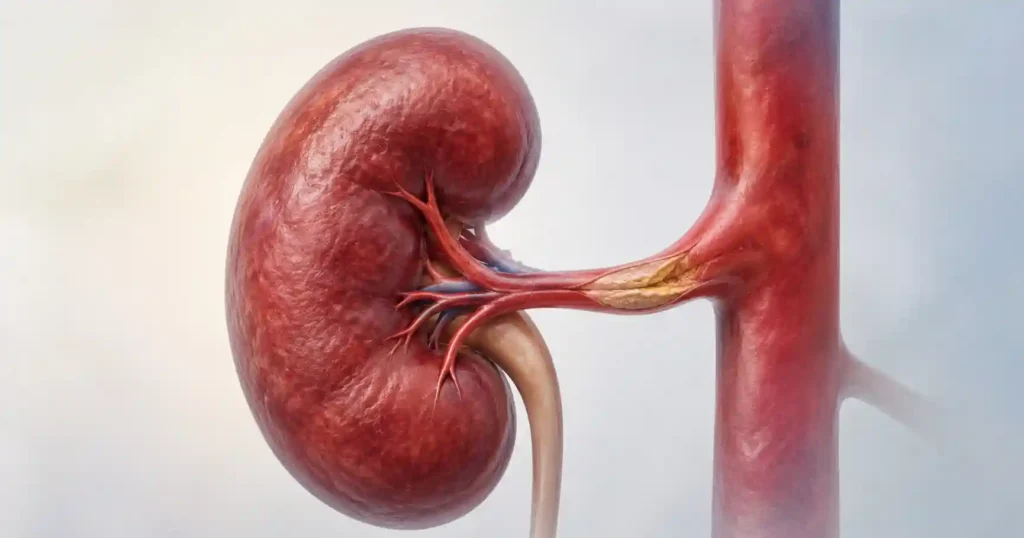
Think of your kidneys as the body’s thermostat for blood pressure. They do not just filter waste — they actively regulate how much fluid stays in your bloodstream and how tightly your blood vessels constrict. When this regulatory system malfunctions, blood pressure rises. And unlike the thermostat in your house, you cannot turn it down manually.
The kidneys control BP through three interconnected mechanisms:
1. Fluid and sodium balance. Healthy kidneys excrete excess sodium and water. When kidney function declines, the kidneys retain more sodium, which pulls water into the bloodstream and expands blood volume. More volume in the same vascular space means higher pressure — basic physics.
2. The renin-angiotensin-aldosterone system (RAAS). This is the central pathway. When the kidneys sense reduced blood flow — from artery narrowing, parenchymal disease, or even dehydration — they release an enzyme called renin. Renin triggers a hormonal cascade: angiotensinogen converts to angiotensin I, which converts to angiotensin II. Angiotensin II is one of the most potent vasoconstrictors in the human body. It squeezes blood vessels tighter and stimulates aldosterone release from the adrenal glands, which causes even more sodium and water retention [3].
3. Sympathetic nervous system activation. Diseased kidneys send signals that activate the sympathetic (“fight or flight”) nervous system, further constricting vessels and increasing heart rate.
When all three mechanisms activate at once — as they do in significant kidney disease — blood pressure becomes very difficult to control with standard medications. This is why patients with renal hypertension often need 3, 4, or even 5 drugs to achieve adequate control. If your BP is still uncontrolled despite triple therapy, you can quickly check whether the kidney pathway is likely driving it with our BP and kidney damage risk tool.
➡️ Related Read: High Blood Pressure and Your Kidneys — The Silent Damage Nobody Talks AboutThe Two Types of Renal Hypertension (And Why the Distinction Matters)
Renal hypertension is not a single entity. It divides into two fundamentally different categories, and confusing them leads to wrong treatment decisions.
Type 1: Renoparenchymal hypertension (kidney tissue disease)
This is the more common form, accounting for approximately 2–5% of all hypertension cases [1]. The problem lies within the kidney tissue itself — damage to the nephrons (the tiny filtering units) from chronic kidney disease (CKD), diabetic nephropathy, chronic glomerulonephritis, or polycystic kidney disease.
When enough nephrons are damaged, the kidneys lose the ability to properly excrete sodium and water. They also overactivate the RAAS in an attempt to maintain filtration pressure through the damaged tissue. The result is volume overload plus vasoconstriction — a double mechanism driving BP upwards.
The clinical clue: renoparenchymal hypertension usually develops gradually, alongside declining kidney function (rising creatinine, falling eGFR). Most patients already carry a known diagnosis of CKD or diabetes when this emerges.
Type 2: Renovascular hypertension (blocked renal arteries)
This is less common but more dramatic. A narrowing (stenosis) of one or both renal arteries reduces blood flow to the kidney. The kidney interprets this reduced flow as low blood pressure and activates the RAAS aggressively — even though systemic blood pressure is already dangerously high everywhere else. It is essentially a miscommunication built into the anatomy.
The two main causes of renal artery stenosis are:
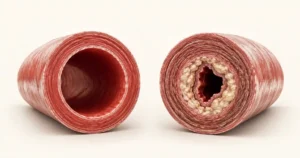
- Atherosclerosis (90% of cases) — plaque buildup in the renal artery, typically in men over 50 with other cardiovascular risk factors (smoking, diabetes, high cholesterol).
- Fibromuscular dysplasia (FMD) (10% of cases) — a non-atherosclerotic arterial wall abnormality, typically in young women aged 15–50. This matters because it is potentially curable with angioplasty.
The clinical clues for renovascular hypertension include sudden onset of severe hypertension, hypertension before age 30 (think FMD), resistant hypertension in an older patient with known vascular disease, a sudden worsening of previously stable BP, or an abdominal bruit (a “whooshing” sound a doctor hears with a stethoscope over the abdomen).
The Red Flags: When to Suspect Your Kidneys Are Driving Your Blood Pressure
Not every patient with high blood pressure needs a renal workup. But specific clinical features should trigger investigation. If any of the following apply to you, ask your primary care doctor specifically for a serum creatinine, eGFR, urine albumin-to-creatinine ratio (uACR), and a renal Doppler ultrasound — naming the test by name reduces the chance the request gets generalized into a routine panel that misses what matters.
Resistant hypertension. Your blood pressure remains above target despite three or more antihypertensive drugs at optimal doses, including a diuretic. This is the single most important red flag — up to 20–30% of resistant hypertension has a renal cause [2].
Young-onset hypertension. Significant hypertension diagnosed before age 30, particularly in women, should prompt investigation for fibromuscular dysplasia of the renal arteries.
Sudden worsening. A patient with previously well-controlled BP whose readings suddenly spike — especially if this coincides with an acute decline in kidney function — should be evaluated for acute renal artery stenosis or thrombosis.
Flash pulmonary edema. Sudden, severe breathlessness due to fluid overload, occurring out of proportion to the degree of heart dysfunction. This is a classic presentation of bilateral renal artery stenosis.
An asymmetric kidney on ultrasound. If one kidney is significantly smaller than the other (a difference of more than 1.5 cm / about 0.6 inches in length), this suggests chronic ischemia from renal artery stenosis on the smaller side.
Rising creatinine on ACE inhibitors or ARBs. A creatinine rise of more than 30% after starting these drugs is a strong indicator of bilateral renal artery stenosis or stenosis in a solitary functioning kidney [4]. This happens because these drugs reduce the compensatory angiotensin II-mediated efferent arteriolar constriction that was maintaining filtration pressure in the ischemic kidney.
How Renal Hypertension Is Diagnosed
The workup is systematic. It starts with simple blood and urine tests and escalates to imaging only when clinical suspicion is high.
Step 1: Basic screening (every hypertensive patient should have these)
- Serum creatinine and eGFR — the most basic measure of kidney function. An eGFR below 60 ml/min/1.73m² indicates at least Stage 3 CKD. You can quickly check your eGFR-based CKD stage using our CKD stage calculator.
- Urine albumin-to-creatinine ratio (uACR) — detects microalbuminuria, the earliest sign of kidney damage from hypertension. A value above 30 mg/g is abnormal.
- Serum potassium — low potassium (hypokalemia) in a hypertensive patient not taking diuretics may suggest hyperaldosteronism, sometimes secondary to renal artery stenosis.
- Renal ultrasound — assesses kidney size, symmetry, and structure. Asymmetric kidneys are a major clue.
Step 2: Targeted investigation (when clinical suspicion is moderate to high)
- Duplex Doppler ultrasound of renal arteries — non-invasive, no contrast, no radiation. Measures blood flow velocity in the renal arteries. A peak systolic velocity above 200 cm/s or a renal-to-aortic ratio above 3.5 suggests significant stenosis [5]. Limitation: operator-dependent and difficult in obese patients or those with bowel gas.
- CT angiography (CTA) — high sensitivity and specificity for renal artery stenosis. Requires iodinated contrast (caution in patients with impaired kidney function).
- MR angiography (MRA) — avoids radiation and iodinated contrast. Can use gadolinium (carries risk in severe CKD — nephrogenic systemic fibrosis). Time-of-flight MRA avoids contrast entirely but is less sensitive.
- Plasma renin activity and aldosterone — helps differentiate primary from secondary aldosteronism and confirms RAAS activation.
Step 3: Definitive investigation (when intervention is being considered)
- Catheter-based renal angiography — the gold standard for visualizing renal artery anatomy. Also allows simultaneous angioplasty and stenting if appropriate.
Treatment: Why Standard BP Management Often Fails in Renal Hypertension
The treatment of renal hypertension hinges on which type you have and what is driving it. The single most consequential decision point is whether the kidney problem is parenchymal (drugs only) or vascular (drugs first, with selective angioplasty for specific subgroups). Get that wrong and you spend years escalating medications when angioplasty would have cured the problem — or stenting an artery that the trial evidence says provides no benefit.
Medical treatment (both types)
ACE inhibitors (ramipril, enalapril) and ARBs (losartan, valsartan) are the first-line drugs. They directly block the RAAS — the very system the kidneys are overactivating. They also have a proven renoprotective effect, slowing the progression of CKD and reducing proteinuria [6].
However, these drugs require careful monitoring in renal hypertension. You must check creatinine and potassium 1–2 weeks after starting or dose-adjusting. A creatinine rise of up to 25% is acceptable and expected. A rise above 30% — or hyperkalemia above 5.5 mmol/L — requires dose reduction or drug cessation and should trigger investigation for bilateral renal artery stenosis [4].
Additional drugs commonly needed include:
- Calcium channel blockers (amlodipine, nifedipine) — effective vasodilators that work independently of the RAAS.
- Diuretics (thiazide or loop diuretics) — address the volume overload component. Loop diuretics (furosemide) are preferred when eGFR drops below 30.
- Mineralocorticoid receptor antagonists (spironolactone) — particularly effective as add-on therapy in resistant hypertension, but risk hyperkalemia in CKD.
Whichever combination you end up on, structured home BP monitoring is what tells your doctor whether the regimen is actually working between appointments. Most patients underestimate how variable their pressures are across the day. Keep a blood pressure log for at least 7 consecutive days before each appointment so the trend, not a single clinic reading, drives medication decisions.
Interventional treatment (renovascular hypertension only)
The role of renal artery revascularization — angioplasty with or without stenting — has changed significantly. Two landmark trials reshaped practice:
The ASTRAL trial (2009) and the CORAL trial (2014) both showed that in the majority of patients with atherosclerotic renal artery stenosis, stenting did not provide significant benefit over optimal medical therapy alone for blood pressure control or kidney function preservation [7][8]. This was a paradigm shift — we stopped routinely stenting atherosclerotic renal artery stenosis.
The important exceptions where revascularization is still considered:
- Fibromuscular dysplasia — angioplasty (without stenting) is the treatment of choice and can be curative. Up to 50% of FMD patients achieve cure of hypertension post-angioplasty [9].
- Flash pulmonary edema with bilateral renal artery stenosis.
- Rapidly declining kidney function attributable to stenosis.
- Failure of maximal medical therapy to control BP.
High blood pressure and worried about your kidneys? Download Dr. Khalid’s Blood Pressure & Kidney Protection Guide.
Enter your email below to receive Dr. Khalid’s complete Blood Pressure & Kidney Protection Guide as a free, printable PDF.
The Vicious Cycle: How High BP and Kidney Damage Feed Each Other
This is the concept I spend the most time explaining to patients, because understanding it changes behavior. High blood pressure and kidney disease are not two separate problems — they are a self-reinforcing cycle.
Uncontrolled hypertension damages the small blood vessels inside the kidneys (the glomerular capillaries and afferent arterioles). This damage is called hypertensive nephrosclerosis, and it is one of the leading causes of chronic kidney disease worldwide [10]. As the kidney tissue scars, it loses filtering capacity. As filtering capacity drops, sodium and water retention increase, RAAS activates further, and blood pressure rises even higher.
This is why early, aggressive BP control is not optional — it is renoprotective. The KDIGO guidelines recommend a target of under 120 mmHg systolic for most CKD patients, based on evidence from the SPRINT trial showing reduced cardiovascular events and slowed CKD progression at lower BP targets [11].
Every year of uncontrolled hypertension accelerates kidney damage. Once enough nephrons are lost, the damage becomes irreversible. The window for intervention narrows over time — which is why identifying the kidney-BP connection early matters so much.
➡️ Related Read: High Blood Pressure and Your Kidneys — The Silent Damage Nobody Talks AboutLifestyle Modifications That Actually Move the Needle
Lifestyle changes carry more weight in renal hypertension than in essential hypertension because failing kidneys cannot fully handle the sodium and volume that medications alone are trying to compensate for. The same interventions that work for ordinary high BP work harder here, and dietary sodium is the single biggest variable.
Sodium restriction. This is non-negotiable. Target under 2,000 mg/day (about 3/4 teaspoon of salt total — stricter than the general population target of 2,300 mg). In CKD, the kidneys are already failing to excrete sodium efficiently — every extra gram of dietary sodium contributes directly to fluid retention and higher BP. The DASH-Sodium trial showed an additional 7 mmHg systolic reduction with sodium restriction beyond what the DASH diet alone achieved [12]. The same dietary patterns that protect kidneys from stones also protect them from hypertensive damage — the principles in our kidney stone prevention diet overlap heavily with what works here.
Weight management. Obesity drives hypertension through multiple pathways — increased sympathetic activity, hyperinsulinemia, and physical compression of the kidneys. A 10 kg / 22 lb weight loss can reduce systolic BP by 5–10 mmHg.
Exercise. 150 minutes of moderate-intensity aerobic activity per week. The cardiovascular benefits are well established, but exercise also directly improves renal blood flow and reduces sympathetic overactivation.
Alcohol limitation. More than 2 standard drinks daily (1 standard US drink = 14 g pure alcohol = 12 fl oz beer / 5 fl oz wine / 1.5 fl oz spirits) raises BP significantly. In patients with CKD, alcohol also contributes to dehydration and can worsen proteinuria.
➡️ Related Read: How to Lower Blood Pressure Naturally — What Actually WorksIn My Practice
A case that shaped my approach: a man in his mid-fifties with longstanding type 2 diabetes and hypertension was referred for “medication-resistant BP.” He had been started on ramipril by his primary care doctor several months prior, but the follow-up creatinine check was delayed. By the time I reviewed his blood tests, his creatinine had risen by over 40% from baseline — a figure that should have prompted urgent investigation weeks earlier. CT angiography confirmed bilateral renal artery stenosis. By then, one kidney had lost significant function. Early Doppler screening at the time his BP became resistant would have detected this before irreversible damage occurred.
The takeaway I now repeat to every patient starting an ACE inhibitor: the 2-week creatinine check is not an optional safety net — it is the single test that protects you from missed renal artery stenosis. If you start one of these drugs, put the follow-up blood test in your phone calendar before you leave the appointment.
⚠️ When to See a Doctor — Urgently
- Blood pressure above 180/120 mmHg — this is a hypertensive emergency. Seek immediate medical attention, especially with headache, chest pain, visual changes, or breathlessness.
- Sudden severe breathlessness — flash pulmonary edema can occur in bilateral renal artery stenosis and requires emergency treatment.
- Blood pressure resistant to 3+ medications — ask your doctor for kidney function tests (creatinine, eGFR, uACR) and a renal ultrasound if not already done.
- Rapid decline in kidney function after starting an ACE inhibitor or ARB — this may indicate renal artery stenosis. Do not simply stop the medication on your own — report it the same day.
- New-onset hypertension under age 30 — particularly in women, this warrants investigation for fibromuscular dysplasia, which is potentially curable.
Frequently Asked Questions
Can renal hypertension be cured?
It depends on the cause. Renovascular hypertension due to fibromuscular dysplasia can sometimes be cured with angioplasty — up to 50% of patients achieve normal BP without medication after the procedure. Atherosclerotic renal artery stenosis is rarely curable but is manageable with optimal medical therapy. Renoparenchymal hypertension from CKD is a chronic condition requiring lifelong management, though aggressive treatment can slow progression and maintain kidney function for years. The relevant decision points are summarized in our guide to kidney-BP damage.
Does every hypertensive patient need kidney tests?
Yes — at minimum, a basic panel. The European Society of Hypertension (ESH) 2023 guidelines recommend that every newly diagnosed hypertensive patient should have serum creatinine, eGFR, and urine albumin screening [13]. These are inexpensive tests that can identify kidney involvement early. More advanced imaging (Doppler, CT or MR angiography) is reserved for patients with clinical features suggesting renovascular disease. You can check what your eGFR means clinically using our CKD stage calculator.
Why did my creatinine rise after starting my blood pressure medication?
This is expected with ACE inhibitors and ARBs. These drugs reduce the efferent arteriolar pressure inside the glomerulus, which is how they protect the kidney long-term — but this also temporarily reduces filtration pressure and raises creatinine. A rise of up to 25% is normal and acceptable. A rise above 30% raises concern for bilateral renal artery stenosis and should prompt further investigation. Never stop these medications on your own — report any creatinine changes to your doctor the same day. The creatinine pattern is one of the most informative signals in managing renal hypertension.
Is renal hypertension the same as CKD?
No, but they are closely related. CKD is one of the main causes of renal hypertension (the renoparenchymal type), but renal hypertension can also occur with normal kidney function if the renal arteries are narrowed (renovascular type). Conversely, not all CKD patients develop renal hypertension, though the vast majority do. The two conditions amplify each other — uncontrolled hypertension accelerates CKD, and worsening CKD drives BP higher. You can stage your kidney function with our CKD stage calculator.
Does home blood pressure monitoring change how renal hypertension is managed?
Yes — significantly. In renal hypertension, BP fluctuates more than in essential hypertension because the RAAS responds to volume status, posture, and time of day. A single clinic reading often underestimates true average BP, which is why white-coat hypertension and masked hypertension are both more common in this group. Logging morning and evening readings for at least 7 consecutive days before each appointment gives your doctor the trend that drives medication adjustments. Use a validated upper-arm cuff and our BP trend tracker rather than logging on paper.
How much should I limit sodium if I have renal hypertension?
Target under 2,000 mg of sodium per day (about 3/4 teaspoon of salt total) — stricter than the 2,300 mg general population target. In renal hypertension the kidneys cannot excrete sodium efficiently, so each extra gram drives fluid retention and higher BP directly. Most dietary sodium (70-80% in typical Western diets) comes from processed and restaurant food rather than the salt shaker, so reading nutrition labels and cooking at home produce far more impact than removing the salt cellar from the table. The DASH diet combined with this sodium restriction is the best-studied dietary pattern for renal hypertension management.
References
- Textor SC. Renal arterial disease and hypertension. Med Clin North Am. 2017;101(1):65-79. PubMed
- Calhoun DA, Jones D, Textor S, et al. Resistant hypertension: diagnosis, evaluation, and treatment. Circulation. 2008;117(25):e510-e526. PubMed
- Hall JE, do Carmo JM, da Silva AA, et al. Kidney dysfunction, rather than nonrenal vascular dysfunction, mediates salt-induced hypertension. Circulation. 2016;133(11):894-906. PubMed
- Bakris GL, Weir MR. Angiotensin-converting enzyme inhibitor-associated elevations in serum creatinine. Arch Intern Med. 2000;160(5):685-693. PubMed
- Williams GJ, Macaskill P, Chan SF, et al. Duplex ultrasonography for renal artery stenosis. Cochrane Database Syst Rev. 2007;(4):CD004582. PubMed
- Jafar TH, Schmid CH, Landa M, et al. Angiotensin-converting enzyme inhibitors and progression of nondiabetic renal disease. Ann Intern Med. 2001;135(2):73-87. PubMed
- ASTRAL Investigators. Revascularization versus medical therapy for renal-artery stenosis. N Engl J Med. 2009;361(20):1953-1962. PubMed
- Cooper CJ, Murphy TP, Cutlip DE, et al. Stenting and medical therapy for atherosclerotic renal-artery stenosis (CORAL). N Engl J Med. 2014;370(1):13-22. PubMed
- Plouin PF, Perdu J, La Batide-Alanore A, et al. Fibromuscular dysplasia. Orphanet J Rare Dis. 2007;2:28. PubMed
- Hill GS. Hypertensive nephrosclerosis. Curr Opin Nephrol Hypertens. 2008;17(3):266-270. PubMed
- SPRINT Research Group. A randomized trial of intensive versus standard blood-pressure control. N Engl J Med. 2015;373(22):2103-2116. PubMed
- Sacks FM, Svetkey LP, Vollmer WM, et al. Effects on blood pressure of reduced dietary sodium and the DASH diet. N Engl J Med. 2001;344(1):3-10. PubMed
- Mancia G, Kreutz R, Brunström M, et al. 2023 ESH Guidelines for the management of arterial hypertension. J Hypertens. 2023;41(12):1874-2071. PubMed
Dr. Muhammad Khalid
MBBS · FCPS (Urology) · MCPS (General Surgery) · CHPE · CRSM · IMC #539472
Specialist urologist with 11+ years of clinical experience across tertiary teaching hospitals. Trained at Lady Reading Hospital and Khyber Teaching Hospital, Peshawar. Author or co-author of five peer-reviewed international publications, including in Cureus and the World Journal of Surgery. Procedural expertise: URS, PCNL, RIRS, TURP, TURBT, and major open urological surgery. Full profile →
This article is for educational purposes only and does not constitute medical advice. Always consult your physician or urologist for diagnosis and treatment decisions specific to your condition.