Supplements for Kidney Stone Prevention: What Works
Patients ask me which supplement will stop their kidney stones coming back. The honest answer surprises them: a few help, several do nothing, and one common one — high-dose vitamin C — can quietly make things worse.

Every week, a man who has just passed a stone asks me the same thing: which supplements for kidney stone prevention should he be taking? He has usually already bought something — a magnesium tablet, a high-dose vitamin C, a calcium pill he heard protects the bones. The honest answer is uncomfortable. Most over-the-counter supplements do nothing to lower stone risk, a few of them quietly raise it, and the one supplement with the strongest evidence is the one almost nobody is taking. For most men, the biggest wins come from fluid, diet, and salt — not a pill. But supplements still matter, because the wrong one can undo months of careful prevention. This article walks through what the evidence actually says about vitamin C, calcium, potassium citrate, magnesium, and the rest, so you can stop guessing in the supplement aisle. For where prevention sits in the bigger picture of men’s health, see our men’s wellness hub. Let’s start with the supplement people are most surprised to learn can work against them.
Key Takeaways
- High-dose supplemental vitamin C (around 1,000 mg a day or more) is linked to roughly 40% higher stone risk in men, because the body turns excess vitamin C into oxalate.
- Calcium from food lowers stone risk; calcium supplements taken between meals can raise it. The source and timing matter more than the total amount.
- Potassium citrate is the one supplement with strong trial evidence, but it mainly helps stone formers with low urinary citrate confirmed on a 24-hour urine test.
- For most men, fluid, dietary sodium, and normal dietary calcium do far more to prevent stones than any pill on the shelf.
Do supplements for kidney stone prevention actually work?
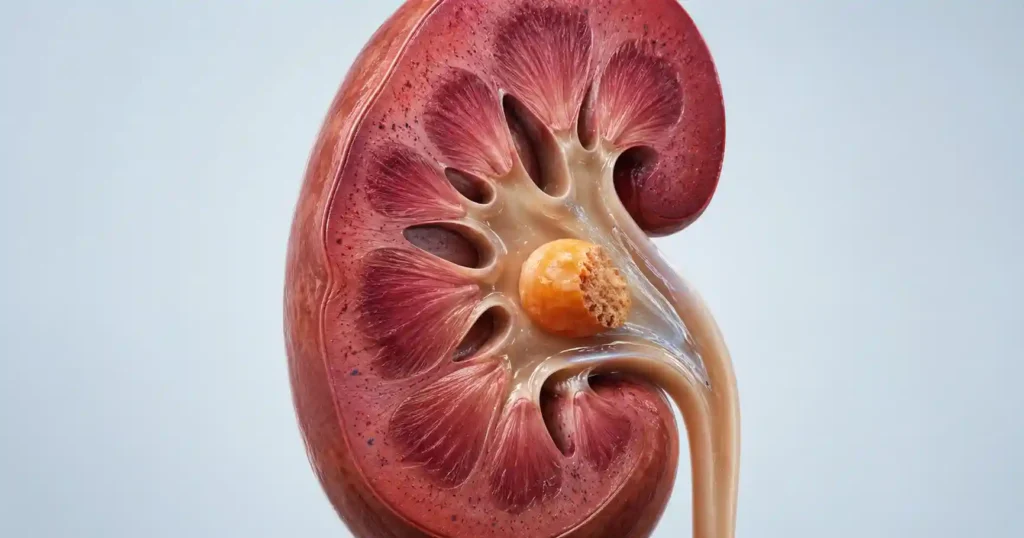
It helps to start with how stones form. A kidney stone develops when urine becomes supersaturated — when there is more calcium, oxalate, or uric acid dissolved in it than the fluid can hold. A supplement only changes your risk if it changes one of those numbers. Most do not.
That single test — does this pill alter my urine chemistry — rules out most products marketed for “kidney health.” Herbal blends, antioxidant formulas, and generic “detox” capsules have no trial evidence behind them for stone prevention. A handful of supplements do move the needle, in both directions, which is why this is worth getting right.
Before reaching for anything, I would rather a patient know his own risk. Stone risk depends heavily on your metabolic profile and stone type, which you can estimate with our kidney stone risk profiler. A man who has never had a stone needs a very different plan from someone passing his third in two years.
Vitamin C: the popular supplement that can raise your risk
This is the one that surprises people most. Vitamin C feels harmless — it is water-soluble, it is in orange juice, and people megadose it at the first sign of a cold. But the body converts excess ascorbic acid into oxalate, and oxalate is half of the most common stone type.
In a large prospective study, Ferraro and colleagues found that men with a total vitamin C intake of 1,000 mg per day or more had roughly a 40% higher risk of kidney stones compared with men taking under 90 mg, with supplemental vitamin C specifically driving the association [2]. Vitamin C from food was not linked to higher risk, and women did not show the same pattern.
The practical message is narrow but firm: if you are a man who forms calcium oxalate stones, drop the high-dose vitamin C supplements. Getting vitamin C from fruit and vegetables is fine and even helpful — it is the 1,000 mg tablets that cause trouble. The same caution applies to loading up on oxalate elsewhere, which our guide to foods that raise oxalate covers in detail.
Calcium: the form matters more than the dose
For years, stone formers were told to avoid calcium. We now know that advice backfires. In Curhan’s landmark study of more than 45,000 men, those with the highest dietary calcium intake had a significantly lower stone risk — low dietary calcium was associated with about a 50% higher risk [3].
The mechanism is elegant. Calcium eaten with a meal binds oxalate in the gut and carries it out in the stool, so less oxalate reaches the urine. Starve the gut of calcium and more oxalate gets absorbed and excreted — exactly the wrong outcome.
Supplements are a different story. Calcium supplements, especially taken between meals, can raise urinary calcium without the oxalate-binding benefit. In women, supplemental calcium was associated with increased stone risk [4], and the Women’s Health Initiative trial found a 17% excess in urinary stones among women taking calcium plus vitamin D [5]. The AUA recommends a normal calcium intake at the recommended daily allowance — roughly 800 to 1,200 mg, ideally from food — not restriction [1].
If you need a calcium supplement for bone health, take it with meals so it can do its oxalate-binding job, and discuss the dose with your doctor.
In My Practice
One of the most common mistakes I see is the man who passes a painful calcium stone, decides calcium is the enemy, and cuts out all dairy overnight. He comes back a year later with more stones, not fewer. When he stopped eating calcium with his meals, there was nothing in his gut to bind oxalate, so more of it reached his urine.
Cutting dietary calcium is one of the fastest ways to make calcium oxalate stones worse, not better.
Worried about a stone coming back? Download Dr. Khalid’s 7-Day Kidney Stone Prevention Meal Plan.
Enter your email below to receive Dr. Khalid’s complete 7-Day Kidney Stone Prevention Meal Plan as a free, printable PDF.
Potassium citrate and magnesium: the supplements with real evidence
Here is the supplement almost no one in the vitamin aisle is taking, and it is the one with the best evidence. Potassium citrate works by raising urinary citrate — a natural inhibitor that coats calcium crystals and stops them from growing — and by making urine less acidic.
The AUA recommends potassium citrate for patients with recurrent calcium stones and low or low-normal urinary citrate, based on randomized trials showing reduced recurrence [1]. It is also first-line for uric acid stones, where raising urine pH can actually dissolve a stone. But notice the condition: it helps people whose 24-hour urine shows low citrate. It is a targeted therapy, not a blanket vitamin, and prescription-strength dosing usually beats over-the-counter products.
Magnesium has a smaller supporting role. It binds oxalate in the gut much like calcium does, and trials of potassium-magnesium citrate have shown reduced calcium stone recurrence. As a standalone magnesium pill, the evidence is thin. I apply the same evidence-first scrutiny here that we use for other men’s supplements in our prostate supplements evidence review — a promising mechanism is not the same as a proven benefit.
Vitamin B6, fish oil, probiotics — and what I actually recommend
A few other supplements come up often. Vitamin B6 (pyridoxine) can reduce the body’s oxalate production and matters most in a rare inherited condition called primary hyperoxaluria; for the average stone former, the benefit is modest. Fish oil and omega-3s have a plausible anti-inflammatory rationale but no convincing stone-prevention data. Probiotics containing Oxalobacter formigenes — a gut bacterium that eats oxalate — are scientifically interesting but still investigational.
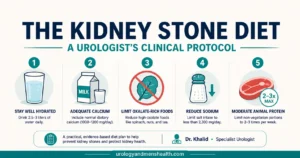
So here is what I actually tell patients. First, build the foundation: drink enough to produce at least 2.5 liters of urine a day (about 85 fl oz / 10 cups), keep sodium under about 2,300 mg (roughly 1 teaspoon of salt), and eat normal calcium with your meals. Our full kidney stone diet protocol lays out the food side step by step.
Second, get a 24-hour urine test after a recurrent stone, and only add potassium citrate if your citrate is genuinely low. Third, stop any high-dose vitamin C if you form calcium oxalate stones. If you want help matching a supplement to your actual situation rather than guessing, our evidence-based supplement matcher is built for exactly that. The goal is fewer pills doing more, not a cabinet full of capsules doing nothing.
When Supplements Become the Problem
Some supplement habits actively raise stone risk or interact with kidney function. Talk to a urologist or your doctor before continuing if any of these apply to you:
- Taking 1,000 mg or more of vitamin C daily and you form calcium oxalate stones.
- Using high-dose calcium plus vitamin D supplements, especially between meals.
- Considering potassium citrate while you have chronic kidney disease or take potassium-sparing blood pressure medication, which together can push potassium dangerously high.
- Relying on any “kidney cleanse” blend in place of a real metabolic workup after recurrent stones.
Frequently Asked Questions
Which supplements for kidney stone prevention actually work?
Honestly, very few. Potassium citrate has the strongest evidence, but it mainly helps stone formers whose 24-hour urine shows low citrate. Normal dietary calcium and good fluid intake outperform almost every pill on the shelf. Before adding anything, it helps to know your stone type and metabolic profile — our kidney stone risk profiler is a good starting point.
Can taking vitamin C cause kidney stones?
In men, yes. High-dose supplemental vitamin C — around 1,000 mg a day or more — is linked to a roughly 40% higher stone risk, because the body converts excess ascorbic acid into oxalate. Vitamin C from food carries no such risk. If you form calcium oxalate stones, the megadose immune-season habit is one worth dropping. See our guide to foods that raise oxalate.
Should I stop calcium supplements if I keep getting kidney stones?
Not necessarily, but talk to your doctor about timing and source. Calcium from food actually lowers stone risk by binding oxalate in the gut. Calcium supplements taken between meals can raise urinary calcium and risk. If you need a supplement for bone health, take it with food, and pair it with the diet steps in our kidney stone diet protocol.
Does magnesium help prevent kidney stones?
Modestly, and mostly in combination. Magnesium binds oxalate in the gut, and trials of potassium-magnesium citrate have shown reduced calcium stone recurrence. As a standalone magnesium pill, the evidence is weak. It’s reasonable, not a cure. The bigger levers are fluid and diet, which you can build into a routine with our evidence-based supplement matcher.
Are ‘kidney support’ supplements sold online worth buying?
I’d save your money. Most ‘kidney support’ blends mix herbs and low-dose minerals with no trial evidence for stone prevention, and some contain enough added vitamin C or oxalate-rich botanicals to be counterproductive. The same evidence-first scrutiny applies here as with prostate products — see how we assess those in our prostate supplements evidence review.
References
- American Urological Association. Medical Management of Kidney Stones: AUA Guideline. J Urol. 2014 (amended 2019). AUA
- Ferraro PM, Curhan GC, Gambaro G, Taylor EN. Total, Dietary, and Supplemental Vitamin C Intake and Risk of Incident Kidney Stones. Am J Kidney Dis. 2016;67(3):400-407. AJKD
- Curhan GC, Willett WC, Rimm EB, Stampfer MJ. A prospective study of dietary calcium and other nutrients and the risk of symptomatic kidney stones. N Engl J Med. 1993;328(12):833-838. NEJM
- Curhan GC, Willett WC, Speizer FE, Spiegelman D, Stampfer MJ. Comparison of dietary calcium with supplemental calcium and other nutrients as factors affecting the risk for kidney stones in women. Ann Intern Med. 1997;126(7):497-504. PubMed
- Wallace RB, Wactawski-Wende J, O’Sullivan MJ, et al. Urinary tract stone occurrence in the Women’s Health Initiative (WHI) randomized clinical trial of calcium and vitamin D supplements. Am J Clin Nutr. 2011;94(1):270-277. PubMed
Dr. Muhammad Khalid
MBBS · FCPS (Urology) · MCPS (General Surgery) · CHPE · CRSM · IMC #539472
Specialist urologist with 11+ years of clinical experience across tertiary teaching hospitals. Trained at Lady Reading Hospital and Khyber Teaching Hospital, Peshawar. Author or co-author of five peer-reviewed international publications, including in Cureus and the World Journal of Surgery. Procedural expertise: URS, PCNL, RIRS, TURP, TURBT, and major open urological surgery. Full profile →
This article is for educational purposes only and does not constitute medical advice. Always consult your physician or urologist for diagnosis and treatment decisions specific to your condition.